


Privilege creep is the silent killer of access control. Most IT and security teams know it's happening. They just can't stop it.
Here's what I mean. An engineer joins your sales tools team to help with a launch. Two months later, they've moved to platform engineering. But they still have admin access to Salesforce, Marketo, and a half dozen other apps they no longer need. Multiply this by 500 employees, 100 SaaS apps, and 18 months of role changes, and you've got a sprawling mess of standing privileges that no one can fully account for.
This is privilege creep. And it's the #1 reason audits fail, breaches escalate, and IT teams burn out trying to clean it up.
The conventional wisdom says: tighten your policies. Run more access reviews. Hire more IT. But that's treating the symptom, not the cause. The real fix is structural, and it requires rethinking where access governance lives in your stack.
Key Takeaways:
- Privilege creep happens because access is granted permanently by default and reviewed manually after the fact. The fix is making access temporary by default.
- Most IT teams underestimate the audit cost of standing access. A single compliance cycle can consume 100+ hours of cleanup work that compounds quarterly.
- Time-bound, just-in-time access cuts privileged accounts by 80%+ when paired with automated provisioning through your identity provider.
- Access reviews fail when reviewers lack context. Showing last login data and group memberships inside Jira changes review behavior overnight.
- Governance belongs in Jira and Slack, not a separate IGA portal. When evidence is generated as a byproduct of normal workflows, audits stop being a fire drill.
Why Privilege Creep Wins by Default
If you've been in IT for more than two years, you've seen this pattern. A developer requests temp admin access to debug a production issue. You grant it. The fire gets put out. And then... nothing. The access stays. Forever.

It's not laziness. It's how the system is built. Access is granted permanently by default in most identity providers, and the only way to remove it is for someone to remember to remove it. Spoiler: no one remembers.
The deeper issue is that most companies treat access management like inventory. You add stuff. Occasionally you do a count. Things you forgot about pile up in the corner. But access isn't inventory. It's risk. Every standing privilege is a vector. Every dormant admin account is a backdoor waiting to be exploited.
The Hidden Cost Compounds Every Quarter
Let me give you some numbers. A mid-market company with 500 employees typically has 80-120 SaaS apps, with an average of 4-6 access roles per app. That's roughly 400+ unique entitlements that need to be managed. Now factor in role changes, project rotations, contractors, and offboarding events. You're easily looking at 200-300 access events per month.

If just 20% of those events leave behind orphaned access, you're accumulating 40-60 stale privileges every month. After a year, that's 500+ access points that no one can confidently say are still needed.
The cost shows up in three places. First, audit cycles. Compliance teams spend 100+ hours per quarter chasing down evidence and cleaning up access. Second, license waste. We've seen companies pay for 30-40% more SaaS seats than they actually use because no one reclaims licenses from inactive users. Third, breach blast radius. When an attacker compromises one account, they don't get access to one app, they get access to 15.
Why Quarterly Access Reviews Don't Fix It
Most companies try to solve privilege creep with quarterly access reviews. Sounds reasonable, right? Get managers to certify who needs what every 90 days.
In practice, this is a disaster. Reviewers get a spreadsheet with 200 names and 50 apps. They have no context, no usage data, no time to actually evaluate anything. So they rubber stamp the whole list. Compliance gets their evidence. The auditor checks the box. Privilege creep continues.
I've talked to dozens of IT leaders who run this exact process. Their honest answer is the same: "We know the reviews are theater, but we don't have a better option." Learn more about Multiplier and how teams are replacing this theater with actual governance.
The problem isn't reviewer effort. It's that the review happens too late, in the wrong place, with the wrong information. By the time a manager is reviewing access, the damage is already done. And without usage data sitting next to the access list, there's no way to make an informed call.
The Structural Fix: Make Access Temporary by Default
Here's the reframe. The issue isn't that you're not reviewing access enough. It's that access is granted permanently in the first place.
Flip the default. Make access temporary by default, with explicit decisions required to make it permanent. Suddenly the math changes. Instead of fighting an ever-growing pile of standing access, you only have access that someone affirmatively chose to keep.
This is what just-in-time access actually means. Not "fast provisioning" (which is what vendors usually market it as). It means access that exists for a defined window and automatically disappears at the end of that window.
Just-in-Time Access in Practice
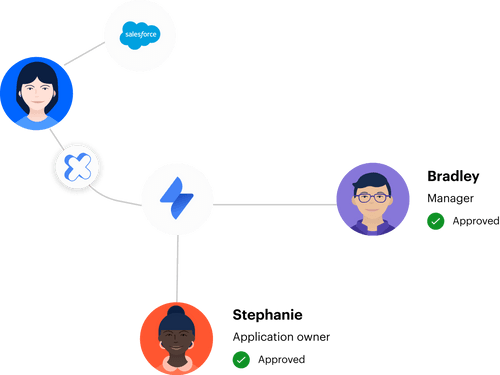
Think about how this changes the engineer-debugging-prod scenario from earlier. Instead of granting permanent admin access, you grant it for 4 hours. The engineer requests it through Jira or Slack. The manager approves in 2 minutes. Multiplier provisions it through your identity provider. Four hours later, it's gone. Automatically. No ticket, no follow-up, no human in the loop.
What this looks like at scale: Stavvy, a fintech we work with, reduced privileged access by 85% by implementing time-bound JIT access. Over 1,300 access requests were automatically revoked after their approved windows expired. The cybersecurity engineer, John Yamich, told us he hadn't found another tool that made this approachable for a startup wanting to level up.
That 85% reduction isn't from yelling at people to use less access. It's from changing the default state of the system.
Why This Beats Policy-Heavy Approaches
A lot of IT leaders try to solve privilege creep with policy. Write a policy that says "all admin access must be reviewed quarterly." Train people on the policy. Audit the policy. The policy says the right things. Nothing changes.
The reason policy-heavy approaches fail is that they require manual enforcement. And manual enforcement at the scale of modern SaaS environments is impossible. You can't have a human in the loop for every access decision, and you can't expect humans to remember to revoke access weeks or months later.
Automation-first least privilege flips this. The system enforces the policy by default. Access expires whether anyone remembers or not. License is reclaimed whether anyone files the ticket or not. The policy isn't a document, it's the actual behavior of the system.
This is what we mean by automation-first. The policy and the enforcement are the same thing. See how Multiplier works when policy and enforcement collapse into a single workflow.
The Identity Provider Is the Source of Truth, Not Spreadsheets
One more piece. For automation-first JIT access to work, you need to be operating at the identity provider layer (Okta, Entra ID, Google Workspace), not the individual app layer.
Why? Because the IDP is where authoritative group memberships live. When you add or remove someone from an IDP group, downstream apps respect that change. When you manage access in spreadsheets or individual apps, you create drift. The IDP says one thing, the app says another, and you're never quite sure which is right.
A lot of "access management" tools today operate at the wrong layer. They track requests but require IT to manually translate those requests into IDP changes. That manual step is where errors creep in and audit evidence gets lost.
The right architecture is: requests come in through Jira/Slack, approvals happen in Jira/Slack, and provisioning happens through API calls to the IDP. No spreadsheets, no manual translation, no drift.
Running Access Reviews That Actually Catch Creep
Even with JIT access for new requests, you'll still have legacy standing access to clean up. This is where access reviews matter, but they have to be structured very differently than the spreadsheet rubber-stamp model.
Show Reviewers the Context They Need
The single biggest change you can make to access reviews: put usage context next to access data. When a manager is reviewing whether someone should keep access to Salesforce, they shouldn't just see the access. They should see the last login date, the user's department, their job title, and a recommendation based on inactivity.
We do this in Multiplier's access review feature. The reviewer dashboard shows users, group memberships, last login, and a recommendation (e.g., "Revoke if inactive 90+ days"). The review takes 30 seconds per user instead of 5 minutes, and the decisions are actually informed.
The reviewer also doesn't have to log into a separate tool. The review happens in their JSM Help Center, which they're already using for other work. No new login, no new training, no context switching.
Make Revocation the Default Action
Most access review tools make "Keep" the easy button and "Revoke" require justification. Flip this. Make "Revoke" the easy button when the data suggests revocation. If the user hasn't logged in for 90 days, the recommended action should be Revoke, and the reviewer should have to actively choose Keep with a reason.
This small UX change has an outsized impact on outcomes. We see 3-4x more revocations when the system surfaces the recommendation versus a neutral spreadsheet.
When the reviewer clicks Revoke, the action should execute automatically, removing the user from the relevant IDP groups and creating a Jira ticket as evidence. No manual provisioning step, no screenshot collection, no spreadsheet upload to Vanta later. The evidence is generated as a byproduct of the review action itself.
Run Reviews Continuously, Not Quarterly
Quarterly reviews are an artifact of when access reviews were manual and expensive. With automation, there's no reason to batch them.
Run smaller, more frequent reviews scoped to specific apps or specific risk levels. Production system access? Reviewed monthly. Standard business apps? Quarterly is fine. Dormant accounts? Auto-flagged and reclaimed continuously based on login telemetry.
This is what Auto Reclaim does in Multiplier. It pulls last-login data from your IDP, flags users who exceed inactivity thresholds, sends them a warning email, and revokes access if they don't log in by the deadline. A Jira ticket is generated documenting the change. No quarterly review needed for this category of cleanup, it just happens.
Tie Evidence to the Originating Issue
The audit cost of access reviews comes from rebuilding evidence. Auditors ask: "Show me that Sarah's access to Salesforce was reviewed and approved on April 15." If your evidence is a screenshot in a Notion page, that's 20 minutes of digging. If your evidence is a Jira issue with the review action, the IDP change, and the timestamp all linked, that's 20 seconds.
This is why the system of record matters. When approvals, provisioning changes, and review decisions all write back to the originating Jira issue, you don't have an audit "process," you have an audit trail that exists by default. Auditors get clean evidence pulled directly from JSM. Vanta-ready exports. No spreadsheet reconstruction.
How Multiplier Eliminates Privilege Creep
So how does this actually work in practice? Multiplier embeds identity governance directly into Jira Service Management and Slack. Here's how the pieces fit together to eliminate privilege creep.
Time-Based Access That Auto-Revokes
When an employee requests access through the JSM portal or Slack, they pick a duration: 1 hour, 6 hours, 24 hours, or whatever durations your admin has configured. After approval, Multiplier provisions access through the identity provider (Okta, Entra ID, or Google Workspace) by adding the user to the mapped IDP group. A timer starts.

When the timer expires, Multiplier automatically calls the IDP to remove the group membership. The change is recorded in the originating Jira issue. No human follow-up required. No standing privilege left behind.
For SSO apps where group membership controls access, this means the user genuinely loses access at expiry. Not "marked as inactive in a spreadsheet" but actually removed from the system.
Access Reviews Inside JSM with Usage Context
Multiplier's access review feature runs campaigns inside Jira. Admins create a campaign, scope it to specific apps, and assign reviewers. Reviewers get an email and land on a JSM Help Center dashboard showing users, group memberships, last login dates, job titles, departments, and Multiplier's recommendations.
Reviewers click Keep or Revoke for each user. Revocations trigger automatic IDP group removals and create Jira tickets documenting the change. The campaign dashboard shows real-time progress and exceptions. When the campaign closes, you can export results as CSV for auditors or push evidence to systems like Vanta.
This collapses what used to be a multi-week process into a campaign that runs for a few days, with evidence generated automatically.
Auto Reclaim for Dormant Accounts
For the long tail of dormant accounts, Multiplier's Auto Reclaim feature continuously monitors login telemetry from your IDP. You define inactivity thresholds (e.g., 30 days), grace periods, and group exclusions for executives or critical teams.
When a user crosses the threshold, they get an email warning. If they don't log in by the grace period deadline, Multiplier automatically revokes their access and creates a Jira ticket. Admins see the full picture in a dashboard: notifications sent and revocations performed.
Auto Reclaim is available on Multiplier's Advanced edition. It's how teams cut SaaS license waste while enforcing least privilege at the same time.
Evidence That Lives Where Work Happens
Every Multiplier action ties back to a Jira issue. Request created, approval granted, IDP group added, expiry timer fired, group removed, the whole sequence.
For access review campaigns, Multiplier provides CSV exports for auditors, and admins can push evidence to systems like Vanta. That means your audit trail is generated as a byproduct of normal access workflows, not a separate process.
If your team is operating on Atlassian and your identity is in Okta, Entra ID, or Google Workspace, this fits into your existing stack without adding another portal. Get started with Multiplier to see how this works in your environment.
Next Steps
Privilege creep doesn't get fixed by adding more access reviews or writing better policies. It gets fixed by changing the default state of access from permanent to temporary, automating provisioning through your identity provider, and putting governance where work already happens. When evidence is generated as a byproduct of normal workflows instead of rebuilt every quarter, audits stop being a fire drill and least privilege becomes the actual operating state of your environment.
Frequently Asked Questions
How do I set up time-based access for employees?
To set up time-based access using Multiplier, follow these steps: 1) In your Jira Service Management portal, navigate to the Multiplier app catalog. 2) When an employee requests access, they can select the duration for which they need access (e.g., 1, 6, or 24 hours). 3) After the request is approved, Multiplier automatically provisions access and sets a timer to revoke it once the duration expires. This ensures that access is only granted for the necessary time, helping to minimize privilege creep.
What if an employee needs extended access beyond the initial request?
If an employee needs to extend their access, Multiplier allows for this without requiring a new approval process. Simply navigate to the existing Jira ticket for their access request and select the option to extend the duration. This way, you can quickly grant the necessary access while maintaining control over the time-limited privileges, ensuring that access is not left standing unnecessarily.
Can I automate access reviews with Multiplier?
Yes, you can automate access reviews using Multiplier's access review feature. To do this, create an access review campaign in Jira. Select the applications you want to include, assign reviewers, and launch the campaign. Reviewers will receive notifications and can easily see user details like last login dates and job titles. This streamlined process helps ensure that access is regularly reviewed and unnecessary privileges are revoked, reducing the risk of privilege creep.
When should I use Auto Reclaim for inactive licenses?
You should use Auto Reclaim when you want to optimize your SaaS licenses and reduce costs associated with unused access. Set inactivity thresholds (e.g., 30 days) for applications, and Multiplier will automatically monitor user activity. If a user exceeds the threshold, they'll receive a warning email. If they remain inactive after the grace period, Multiplier will revoke their access and generate a Jira ticket documenting the action. This feature helps maintain least privilege while minimizing license waste.
How do I integrate Multiplier with my identity provider?
To integrate Multiplier with your identity provider, first register Multiplier as an app in your identity provider (like Okta, Azure AD, or Google Workspace). Grant the necessary API permissions for Multiplier to manage user groups and access. Once set up, employees can submit access requests through Jira or Slack, and Multiplier will handle provisioning automatically based on the defined roles and access levels, ensuring a seamless experience.


