


Your access review breaks the minute Jira, Slack, Okta, and a spreadsheet all own a different piece of the decision. The mistake most IT teams make is treating identity governance like a separate compliance project, when the real work already starts inside the service desk. By the time audit season shows up, you're rebuilding proof from comments and screenshots instead of enforcing least privilege as the work happens.
The problem is where the work lives. Access starts in Jira, gets approved in Slack, gets changed in Okta or Entra, then gets rebuilt in a spreadsheet when the auditor shows up. And somehow people call that governance.
I've seen this pattern a lot in fast-growing teams. At 100 people, it feels manageable. At 500 people, it turns into a queue. At 1,200 people, like Luno, you can have hundreds of routine access requests hitting IT from Slack, email, and Jira. Same request type. Same approval chase. Same manual group assignment. Over and over.
Key Takeaways:
- Identity governance breaks when tickets, approvals, identity changes, and audit evidence live in different systems.
- The role of identity systems should be enforcement: grant, revoke, expire, and prove access decisions happened.
- Access reviews are weak when reviewers can't see usage, last login, department, group membership, and risk context in one place.
- If Jira already owns service work, access governance should live there too.
- A good access model separates intake, approval, enforcement, and evidence, then connects them back to one record.
- Standing access should be treated like debt. If nobody owns the expiry, IT pays for it later.
Why Identity Governance Breaks Outside Jira
Identity governance breaks outside Jira because access work already starts in the service desk, while enforcement happens somewhere else. That split creates delays, missing context, and weak audit evidence. The role of identity governance isn't just approval. It's making sure the approved access actually matches reality.

The Portal Split Creates Audit Debt
A separate IGA portal sounds logical at first. Security gets its own system. Controls look cleaner on a slide. Procurement can say they bought a governance suite. Fair point. For large enterprises with deeply custom identity programs, a dedicated portal can make sense.

The issue is that most employees don't live in that portal. They live in Jira, Slack, email, and whatever tool they're blocked from using. So the request starts in one place, the approval happens in another, and the actual identity change happens somewhere else. Now the audit trail is basically a scavenger hunt. If your Jira queue already carries the access record, the next question is whether that record can also carry the decision and the evidence, which is the right moment to Learn more about Multiplier.
Access Reviews Become Spreadsheet Theater
Quarterly access reviews can look official while still being pretty weak. A reviewer gets a spreadsheet with names, apps, and maybe groups. They mark Keep or Revoke. Then someone else has to go remove access manually, assuming the spreadsheet made it back to the right person.
The real problem isn't the review itself. It's the gap between decision and enforcement. If a manager says revoke, but the revocation sits in a queue for two weeks, the control didn't really happen yet. That's why the role of identity in access reviews matters so much. Identity systems shouldn't just feed the review. They should execute the outcome.
The Human Cost Shows Up Tuesday Morning
At Videoamp, new hires started on Monday, and Tuesday became the access request pileup. The IT queue filled with requests that didn't have enough context, ownership was unclear, and the team became the bottleneck. Not because they were bad at IT. Because the process made them chase basic information before they could do the work.
You can feel that kind of broken process in the team. Someone is waiting for Figma, GitHub, Salesforce, or a reporting tool. IT is chasing a manager. Security is worried about overprovisioning. The employee thinks IT is slow, when really the system is forcing everyone to pass the same request around like a paper form with too many signatures. The fix starts by changing the operating model.
How to Make Identity Governance Enforceable Inside Daily Work
Identity governance becomes enforceable when the request, approval, identity change, expiry, and evidence connect to one operational record. Jira can own the work record, while the identity provider owns the actual access change. That gives IT speed, security control, and auditors a clean chain of proof.
Diagnose Where Your Access Process Actually Lives
Start with a blunt audit of where access work really happens. Not where the policy says it happens. Where it actually happens on a Wednesday afternoon when someone needs access before a customer call. We were surprised how often the answer is: everywhere. Jira ticket, Slack thread, email approval, Okta group, spreadsheet tracker, then a screenshot for evidence.
Ask five questions before buying another portal or rebuilding workflows. Where does the request start? Where does the approval happen? Who performs the identity change? Where is the revocation tracked? Where would you prove all of that during an audit? If you need more than two systems to answer those questions, you don't have governance yet. You have fragments.
A simple diagnostic works well:
- Pick 20 access requests from the last 30 days.
- Trace each one from request to approval to provisioning.
- Mark every system touched.
- Check whether access was later removed or reviewed.
- Count how many requests have complete evidence in one place.
If fewer than 80% of those requests have a clean chain, don't start with policy rewriting. Start with the workflow. Policy without operational enforcement is just a PDF with good intentions.
Treat Jira as the Control Record, Not Just Intake
Jira is usually treated like the front door. Someone opens a ticket, IT works it, and then the real identity change happens elsewhere. That model works for simple support requests, but access is different. Access has risk. Access has ownership. Access has future obligations, like expiry, review, and revocation.
The better model is to make Jira the control record. The ticket shouldn't just say someone asked for Salesforce Admin. It should show who requested it, who approved it, what role was granted, which identity group changed, when access should expire, and what happened during review. That changes the role of identity governance from a side process into normal service work. Honestly, that sounds boring. But boring is good here.
Use a simple rule: if the access decision matters later, it belongs on the Jira record now. That includes:
- Requester context: employee, department, manager, location, and role.
- Access context: app, role, permission level, and reason.
- Approval context: approver, timestamp, decision, and comments.
- Enforcement context: identity group added or removed.
- Review context: last login, reviewer decision, and revocation status.
The surprise is how much cleaner audits become when the service desk record is the proof source. You don't have to rebuild the story later. The story is already there.
Push Decisions Through the Identity Provider
The identity provider should be the enforcement layer, not a place someone visits manually after approval. Okta, Entra ID, and Google Workspace already know the user, groups, and app assignments. If governance decisions don't flow through that layer, IT ends up doing copy and paste work with security consequences. Small mistakes add up fast.
There's a fair objection here. Some apps don't support clean provisioning through SSO or group mapping. True. Not every SaaS app will fit the model perfectly, especially older tools or weird department-owned software. Still, the rule holds: for any app where access can be controlled through identity provider groups, approvals should trigger the identity change through those groups. Manual exceptions should be labeled as exceptions, not treated as normal work.
A practical threshold: if an app gets more than 10 access requests per month, map its common roles to identity groups. Below that, manual handling may be fine for a while. Above that, manual provisioning becomes an operating tax. It costs time, creates risk, and makes access reviews harder because nobody fully trusts the data.
The role of identity systems here is really specific:
- Store the authoritative user profile.
- Own group membership.
- Push app access through SAML or SCIM where supported.
- Remove access when the workflow says it should end.
- Write the outcome back to the work record.
That's the whole game. Not glamorous. Very useful.
Put Expiry on Risky Access by Default
Standing access is access debt. It feels harmless when it's granted, then it sits around until someone asks why a former project owner still has admin rights six months later. Privileged access is the obvious example, but the same logic applies to finance systems, customer data, production tools, and even expensive SaaS licenses. If access is needed for a task, give it for the task window.
The decision rule I like is simple: if the access creates meaningful security, compliance, or cost risk, make the requester choose a duration. One hour, six hours, twenty-four hours, seven days. Pick sane defaults by app type. If someone truly needs permanent access, make that the exception and require a stronger approval. It flips the burden of proof in the right direction.
NIST's access control guidance in SP 800-53 Rev. 5 points toward the same idea: access should be authorized, managed, and reviewed against need. The operational lesson is less academic. If nobody sets an expiry at the moment of approval, IT has to remember cleanup later. And cleanup later rarely wins against the next urgent ticket.
For risky access, use this rule:
- 1 to 24 hours: production, admin, break-glass, or incident access.
- 7 to 30 days: project-based access with a known end date.
- Quarterly review: role-based access that should continue but needs certification.
- No expiry: only when the access is core to the person's job.
The goal isn't to make employees beg for access. It's to stop creating permanent grants for temporary work.
Run Access Reviews With Usage Context
Access reviews fail when reviewers don't have enough context to make a real decision. A list of users and apps isn't enough. People rubber-stamp because they don't know whether the person still uses the tool, what group grants the access, whether the user changed departments, or whether the access is tied to a current role. Nobody wants to revoke something and break someone's work by accident.
A strong review gives the reviewer enough context to act with confidence. Show last login. Show group membership. Show job title and department. Show manager. Show recommendations when a user looks inactive for 90+ days. Then, and only then, ask Keep or Revoke. Without that context, you're asking managers to guess. And guessing is a bad control.
The role of identity data in reviews is to make the decision obvious. If a user hasn't logged into an app in 120 days, changed teams two months ago, and still has an elevated role, the reviewer shouldn't need a meeting to decide. Revoke it. If the user logs in every day and the access maps to their job, keep it and move on.
If the access model you want is Jira as the record, JSM as intake, and the identity provider as the enforcement point, you can See how Multiplier works.
Measure Governance by Exceptions, Not Ticket Volume
A lot of IT teams measure access work by ticket volume and resolution time. I get why. It's visible. Jira makes it easy. Leaders understand queues. But ticket volume doesn't tell you whether access is governed well. You can close tickets fast and still leave standing access everywhere.
Measure exceptions instead. How many access requests required manual provisioning? How many approvals missed the SLA? How many revocations were decided but not enforced within 24 hours? How many users had no login activity for 90 days and still kept a license? Those numbers tell you where governance is actually broken. Ticket count just tells you how busy everyone is.
A good governance dashboard should answer:
- What percent of access requests were fully automated?
- Which apps still require manual provisioning?
- How many privileged grants are active right now?
- How many time-bound grants expired cleanly?
- Which access review revocations are still pending?
- Which licenses are inactive past the threshold?
Synthesia is a good example of why this matters. During 4x headcount growth, they moved away from Slack channels and Notion boards for access work. They processed 3,800+ access requests in a year, with 75% fully automated, while a 4-person IT Ops team supported 420+ employees. That's not just faster ticket handling. That's a different operating model.
How Multiplier Runs Access Reviews in Jira
Multiplier runs identity governance inside Jira Service Management, with access reviews, approvals, provisioning, and revocations tied back to Jira records. The key difference is that review decisions don't sit in spreadsheets. They can become enforced identity changes with audit evidence attached to the work record.
Access Reviews With Usage Context
Multiplier's Access Reviews are built for the part of governance most teams hate: quarterly certification. Admins create campaigns in JSM, choose approved applications, assign reviewers, and launch the review. Reviewers see user attributes, groups, last login, and recommendations before they decide Keep or Revoke. That matters because a reviewer with context makes better decisions than a reviewer staring at a spreadsheet.
When a reviewer chooses Revoke, Multiplier can remove the user from the relevant identity provider group and create Jira evidence of the change. It also tracks campaign progress and exceptions, so IT isn't guessing which reviews are done and which revocations are still waiting. For teams that need auditor-ready exports, results can be exported as CSV or pushed to systems like Vanta. The old cost was review decisions trapped in spreadsheets. The new model is decisions and enforcement living in the same workflow.
Requests, Approvals, and Revocations on One Record
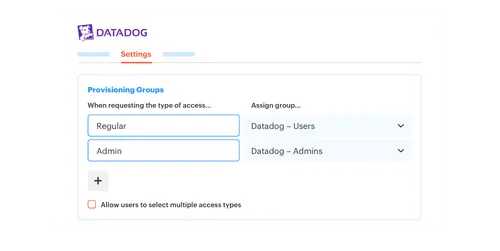
Multiplier also connects the work around reviews to the work around requests. The Application Catalog gives employees a Jira-native way to request sanctioned apps and roles. Approval Workflows route decisions to managers, app owners, or specific users in JSM or Slack. Automated Provisioning then changes identity provider group membership after approval, so the Jira record shows what happened instead of just what someone intended to do.

For higher-risk access, Time-Based Access lets requesters choose durations like 1, 6, or 24 hours, then removes access from the mapped identity provider group when the window expires. Auto Reclaim can also identify inactive users based on login data from the identity provider and revoke access after the configured warning and grace period. If your team wants access reviews, requests, and revocations attached to the same Jira-based workflow, Get started with Multiplier.
Make Governance Operational, Not Ceremonial
Identity governance should feel less like a quarterly ceremony and more like normal work done correctly. Requests start where employees already ask for help. Approvals happen where approvers already respond. Identity systems enforce the change. Jira keeps the record.
That's the shift. When people ask what role do identity systems play in modern governance, the answer isn't "another portal." The role is enforcement, proof, expiry, and cleanup. Put that inside the systems your team already uses, and governance stops being a rebuild project every audit season.
Frequently Asked Questions
How do I streamline access requests for new hires?
To streamline access requests for new hires, you can use Multiplier's Application Catalog within Jira Service Management (JSM). Start by ensuring that all necessary applications are listed in the catalog. New hires can then easily browse and request access to these applications directly from the JSM portal or via Slack. This reduces the back-and-forth communication and ensures that requests are logged properly for auditing. automate approval workflows to route requests to the right approvers, which speeds up the process and minimizes delays.
What if I need to revoke access quickly?
If you need to revoke access quickly, use Multiplier's automated provisioning feature. Once a revocation decision is made during an access review, Multiplier can immediately remove the user from the relevant identity provider group, ensuring that access is revoked without delay. This process is logged in the Jira ticket, providing a clear audit trail. To ensure swift action, set up your access review campaigns to include timely notifications for reviewers, so they can act quickly on access decisions.
Can I track access usage for audits?
Yes, you can track access usage for audits by utilizing Multiplier's Access Reviews feature. When you conduct access reviews, ensure that you include relevant user attributes such as last login dates and group memberships. This information helps reviewers make informed decisions about whether to keep or revoke access. The results of these reviews can be exported as CSV for auditors, providing a comprehensive view of access activity and ensuring compliance.
When should I set time-based access for applications?
You should set time-based access for applications when the access poses a security risk or is needed only temporarily. With Multiplier's Time-Based Access feature, requesters can choose durations like 1, 6, or 24 hours for elevated access. This approach minimizes the risk of overprovisioning and ensures that access is automatically revoked when it is no longer needed. It's particularly useful for production systems or sensitive data where access should be tightly controlled.
Why does my team struggle with access request approvals?
Your team may struggle with access request approvals due to fragmented processes. To improve this, consider using Multiplier's Approval Workflows within JSM. By routing approvals directly to the appropriate managers or app owners and providing notifications via email or Slack, you can ensure that decisions are made quickly and efficiently. This keeps the process visible and tied to the original request, reducing the chances of lost approvals and delays.


