


Most teams think automating license revocation is a cleanup task. It’s not. It’s one of the clearest signals of whether your access model is actually governed, or whether you’re just granting access fast and hoping someone remembers to remove it later.
I’ve seen this pattern a lot. Access requests usually start in one place, approvals happen somewhere else, provisioning happens in the identity provider, and audit evidence ends up scattered across comments, screenshots, Slack messages, and spreadsheets. Then six months later, someone asks a basic question like who still has this license and why, and nobody feels great about the answer.
Key Takeaways:
- Automating license revocation is really about enforcing least privilege, not just saving money.
- Most revocation problems start with fragmented workflows across Jira, Slack, email, spreadsheets, and the identity provider.
- If revocation is manual, standing access tends to pile up fast.
- The better model is simple: request, approve, provision, expire, review, and log everything in one system.
- Time-bound access and inactivity-based reclamation solve different problems, and you usually need both.
- Audit readiness gets much easier when revocation evidence is created as part of the workflow.
- Identity governance works better inside Jira than in a separate portal for teams already running on JSM.
Why Automating License Revocation Usually Breaks in Manual Workflows
Automating license revocation usually breaks because most teams are trying to automate the last step of a broken process. If requests, approvals, provisioning, and review all live in different places, revocation ends up being the forgotten chore at the end. That’s why access piles up, licenses sit unused, and audits turn into archaeology.

Manual revocation sounds manageable until volume kicks in
At 20 employees, you can brute force this stuff. Somebody in IT gets a ping, checks access, removes a user, maybe updates a ticket, maybe not. It’s messy, but it sort of works.
Then you hit 200, 500, 1000 people. Different teams want different apps. Contractors need short-term access. Managers approve things in Slack. IT works from Jira. Security wants tighter controls. Finance wants fewer wasted licenses. And now your “simple” revocation process depends on memory and follow-up. That’s where most teams go wrong.
The ugly part is that manual license removal rarely fails all at once. It fails quietly. A user changes roles and keeps old access. A contractor leaves and one app gets missed. An elevated entitlement gets granted during an incident and never expires. Nobody notices because the request is closed, the work moved on, and the evidence lives in five places.
Research from IBM’s Cost of a Data Breach report keeps pointing to the cost of access sprawl and weak controls. Different cause, same lesson. Excess access has a real price.
The real problem isn’t revocation, it’s fragmentation
The surface complaint is usually, “We need better automating license revocation.” Fair. But that’s not the root cause.
The root cause is the ITSM and IGA split. One system handles the request. Another handles governance. Another handles approval. Another holds the actual group membership. Then someone rebuilds the story for an auditor later. That operating model is broken before the first license is ever granted.
A lot of companies buy a separate governance portal and assume they’ve solved it. In practice, they’ve often added another place people have to check. Another interface. Another sync problem. Another adoption problem. I’d argue that for teams already living in Jira Service Management, identity governance belongs in Jira. That’s where the work already starts.
Atlassian’s own examples of employee service workflows in JSM show why service desks become the operational hub for joiners, movers, and leavers in the first place. The ticket is where context lives, where approvals start, and where teams already know how to work. You can see that pattern in Atlassian’s write-up on employee lifecycle management with JSM.
The costs stack up faster than most teams realize
When revocation is manual, the waste isn’t just license cost. It’s IT time, approval lag, audit prep, and risk exposure. All of it compounds.
You lose time chasing approvers. You lose time figuring out what was granted. You lose time validating whether a user is still active. You lose time gathering evidence later. And if you’re not automating license revocation in a way that ties back to the original request, you also lose confidence that the right change actually happened.
That’s exhausting for IT teams. It’s also frustrating for everyone else. Employees wait longer for access on the front end because the back end is clogged with cleanup work. Security doesn’t trust the state of access. Finance sees SaaS spend drift upward. Then audit season hits and everyone’s weekend gets worse.
What Automating License Revocation Actually Requires
Automating license revocation requires a system that connects request, approval, provisioning, expiry, review, and evidence. If one of those parts sits outside the workflow, you don’t really have automation. You have a partial script and a lot of hope.
Start with identity provider group control, not app-by-app heroics
The cleanest path to automating license revocation is group-based control through your identity provider. That matters more than people think.
If access is granted through mapped groups in Okta, Entra ID, or Google Workspace, revocation becomes authoritative. Remove the group membership, and the downstream access changes with it for supported SSO flows. You’re not relying on someone to remember which screen to click in which app. You’re managing the control point upstream.
That’s why group mapping matters so much in any serious access model. You want deterministic behavior. You want a request for a role to map to a known group. You want approval to trigger a known action. And you want revocation to happen from the same logic.
There’s a case to be made for direct app-by-app administration in very small environments. But it usually collapses once app count and headcount start growing. Too many exceptions. Too much tribal knowledge. Too many chances to miss something.
Separate temporary access from inactive access
A lot of teams lump these together. They shouldn’t. Temporary elevated access and stale unused licenses are different problems.
The first problem is just-in-time access. Someone needs admin rights for one hour, six hours, maybe a day. In that case, automating license revocation means expiry should be built into the original request. The access should end because the duration ended, not because someone remembered to clean it up.
The second problem is inactivity. Someone got a license, stopped using it, and kept it anyway. This is where inactivity thresholds, grace periods, and warnings matter. Different trigger. Different policy. Same goal.
Honestly, this distinction catches people off guard. They think revocation is one workflow. It’s usually at least two:
- Duration-based removal for time-bound access
- Inactivity-based removal for underused SaaS licenses
- Review-driven removal when certifications uncover excess access
If you mash all three together, policy gets muddy fast.
Evidence has to be automatic or it won’t happen reliably
This is the overlooked part. Most teams focus on the access change, but not the proof.
If your automating license revocation process still depends on screenshots, spreadsheet exports, or side notes in Slack, then your audit story is weak. Not because the team is lazy. Because the operating model asks humans to do evidence work after the fact, and humans are busy.
The better approach is simple. The Jira issue should hold the request, approver, action, and result. Revocation should be logged as part of the workflow. Reviews should produce their own records. That way the evidence is a byproduct of the work, not a second project later.
That’s a huge shift. Small on paper. Massive in real life.
How High-Performing Teams Build Revocation Into the Workflow
High-performing teams build automating license revocation into the operating model from day one. They don’t treat revocation as a cleanup sprint after access has already spread. They make removal part of the same workflow that grants access in the first place.
Centralize intake so every request starts clean
The first step is boring. And it matters a lot.
You need one intake path. Not email for one app, Slack for another, and a form for a third. If access starts through scattered channels, revocation will be scattered too. A centralized catalog or request path creates the record you’ll need later when it’s time to remove access, review it, or prove what happened.
That means every request should capture:
- who needs access
- which app or role they need
- who approves it
- whether it’s permanent or time-bound
- what group or entitlement it maps to
Without that structure, automating license revocation gets fuzzy fast. You can’t automate what isn’t defined.
Make approvals part of the same record
Approvals should happen where people already work, but the system of record needs to stay intact. That’s the balance.
For a lot of teams, chat-first approval is the practical answer. People respond faster in Slack than in email. But chat alone isn’t governance. You still need the approval tied back to the issue that triggered the change. Otherwise you get speed without traceability, which is a bad trade.
The good setups do both. Approvers can act quickly, and the approval is still captured in the same operational record. That’s where a lot of the friction disappears.
If you want to see what that looks like in practice, See how Multiplier works.
Use time limits aggressively for risky access
This is where least privilege becomes operational instead of aspirational. If elevated access is sensitive, make the duration part of the request.
I prefer a model where temporary access is the default for risky roles. Production access. Admin access. Financial systems. Anything that would create cleanup pain later if it stayed in place too long. You don’t want a person or a team remembering to remove that later. You want expiry to be built in before access is granted.
A simple operating pattern looks like this:
- User requests a role with a defined duration
- Approval happens in the workflow
- Provisioning adds the mapped group
- Timer starts immediately
- Group membership is removed at expiry
- Jira holds the full record
That is automating license revocation in a way that actually sticks.
Run periodic reviews for what policy misses
No policy model catches everything. Role changes happen. Teams reorganize. People inherit access over time. Exceptions pile up.
That’s why periodic access reviews still matter, even if you’ve gotten much better at automating license revocation. Reviews give you a second layer of control. They let app owners or managers look at real users, group memberships, and last login data and decide what stays and what goes.
And when revocations execute from those review decisions, you stop doing fake certification. You know the kind. A spreadsheet gets sent around, people mark “keep” on everything, and nothing actually changes. That’s not governance. That’s paperwork.
Use inactivity policies to cut waste without turning finance into the bad guy
Unused licenses are the quiet leak in a lot of SaaS budgets. Nobody feels them day to day, so they stick around.
Inactivity-based revocation fixes that if it’s done with some nuance. You need thresholds. You need grace periods. You need exclusions for roles that should be exempt. And you need user warnings before removal. Otherwise people get surprised and the policy loses credibility.
This is one reason automating license revocation has become a finance conversation as much as a security one. The same workflow that reduces standing access also cuts waste. That’s not a side benefit anymore. It’s part of the business case.
How Multiplier Makes Automating License Revocation Practical in Jira
Multiplier makes automating license revocation practical by putting the workflow inside Jira Service Management instead of splitting it across a separate governance portal, chat threads, and spreadsheets. For teams already running on JSM, that means the request, approval, provisioning action, revocation event, and audit trail can live in the same operational system.
Revocation starts with better intake and approval routing
Multiplier’s Application Catalog gives employees a Jira-native place to request access through JSM or Slack, with roles mapped to identity provider groups. That matters because clean intake is what makes automating license revocation possible later. If the request starts with a defined role and mapped group, removal can follow the same logic instead of becoming a manual detective job.
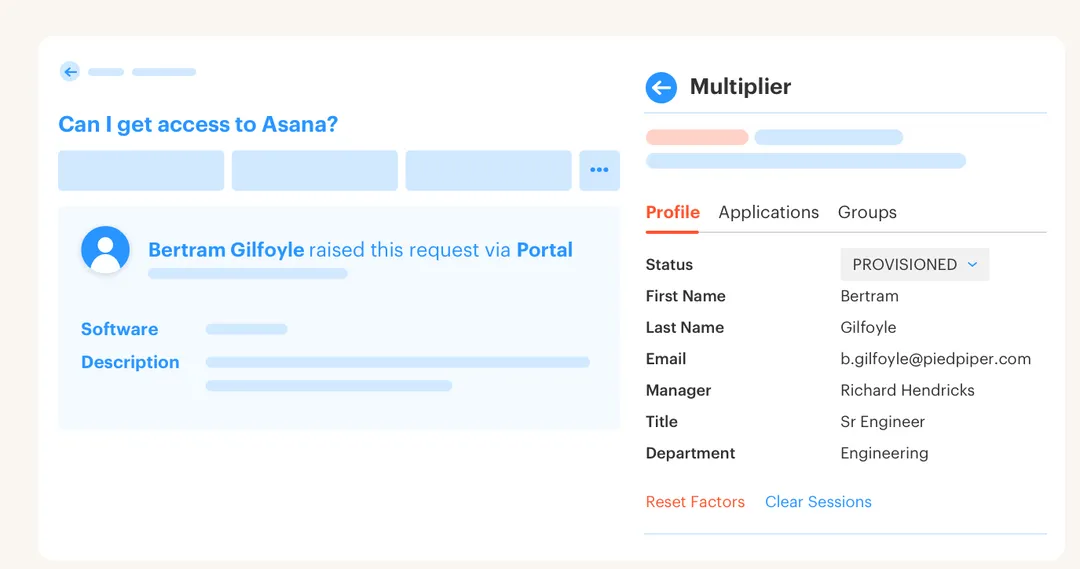
From there, Multiplier’s Approval Workflows route the request to the right approver in Jira or Slack. Once approved, Multiplier can trigger provisioning through identity provider groups. So the access change is tied back to the issue from the start. No side channel approvals. No rebuilding the evidence later.
That’s a big deal when you’re trying to remove old access quickly and prove it happened. Learn more about Multiplier.
Time-bound access and inactivity policies handle the two big revocation jobs
Multiplier handles duration-based revocation with Time-Based Access. A requester can choose a duration during submission, and once approved, Multiplier adds the user to the mapped identity provider group and starts the timer. When the window expires, it removes that group membership and records the change in Jira. That’s automating license revocation for temporary access in the cleanest possible way.

For stale SaaS licenses, Multiplier’s Auto Reclaim feature tackles the inactivity side. It uses last-login telemetry from the identity provider, lets admins define inactivity thresholds, grace periods, and group exclusions, warns users by email, and then automatically revokes access if they stay inactive. It also generates a Jira ticket documenting the removal. One important boundary here: Auto Reclaim is available on the Advanced edition, and it depends on accurate login data from the identity provider.
Multiplier also supports Access Reviews in JSM, so reviewers can mark Keep or Revoke with usage context, and revocations can execute against the relevant identity provider groups. That gives teams a third control path when automating license revocation through expiry or inactivity alone isn’t enough.
Jira stays the system of record
What I like about the model is that Jira stays central. Multiplier doesn’t ask your team to learn an entirely different governance portal just to get basic access control right.
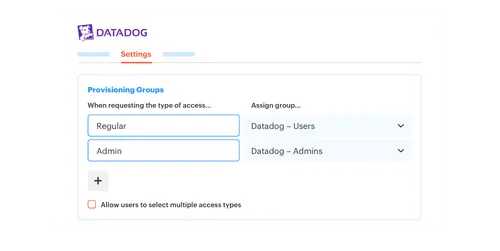
Requests can come in through the catalog or Slack App. Approvals can happen in Slack or Jira. Provisioning and revocation actions execute through the identity provider. And the evidence writes back to the Jira issue. That lines up with how teams already operate, which is why it’s practical.
You can also use Multiplier’s Post Functions for broader lifecycle orchestration in Jira workflows, like onboarding or offboarding steps that create users, assign groups, or disable accounts through supported identity providers. Different use case, same principle. Put the operational control in the workflow your team already trusts.
If your team is trying to do automating license revocation without adding another portal, Get started with Multiplier.
Why the Best Revocation Strategy Feels Boring Once It’s Working
Automating license revocation should feel boring once it’s working. That’s the point. The request comes in, the right person approves it, access is granted through the identity provider, expiry or inactivity rules remove it later, and Jira holds the evidence the whole time.
That beats the old model by a mile. Fewer standing privileges. Less SaaS waste. Less manual cleanup. Better audits. And honestly, a much calmer IT team.
If you’re already running on Jira Service Management, you probably don’t need another governance portal. You need the governance workflow to live where the work already happens. That’s usually the difference between policy on paper and policy that actually holds up.
Frequently Asked Questions
How do I set up time-based access with Multiplier?
To set up time-based access using Multiplier, follow these steps: 1) When an employee submits a request through the Application Catalog in Jira Service Management, they can choose a duration for access (like 1, 6, or 24 hours). 2) After the request is approved, Multiplier automatically provisions access and starts a timer for the selected duration. 3) Once the time expires, Multiplier removes the user from the mapped group, ensuring that access is revoked without manual follow-up. This helps enforce least privilege effectively.
What if I need to reclaim licenses from inactive users?
If you want to reclaim licenses from inactive users, Multiplier's Auto Reclaim feature can help. Here’s how to use it: 1) Define inactivity thresholds (like 30 days) and grace periods for notifications through Multiplier's settings. 2) When a user exceeds the inactivity threshold, they’ll receive an email warning them about potential license revocation. 3) If they remain inactive after the grace period, Multiplier will automatically revoke their access and create a Jira ticket documenting the removal. This helps optimize your SaaS spend.
Can I integrate access reviews into my workflow?
Yes, you can integrate access reviews into your workflow using Multiplier's Access Reviews feature. To do this: 1) Create an access review campaign in Jira Service Management, selecting the applications you want to include. 2) Assign reviewers for each app, who will receive notifications to assess user access. 3) Reviewers can mark users to keep or revoke based on usage data, and Multiplier will automatically execute the revocations while documenting the changes in Jira. This streamlines your access governance process.
When should I use the Slack App for access requests?
You should use the Slack App for access requests when your team frequently communicates through Slack. To do this: 1) Employees can trigger access requests directly in Slack using the /request command, which opens the same Application Catalog available in Jira. 2) After submitting a request, a Jira ticket is automatically created, ensuring that all actions are logged and auditable. 3) Approvers receive notifications in Slack, allowing for quick decisions without leaving their primary communication tool, speeding up the access process.


