


Privileged access is where most least privilege programs quietly fall apart. You can write all the policy you want, but if elevated access still lives too long, gets approved in Slack threads, and gets cleaned up later "when someone has time," you don't really have control. You have hope.
A lot of teams think understanding privileged access management means comparing feature lists in a buyer's guide. I don't think that's the real job. The real job is understanding where privileged access breaks operationally, because that's where audits get messy, risk grows, and IT starts making tradeoffs they never meant to make.
Key Takeaways:
- Privileged access management is really about controlling who gets elevated access, for how long, with proof that it was approved and removed.
- Most teams don't fail on policy. They fail on operational enforcement.
- If privileged access lasts longer than the work itself, you've already drifted into standing privilege.
- If approvals, provisioning, and evidence live in different tools, audits get slow and revocations get missed.
- Time-bound access beats permanent admin rights for most real-world elevated access needs.
- The cleanest privileged access setups tie request, approval, grant, and revocation back to one system of record.
- For Jira-centric teams, keeping governance in Jira and Slack cuts friction without weakening control.
Why privileged access management usually breaks in the real world
Privileged access management breaks in operations long before it breaks in policy. On paper, the rules look fine. In practice, requests come in from too many places, approvers are slow to respond, admins provision manually, and no one wants to remove access in the middle of a busy week.

The first problem is almost never policy
Most companies already know privileged access should be limited. That's not the missing idea. The missing piece is execution. You can have a written least privilege policy, annual training, and a security slide in onboarding, and still end up with engineers holding admin rights for months because revocation depends on memory.
I've seen this pattern a lot. A team starts with maybe 80 people. Manual access feels manageable. Then they hit 200. Then 500. Then a few acquisitions, a new office, a heavier compliance burden, and now every exception request feels urgent. What was once a tidy process becomes a pile of exceptions.
A fintech team in growth mode ran into exactly that. After growth and acquisitions, they had long-lived privileged access hanging around all over the place. Once they moved to a just-in-time model, they cut privileged access by 85% and automatically revoked more than 1,300 approved access windows. That stat matters because it shows what most teams don't want to admit: the revocation step is where the old model usually fails.
The tool split creates the hidden cost
The real bottleneck usually isn't the approval itself. It's the split between systems. The request starts in Jira. The manager responds in Slack or email. IT provisions in Okta or Entra. Then someone pastes screenshots into a ticket or spreadsheet so the auditor has something to look at later.
That workflow is broken by design.
If your request, approval, grant, and evidence live in four places, use this as a simple diagnostic. Pull 20 privileged access requests from the last 90 days. Count how many have all four of these linked clearly: who asked, who approved, when access was granted, when it was removed. If fewer than 18 out of 20 are clean, your privileged access process isn't controlled enough for scale. It's being held together by responsible people doing extra work.
And that's the trap. Good people can hide a bad system for a surprisingly long time.
The human cost shows up in weird places
A bad privileged access process doesn't just create risk. It burns time in the ugliest possible way. Constant interruptions. Back-and-forth approvals. Weekend cleanup. Audit prep that turns into archaeology.
Picture a Tuesday morning. A new hire starts, two engineers need temporary production access, one contractor needs a data export role extended, and your IT lead is already sitting on 40 open tickets. The approvals are in Slack, the entitlement lives in the identity provider, and no one is fully sure whether the previous access window actually expired. That's the moment when teams either over-grant to keep work moving or create delay that everyone resents.
It feels small in the moment. It compounds fast.
If you want to go deeper on how Jira-based access control can work operationally, Learn more about Multiplier.
The real point of privileged access management is enforced expiry
Privileged access management is the discipline of granting elevated access only when needed, limiting its scope, and proving that it was removed when the need ended. That's the direct answer. Not broad policy language. Not generic identity tooling. Controlled access with enforced expiry and evidence.
Start with the duration, not the role
Most teams frame privileged access around who deserves it. That's partly right, but it misses the more important variable: how long should this access exist?
If the work takes 2 hours and the entitlement lasts 30 days, you've already lost the thread.
A better operating rule is simple. If the task has a predictable end point, the access should have one too. Production troubleshooting, temporary database work, admin actions during an incident, elevated access for a deployment. These are time-bounded tasks. So the access should be time-bounded as well. One hour. Six hours. Twenty-four hours. Pick a window that matches the work.
This is where a lot of PAM discussions get too theoretical. Teams argue over perfect role design while ignoring the fact that duration is the fastest path to reducing standing privilege. Frankly, I think duration is often more important than role taxonomy in fast-moving teams.
Standing privilege is usually an operational shortcut
There's a fair case for persistent admin access in a few scenarios. Small infra teams. Highly specialized platform roles. Emergency responders with strict operational requirements. That part is real.
But most standing privilege is not strategic. It's just leftover convenience.
If you want a quick test, review every privileged group with this rule: if a user hasn't used the access in 30 days, that access needs to be challenged. If they've needed it fewer than 3 times in a month, move them to request-based or time-bound access unless there's a documented reason not to. This won't fit every edge case, but it's a much better default than keeping broad access around forever because revocation is annoying.
That's why understanding privileged access management has to include operating thresholds, not just definitions. Without thresholds, every exception becomes permanent.
Evidence can't be a separate project
A lot of teams treat audit evidence as a reporting task done after the fact. That's backwards. Evidence should be created as work happens.
You request access. Approval is logged. Provisioning happens. Revocation happens. The record should already exist.
When evidence is rebuilt later, three things usually go wrong:
- Screenshots replace system records.
- Missing revocations get explained away instead of fixed.
- Audit prep becomes a month of expensive manual work.
NIST's guidance on least privilege keeps coming back to limiting privileges to what's needed for authorized tasks and durations, which is exactly the point here, not broad permanent access by default. Their broader access control guidance is worth reading if you want the control logic behind the practice NIST access control guidance.
Why policy-heavy PAM programs stall out
Policy-heavy privileged access management programs stall when operational friction gets higher than the risk feels immediate. People stop following the intended path. They route around it. That's why teams with a lot of written policy can still have messy privileged access.
Friction changes behavior faster than policy changes behavior
If an engineer needs elevated access during an outage, they won't care that the policy PDF is well written. They care whether the request takes 3 minutes or 3 hours.
That sounds obvious, but it's why so many privileged access programs drift. The approved path is too slow, so a faster unofficial path emerges. Someone pings a known admin. Someone keeps an extra entitlement in place "just in case." Someone approves in chat without tying it back to the ticket. Now you've got access, but not governance.
A mid-market fintech team dealing with hundreds of routine access requests found themselves chasing managers for approval and manually assigning Okta groups. Once they automated the request and provisioning flow, they reduced IT workload on access requests by 80%. That's not just an efficiency story. It's a governance story. Lower friction means fewer shortcuts.
You need one diagnostic section in every PAM review
Whenever I look at a privileged access setup, I ask five questions first:
- Where do requests actually start?
- Where do approvals actually happen?
- What system actually grants the access?
- What event actually removes the access?
- Where would an auditor go to verify all four?
If the answers involve more than two systems for routine requests, you're carrying unnecessary governance drag. If no one can answer question four quickly, you've got a revocation problem. If question five leads to spreadsheets, the audit trail isn't strong enough.
This diagnostic matters because it tells you whether your PAM design is operational or theoretical. A lot of teams have theoretical control. Fewer have operational control.
The maturity jump happens when revocation becomes automatic
Most companies focus their energy on approvals. Reasonable instinct. Approval feels like control.
But approval without automatic follow-through is partial control at best.
The maturity jump happens when elevated access expires without human cleanup. That's when least privilege stops being aspirational and becomes real. A request window opens. Access is granted through the identity provider. The clock runs. Access is removed. Evidence lands in the record. Done.
That flow is less glamorous than a big PAM architecture diagram. But it's what actually reduces risk.
For a baseline on privileged access concepts, including the admin-account risks that tend to pile up over time, CISA has a useful practical overview here: CISA privileged access management guidance.
What good privileged access management looks like at scale
Good privileged access management at scale means privileged access is easy to request, hard to overextend, and simple to verify. The access path should be faster than the workaround. If it isn't, people will keep inventing side channels.
Build around request classes, not one giant policy
Not all privileged access needs the same path. That's where teams overcomplicate things. They try to force every elevated request through one universal control flow.
A better move is to separate privileged access into buckets:
- routine low-risk elevated access with short durations
- higher-risk admin access that needs explicit approval
- lifecycle-driven changes tied to onboarding, transfers, and offboarding
- periodic review for access that still needs to exist after the fact
That separation matters because it gives you better decision rules. If the request is low risk, repeated often, and mapped cleanly to an identity provider group, automate it after the right approval. If the request touches production, finance, customer data, or admin privileges, require named approval and default to time-limited access. If the access is rare and hard to model, track it manually but keep the evidence in the same system of record.
Not every access path should be fully automated. That's a real limitation. Some non-SSO or edge-case systems still need manual handling. But even then, the request and evidence flow shouldn't leave the main workflow.
Reviews need usage context or they become checkbox theater
Quarterly access reviews are a good idea. Badly run access reviews are just organized rubber-stamping.
If a reviewer only sees a name and app title, they'll click keep. Fast. Maybe too fast.
If they can see job title, department, group membership, and last login, the review gets sharper. A reviewer can actually decide whether the access still makes sense. That's the difference between certification as paperwork and certification as governance.
One practical rule: if more than 85% of reviewers click keep in under a minute per user with no usage context, the review process is too thin to be trusted. Slow it down. Add data. Narrow scope. Force decision quality back into the process.
Honestly, this is where a lot of programs fool themselves. They say they run reviews. Sure. But are they producing decisions or just signatures?
Lean IT needs automation, not heroics
One of the more interesting signals in this market is how small some strong IT teams are. A fast-growing company scaled to support more than 400 employees with a four-person IT team by automating access operations. That only works when the bulk of routine access isn't getting hand-carried across chat, tickets, and IDP consoles all day.
That's also why the "just hire more IT admins" answer is weak. Content problems are often hiring problems in disguise. Access problems aren't. They're workflow problems. You can add headcount, but if every request still requires manual approval chasing, manual group assignment, and manual evidence collection, you've just staffed the bottleneck.
The teams that run lean don't avoid governance. They operationalize it.
How Multiplier makes least privilege easier to enforce
Multiplier fits this model because it keeps access governance inside Jira Service Management and Slack, while pushing approved changes through the identity provider and writing the evidence back to Jira. That matters if you're trying to automate 75% or more of access requests without weakening privileged access controls.
It centralizes request, approval, and evidence in one record
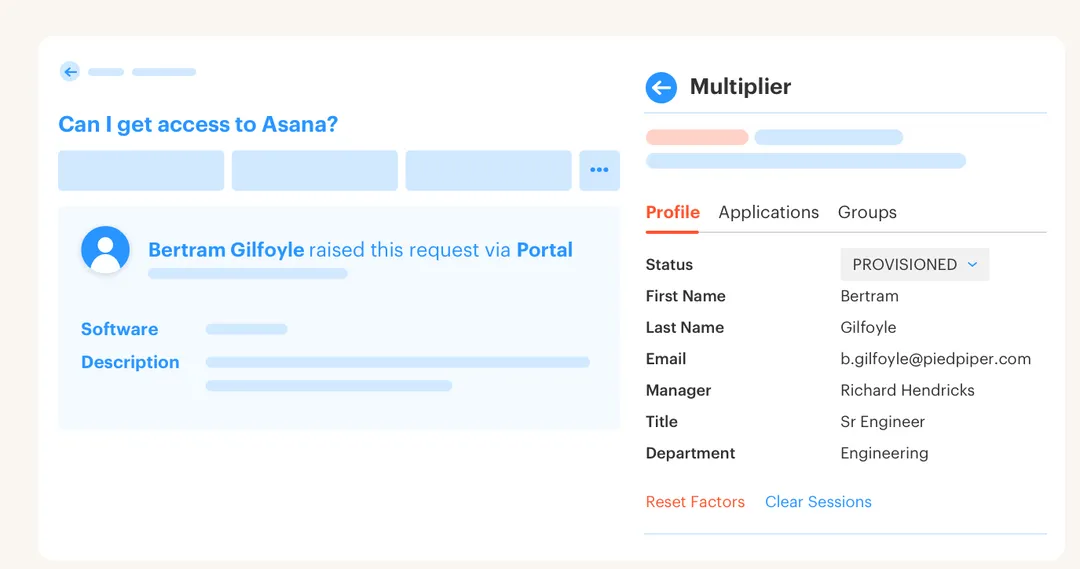
Multiplier's Application Catalog gives employees a single Jira-native place to request sanctioned apps and roles, instead of sending requests through email, Slack threads, and side conversations. That alone cuts a lot of noise. More importantly, it creates a clean starting point for the privileged access flow.
From there, Approval Workflows route the request to the right person, whether that's the manager, app owner, or a specific user. Approvers can act in Jira or Slack, and the decision stays tied to the Jira issue. That closes one of the biggest gaps in privileged access management: approvals that happen somewhere convenient but leave weak evidence behind.
If your team is still stitching together screenshots for the auditor, this is the first thing to fix. Continuous audit trail beats quarter-end reconstruction every time.
It enforces time-bound access through the identity provider
This is the piece that matters most for privileged access. Multiplier's Time-Based Access lets requesters choose a duration like 1, 6, or 24 hours when they submit the request. Once approved, access is provisioned through the mapped identity provider group, and the timer starts. When the window expires, Multiplier removes that group membership and logs the change in Jira.

That's a much stronger operating model than granting elevated access and hoping someone remembers to clean it up later.
A fintech company using this approach cut privileged access by 85% and automatically revoked more than 1,300 access windows after the approved period ended. That's what enforced least privilege looks like in practice. Not theory. Not a policy slide. Real expiry.
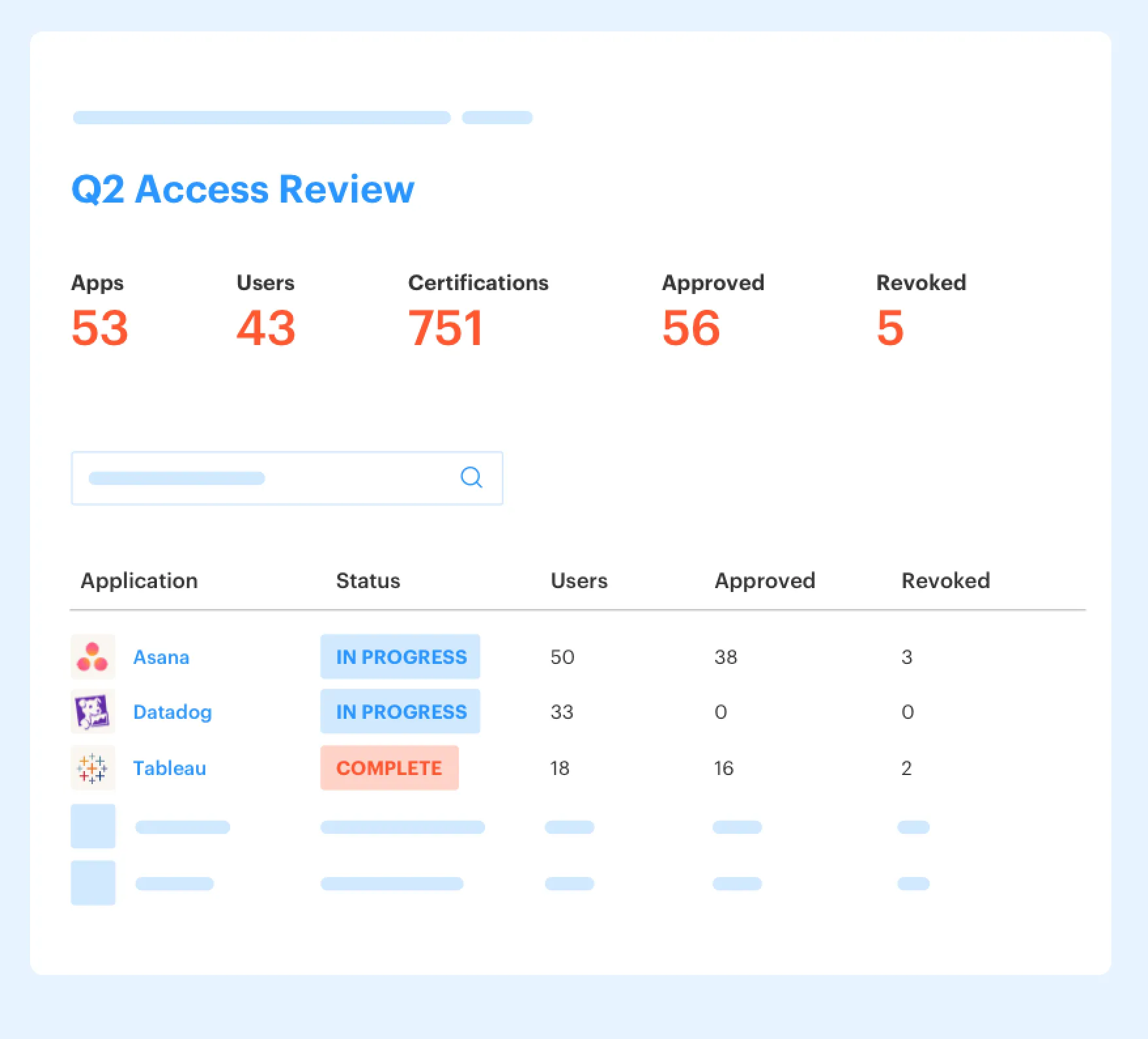
Multiplier also supports Access Reviews inside JSM, so reviewers can see user context and take keep or revoke actions in the same governance flow. And for teams trying to cut waste alongside risk, Auto Reclaim can revoke unused app access based on identity provider login data, with Jira tickets documenting the action. Just worth being precise here: Auto Reclaim is available on the Advanced edition, and it depends on accurate login telemetry from the identity provider.
If you want to see how this works in your own Jira and Slack environment, Get started with Multiplier.
The teams that get PAM right make expiry the default
Understanding privileged access management isn't really about memorizing a definition. It's about seeing where access lives too long, where approvals drift outside the workflow, and where evidence gets rebuilt instead of created automatically.
The strongest setups do a few things really well. They keep governance where work already happens. They make elevated access temporary by default. They push provisioning and revocation through the identity provider. And they leave behind a clean audit trail in the same record that initiated the request.
That's the shift.
Policy still matters. Of course it does. But automation-first least privilege beats policy-heavy approaches that nobody can actually enforce on a busy Tuesday.
Frequently Asked Questions
How do I set up time-based access for my team?
To set up time-based access using Multiplier, start by navigating to the Application Catalog within Jira Service Management. When an employee submits a request, they can select a duration for access, such as 1, 6, or 24 hours. Once the request is approved, Multiplier will automatically provision the access and set a timer to revoke it when the time expires. This ensures that elevated access is temporary and reduces the risk of standing privileges.
What if I need to automate access reviews?
You can automate access reviews with Multiplier's Access Reviews feature. Start by creating a new access review campaign in Jira Service Management. Select the applications you want to include and assign reviewers. Once the campaign is launched, reviewers will receive notifications and can easily mark access as 'Keep' or 'Revoke' based on user context. This process streamlines access certification and helps maintain compliance without the hassle of spreadsheets.
Can I manage access requests through Slack?
Yes, you can manage access requests directly through Slack using the Multiplier Slack App. Employees can initiate requests by typing '/request' in any channel or by using the app's UI. They will see the same application catalog available in Jira Service Management, allowing them to select the app and role they need. This integration keeps the workflow seamless and ensures that all requests are logged in Jira for proper audit tracking.
When should I consider using Auto Reclaim?
Consider using Auto Reclaim if your organization wants to optimize SaaS spending by automatically reclaiming unused licenses. This feature is particularly useful if you have a large number of applications and users. Set inactivity thresholds (like 30 days) and grace periods for users to log in. If they remain inactive, Multiplier will automatically revoke their access and generate a Jira ticket documenting the action, helping you manage licenses efficiently.
Why does my team need a centralized access request system?
A centralized access request system, like the one provided by Multiplier, helps streamline the process by keeping all requests, approvals, and evidence in one place. This reduces the chances of missed approvals and ensures that all actions are documented for auditing purposes. By integrating with Jira Service Management, you can eliminate the chaos of multiple channels and improve compliance and efficiency in managing privileged access.


