


75% of access requests shouldn't need a human. If your team is still chasing approvals across Jira, Slack, Okta, and spreadsheets, the problem isn't effort. The better question is how can automation reduce the manual access work without weakening governance.
Most IT teams don't have an access problem. They have a split-work problem. The request starts in Jira, the approval happens in Slack, the change happens in the identity provider, and the evidence gets rebuilt later in a spreadsheet. Which is a little wild, when you sit with it.
When access work is split across 4 systems, every request becomes a mini project. And mini projects don't scale. Not when you're onboarding 30 people a month, dealing with app sprawl, preparing for audits, and trying to keep standing privilege under control.
Key Takeaways:
- Access automation works when Jira stays the system of record, not when governance moves into another portal.
- The real bottleneck is the handoff between request, approval, provisioning, and audit evidence.
- If 60%+ of your access requests are repeatable, automate the low-risk patterns first.
- Time-bound access reduces standing privilege because expiry is built into the request.
- Access reviews get easier when review decisions and revocations happen in the same workflow.
- The goal isn't fewer controls. It's fewer manual steps between the control and the outcome.
Why Manual Access Work Breaks Inside Growing IT Teams
Manual access work breaks because every request depends on memory, follow-up, and tool switching. Jira has the ticket, Slack has the approval nudge, Okta or Entra has the actual entitlement, and spreadsheets have the audit story. When those pieces live apart, automation can't reduce much because the workflow is already fractured.

The access request is rarely the real problem
It's Tuesday at 9:41 AM and an IT lead named Priya opens a Jira queue with 47 new access tickets from Monday's 12-person new hire cohort. Six of them just say "need Figma access." Four are missing the manager approver. Two are asking for prod database access with no context. She spends the next 3 hours in Slack DMs asking clarifying questions before she can touch the actual provisioning. That's the real bottleneck. Not the tickets. The 11 tiny decisions hiding inside each one.
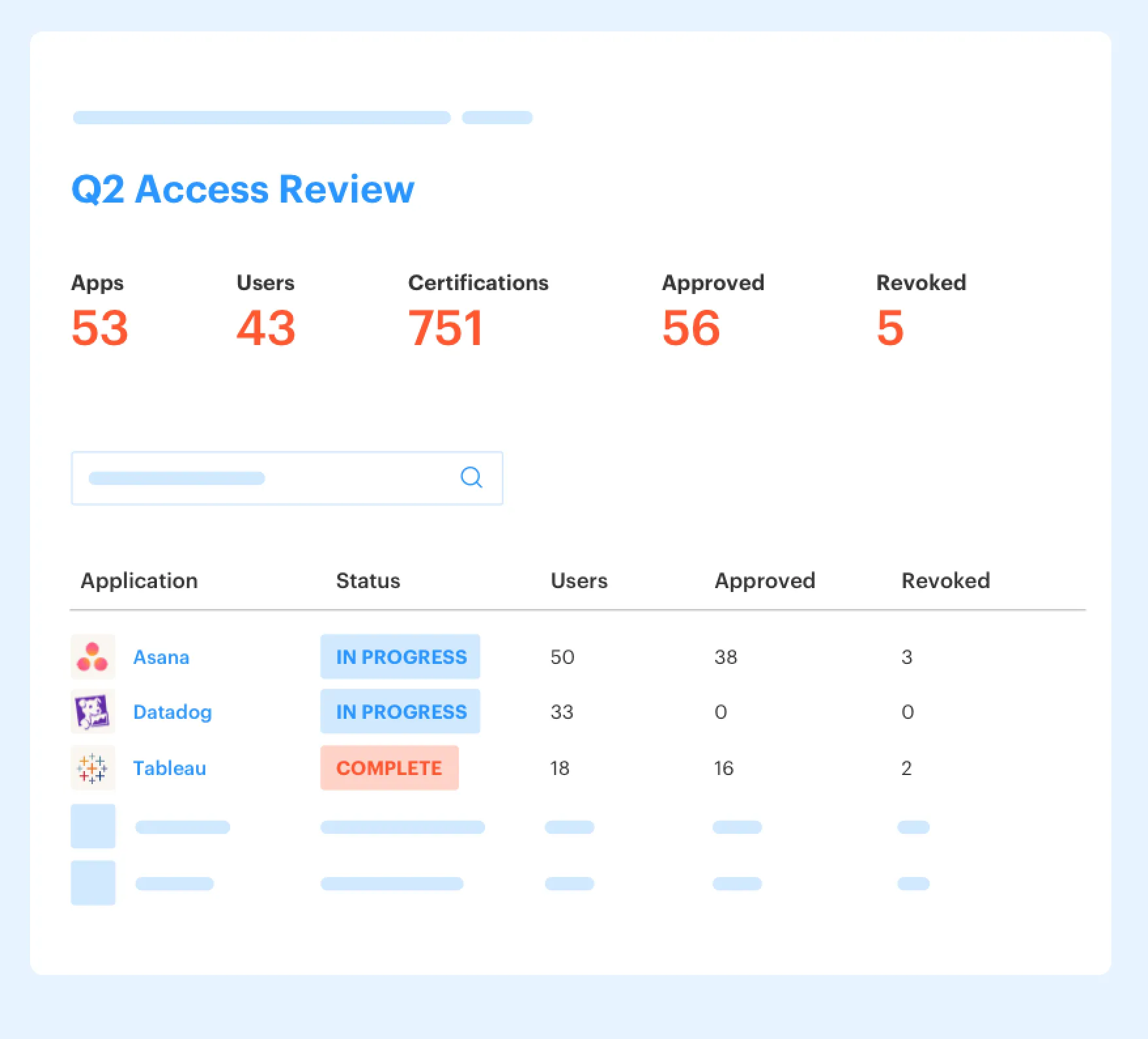
I saw this kind of pattern a lot in fast-growing teams. Not always in access, but in operations generally. The work looks simple from the outside, then you sit with the person doing it and realize there are 11 little decisions hiding inside a 2-minute task. Once those 11 decisions repeat 500 times, the team starts drowning in stuff that never should have reached them in the first place.
At Videoamp, growth from 100 to 500 employees created a pretty obvious version of this. New hires would start on Monday, then Tuesday would hit and IT would get flooded with access requests without enough context. The requests weren't exotic. They were repetitive. Because ownership was unclear and requests came in with missing details, IT became the bottleneck for work everyone assumed was basic.
That's where the question changes. It's not just how can automation reduce tickets. It's how can automation reduce the decisions that never needed a human in the first place.
Separate governance portals create another queue
A separate IGA portal sounds clean on paper. You get policy, workflows, certifications, and a dedicated place for identity governance. I get why teams buy into that. Security teams want control, auditors want evidence, and IT wants fewer one-off requests flying around in Slack.
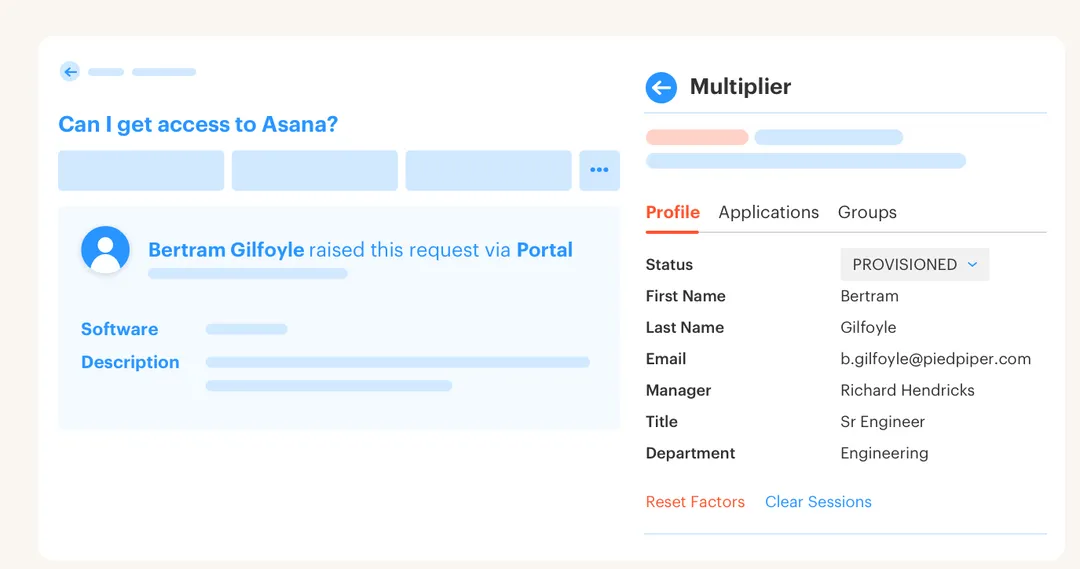
Adoption is where it breaks. Employees already go to Jira for help, approvers already live in Slack, and IT already uses Jira tickets to track work. When governance moves into a separate portal, you haven't removed the work. You've added a new place people need to check, learn, and maintain. It's like putting a second front desk beside your existing service desk, then wondering why requests still get routed to the wrong person.
If that Jira-first model is where you're already headed, Learn more about Multiplier.
Honest concession: a separate governance suite is worth it in some cases. If you're a large enterprise with many business units, custom policies, and a dedicated identity governance team, a heavy IGA suite may make sense. For mid-market and high-growth teams already running on Jira Service Management, the added portal usually creates more operational drag than governance lift. The issue isn't control. It's where the control lives.
Access automation reduces manual work when it stays close to the request. Move it too far away, and you create a new queue with a nicer name.
How Automation Reduces Access Work Without Losing Control
Automation reduces access work by turning repeatable requests into governed workflows with clear inputs, mapped approvers, identity provider changes, and logged evidence. The trick is not automating everything at once. Start where the request pattern is obvious, the risk is known, and the approval path can be encoded.
Audit the requests that should never hit IT manually
30 days of tickets. That's the window. Not 6 months, not a giant transformation project. Just pull every app access request from the last 30 days and sort them by app, role, requester department, approver, and whether IT had to ask a follow-up question before doing the work.
You'll usually see the pattern fast. A handful of apps create most of the repetitive work. Viewer, editor, admin, contractor access, temporary production access, basic onboarding bundles. Not glamorous. But that's exactly why they're perfect for automation. If the same request appears 20+ times a month and follows the same approval path 80% of the time, it shouldn't be handled manually anymore.
Here's the diagnostic I use. Ask five questions of each request pattern: Does the request have a standard app and role? Is the approver predictable? Can the role map to an identity provider group? Is the request low-risk or time-bound? Does audit evidence need to show who approved, who granted, and when it changed?
If you get 4 yeses, automate it. If you get 2 or fewer, leave it manual for now. Teams get into trouble when they try to automate edge cases first because those feel more painful. But edge cases are where automation gets messy. Start with boring volume. Boring volume pays you back.
Keep Jira as the access record, not just the intake form
Jira shouldn't just capture the request. It should carry the story. Who requested access, what role they asked for, who approved it, what group changed in the identity provider, when access started, when it ended, and what happened if something failed. Without that record, automation reduces effort but creates audit risk.
The mistake is treating Jira as the front door and then doing the real work somewhere else. A ticket gets created, then approval happens in Slack, then someone adds a user to a group in Okta, then someone comments "done." That might work at 50 people. At 500, it starts to fall apart because "done" is not evidence. It's a feeling.
A better setup makes the Jira issue the anchor. The approval is tied to the issue. The provisioning action is tied to the issue. The revocation is tied to the issue. The access review decision is tied to the issue. One record. One chain. Way less cleanup later.
This is where audits stop being a quarterly rebuild. Instead of hunting through Slack messages and screenshots, you're exporting what already happened. Honestly, this is the part teams underestimate. They think access automation is about speed, and it is. The bigger win is evidence created as a byproduct of normal work.
Map roles to identity provider groups before approving automation
Automation only works if the system knows what to change. Your app roles need to map to identity provider groups before you turn on provisioning. Viewer maps to one group. Editor maps to another. Admin maps to a higher-risk group with an approval gate. Very simple idea. Very easy to skip.
When teams skip this mapping, automation becomes vague. Someone approves "Figma access," but what does that mean? Viewer? Editor? Admin? Temporary contractor access? If IT still has to interpret the request after approval, you haven't really automated the work. You've just made the first half prettier.
The operating rule is pretty clear. If a role can't be mapped to a group, don't automate provisioning for it yet. Keep the request in Jira, route the approval, and log the manual work. That still gives you better control. Then come back and map the role properly when the pattern is stable.
If you want to see what these mappings look like in a live Jira workflow, See how Multiplier works.
Honest downside: mapping roles takes work up front. Someone has to clean up app ownership, define what "approved" means, and decide which groups are safe to automate. It's not magic. The payoff is real though, because once roles are mapped, every future request gets easier. The first 20 mappings are annoying. The next 500 requests are not.
Use time-bound access for anything risky or temporary
Permanent access is the default because manual cleanup is annoying. That's it. Most teams don't actually believe people should keep elevated access forever. They just don't have a reliable way to remove it after the job is done.
Time-bound access fixes a very specific problem. If someone needs access for 1 hour, 6 hours, or 24 hours, the expiry should be part of the request. Not a reminder. Not a calendar note. Not a Jira comment that someone may or may not see next week. The system should remove the user from the mapped group when the approved window ends.
Stavvy is a good example of why this matters. They had long-lived privileged access after growth and acquisitions, which is a very normal mess. Once they moved to just-in-time access, they reduced privileged access by 85% and had 1,300+ access requests automatically revoked after approved windows. That's the difference between policy and enforcement.
The rule I'd use: if the access is privileged, production-related, customer-data related, or needed for a short task, make it time-bound by default. If someone needs it again, they request it again. People sometimes push back because they think it adds friction. It does add a little. The friction is pointed at the risk, not at every request. That's the nuance.
Turn access reviews into decisions, not spreadsheet projects
Access reviews fail when the reviewer has to be a detective. They get a spreadsheet with users, apps, groups, maybe job titles, maybe last login, and they're expected to certify access with confidence. In reality, half the work becomes "who is this person?" and "do they still need this?" And then revocations become another ticket queue.
A better access review is built around action. The reviewer sees the user, app, role, department, group membership, and last login context. Then they choose keep or revoke. If they revoke, the change should execute through the identity provider and write the evidence back into the system of record. No second process. No separate cleanup project.
The decision threshold matters. If a user hasn't logged into an app in 90 days, that's a strong review signal. Not always an automatic revoke, because executives, leave, and special cases exist. It should be enough to push the reviewer toward a decision instead of rubber-stamping everything.
What I'd avoid is treating access reviews as a compliance ceremony. When reviews only exist for the audit, people do the minimum and move on. When reviews create real revocations and clean evidence, they improve security while also making the next audit easier. Completely different motion.
Automate only where the workflow has a clean owner
Every access workflow needs an owner. Not a committee. Not "IT." A real person or role who can say yes, no, or not anymore. Without ownership, automation just moves confusion faster.
There are a few clean ownership patterns. Manager approval works for broad employee access. App owner approval works for specialized tools. Security approval works for privileged access. Auto-approval can work for low-risk apps where the role is standard and the group mapping is clear. The mistake is using one approval model for everything.
Synthesia is a great case here. They grew 4x and had IT requests living in Slack channels and Notion boards. A 4-person IT Ops team ended up supporting 420+ employees, with 3,800+ access requests processed in a year and 75% fully automated. That didn't happen because they removed governance. It happened because they made the common paths predictable.
The rule is: if no one owns the decision, don't automate the decision. Fix ownership first. Then automate. Otherwise you'll just create faster bad approvals, and nobody wants to explain that during an audit.
How Multiplier Keeps Access Work Inside Jira
Multiplier keeps access governance inside Jira Service Management by tying requests, approvals, provisioning, reviews, and audit evidence to Jira issues. It doesn't ask employees to adopt another portal. Access starts where employees already ask for help, approvals can happen in Slack, and identity changes run through the identity provider.
Jira-native intake, approval, and provisioning
Multiplier's Application Catalog gives employees a Jira-native app store for approved tools and roles. They can request access through JSM or Slack, and each request creates a Jira issue with the right context up front. For IT, that means fewer vague tickets like "need access" and fewer follow-up loops just to figure out which app, role, or approver applies.

Once approved, Multiplier provisions through identity provider groups in Okta, Entra ID, or Google Workspace. That matters because the identity provider stays authoritative. Multiplier isn't inventing a second source of truth. It's using the group mappings you define, then writing success or failure comments back to the Jira issue so the operational record and audit record stay together.
Approval Workflows route decisions to managers, app owners, or specified users in Jira and Slack. That's the practical part. People approve where they already work, while the ticket remains the record. For teams trying to automate 75%+ of requests and still run lean IT, that combination is the main thing. Less chasing. Less copy/paste. Fewer missing approvals.
Time-bound access and review evidence that auditors can follow
Multiplier's Time-Based Access is built for the requests that shouldn't become standing privilege. A requester can choose a duration like 1, 6, or 24 hours, approval happens, access is granted through the mapped identity provider group, and expiry triggers removal from that group. The change is recorded back on the Jira issue.
Access Reviews work the same way. Campaigns run inside JSM, reviewers see context like user attributes, groups, last login, and recommendations, then mark keep or revoke. Revocations execute through the identity provider, and the evidence stays tied to Jira. For audit teams, that's the difference between rebuilding the story and exporting what already happened.
Multiplier also supports Auto Reclaim on the Advanced edition, using identity provider login data to identify inactive users, warn them, and revoke access if they remain inactive after the grace period. When your next audit asks for the story behind a grant and revoke, Get started with Multiplier. That's a much cleaner motion than screenshots, spreadsheet tabs, and Jira comments that say "done."
Run Access Work Where the Work Already Happens
Access automation doesn't work because you bought an automation tool. It works because the request, approval, change, expiry, and evidence all sit close enough together that the workflow can run without a human stitching it back together.
So if you're asking how can automation reduce access work, start with the repeatable requests. Map the roles. Keep Jira as the record. Route approvals where people already respond. Use the identity provider for changes. And make expiry and evidence part of the workflow from day one.
When you do that, governance stops being a separate project. It becomes how access gets done.
Frequently Asked Questions
How do I automate repetitive access requests?
To automate repetitive access requests, start by identifying the patterns in your access requests. Look for requests that are submitted frequently and have predictable approval paths. Multiplier's Application Catalog handles this directly. Employees can browse approved applications and request access directly through Jira Service Management or Slack, with the right context included up front, which cuts the back-and-forth.
What if I need to revoke access quickly?
If you need to revoke access quickly, use Multiplier's Time-Based Access. This allows you to set temporary access for specific durations (like 1, 6, or 24 hours) when granting access. Once the time expires, the system automatically removes the user from the mapped identity provider group, ensuring timely revocation without manual intervention. This is especially useful for sensitive or privileged access situations.
Can I track approval workflows in Jira?
Yes, you can track approval workflows in Jira using Multiplier. When an access request is submitted, a Jira ticket is created, and the approval process is managed within Jira. Approvers receive notifications and can approve or deny requests directly from their email or Slack. Once approved, the ticket transitions automatically, and provisioning actions are logged back into the Jira issue, providing a complete audit trail of the request and its outcomes.
When should I use time-bound access?
You should use time-bound access for any requests that involve elevated privileges or are needed for a limited time. This includes access for temporary projects, sensitive data, or production environments. By setting access to expire automatically after a specified duration, you minimize the risk of standing privileges and ensure that access is only granted when necessary. Multiplier's Time-Based Access handles provisioning and revocation automatically.
Why does my team struggle with access reviews?
Teams often struggle with access reviews because they rely on manual processes and disparate systems. By using Multiplier's Access Reviews feature, you can streamline the review process within Jira. Reviewers can see all necessary context, such as user attributes and last login dates, in one place. This allows them to make informed decisions about whether to keep or revoke access without having to sift through spreadsheets or multiple systems.


