


500 access tickets a quarter don't feel like a dashboard problem at first. But how do dashboards track anything useful when approvals happen in Slack, provisioning happens in Okta, and audit evidence gets rebuilt later in a spreadsheet?
That's the part a lot of IT teams miss. The dashboard isn't the issue. The source of truth is. If the work is scattered across 4 places, the dashboard just becomes a nicer looking version of the mess.
I've seen this pattern a lot. Teams buy a reporting layer because they want control, but the real work still happens in side channels. Then the audit comes around, and everyone acts surprised that the numbers don't match the story.
Key Takeaways:
- Dashboards only work if the access workflow creates clean data as work happens.
- The real question isn't how do dashboards track requests, it's where the evidence is created.
- Jira is usually the better source of truth if your team already runs access work there.
- Slack approvals can be fast, but only if they're tied back to the Jira issue.
- Access dashboards should track requests, approvals, provisioning, expiry, revocation, and reviewer decisions.
- The fastest path is usually starting with a self-service app catalog, then adding automation.
- Audit evidence should be produced by the workflow, not rebuilt after the fact.
Why Access Dashboards Break When Work Happens Elsewhere
Access dashboards break when they report on tickets but the actual access work happens outside the ticket. A dashboard can count request volume, SLA time, and status changes, but it can't prove approval, provisioning, or revocation if those steps live in Slack threads, identity provider logs, and spreadsheets. That's where the audit story starts to fall apart.

A lot of IT teams treat dashboards like the final layer. Build the workflow, bolt on reporting, then show leadership a nice view of what's happening. Reporting matters. But if the dashboard is pulling from a system that only captures 40% of the workflow, you're not looking at governance. You're looking at ticket hygiene.
Picture an IT admin at 4:45 PM on a Thursday. A sales leader needs admin access to a reporting tool for 24 hours. The request comes into Jira, approval happens in Slack, someone adds the user to an identity provider group, and then the Jira ticket gets a comment like "done." It works. Sort of. Two months later, when an auditor asks who approved the access, when it was removed, and why it was granted, everyone starts digging through DMs and export files.
Not fun.
The mistake is assuming a dashboard can fix missing evidence. It can't. A dashboard is more like the scoreboard at a hockey game. If the refs aren't recording penalties, shots, and goals properly, the scoreboard will still light up, but it won't tell the truth. Access governance has the same problem. The dashboard can only show what the workflow captured.
If your access process already shows gaps like missing approvers, vague ticket comments, and manual group changes, the Jira-native workflow behind Multiplier is worth comparing against the handoffs you're trying to report on.
The Dashboard Is Usually Blamed for the Workflow
A dashboard gets blamed because it's visible. Everyone sees the bad chart. Nobody sees the broken handoff that created the bad chart in the first place. This is where teams start asking the wrong question. They ask how do dashboards track access faster, when the better question is what the dashboard is allowed to see in the first place.
The root cause is usually fragmentation. Jira knows the request, Slack knows the approval, Okta or Entra knows the group change, and a spreadsheet knows the quarterly review. Each system has part of the story, but none of them owns the whole story. And because nobody owns the whole story, the team ends up doing reconciliation work just to answer basic questions.
That work compounds fast. One missing approval isn't a big deal. One unclear revocation date isn't the end of the world. But 300 requests later, you have a pile of almost-evidence. Looks close enough for daily operations. Not close enough for audit.
Separate Governance Portals Create a Second Work Queue
Large enterprises with dedicated IGA teams genuinely do get value from separate governance portals. They centralize policy, create structured approvals, and give security a dedicated system for access controls. I'm not pretending those tools have no place. For a 2,000-person company with a CISO org and a compliance team, the math works.

The math breaks at mid-market. Most IT teams between 200 and 1,500 employees don't live in those portals. They live in Jira, Slack, and their identity provider. The portal becomes another place to check, another queue to watch, and another system that employees forget exists. You bought governance, but you created more manual work for the people supposed to enforce it.
When governance sits outside the daily workflow, adoption drops. Requests still come in through the paths people already know. Slack DMs, Jira tickets, and manager pings. The separate portal might be cleaner, but if the team has to keep dragging work back into it, the dashboard becomes stale before anyone trusts it.
The fix isn't a prettier dashboard. It's getting the work and the evidence into the same operational path.
How Dashboards Track Access Work Without Rebuilding Evidence
Dashboards track access work well when every request creates a complete chain of events: request, approval, provisioning, expiry, review, and revocation. The data has to be written as the workflow runs, not reconstructed at quarter end. Once that happens, dashboards stop being reporting theatre and start becoming operational control.
Start by Auditing What the Dashboard Can't Prove
Three questions usually expose the real state of your dashboard. Can you prove who approved the access? Can you prove what changed in the identity provider? Can you prove when access was removed? If any answer requires someone to search Slack, export logs, or open a spreadsheet, the dashboard isn't complete yet.
I like starting there because it cuts through opinion. People will argue about tools all day. They won't argue with missing evidence. Pull 20 random access requests from the last 30 days and check them against the full lifecycle. Not the ticket status. The lifecycle. Request submitted, approver assigned, approver decision, group changed, user notified, access expired or revoked.
You don't need a massive audit to find the pattern. In most teams, 20 tickets is enough. If more than 3 of those tickets require side-channel evidence, you have a governance data problem. If more than 5 require manual interpretation, your dashboard is probably telling a cleaner story than the workflow deserves.
Run the check like this:
- Pick 20 access tickets from the last 30 days.
- Confirm the approver is visible in the ticket.
- Confirm the provisioning action is tied to the ticket.
- Confirm expiry or revocation is documented where needed.
- Confirm the evidence can be exported without screenshots.
That last point matters more than people think. Screenshots feel fine during the year. During an audit, they become a tax. Someone has to gather them, name them, explain them, and hope they match the final access state. That's a bad system.
Track the Request Before You Track the Outcome
Access dashboards need clean intake before they can report clean outcomes. If the request doesn't capture the app, role, duration, business reason, and approver path up front, everything downstream gets messy. Garbage in, audit panic out. I've seen teams try to solve this with more required fields, and honestly, that often just annoys everyone.
The better approach is to make the request path structured without making it painful. Employees shouldn't have to know the right identity provider group. They shouldn't have to guess whether they need Viewer, Editor, or Admin based on tribal knowledge. They should pick from a sanctioned catalog of apps and roles, with the workflow deciding what happens next.
A practical threshold: if IT has to ask a follow-up question on more than 10% of access requests, intake is broken. Not a people problem. A design problem. The request form isn't giving the dashboard enough data to track the work properly.
A clean request should capture:
- Application: The sanctioned app being requested.
- Role: The exact permission level, like Viewer, Editor, or Admin.
- Duration: Permanent, time-bound, or temporary elevated access.
- Reason: The business context for why access is needed.
- Approver route: Manager, app owner, or named approver.
A lot of teams skip duration because it adds friction. Fair point. Asking for duration on every low-risk app might be overkill, and you'll just train people to pick "permanent" on autopilot. Reserve the duration field for elevated access, production tools, finance systems, and customer data. That's where least privilege becomes real instead of theoretical.
Make Approval Data Part of the Record
"Approved in Slack" isn't an approval as far as your dashboard is concerned. A Slack message that says "approved" might move the work forward, but unless that action updates the request record, the dashboard can't really track the decision. It can track that the ticket moved. That's different.
The hidden risk is approval drift. The approver says yes in Slack, someone else updates the ticket later, provisioning happens after that, and then the ticket closes. Each step looks reasonable on its own, but the chain is weak. If someone asks who approved what, and whether the approved role matches the provisioned role, you have to reconstruct the story.
One simple rule works well: if an approval doesn't update the system of record, it doesn't count as an approval for audit purposes. Sounds strict. It should. Access decisions are only valuable if they're attached to the thing they approved.
That doesn't mean forcing everyone into a new portal. I think that's where teams swing the pendulum too far. Approvals can happen in Slack because that's where people are. The key is making the Slack action write back to Jira, so the dashboard can track the approval without asking humans to remember where it happened. If that handoff is the bottleneck in your current process, see how Multiplier works in the context of Slack approvals tied back to Jira issues.
Track Provisioning Through the Identity Provider
Provisioning is where dashboards either become useful or fake useful. A ticket moving to "Approved" doesn't mean access was granted. It means someone said yes. The dashboard needs to know whether the identity provider group was actually updated, whether the action succeeded, and whether the change maps to the requested role.
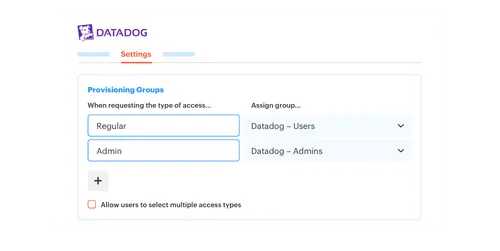
This is why group mapping matters. If each catalog role maps to a specific identity provider group, the workflow becomes deterministic. Request Figma Editor, approve Figma Editor, add user to the Figma Editor group. No guessing. No copy/paste from a spreadsheet. No admin choosing a similar-looking group under time pressure.
The exception is non-SSO or manual apps. Some tools won't support clean identity provider provisioning, and that's valid. You can still track the request and approval in the same place, but you shouldn't pretend the dashboard can prove automatic provisioning if the change happened manually inside the app. Different evidence standard. Different reporting expectation.
For SSO apps, the dashboard should track these events:
- Approval status reached.
- Identity provider action triggered.
- User added to or removed from the mapped group.
- Success or failure written back to the request.
- Ticket closed only after the change is recorded.
That sequence creates confidence. Not because the dashboard is fancy, but because the underlying workflow leaves fewer gaps. The dashboard is just showing the chain.
Use Expiry as a First-Class Metric
Standing access is often a dashboard design failure. Not always, and some access should be ongoing. But elevated permissions, admin roles, production access, and short-term project access should have expiry built into the request. If your dashboard can't show which access expires when, it can't really tell you whether least privilege is working.
The strongest access dashboards track time-bound access separately from standard access. They show how many temporary grants are active, how many expired, and how many were revoked on time. They also show exceptions. Someone extending access during an incident might be reasonable. Someone keeping admin access for 180 days after a project ended is a different story.
A useful benchmark: any privileged access without a defined expiry should be reviewed within 30 days. Not quarterly. 30 days. Quarterly reviews are too slow for high-risk access because the damage window is too wide. You don't need to be dramatic about it. Just shorten the feedback loop.
Time-bound access also changes team behavior. If people know access will expire automatically, they stop asking for forever-access as a default. The request becomes more precise. The dashboard becomes more honest. And IT spends less time being the cleanup crew for permissions that should've ended weeks ago.
Separate Review Progress From Revocation Completion
Access review dashboards often make one big mistake: they track reviewer completion, not actual revocation completion. A reviewer marking "Revoke" is a decision. It isn't the control. The control happens when access is removed and evidence is attached to the record.
I get why teams track completion. It makes the campaign look manageable, and 82% complete feels like progress. But if 40 revoke decisions still require manual group removal, you don't have 82% governance completion. You have 82% review completion and a pile of follow-up work waiting for someone in IT.
The dashboard should split those stages apart. Review submitted, revoke selected, identity provider group removed, evidence recorded, and exception noted. Once you see the stages clearly, you can tell whether your access reviews are actually reducing risk or just collecting decisions.
A good review dashboard answers 5 questions fast:
- Which reviewers haven't responded yet?
- Which apps have the highest revoke rate?
- Which users were marked for removal?
- Which revocations were completed?
- Which exceptions need follow-up?
That last one is where the real work lives. Exceptions are normal. Someone might need access for a migration, incident, or customer commitment. The problem isn't exceptions. The problem is exceptions that never get revisited.
Connect License Waste to Access Governance
License dashboards and access dashboards are usually treated as different things. I think that's a mistake. SaaS waste is often an access governance problem wearing a finance hat. If someone hasn't logged into an app for 90 days, the question isn't only "why are we paying for this?" It's also "why does this person still have access?"
That connection is useful because finance and security suddenly care about the same workflow. Finance wants to reduce spend, security wants less standing privilege, IT wants fewer manual cleanup tasks. Same motion. Find inactive access, notify the user, revoke if needed, and document the change.
The caveat is data quality. Last login data has to come from a reliable source, usually the identity provider. If an app doesn't send good login telemetry, don't build a hard automation rule around it. Flag it for review instead. Bad telemetry creates bad revocations, and that turns a smart policy into an IT fire drill.
For apps with solid login data, inactivity thresholds are powerful. Start with 30, 60, or 90 days depending on the app. Add a grace period. Exclude groups that need special handling. Then track reclaimed licenses and revoked access in the same operational view. Suddenly the dashboard isn't just tracking governance. It's showing money and risk coming out of the system.
How Multiplier Turns Jira Issues Into Governance Evidence
Multiplier turns Jira issues into governance evidence by keeping access requests, approvals, provisioning, reviews, and revocations tied to the same Jira record. The point isn't another dashboard sitting beside the workflow. The point is cleaner workflow data, so dashboards can show what actually happened without rebuilding the trail later.
Jira-Native Intake and Slack Approvals
Multiplier's Application Catalog gives employees a Jira-native app store for sanctioned tools, roles, and access levels. They can request access from the JSM portal or Slack, and the request creates a Jira issue with the right context attached. The dashboard now starts with structured data instead of a vague ticket that says "need access."

Approval Workflows then route the decision to a manager, app owner, or specific user. Approvers can act in Jira or Slack, and the decision ties back to the Jira issue. For teams trying to stand up self-service quickly, that matters a lot. You can create the catalog, route approvals where people already work, and avoid training everyone on another portal.
Multiplier also provisions through identity provider groups for supported SSO workflows. The request role maps to one or more groups in Okta, Entra ID, or Google Workspace. When the Jira issue reaches the approved status, the identity provider action happens and the result is written back to the ticket. Old process: approve, copy, paste, screenshot. Better process: approve, provision, record.
Access Reviews and Expiry Stay in the Same Trail
Multiplier's Time-Based Access handles temporary grants by adding the user to the mapped identity provider group and removing them when the approved window expires. The expiry event is recorded against the Jira issue, which gives the dashboard the thing most manual workflows miss: proof that access ended. That's a big deal for privileged access.
Access Reviews run inside JSM as campaigns. Reviewers see user attributes, groups, last login, and recommendations, then mark Keep or Revoke. When revoke actions apply to identity provider group access, the removal can be executed and documented through Jira. Admins can export results as CSV or push evidence to Vanta, which matters when the audit asks for more than a status report.
Auto Reclaim adds another layer for license cleanup on the Advanced edition. It uses login data from the identity provider, applies inactivity thresholds and grace periods, warns users, then revokes access if they stay inactive. The Jira ticket documents the removal. The same evidence trail supports IT, finance, and security without turning every cleanup into a manual project.
If your current dashboard can show request volume but not prove approval, provisioning, expiry, and revoke completion, the practical next move is to test the workflow itself. Get started with Multiplier and compare the Jira evidence trail against the dashboard gaps you're dealing with now.
Make the Dashboard Match the Work
A dashboard is only as strong as the workflow feeding it. If requests, approvals, provisioning, expiry, and revocations happen across different tools, the dashboard will always need cleanup work. Maybe a lot. Maybe just enough to make audits painful every quarter.
The better move is to make Jira the place where access work creates evidence by default. Start with intake. Add Slack approvals. Map roles to identity provider groups. Put expiry on elevated access. Split review decisions from completed revocations. Do that, and the dashboard stops being a reporting layer trying to explain the mess.
It becomes the operating system for access governance.
Frequently Asked Questions
How do I ensure all access requests are documented?
Use Multiplier's Application Catalog. When employees request access through the JSM portal or Slack, a Jira ticket is created automatically with all necessary details — application, role, and approver path. Audit those tickets regularly to confirm approvals and provisioning are recorded correctly. That gives you a complete trail without manual documentation.
What if approvals happen in Slack but aren't recorded?
Set up Multiplier so any approval action in Slack automatically updates the corresponding Jira ticket. Every approval gets linked to the request, keeping the record clean for audits. Encourage your team to use the integrated workflow so nothing falls through the cracks.
Can I automate access revocation for temporary permissions?
Yes. Multiplier's Time-Based Access feature handles this. When users request elevated access, they specify a duration. Once approved, Multiplier provisions access and automatically revokes it when the window expires — no manual follow-up needed.
When should I conduct access reviews?
Every 30 days for high-risk access. Multiplier's Access Reviews feature lets you create campaigns based on last login and group memberships, with clear timelines for reviewers. Revocations can run automatically through the identity provider, which keeps risk low without requiring a manual cleanup sprint.
Why does my dashboard show discrepancies in access requests?
Discrepancies happen when the workflow isn't capturing all the data. Make sure each access request through Multiplier includes the application, role, and approver path. Audit the Jira tickets to confirm that requests, approvals, provisioning, and revocations are all recorded. When the data is complete, the dashboard catches up.


