


Moveworks vs Zluri is a weird comparison because only one of them is really built around SaaS governance. If you're comparing Moveworks vs Zluri for access management, you're probably trying to answer a bigger question: do we need an AI support layer, or do we need a governance workflow that actually controls who gets access, when, and why?
I've seen this buying mistake happen a lot. A team feels buried in access requests, so they search for automation. Fair instinct. The catch is that "automation" can mean wildly different things. One tool might deflect employee questions in Slack. Another might discover unused SaaS licenses and route access reviews. Those are not the same job.
[Table: Decision Factor] — See "Table Embed Codes" in Oleno to copy the HTML for this table.
Key Takeaways:
- Moveworks fits teams that want conversational employee support across departments, especially through Slack, Teams, and web experiences.
- Zluri fits teams trying to manage SaaS sprawl, access workflows, app discovery, and license waste in one platform.
- If access reviews and license reclamation matter, Zluri is closer to the governance problem than Moveworks.
- If the main issue is employee support volume, Moveworks is worth evaluating before a SaaS governance platform.
- For pricing, both require custom evaluation, so compare implementation effort and workflow fit before feature volume.
Moveworks and Zluri Solve Very Different Access Problems
Moveworks and Zluri solve different operational problems, even when both appear in access management research. Moveworks focuses on AI employee support and automated request resolution, while Zluri focuses on SaaS management, access governance, and license control. Treating them as interchangeable creates a messy evaluation from day one.

What this comparison is actually evaluating
The first filter is simple: are you trying to reduce employee support volume, or are you trying to govern SaaS access? Those sound close in a budget meeting. They aren't close once the tickets start moving. Moveworks positions around AI-powered employee support, agentic automation, and approved AI access paths for employees (Moveworks Dynamic AI Platform, Moveworks Quick GPT). Zluri is usually evaluated for SaaS management, application visibility, access workflows, and governance controls (Zluri Product Overview).

Here's the diagnostic I'd use before looking at demos. If 60% or more of your pain is "employees keep asking the same questions and IT is buried," start with the AI support category. If 60% or more is "we don't know who has access, licenses are wasted, and access reviews are painful," start with SaaS governance. Simple. A little blunt, maybe, but it prevents the classic tool mismatch.
A useful evaluation split:
- Support automation pain: repetitive questions, service desk deflection, employee self-service, broad internal task resolution
- Governance pain: access approvals, access reviews, deprovisioning, unused SaaS licenses, audit evidence
- Workflow pain: where requests start, where approvals happen, where proof gets stored
- Ownership pain: whether IT, security, procurement, or workplace technology owns the outcome
The difference between AI employee support and SaaS governance
AI employee support is about getting employees answers and completing tasks faster. SaaS governance is about controlling access, cost, and risk across applications. Moveworks leans into the first category with conversational AI and enterprise task automation (Moveworks ITSM Market Positioning). Zluri leans into the second with SaaS visibility, access management, and license optimization (Zluri Statistics).
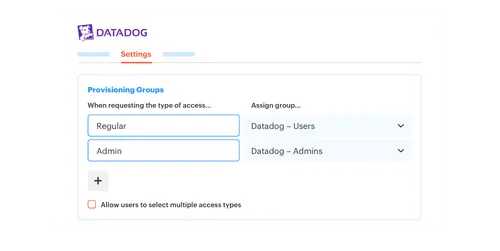
Think of it like the difference between a front desk and a building access badge system. The front desk can answer questions, route people, and make the experience feel smooth. The badge system decides who gets into which room, for how long, and what record exists when someone asks later. Honestly, both matter. They just fail in different ways when you buy one expecting the other.
Use this rule when shortlisting: if the audit trail is the primary output, evaluate governance depth first. If the employee experience is the primary output, evaluate conversational automation first. If both matter, don't pretend one platform automatically covers the other. Ask where the approval record lives and who can revoke access without another manual loop.
Why the Wrong Choice Creates More Work for IT and Security
The wrong access tool creates more work because it moves the bottleneck instead of removing it. A support assistant can speed intake without enforcing governance, while a SaaS platform can add visibility without matching the team's daily workflow. The mistake shows up later as duplicate tickets, manual reconciliation, and audit cleanup.
The hidden cost of choosing an adjacent tool instead of a governance workflow
Picture a Tuesday onboarding batch. Five new hires start, 14 app requests hit the queue, and three managers approve in different channels before lunch. IT still has to confirm the right app role, update groups, document the approval, and remember which access was temporary. By Friday, everyone feels like the process improved because the front door looked cleaner. The back office is still duct tape.
This is where adjacent tools get expensive. Not because they're bad. Because they solve a neighboring problem and everyone quietly fills the gap with spreadsheets, Slack threads, and "can you just handle this one?" messages. I've seen teams celebrate a new request experience while the real governance work still lives in someone's browser tabs. Painful. Also very normal.
Before approving a purchase, check four things:
- Where does the access request start? If it starts in chat but must become a ticket later, measure that handoff.
- Where does approval evidence live? If evidence is spread across tools, audit work increases.
- Who executes provisioning and revocation? If IT still does it manually, automation is partial.
- Can access expire automatically? If not, temporary access becomes standing access.
What buyers should evaluate before making a decision
Buyers should evaluate Moveworks vs Zluri by workflow ownership, not feature volume. A long feature list can hide the fact that requests, approvals, provisioning, reviews, and audit evidence live in different places. The better question is: what system becomes the operational record when access changes?
The threshold I like is 30 days. If you can't trace a request from intake to approval to provisioning to revocation within 30 days of going live, your implementation plan is too abstract. Push the vendor for a live workflow using one common app, one sensitive app, and one temporary access scenario. If they can't show all three without hand waving, you've found your gap.
A practical evaluation scorecard:
- Request intake: Can employees request access without guessing the owner?
- Approval routing: Can managers and app owners approve in the channel they already use?
- Provisioning: Does approval trigger access, or does IT still copy data between systems?
- Review evidence: Can reviewers see enough context to certify access responsibly?
- Revocation: Does access removal happen automatically or become another ticket?
- Audit export: Can the team produce evidence without rebuilding the story later?
The hidden trap is buying for the demo moment. Demos make intake look clean. Operations expose whether the workflow survives volume.
Moveworks Overview
Moveworks is strongest when the goal is AI-led employee support across the enterprise. It offers conversational experiences across workplace channels and focuses on resolving employee requests through automation. For access management buyers, the question is whether support automation is enough, or whether governance controls need a dedicated workflow.
Moveworks strengths for conversational employee support
Moveworks is built around the employee experience layer. Employees ask for help, the assistant interprets intent, and the platform can take action across connected systems. Its public materials emphasize agentic AI, no-code and low-code customization, and enterprise support automation (Moveworks Dynamic AI Platform). That's a real strength if support volume is your problem.
Where I think Moveworks makes sense is the large-enterprise environment where IT, HR, finance, and facilities all create service demand. If employees are already asking questions in Slack or Teams, a conversational layer can reduce friction. The platform also positions Quick GPT as an approved route for employees to use generative AI at work (Moveworks Quick GPT). Different problem. Same employee-facing motion.
Good-fit signals for Moveworks:
- Large employee base with repetitive service requests
- Multiple departments looking for a shared support automation layer
- Slack, Teams, web, or embedded assistant experiences as preferred intake
- ROI measured through request resolution, deflection, and employee experience
Moveworks limitations for access governance and certification
Moveworks is not primarily a full identity governance platform. Its public positioning centers on AI employee support, service automation, and task execution rather than access certification, entitlement governance, or separation-of-duties controls (Moveworks ITSM Market Positioning). That doesn't make it weak. It means the buyer needs to be precise.
The limitation shows up when access needs governance depth. A conversational assistant can start or route a request, but audit-heavy teams still need clean approval records, certification workflows, revocation evidence, and a reliable system of record. Critics of dedicated governance tools would say they add process overhead, and that's fair. Some do. Still, access governance without enforceable proof becomes a quarterly scramble.
Use this test: if auditors ask for "who approved this access, when was it provisioned, and when was it removed," can the system answer from one record? If not, Moveworks may need to sit beside a governance tool rather than replace one. That's not a knock. It's architecture.
Moveworks pricing and implementation considerations
Moveworks uses an enterprise sales motion rather than a public self-serve pricing model, so buyers should expect custom pricing and implementation scoping. Public review listings and vendor pages point toward enterprise evaluation rather than a simple starter tier (Moveworks G2 Reviews). The pricing conversation should focus on support automation ROI, not only access workflows.
Implementation planning matters because conversational automation touches many systems. The assistant has to understand employee intent, connect to enterprise tools, respect permissions, and route tasks safely. That takes real work. We were skeptical the first time we saw teams try to use assistant platforms for every internal workflow, because the happy path looked great and the exceptions carried the cost.
Ask these questions before buying:
- Which access workflows are native versus custom configured?
- Which systems must connect before launch?
- How are failed automations routed back to IT?
- What evidence exists for approvals and completed access changes?
- What governance platform remains in place for certifications?
How Multiplier is Different: Multiplier is built for access management inside Jira Service Management rather than broad employee support automation. Requests, approvals, provisioning actions, and audit evidence stay tied to the Jira ticket, with Jira-native application catalog workflows and identity provider group-based provisioning.
Zluri Overview
Zluri is stronger when the goal is SaaS discovery, license control, and access governance across a growing application portfolio. It gives IT and security teams visibility into apps, users, spend, and access workflows. For Moveworks vs Zluri buyers, Zluri sits closer to the SaaS governance problem.
Zluri strengths for SaaS discovery and license control
Zluri's value is clearest when SaaS sprawl is the mess. The platform is commonly evaluated for app discovery, shadow IT visibility, workflow automation, access management, and license optimization (Zluri Product Overview). If your team doesn't know how many apps are in use, who owns them, or which licenses are idle, that visibility matters.
This is the procurement and IT overlap that gets ignored until spend gets ugly. One app becomes 20. Then 80. Then every department has a tool nobody fully owns. Zluri's API and integration story also supports broader SaaS operations use cases, which matters when the goal is to connect app data into governance workflows (Zluri API).
Zluri is a better fit when:
- SaaS discovery is a top buying reason
- License optimization has a clear budget owner
- Access reviews need app usage and ownership context
- IT and procurement both care about the platform outcome
Zluri limitations for Jira-centric service workflows
Zluri is less centered on Jira Service Management as the daily operational system of record. That matters for teams where employees already request access in JSM, approvals already happen against tickets, and auditors expect the ticket to tell the full story. Zluri can support access workflows, but its broader platform model is different from a Jira-first access request process.
There's a case to be made for the broader model. If SaaS discovery and spend visibility are the main issues, a dedicated SaaS management platform gives you a wider lens. I get the logic. The tradeoff appears when the service desk team now has one place for tickets and another place for access governance decisions. At scale, that split creates small delays that compound.
Use a 10-request walkthrough before deciding. Take 10 real access requests from the last month and map where each one would start, who approves it, how provisioning happens, and where the audit trail lands. If more than three of the 10 require a second system outside the team's normal queue, plan for change management. If more than six do, budget for process redesign.
Zluri pricing and implementation considerations
Zluri pricing is typically custom rather than a public starter plan, so buyers should evaluate package fit against SaaS discovery, access management, and license optimization needs. Third-party pricing guides describe quote-based packaging, which makes discovery scope and integration requirements important during evaluation (Zluri Pricing Guide). The strongest business case usually includes spend visibility, not access requests alone.
Connector quality matters here. A SaaS management platform is only as useful as the freshness and depth of its app data. If license reclamation is part of the ROI model, ask how often usage data refreshes, which apps provide reliable activity signals, and what happens when an app has weak metadata. Small detail. Big consequence.
During evaluation, push for proof in four areas:
- App discovery coverage for your actual stack
- Access review workflow depth for sensitive apps
- License reclamation logic and data freshness
- Reporting flexibility for audit and finance stakeholders
How Multiplier is Different: Multiplier focuses on operational access workflows inside Jira Service Management rather than broad SaaS discovery and spend optimization. Its approach centers on application catalog intake, Jira or Slack approval routing, group-based provisioning, time-based access, and ticket-linked audit records.
How Multiplier Fits Teams That Run Access Through Jira
Multiplier fits teams that already run access requests through Jira Service Management and want governance to stay in that workflow. It is designed around Jira-native request intake, approvals, provisioning, access reviews, and audit evidence. Compared with Moveworks and Zluri, the fit is narrower, but much more specific.
[Table: Feature Category] — See "Table Embed Codes" in Oleno to copy the HTML for this table.
If your team wants to see how the Jira-native model handles real request workflows, Learn more about Multiplier with a walkthrough built around your current access process.
Where the Jira-native approach changes the work
The big difference is where the work lives. With Multiplier, employees request access through a Jira-native application catalog, approvals can route to managers or app owners, and provisioning runs through identity provider group assignments. That means the request record and the governance record don't drift apart.

This is the part I care about most. Not the prettiest UI. Not the longest connector list. The boring operational question is whether IT can open the Jira issue and see what happened. Who asked. Who approved. What changed. When it expires. Whether it was revoked. That's the stuff auditors ask for and IT teams spend nights reconstructing.
For teams already committed to Jira Service Management, this creates a different buying rule: if JSM is your access system of record, don't buy a tool that makes it secondary unless the broader platform benefit is worth the tradeoff. Zluri may be worth that tradeoff for SaaS discovery and spend. Moveworks may be worth it for enterprise support automation. For access management in Jira, the native workflow matters more.
Which teams should consider Multiplier instead
Teams should consider Multiplier when access operations already run through Jira and the main pain is request-to-provision execution. The fit is especially strong when IT wants Slack-based approvals, identity provider provisioning, time-bound access, Jira-native access reviews, and audit evidence attached to the original ticket.
The exception is important. If your biggest issue is unknown SaaS inventory, start with Zluri. If your biggest issue is employee support volume across departments, start with Moveworks. Multiplier is the sharper fit when the access workflow itself is broken inside Jira, not when the company needs a broad AI support assistant or a full SaaS management program.
Use this decision rule:
- Choose Moveworks if employee support automation is the main business case.
- Choose Zluri if SaaS discovery and license optimization drive the budget.
- Choose Multiplier if Jira Service Management is where access requests, approvals, and audit evidence should live.
- Revisit the shortlist if your team needs all three, because that likely means a layered architecture.
For a more concrete look at approvals, provisioning, and access reviews in JSM, See how Multiplier works against one of your existing access request paths.
The Practical Recommendation for Moveworks vs Zluri Buyers
Moveworks vs Zluri is not a "which tool is better" decision. It is a workflow-fit decision. Moveworks fits employee support automation, Zluri fits SaaS management and governance, and Multiplier fits teams that want access management in Jira Service Management without making Jira a side channel.
If you're still stuck, run a one-week proof exercise. Take 20 recent access requests. Classify each request by support need, governance need, and system-of-record need. If most requests are questions or task routing, Moveworks deserves a closer look. If most requests expose app ownership, license waste, or review gaps, Zluri is closer. If most requests already start in Jira and die in manual provisioning or audit cleanup, the Jira-native path is the cleaner answer.
This is where I'd be pretty direct with the buying team. Don't buy the category name. Buy the workflow your team has to live inside every Tuesday morning.
If your access process already runs through Jira and you want to compare the fit against your current queue, Get started with Multiplier and use your own request examples rather than a generic demo script.
The clean recommendation: choose Moveworks for AI employee support, choose Zluri for SaaS visibility and license control, and choose Multiplier when access requests, approvals, provisioning, reviews, and evidence need to stay connected inside Jira Service Management.
Frequently Asked Questions
How do I set up automated provisioning with Multiplier?
To set up automated provisioning with Multiplier, first ensure your identity provider (like Okta or Azure AD) is integrated with your Jira Service Management (JSM). Then, configure your application catalog by syncing the apps and roles you want to manage. When an access request is approved, Multiplier will automatically provision access by adding users to the appropriate groups in your identity provider. Access gets provisioned quickly with less room for manual error.
What if I need to revoke access quickly?
If you need to revoke access quickly, you can use Multiplier's time-based access feature. This allows you to set temporary access durations when requests are submitted. Once the duration expires, Multiplier automatically removes the user from the relevant group, ensuring that access is not left lingering unnecessarily. For urgent revocations, you can manually adjust the access settings in the Jira ticket linked to the request, which will trigger immediate updates in your identity provider.
Can I track access requests in real-time?
Yes, with Multiplier, you can track access requests in real-time through Jira Service Management. Each access request creates a Jira ticket, which captures the entire workflow from submission to approval and provisioning. You can monitor the status of requests, see who approved them, and access audit trails directly within Jira. Everything stays in one place, so nothing slips through.
When should I consider using Multiplier for access management?
Consider using Multiplier for access management when your team primarily operates within Jira Service Management and needs a streamlined way to handle access requests, approvals, and provisioning. If your organization is experiencing bottlenecks due to manual processes or if you need to maintain a clear audit trail linked to each access request, Multiplier can significantly improve efficiency and governance. It works best for teams that need identity provider integration for automated provisioning.
Why does my team need time-based access?
Time-based access reduces security risk by limiting how long permissions stay active. By allowing temporary access, you ensure that users only have access when they need it, reducing the chances of unauthorized use. Multiplier enables this by letting requesters choose access durations, which automatically revokes permissions once the time expires. It enforces least privilege without adding overhead to manage expired permissions manually.


