


95% of audit pain shows up after the fact, when someone asks for proof and your team starts digging through Jira comments, Slack approvals, and a spreadsheet nobody fully trusts. That’s why access reviews gets misunderstood so often. People treat reviews like a quarterly compliance chore, when they’re actually one of the few controls that tells you who still has access, who shouldn’t, and whether your process is real or just policy on paper.
Most teams don’t have an access review problem. They have a workflow problem. Reviews fail because the evidence lives in one place, approvals in another, and revocations somewhere else entirely.
Key Takeaways:
- Access reviews aren’t just compliance. They’re how you catch stale access before it becomes a real risk.
- If your review process ends in spreadsheets, your audit trail is already broken.
- Reviews work best when decisions, revocations, and evidence live in the same system.
- If reviewers can’t see last login data, job context, and group membership, they’ll rubber-stamp.
- Time-bound access reduces what reviews have to clean up later.
- Jira-native reviews matter because work already happens there, and audit evidence gets created as a byproduct.
- Strong access reviews don’t just identify issues. They trigger real revocations.
Why Access Reviews Keep Getting Missed
Access reviews matter because most companies accumulate access faster than they remove it. Every hire, transfer, contractor start date, acquisition, and exception request adds more permissions into the system. Very little of that access gets cleaned up with the same discipline it was granted. So the review becomes the only moment where the company stops and asks a basic question: should this person still have this?

The risk usually starts with normal growth
Back when a company is 50 people, you can get away with a lot. Someone asks for access in Slack. A manager replies with a thumbs up. IT adds a group in Okta. Done. Nobody loves it, but it works well enough.
Then you hit 200, 400, 1,000 employees. Now those same little shortcuts become operational debt. One fintech team in the knowledge base had hundreds of routine access requests coming in through Slack, email, and Jira. IT was chasing approvals, assigning Okta groups manually, and trying to keep an audit log together at the same time. That’s not a process. That’s survival mode.
Access reviews are worth the friction because they expose the mess that day-to-day operations hide. A review forces you to look at the full picture, not just the latest request.
The old way creates blind spots you only see during an audit
A lot of teams think the problem is missing a review cycle. I don’t think that’s the main issue. The bigger problem is where the proof lives.
A typical review in the old world looks like this. The app list comes from one system. User activity from another. Manager decisions happen in email or Slack. Revocations are done manually in the identity provider. Evidence gets copied into a spreadsheet because someone needs to show an auditor something clean. By the time the review is over, nobody is totally sure which record is the source of truth.
That’s why audits become a scramble. Not because teams don’t care. Because the workflow was fragmented from the start.
Reviews are really an operations test
Access reviews are often framed as governance. That’s true, but incomplete. They also test whether your operating model is broken.
If reviewers take more than 30 seconds to decide on a user, the review is missing context. If more than 10% of revocations still require manual cleanup after the campaign, the process isn’t connected to execution. And if you need a spreadsheet to explain what happened, your audit trail lives outside the system that actually did the work.
That’s the part people miss. Access reviews don’t just measure user access. They measure whether your company can enforce least privilege in real life. That’s a much bigger deal.
The Real Problem Isn’t Reviews, It’s Fragmented Governance
The real problem isn’t that companies forget to run access reviews. It’s that identity governance got split across too many tools. Jira handles intake. Slack handles some approvals. The identity provider handles groups. Then someone rebuilds the story in a spreadsheet for audit purposes. Once the workflow gets split like that, every review becomes slower, weaker, and easier to fake.
Separate systems create fake confidence
A separate IGA portal sounds good on paper. More governance. More policy. More control. Fair point. For some large enterprises with big governance teams, that model can work.
But most mid-market and high-growth teams don’t have the headcount for that kind of operational overhead. So what happens? They keep using Jira because that’s where employees already request things. They keep using Slack because that’s where approvals happen fastest. And now they’ve got one more portal layered on top that nobody really wants to live in full time.
That split creates fake confidence. Leadership sees a governance tool on the architecture diagram and assumes the process is tight. Then quarter-end hits and the team is exporting data, reconciling mismatched records, and asking app owners to review a CSV they barely understand.
Rubber-stamping is usually a design problem
People love blaming reviewers. “Managers rubber-stamp.” Sure. Sometimes they do. But look at what they’re given.
If a reviewer sees only a name and an app name, they’ll approve almost everything. If they see the user’s department, title, group memberships, last login date, and a recommendation tied to inactivity, the decision changes. That’s a very different review.
So here’s a simple test. Pick 20 review decisions from your last campaign. If reviewers revoked fewer than 3 and couldn’t explain why they kept the rest, the issue probably isn’t reviewer discipline. It’s weak review design.
Honestly, this surprised us more than anything else when looking at how these systems break. The biggest gains don’t come from nagging reviewers harder. They come from giving reviewers better context and connecting the decision to actual enforcement.
The evidence problem is bigger than the review problem
An access review without clean evidence is half a control. Maybe less. Because if you can’t prove what was reviewed, who approved it, what got revoked, and when that revocation happened, then the company still ends up doing manual audit prep later.
That’s why the contrarian take matters here: audits should be ready by design in Jira, not rebuilt in spreadsheets. Once you accept that, the whole architecture shifts. You stop treating evidence as a reporting step. You make it the output of normal work.
That changes what a good review looks like. Not a nice spreadsheet. A living record tied to the actual request, decision, and change.
What Good Access Reviews Actually Look Like
Good access reviews answer three questions fast: who has access, do they still need it, and what happened after the decision. If your process can’t answer all three inside one workflow, it’s not strong enough. How quickly you can get to a confident answer—not how many rows sit in a spreadsheet—is what actually matters.
Start by diagnosing your review maturity
Before you redesign anything, figure out what kind of review process you actually have. Most teams fall into one of four buckets.
- Spreadsheet review: user lists exported manually, reviewers respond by email, revocations happen later
- Portal review without enforcement: decisions happen in a governance tool, but revocations still need manual work
- Connected review: reviewer context is strong, decisions are tracked, some revocations are automated
- Operational review: reviews run inside the service workflow, revocations execute automatically, evidence is ready immediately
If you’re in bucket one, don’t overcomplicate it. Your first goal is simple: get the review and the audit record into the same system. If you’re in bucket two, your next move is enforcement. If reviewers say revoke, the system should actually revoke. If not, you’re still running half-manual governance.
Give reviewers enough context to say no
A reviewer should never have to guess. The strongest access reviews put the right data in front of the reviewer at decision time.
That usually means at least these five things:
- user name and role
- department or team
- current group memberships
- last login date
- a recommendation based on inactivity or policy
Without that, you get approvals by inertia. With it, you get real decisions. A reviewer might still keep access, and sometimes they should. There’s a case to be made for keeping access where usage is infrequent but still business-critical. But that should be a conscious call, not a lazy one.
One practical threshold: if more than 20% of review items get deferred because the reviewer “needs more info,” stop the campaign and fix the data model first. Running a bigger campaign with weak context just scales bad decisions.
Tie the review to revocation, not just reporting
This is where most processes fall apart. The review ends. Everyone feels productive. Then a separate team has to go execute the revocations manually.
That lag matters. If revocations don’t happen within 24 hours for standard SaaS access, the review is too disconnected from enforcement. And if privileged access sits open for days after a revoke decision, your control window is fiction.
A mid-market fintech team in the source material cut privileged access by 85% after moving to time-limited access and automated revocation. That result matters because it changed the default. The system stopped assuming access should stay forever unless someone remembered to remove it. It assumed access should expire unless there was a reason to keep it.
That’s a much healthier model. Reviews become lighter when standing privilege is lower to begin with.
Use time-bound access to shrink the cleanup job
This is the surprising connection a lot of teams miss. The access review burden grows when standing access is high, but the pain drops when time-based access is common.
Think of it like this. Reviews are your quarterly cleanup crew. Time-bound access is the habit that keeps the house from getting trashed in the first place.
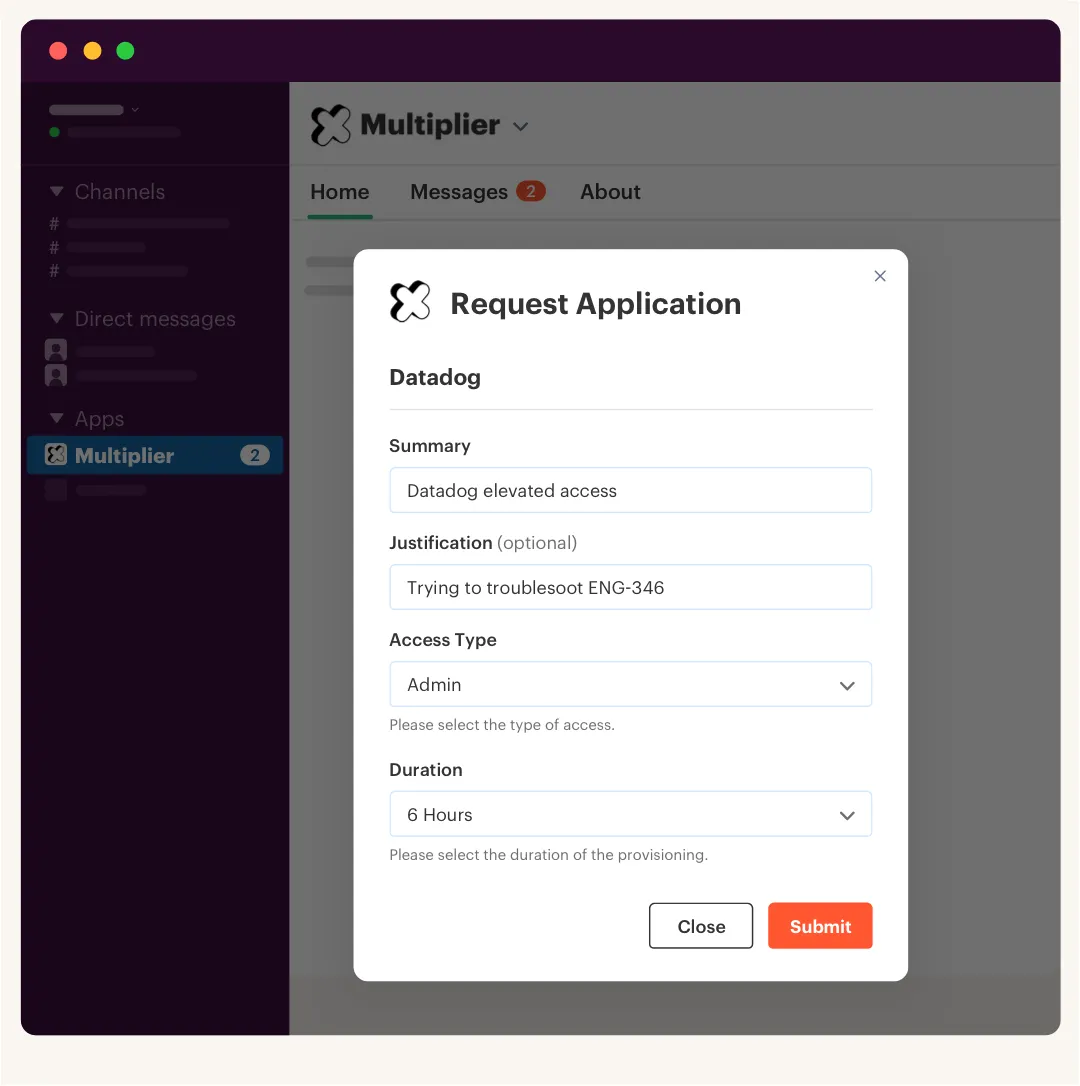
If elevated access is granted for 1 hour, 6 hours, or 24 hours and then automatically removed, your next review has less junk in it. Fewer stale admin roles. Fewer forgotten exceptions. Fewer awkward “does this person still need prod?” conversations.
I’d argue this is one of the most practical least-privilege moves an IT or security team can make. Not because it sounds good in policy. Because it reduces the volume of bad access states your review has to catch later.
Measure the review by outcomes, not completion rate
A 100% completed access review can still be weak. Completion rate is fine as an operating metric. It’s not enough as a control metric.
Track these instead:
- percentage of reviewed access kept vs revoked
- time from revoke decision to actual removal
- number of stale accounts identified through last login context
- percentage of exceptions that needed manual follow-up
- audit prep time after campaign completion
If audit prep still takes days after a “completed” review, the review didn’t really complete. It just moved work downstream.
That’s why good reviews feel operational, not ceremonial. They create an outcome. Access removed. Evidence logged. Risk reduced.
Why Jira-Native Reviews Change the Outcome
Jira-native access reviews matter because they keep the full chain together. Review, decision, revocation, and evidence all live close to the work. That changes speed, accountability, and audit quality at the same time. Once governance sits inside Jira instead of beside it, the value becomes obvious fast. They stop being a quarterly headache and start becoming a reliable control.
The workflow stays in one system of record
This is the main shift. Employees already live in Jira Service Management for requests. IT already works there. Approvers already respond faster in Slack than in email. So when access reviews also run there, you remove a ton of friction.
Instead of exporting app lists and emailing managers, the campaign lives inside the workflow system. Instead of collecting decisions somewhere else, reviewers work from a dashboard with context. Instead of separately documenting revocations, the record updates where the change happened.
One AI company in the background material processed 3,800 plus access requests in a year, with 75% fully automated, while a four-person IT Ops team supported more than 420 employees. That’s not just an efficiency story. It’s a proof point that governance inside the service workflow scales better than bolting governance onto the side.
Jira-native reviews create evidence as a byproduct
This part is huge. And underrated.
A lot of teams still think audit evidence is a reporting task. It shouldn’t be. If your process is designed well, evidence gets created while the work happens. The review decision is recorded. The revoke action is logged. The Jira issue holds the chain. Exporting evidence later becomes simple because the trail already exists.
You can see why access reviews carry more weight in compliance-heavy environments. Reviews aren’t just checking entitlements. They’re proving the company can detect excess access, act on it, and show that it acted.
For teams feeding evidence into Vanta or prepping for SOC 2 and ISO work, that matters a lot. A control is stronger when the proof doesn’t depend on someone remembering to compile it.
Separate portals slow behavior down
I get why companies buy separate governance portals. More features. More policy depth. Maybe a cleaner governance story on paper.
But if the portal sits outside where your team already works, adoption drops. Employees keep going to Slack. IT keeps living in Jira. Reviewers procrastinate because the tool feels like a side trip. Then the company blames “change management” when the real issue is workflow design.
The best systems reduce the number of places people need to think. That’s why Jira-native governance is a meaningful shift, not just an integration choice. It puts control where behavior already exists.
How Multiplier Makes Access Reviews Operational
Multiplier makes access reviews operational by running them inside Jira Service Management, tying reviewer decisions to real identity-provider changes, and keeping evidence on the Jira record. That’s the important shift. You’re not just documenting a review. You’re running one in the same place the request, approval, and revocation already happen.
Access reviews run with context, not guesswork
Multiplier’s Access Reviews feature lets admins create campaigns in Jira, select in-scope applications, assign reviewers, and launch the review from the same system where IT work already happens. Reviewers land on a JSM dashboard that shows user attributes, group memberships, job titles, departments, last login dates, and recommendations. That context matters because it cuts down on rubber-stamping and makes the review faster to complete with a real reason behind each decision.
And when a reviewer marks Revoke, Multiplier can automatically remove the user from the relevant identity provider groups, create Jira tickets documenting the change, and update campaign progress in real time. So the decision and the enforcement don’t drift apart.
Time-bound access reduces what reviews have to catch later
Multiplier also supports Time-Based Access, which is a big deal if you’re serious about least privilege. Requesters choose a duration like 1, 6, or 24 hours. After approval, access is provisioned through the mapped identity provider group and automatically removed when the window expires. The grant and the revocation are both logged to the Jira issue.
That means your next review starts with fewer stale elevated permissions in the system. It’s a cleaner environment. Simpler to review. Lower risk. And much easier to defend in an audit.
Jira, Slack, and identity-provider workflows stay tied together
With Multiplier, Approval Workflows can route requests to managers, app owners, or specific users in Jira or Slack, while Automated Provisioning via Identity Provider Groups handles the actual group changes after approval. The Slack App keeps approvals moving in chat, but Jira stays the system of record. That’s important. Fast approvals are nice. Fast approvals with audit evidence are what actually matter.

If you want to see how that looks in practice, Get started with Multiplier.
Why Access Reviews Matter More Than Most Teams Think
Access reviews aren’t just something auditors ask for. It’s that reviews expose whether your access model is actually controlled or just loosely documented. When reviews run in spreadsheets, they create paperwork. When they run in Jira with context, revocation, and evidence tied together, they create a real control.
That’s the shift. Stop treating access reviews like a quarterly admin task. Treat them like an operating system check for least privilege, audit readiness, and clean execution.
Frequently Asked Questions
How do I set up an access review campaign in Multiplier?
To set up an access review campaign in Multiplier, follow these steps: 1) In Jira, navigate to the Access Reviews section. 2) Click 'New Review' and fill out the required details, including the name of the campaign and the applications you want to include (only those marked 'Approved' will be listed). 3) Assign reviewers for each app and set the start and end dates for the campaign. 4) Once everything is filled out, click 'Create Access Review' to launch the campaign. This process helps ensure your access reviews are streamlined and efficient.
What if I need to revoke access quickly after an access review?
If you need to revoke access quickly after an access review, Multiplier makes it easy. Once a reviewer marks a user for revocation, Multiplier can automatically remove that user from the relevant identity provider groups. This action is logged in the corresponding Jira ticket, ensuring that there's a clear audit trail. To ensure this process works smoothly, make sure that your access review campaigns are set up correctly and that the necessary applications are linked to your identity provider.
Can I automate access requests through Slack with Multiplier?
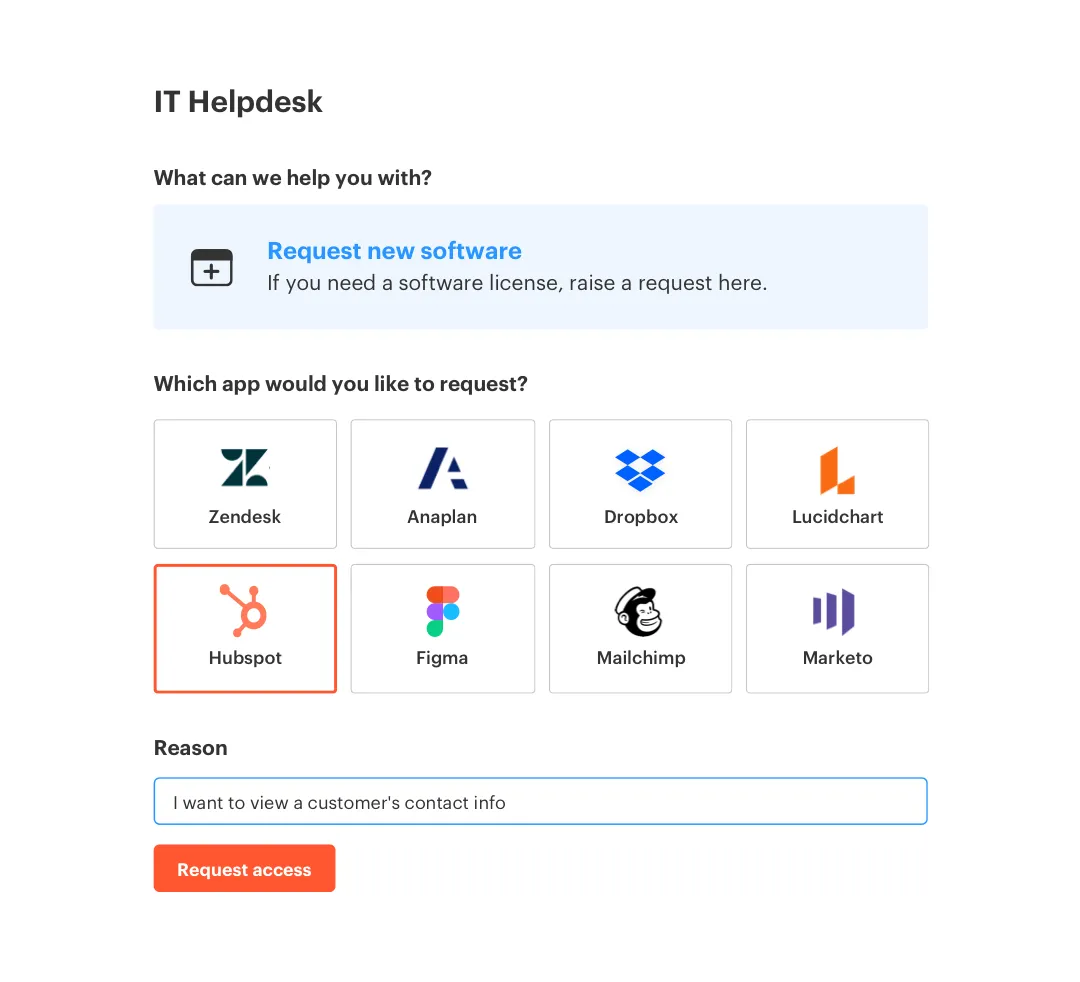
Yes, you can automate access requests through Slack using Multiplier. Employees can simply type `/request` in any Slack channel or use the Multiplier Slack app to browse the application catalog. After selecting the desired app and role, a Jira ticket is automatically created. This integration keeps the approval process fast and ensures that all requests are tracked within Jira, maintaining a complete audit trail.
When should I consider using time-based access?
Consider using time-based access when you want to enforce least privilege and minimize standing access. With Multiplier, requesters can select a duration for access (like 1, 6, or 24 hours) during the request process. This approach reduces the cleanup required during access reviews by automatically revoking access after the specified time. It's especially useful for roles that require temporary elevated permissions, helping to maintain a more secure environment.
Why does my access review process feel slow?
Your access review process may feel slow due to fragmented workflows. If approvals happen in different systems (like email or Slack) and evidence is stored in spreadsheets, it can create delays. Using Multiplier helps streamline this by keeping the entire process within Jira. All requests, approvals, and revocations are logged in one place, making it easier for reviewers to access the necessary context and make decisions quickly.


