


Your IT team just got an audit request. Three days to produce evidence for every access change in the last quarter. You open Jira. Then Slack. Then your email. Then the identity provider logs. Then you realize half the approvals happened verbally, and the other half are buried in comment threads you'll need to screenshot and paste into a spreadsheet.
This is the moment most teams discover their audit trail doesn't actually exist.
Audit trails aren't just compliance theater. They're the difference between a two-hour evidence export and a three-week scramble. They're what separates "we have controls" from "we can prove our controls work." And for most organizations running access management across Jira, Slack, email, and their identity provider, the trail is fragmented, incomplete, and impossible to reconstruct without burning IT cycles.
Key Takeaways:
- Audit trails must be complete, tamper-proof, and exportable, scattered evidence across tools fails all three tests
- Real-time logging tied to the originating ticket eliminates post-hoc reconstruction and screenshot hunting
- Time-bound access with automatic revocation creates enforceable least privilege that auditors can verify
- Access reviews that execute changes and document decisions in the same system produce audit-ready evidence by default
- Organizations using Jira-native governance export clean audit trails in minutes, not weeks
Most Teams Think Audit Trails Are About Compliance
Here's what actually happens. Your auditor asks for proof that access was approved, provisioned correctly, and revoked when it should have been. You pull the Jira ticket. The approval is there, buried in a comment from the manager. But the provisioning step? That happened in Okta, and the only record is a system log that doesn't link back to the ticket. The revocation? Never happened, because no one set an expiry and no one remembered to clean up.
So you start reconstructing. You match timestamps between Jira and the identity provider. You screenshot Slack threads. You ask people what they remember. Three days later, you've built a Frankenstein document that sort of proves compliance, but it's not authoritative, it's not complete, and the auditor knows it.
This is the norm. Audit trails aren't missing because teams don't care. They're missing because the work happens in five different places, and no single system owns the full record.
The Real Problem Isn't Logging, It's Fragmentation
The issue isn't that systems don't log. Jira logs ticket changes. Slack logs messages. Okta logs group assignments. The problem is none of them talk to each other, and none of them produce a unified, timestamped record that connects the request to the decision to the change.

When an employee requests access, the trail starts in Jira. When the manager approves in Slack, the trail moves to chat. When IT provisions in Okta, the trail jumps to the identity provider. When the auditor asks for evidence, you're stitching together three separate logs that weren't designed to form a chain. And if any link is missing, if someone approved verbally, if the provisioning happened off-ticket, if the revocation never occurred, the entire trail collapses.
This fragmentation creates three specific failures that auditors flag every time.
1. Approvals Without Provisioning Proof
You can prove someone approved the request. You can't prove the access was actually granted, or that it matched what was approved. The Jira ticket says "Editor role." The identity provider log shows a group assignment. But which group? Was it the right one? Did it happen immediately, or three days later after someone remembered? The gap between approval and execution is where audit trails break.
2. Provisioning Without Revocation Evidence
Access was granted. Was it ever removed? Most teams can't answer this without manually checking the identity provider. If the access was supposed to be temporary, there's no automated record of expiry. If the person left the company, there's no linked ticket showing offboarding revoked the entitlement. The absence of a revocation record is invisible until the auditor asks, and then it's a finding.
3. Changes Without Context
The identity provider shows a group assignment happened. It doesn't show why. Who requested it? Who approved it? Was it part of onboarding, a promotion, or an ad hoc access request? Without the Jira ticket linked to the change, the log entry is just noise. Auditors need context, and fragmented systems don't preserve it.
Learn more about Multiplier to see how Jira-native governance keeps every approval, provisioning action, and revocation tied to a single auditable record.
What It Feels Like When Audit Season Hits
Picture this. It's Monday morning. Your auditor sends the evidence request. You have until Thursday. You open the spreadsheet they sent, 200 access changes to document. For each one, you need to show who requested, who approved, what was provisioned, when it was revoked, and why.
You start with the easy ones. Jira tickets where everything happened on the record. You export the ticket, send it over. Done in five minutes.
Then you hit the messy ones. The approval happened in a Slack thread. The provisioning happened manually, and the only record is a comment that says "done." The revocation never happened because the access was supposed to be temporary, but no one set an expiry. You spend an hour reconstructing one request.
By Wednesday, you're still on request 47. Your IT team is pulling double duty, handling normal operations and hunting for evidence. Your manager is asking why this takes so long. The auditor is asking for updates. And you're realizing that half the changes you thought were documented actually aren't.
This is the hidden cost of fragmented governance. It's not just compliance risk. It's the operational drag of rebuilding history every quarter because your systems don't preserve it.
The New Way: Audit Trails That Write Themselves
The alternative is simple. Make the audit trail a byproduct of the workflow, not a separate artifact you reconstruct later. When access requests, approvals, provisioning, and revocations all happen in the same system, the evidence is complete by default.
Here's how it works in practice.
Unified Request and Decision Records
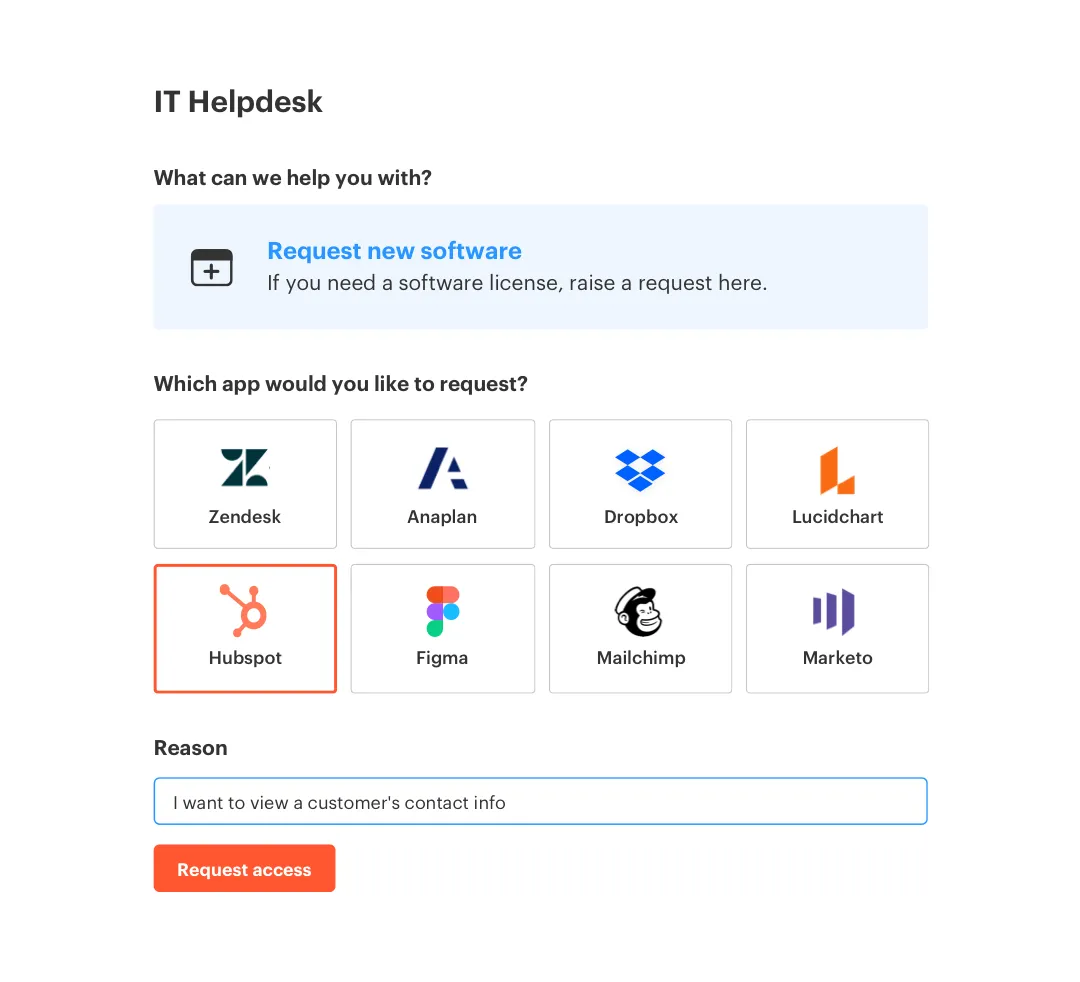
Every access request starts as a Jira ticket. The employee selects the app and role from a catalog. The ticket captures exactly what was requested, when, and by whom. The approver acts in Jira or Slack, and the decision writes back to the ticket as a comment with a timestamp and the approver's name. No screenshots. No email threads. The approval is on the record, linked to the request.
This solves the first audit gap. You can prove not just that someone approved, but exactly what they approved, when, and in what context.
Provisioning Tied to the Ticket
When the request is approved, the system calls the identity provider API to add the user to the mapped group. The provisioning action writes a comment to the Jira ticket confirming success or failure, with the exact group assignment and timestamp. The ticket becomes the authoritative record of both the decision and the execution.
This solves the second gap. You can prove the access was granted, that it matched the approval, and that it happened immediately. The link between approval and provisioning is explicit and tamper-proof.
Automatic Revocation with Evidence
If the access was time-bound, the system sets an expiry timer. When the window closes, it calls the identity provider to remove the user from the group, then writes a revocation comment to the ticket. If the access was part of offboarding, the lifecycle workflow disables the account and removes group memberships, logging each action to the ticket. Either way, the revocation is documented on the same record that granted access.
This solves the third gap. You can prove access was removed, when, and why. The full lifecycle, request, approval, provisioning, revocation, lives in one auditable record.
Access Reviews That Document Decisions and Changes
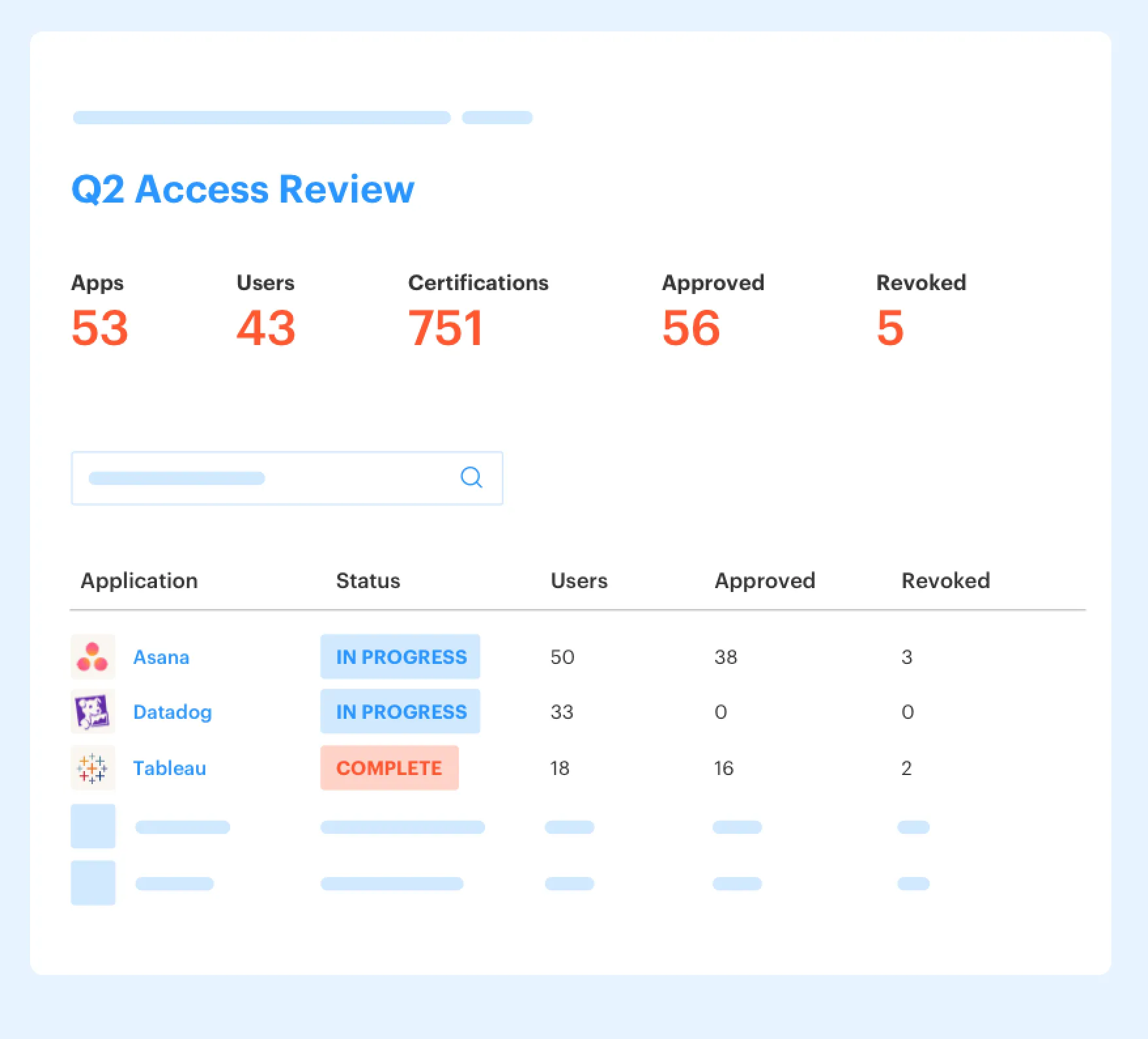
Quarterly access reviews run as Jira campaigns. Reviewers see users, group memberships, last login dates, and recommendations (e.g., "Revoke if inactive 90+ days"). They mark "Keep" or "Revoke" in the JSM dashboard. For every revocation, the system removes the user from the identity provider group and creates a Jira ticket documenting the decision and the change. The campaign dashboard tracks completion in real time, and admins export results as CSV for auditors.
This replaces spreadsheet-driven certifications with a workflow that produces evidence as it runs. The audit trail isn't something you build after the fact. It's the workflow itself.
See how Multiplier works to automate access reviews with built-in audit evidence.
Why Continuous Logging Beats Periodic Reconstruction
Most teams approach audit trails reactively. They wait for the audit request, then scramble to piece together evidence from multiple systems. The problem is memory fades, logs roll over, and people leave. What felt documented in January is a black hole by March.
Continuous logging flips the model. Every action writes to the record in real time, while context is fresh and systems are live. When the auditor asks for evidence, you export the tickets. No reconstruction. No screenshots. No gaps.
Here's what this looks like at scale. A mid-market SaaS company processes 3,800 access requests per year. 75% are fully automated, request, approval, provisioning, and revocation happen without human intervention. Each request produces a Jira ticket with a complete audit trail. When their SOC 2 auditor asks for evidence, they export the relevant tickets as a CSV and send it over. Total time: 20 minutes.
Compare that to the old way. Manual provisioning. Approvals in Slack. Revocations that sometimes happen and sometimes don't. Evidence scattered across Jira, Okta, email, and institutional memory. When the auditor asks, IT spends three weeks reconstructing history. The audit trail exists, technically, but it's not exportable, it's not complete, and it's not defensible.
The difference isn't effort. It's architecture. One system produces audit trails as a byproduct. The other system requires trails to be manually assembled after the fact.
How Multiplier Turns Jira Into Your Audit System of Record
Multiplier embeds identity governance directly into Jira Service Management, so every access action, request, approval, provisioning, and revocation writes to the originating Jira ticket. The ticket becomes the authoritative record, linking decisions to changes with timestamps, actors, and context.
Requests and Approvals on the Record
Employees request access through the JSM portal or Slack. The request creates a Jira ticket with the app, role, and requester captured automatically. Approvers act in Jira or Slack, and the decision writes back to the ticket. Every approval is timestamped, attributed, and linked to the exact request. No email threads. No verbal approvals. The record is complete from the start.
Provisioning Logged to the Ticket
When the request is approved, Multiplier calls your identity provider (Okta, Entra ID, Google Workspace) to add the user to the mapped group. The provisioning action writes a success or failure update to the Jira ticket, with the group name and timestamp. If provisioning fails, the error details are posted to the ticket for audit and troubleshooting. The ticket shows not just that access was approved, but that it was granted, when, and how.

Time-Bound Access with Automatic Revocation
For temporary access, requesters select a duration (1 hour, 24 hours, etc.). Multiplier provisions the access and sets an expiry timer. When the window closes, it calls the identity provider to remove the user from the group and writes a revocation comment to the ticket. The full lifecycle, request, approval, grant, and revoke, is documented on the same record, with no manual follow-up required.
This is least privilege that auditors can verify. You can show that access was temporary, that it expired on schedule, and that the revocation was automatic.
Access Reviews That Execute and Document
Access review campaigns run in Jira. Reviewers see users, groups, last login dates, and recommendations in the JSM dashboard. They mark "Keep" or "Revoke." For every revocation, Multiplier removes the user from the identity provider group and creates a Jira ticket linking the decision to the change. The campaign dashboard tracks progress in real time, and admins export results as CSV for auditors or push to Vanta.
The outcome is faster reviews, reliable revocations, and audit-ready evidence generated as the workflow runs.
Get started with Multiplier and turn Jira into your audit system of record.
Audit Trails as a Competitive Advantage
Clean audit trails aren't just about passing compliance. They're about operational efficiency. When evidence is complete and exportable, audits take hours instead of weeks. When access changes are logged in real time, you can answer security questions immediately. When revocations are automatic and documented, you reduce standing privileges without adding manual work.
Organizations that treat audit trails as a design requirement, not an afterthought, move faster. They automate more. They run leaner IT teams. And they walk into audits confident, because the evidence is already there.
The alternative is the status quo. Fragmented systems. Manual reconstruction. Screenshots and spreadsheets. Audit season as a recurring fire drill.
The choice is simple. Build audit trails into the workflow, or keep rebuilding them every quarter.
Frequently Asked Questions
How do I ensure all access requests are documented?
To ensure all access requests are documented, you can use Multiplier's Application Catalog within Jira Service Management. This allows employees to submit requests directly through the JSM portal or Slack, automatically creating a Jira ticket for each request. Every approval and provisioning action is logged back to the ticket, ensuring a complete audit trail. By centralizing the request process, you eliminate fragmented records across different tools and maintain a tamper-proof history of all access changes.
What if I need to revoke access for a temporary role?
If you need to revoke access for a temporary role, you can set up time-based access using Multiplier. During the access request, the requester selects a duration (like 1 or 24 hours). After approval, Multiplier provisions the access and automatically sets a timer to revoke it when the time expires. This ensures that access is only granted for the necessary duration without manual follow-up, reducing the risk of standing privileges.
Can I automate access reviews with Multiplier?
Yes, you can automate access reviews with Multiplier's Access Review feature. You can create campaigns within Jira, selecting the applications to review and assigning reviewers. Reviewers will receive notifications and can mark users as 'Keep' or 'Revoke' directly in the JSM dashboard. Each decision is documented, and Multiplier automatically removes users from the relevant identity provider groups, making the whole review process faster and more consistent.
When should I use the Slack app for access requests?
You should use the Slack app for access requests when your team frequently communicates through Slack. The app allows employees to request access directly from Slack, creating a Jira ticket automatically. Approvers receive notifications in Slack with one-click options to approve or deny requests. This integration reduces context switching and speeds up the approval process, keeping everything auditable and linked to the original request.
Why does my audit trail seem incomplete?
Your audit trail may seem incomplete due to fragmented systems where approvals and provisioning happen in different places. To resolve this, use Multiplier to centralize all access requests, approvals, and provisioning within Jira. This way, every action is logged in real-time, creating a comprehensive and tamper-proof audit trail. By keeping everything in one system, you can avoid the hassle of reconstructing evidence during audits.


