


You're paying for access you don't need. And I'm not talking about the obvious stuff, the licenses for people who left six months ago. I'm talking about the standing privileges you granted once and forgot about. The admin roles that never got downgraded. The production access that was supposed to be temporary.
Most IT teams think access sprawl is an audit problem. It's not. It's a security liability that compounds daily, and it's costing you way more than the license fees.
Key Takeaways:
- Overprovisioned access creates attack surface that grows silently, most breaches exploit credentials that shouldn't exist
- Standing privileges cost 3-5x more than time-bound access when you factor in license waste, compliance overhead, and breach exposure
- Manual access reviews catch less than 40% of overprovisioned accounts because reviewers lack usage context
- Time-based access with automatic revocation cuts standing privilege by 60-85% without slowing down legitimate requests
- Audit-ready evidence should be a byproduct of access workflows, not a quarterly scramble through screenshots and spreadsheets
Why Nobody Talks About the Real Cost
Overprovisioned access is the thing everyone knows about but nobody wants to fix. You've got quarterly access reviews on the calendar. You've got policies. You've got spreadsheets that say who should have what. And you've still got people with admin rights to systems they haven't touched in eight months.

The problem isn't that teams don't care. It's that the cost is invisible until it's catastrophic.
The Breach That Didn't Need to Happen
Here's what actually happens. Someone gets elevated access for a one-time migration. The project wraps. The ticket gets closed. The access stays. Six months later that account gets compromised, phishing, credential stuffing, doesn't matter. The attacker now has keys to systems that person barely remembers accessing.
When the forensics team shows up, they don't ask why the breach happened. They ask why that account still had those privileges. And you're left explaining a process that everyone followed correctly but still failed.
License Waste Compounds Monthly
Let's talk money. You're paying for Salesforce licenses for people who logged in once during onboarding. You've got Jira seats for contractors who finished their projects in Q2. You've got admin licenses because downgrading someone felt like more work than just leaving it.
One mid-market SaaS company I know was spending $47K annually on licenses for inactive users. Not former employees, current employees who just didn't need those tools anymore. The finance team kept asking why SaaS spend was climbing while headcount was flat. IT didn't have a good answer because they didn't have visibility into who was actually logging in.
Compliance Theater Doesn't Scale
Most access reviews are checking boxes, not reducing risk. You send a spreadsheet to managers asking them to confirm who should have access to what. They skim it during a meeting, approve everything because they don't want to break something, and send it back. You file it for the auditor.
Nobody's looking at last login dates. Nobody's checking if that admin role is still necessary. Nobody's asking if the access was time-bound or if it's been sitting there for 18 months. The review happens, the evidence gets logged, and the overprovisioning continues.
What Most Teams Miss About Least Privilege
Least privilege isn't a policy. It's an operational discipline. And most teams fail at it because they're optimizing for the wrong thing.
The conventional wisdom says you should grant minimal access upfront and add more as needed. Sounds great. In practice, it creates so much friction that people start working around the system. Developers share credentials. Managers pre-approve broad access to avoid constant interruptions. IT grants standing admin roles because the alternative is fielding requests every time someone needs elevated access for 20 minutes.
The Real Problem Is Permanent Access
The issue isn't that teams grant too much access. It's that they grant permanent access when temporary would work. Someone needs database admin rights to troubleshoot a production issue. You add them to the group. The issue gets resolved. The access stays because revoking it manually is one more thing to remember, and forgetting doesn't break anything immediately.
Multiply that by hundreds of requests and you've got a privilege creep problem that no amount of quarterly reviews will fix. Learn more about Multiplier
Manual Revocation Doesn't Happen
Here's the test. Pull up your identity provider right now and check how many users have admin access to your most sensitive systems. Now check when those memberships were added. I'll bet you find accounts that have had elevated access for 6+ months when the actual need was measured in hours.
It's not that IT is lazy. It's that manual revocation requires someone to remember, find the ticket, verify the access is no longer needed, log back into the identity provider, and remove the group membership. That's five steps that compete with every other urgent task. So it doesn't happen.
The Approval Bottleneck Makes It Worse
When access requests take three days to approve, teams start gaming the system. They request broader access than they need because asking twice is worse than asking once. They request permanent access because "temporary" means they'll be back in the queue next week. Managers approve everything because declining creates more work than approving.
The bottleneck doesn't just slow access. It incentivizes overprovisioning.
How High-Performing Teams Enforce Least Privilege
The teams that actually maintain least privilege at scale aren't running tighter policies. They're running systems that make the right behavior automatic.
Time-Bound Access as the Default
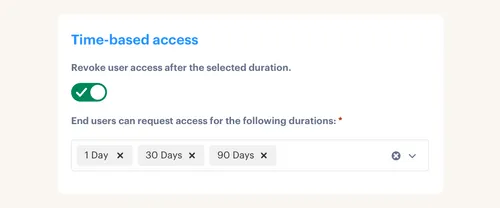
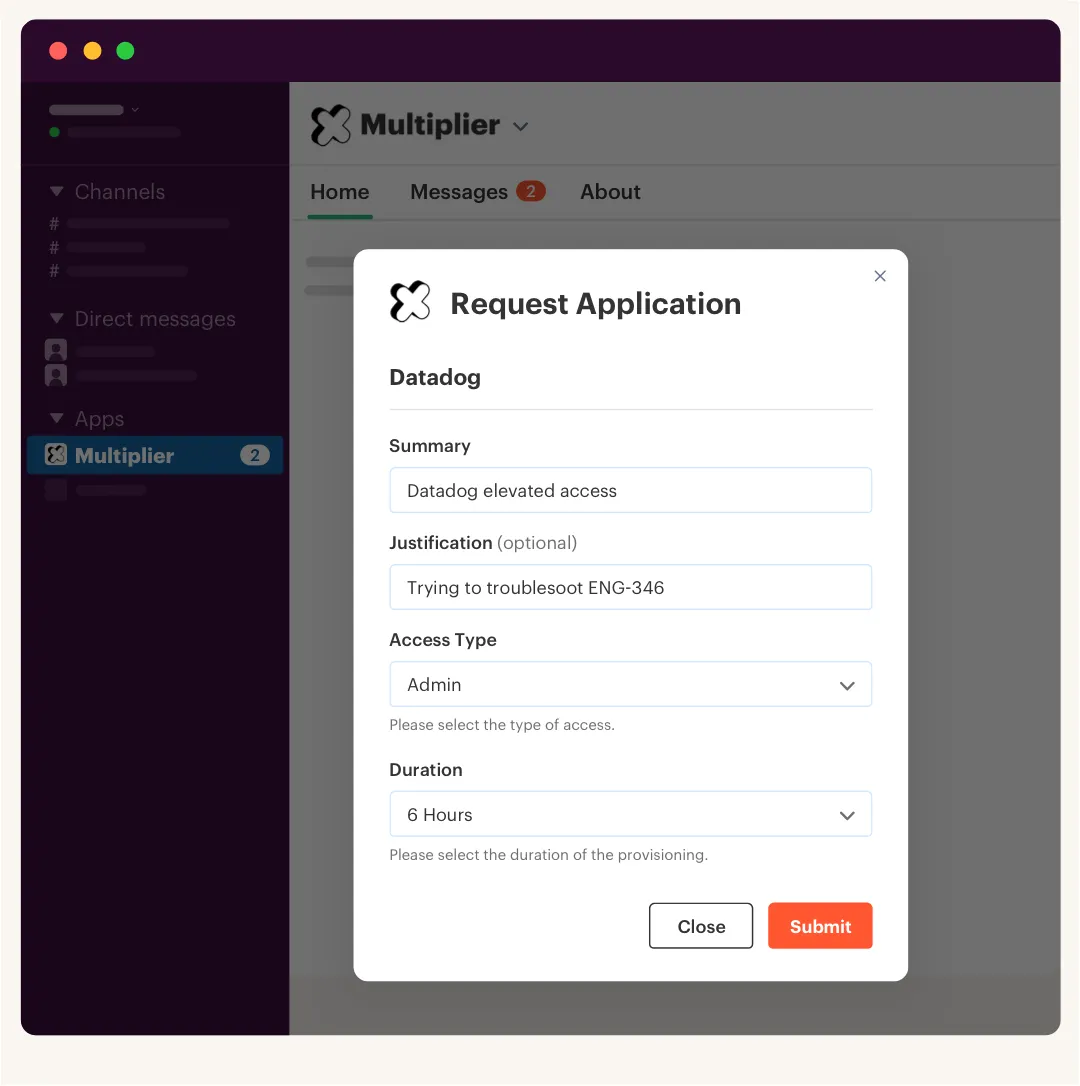
Instead of granting permanent access and hoping someone remembers to revoke it, these teams make temporary access the standard. When someone requests elevated privileges, they specify a duration, 1 hour, 6 hours, 24 hours. The system provisions immediately after approval and sets a timer to remove the access when it expires. No follow-up required.
This isn't just cleaner operationally. It's fundamentally safer. A compromised account with admin rights for 6 hours is a contained incident. A compromised account with permanent admin rights is a catastrophic breach waiting to happen.
Automated Provisioning Through the Identity Provider
Manual provisioning is where least privilege goes to die. Someone approves the request in Jira or email. IT logs into Okta or Entra and adds the user to the right group. They update the ticket with a comment. Maybe they screenshot it for the audit file. The whole process takes 15 minutes and introduces three opportunities for error.
Teams that automate provisioning map access roles to identity provider groups upfront. When the ticket reaches "Approved" status, the system calls the IDP API, adds the user to the mapped group, and writes the result back to the ticket. For time-bound requests, it schedules the revocation automatically. The entire flow is deterministic, fast, and auditable by default.
Access Reviews With Usage Context
Quarterly reviews fail because they're asking the wrong question. "Should this person have access?" is unanswerable without context. What you actually need to know is: Did they use it? When was the last login? Is this access still tied to their current role?
The teams getting this right run reviews inside their ITSM platform with login telemetry baked in. Reviewers see user attributes, group memberships, last login dates, and system-generated recommendations. "Keep" or "Revoke" decisions execute immediately through the identity provider, and the evidence writes itself to the campaign record.
It's not perfect. But it's 10x better than a spreadsheet where every cell is a guess.
License Reclamation Based on Real Activity
SaaS waste isn't just unused licenses. It's licenses for people who logged in once and never came back. The only way to catch this is continuous monitoring, not quarterly snapshots.
High-performing teams set inactivity thresholds per application, 30 days, 60 days, 90 days depending on criticality. When someone crosses the threshold, they get an email warning. If they don't log in during the grace period, the system revokes access automatically and generates a ticket documenting the change. Finance gets a dashboard showing notifications sent and licenses reclaimed. IT stops paying for ghost users.
This works because it's automatic. Manual license audits happen once a year if you're lucky. Automated reclamation runs continuously.
Why Governance Can't Live Outside Your Service Desk
Most teams assume identity governance needs a dedicated suite. Separate portal, separate workflows, separate evidence repository. The logic seems sound, governance is complex, so it needs specialized tooling.
But here's what actually happens. Employees request access in Jira. Approvals bounce through email or Slack. IT provisions in the identity provider. Evidence gets recreated in spreadsheets for the auditor. Every handoff is a delay, every system switch is a context loss, and every manual step is a failure point.
The ITSM and IGA Split Creates the Bottleneck
ITSM platforms handle intake and SLAs well, but they stop short of automated provisioning and certification reporting. Identity governance suites deliver deep policy controls, but they're not Jira-native and require long implementations. You end up with two systems that need to be reconciled by hand.
A product manager files a JSM ticket for Figma access. Their manager approves via email. IT checks a spreadsheet for the right group, adds the user in Okta, screenshots the change, and pastes it into the ticket. Nobody sets an expiry. Two months later the person still has access, the license is still billed, and the audit trail is a collection of images and comments.
Multiply this by hundreds of requests and the backlog forces bad choices. Either grant broad standing access to avoid delays, or accept constant interruptions and manual cleanup. See how Multiplier works
When Governance Lives in Jira, the Bottleneck Dissolves
When access requests, approvals, provisioning, and revocations all happen in the same system, the friction disappears. Requests come through JSM or Slack. Approvers act in Slack or JSM with one-click buttons. Provisioning happens automatically through the identity provider. Time-bound access revokes itself. Access reviews run as Jira campaigns with usage context and enforced revocations.
The audit trail writes itself because every action ties back to the originating ticket. No screenshots, no side-channel evidence, no quarterly scramble to prove what happened. The system that handles the work produces the proof.
Audit Evidence Should Be a Byproduct, Not a Project
The teams that walk into audits with clean reports aren't working harder. They're working in systems where evidence generation is automatic. Every access request creates a ticket. Every approval is logged with timestamp and approver identity. Every provisioning action writes a comment. Every revocation is documented.
When the auditor asks for proof of least privilege enforcement, you export the campaign results. When they ask for evidence of time-bound access, you filter tickets by expiry date. When they ask who approved what, you run a JQL query. The evidence already exists because the workflow required it.
Compare that to the traditional approach. You've got emails in three inboxes, Slack threads you can't search, manual notes in a wiki, and screenshots scattered across ticket comments. Reconstructing what happened takes days. And you still can't prove the negative, that access was revoked when it should have been.
How Multiplier Automates Least Privilege in Jira
Multiplier embeds identity governance directly into Jira Service Management. Instead of juggling a separate IGA portal, spreadsheets, and manual provisioning, you get access requests, approvals, provisioning, time-bound access, and access reviews all in JSM and Slack.
Time-Based Access With Automatic Revocation
When someone requests elevated access, they choose a duration, 1 hour, 6 hours, 24 hours. After approval, Multiplier provisions immediately by adding the user to the mapped identity provider group and sets a timer. When the window expires, it removes the group membership automatically and logs the revocation to the ticket.
No manual follow-up. No standing privileges that outlive their purpose. The entire flow, request, approval, grant, revocation, lives in the Jira issue, so auditors get clean proof of enforced expiry.
Automated Provisioning Through Your Identity Provider
Multiplier maps each access role to identity provider groups in Okta, Entra, or Google Workspace. When a ticket reaches "Approved" status, it calls the IDP API to add the user to the right groups. For time-bound requests, it schedules automatic revocation. The ticket updates with success or failure comments for troubleshooting and audit.

This eliminates copy-paste errors, waiting on admins, and screenshot evidence. Provisioning is fast, deterministic, and tied to the record that initiated it.
Access Reviews With Usage Context and Enforced Revocations
Multiplier's access review campaigns run inside JSM. Admins create campaigns, select in-scope applications, and assign reviewers. Reviewers land on a JSM dashboard showing users, group memberships, last login dates, and system recommendations, "Revoke if inactive 90+ days."
They mark "Keep" or "Revoke" with one click. Multiplier removes users from IDP groups automatically, creates tickets documenting the changes, and updates the campaign dashboard with real-time progress. Admins export results as CSV for auditors or push evidence to Vanta.
It's faster than spreadsheets, more reliable than manual revocations, and generates audit-ready evidence by default.
License Reclamation Based on Login Telemetry
Multiplier's Auto Reclaim feature monitors last-login data from your identity provider. You set inactivity thresholds per app, 30 days, 60 days, 90 days. When someone crosses the threshold, Multiplier emails them a warning. If they don't log in during the grace period, it revokes access automatically and generates a Jira ticket.
A centralized dashboard shows notifications sent and revocations performed. Finance sees license savings. IT stops paying for ghost accounts. And the whole process runs continuously without manual audits. Get started with Multiplier
The Path Forward
Overprovisioned access isn't an audit problem. It's an operational discipline problem. The teams that fix it aren't running stricter policies, they're running systems where least privilege is automatic, time-bound access is the default, and audit evidence is a byproduct of normal workflows.
Start with time-based access for high-risk roles. Make it easy to request, fast to approve, and automatic to revoke. Then move to automated provisioning so IT stops being the bottleneck. Then add usage-based license reclamation so you stop paying for access nobody's using.
The goal isn't perfect governance. It's governance that scales without breaking your team.
Frequently Asked Questions
How do I set up time-based access with Multiplier?
To set up time-based access using Multiplier, follow these steps: 1) When submitting an access request through the JSM portal or Slack, choose the duration for the access (like 1 hour, 6 hours, or 24 hours). 2) After approval, Multiplier will automatically provision the access and set a timer to revoke it once the duration expires. This ensures that access is granted only for as long as it's needed, reducing the risk of overprovisioned access. 3) Make sure to communicate with your team about this process so they understand how to use it effectively.
What if I need to revoke access manually?
If you need to revoke access manually, you can do so by navigating to the relevant Jira ticket where the access request was logged. From there, you can update the ticket to reflect the revocation and remove the user from the appropriate identity provider group. However, keep in mind that Multiplier automates revocation for time-based access, so for future requests, encourage your team to use that feature. This way, manual revocation becomes less frequent and helps maintain least privilege access more effectively.
Can I track access requests in Multiplier?
Yes, you can track access requests in Multiplier through Jira. Each access request creates a Jira ticket that logs all actions taken, including approvals and provisioning. You can view the status of requests, see who approved them, and check the access history. This centralized tracking helps ensure compliance and provides a clear audit trail, making it easier to manage access and respond to audits when necessary.
When should I conduct access reviews?
Access reviews should typically be conducted on a regular basis, such as quarterly, to ensure that users still require the access they have. With Multiplier, you can streamline this process by creating access review campaigns directly within Jira. This allows you to assign reviewers, track their responses, and automatically remove access for users who are no longer active. Regular reviews help maintain security and minimize the risk of overprovisioned access.
Why does my team need automated provisioning?
Automated provisioning is crucial because it eliminates manual steps that can lead to errors and delays. With Multiplier, once an access request is approved, it automatically provisions access through your identity provider, ensuring that users get the access they need quickly and accurately. This reduces the workload on your IT team and helps maintain a secure environment by minimizing standing privileges that can lead to security risks.


