

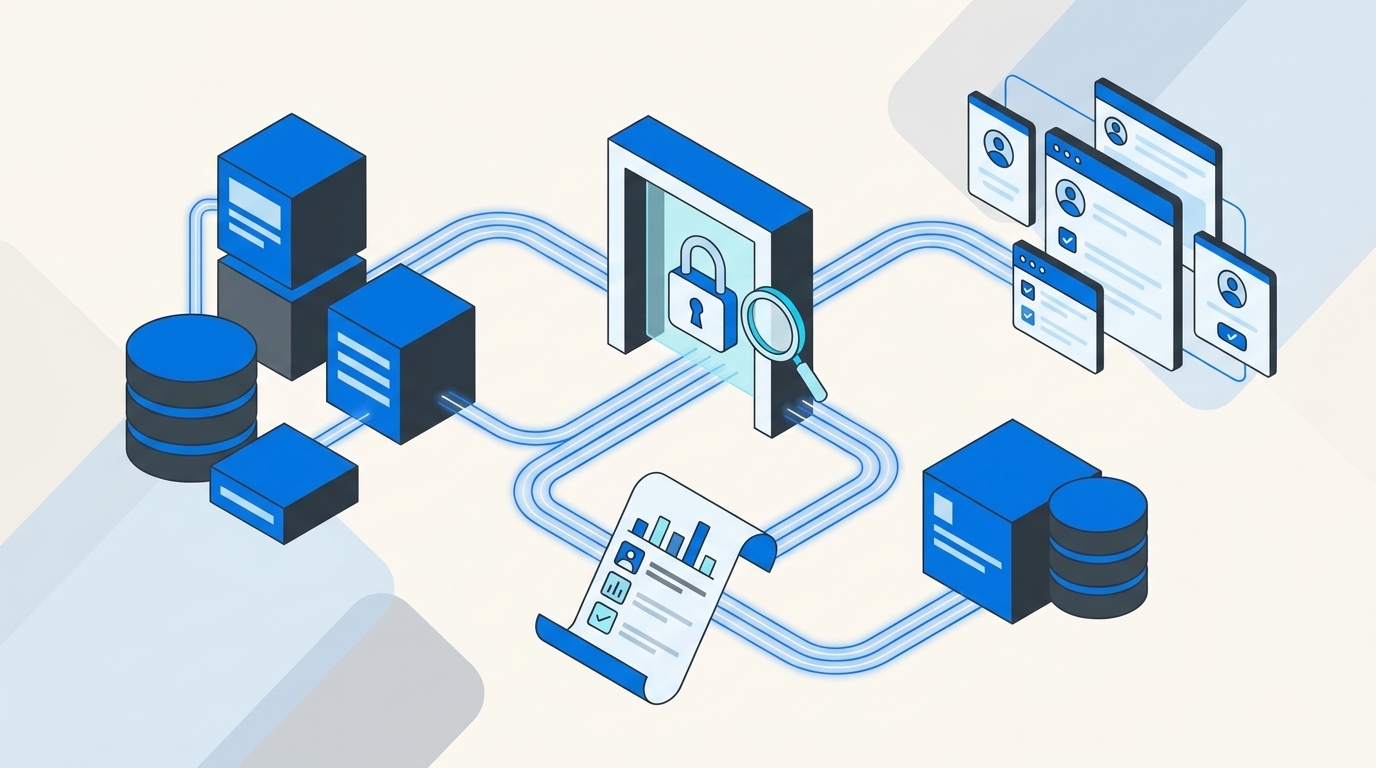
7 screenshots is not an audit trail. If your tracking and auditing application sits outside Jira while requests, approvals, and provisioning happen in Jira, Slack, and Okta, you're rebuilding the truth after the work is already done.
And when the auditor asks who approved access, who provisioned it, and when it was removed, everyone starts hunting.
I’ve seen this movie in different systems. The ticket says approved. Slack has the real approval. The identity provider has the actual group change. The spreadsheet has someone’s memory of the whole thing. Not ideal.
Key Takeaways:
- Your tracking and auditing application should live where access work actually happens, which is usually Jira and Slack.
- The access ticket and the identity provider change need to be tied together, or your audit trail is always partial.
- A good access tracking process logs request, approval, provisioning, expiry, review, and removal in one record.
- If a request takes 5 to 30 minutes of manual IT work, automation becomes obvious pretty fast.
- Jira should be the system of record. Your identity provider should be the system that executes the change.
- Access reviews work better when they start from live access data, not a spreadsheet copied three weeks ago.
Why Access Tracking Breaks Outside Jira
Access tracking breaks when the request, approval, provisioning change, and audit evidence live in different tools. Jira may hold the ticket, Slack may hold the decision, and your identity provider may hold the real entitlement. That split creates slow access and weak evidence, even when every person involved is trying to do the right thing.

A Ticket Without the Change Is Half a Record
A Jira ticket can look clean and still miss the thing that matters. Someone requested Salesforce Admin access. Their manager approved it in Slack. Then IT added the user to the right Okta group. If those three events aren’t tied together, you don’t have a real tracking and auditing application. You have a story with missing chapters.
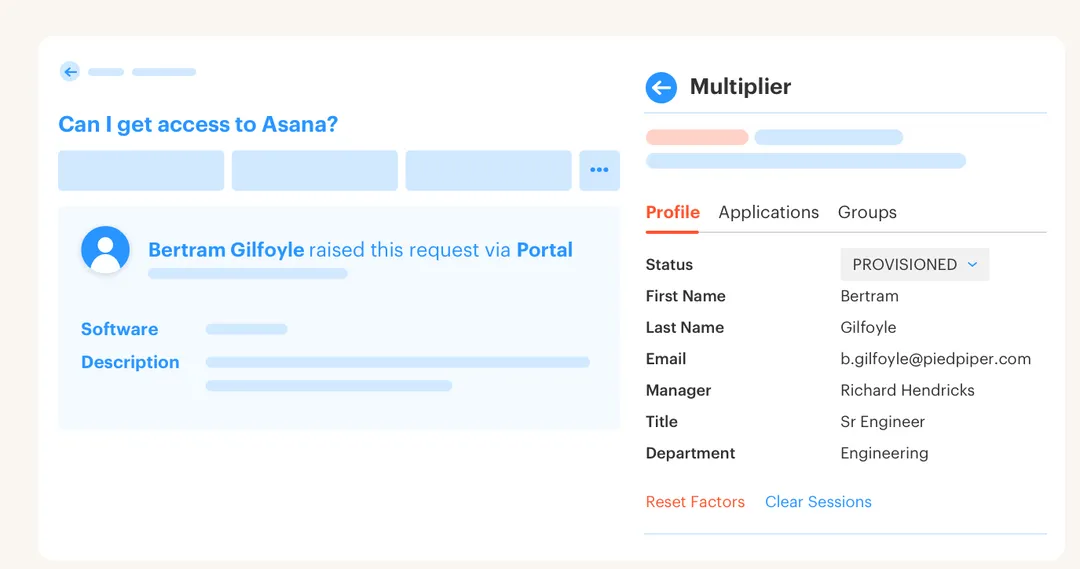
The annoying part is that the process can feel totally normal while it’s broken. Tuesday morning, IT opens the queue and sees 38 access requests from new hires, transfers, and random project needs. Half are missing the role. A few need app owner approval. Someone asks for a screenshot because finance wants proof before renewing licenses. That’s the access governance version of doing bookkeeping from receipts in three different glove compartments. You might get there eventually, but nobody enjoys the drive.
A separate IGA portal sounds reasonable on paper. I get the logic. It gives security a dedicated place for policy and control. The issue is that most employees don’t live there, and IT still has to reconcile the portal with Jira, Slack, and the identity provider. If you already run service delivery in Jira, pushing access governance somewhere else adds another place for context to leak. Want to see what Jira-native governance can look like without adding another portal? Learn more about Multiplier.
The Audit Trail Fractures at the Approval Step
Audit evidence usually breaks at handoffs, not at policy writing. The policy says manager approval is required. The request starts in Jira. The approval happens in Slack. The access change happens through an identity provider group. Then the audit evidence gets rebuilt later, often by someone who wasn’t part of the original request.

Security frameworks care about access control, account management, and proof that access is granted and removed properly. You can see the same pattern in NIST SP 800-53 access control guidance, where the work isn’t just deciding who should have access. It’s proving the control ran. That’s where separate systems get expensive. Not always in license cost. In human follow-up.
Luno had a version of this problem during rapid growth. Access requests arrived through Slack, email, and Jira, and IT had to chase approvals while manually assigning Okta groups. The team later reported an 80% reduction in IT workload on access requests after centralizing the flow and automating the routine work. That number matters because it shows the real cost. Access tracking isn’t a compliance project first. It’s an operating model problem that turns into a compliance problem when nobody can prove what happened.
How to Build an Auditable Access System in Jira
A strong access tracking system starts with one rule: the ticket should know what changed in the identity provider. Jira should capture the request and approval, while the identity provider executes the group or account change. Once those two systems are connected, audits become a byproduct of daily work instead of a quarterly rebuild.
Check Whether Your Evidence Survives the Walkthrough
3 questions tell you whether your current access tracking and auditing application is doing real work. Can you open one Jira ticket and see who requested access, who approved it, what group changed, and when access ended? Can you prove whether the user still has access without checking a spreadsheet? Can a reviewer revoke access and create evidence without asking IT to do a second task?
If the answer is no to any of those, the process is fragile. Not broken beyond repair. Just fragile. I’d start with a sample of 20 recent access requests, because 20 is enough to expose the pattern without turning the exercise into a research project. Pull five standard app requests, five admin requests, five onboarding requests, and five offboarding or transfer requests. For each one, check these fields before you look at any dashboard:
- Requester and business reason: The ticket should say why access was needed.
- Approver and timestamp: The approval should be visible in the same record.
- Provisioning action: The identity provider group or account change should be logged.
- Expiry or review date: Elevated access should not be open-ended by default.
- Removal proof: Revocation should be tied back to the original request or review.
A lot of teams will pass the first two and fail the last three. That’s the trap. They built a request tracker, not an audit-ready access system. Different beast.
Make Jira the Record and Your IDP the Executor
The cleanest model is boring, which is why it works. Jira is where work gets requested, approved, and tracked. Your identity provider is where access actually changes. The tracking and auditing application should connect those two systems instead of asking an admin to copy information from one to the other.
The reason this matters is authority. If access is provisioned through Okta, Entra ID, or Google Workspace groups, the change is traceable and reversible. If access is granted manually inside six different SaaS apps, each app becomes its own little evidence problem. I’m not saying every single app will be perfect. Some non-SSO tools still need manual handling. Fair. But the deciding rule should be clear: if the app supports group-based access through the identity provider, route it that way before building a manual exception path.
The sequence is simple enough:
- Employee requests an approved app and role in Jira or Slack.
- Jira routes approval to the manager, app owner, or named approver.
- Approval changes the ticket status.
- The identity provider group update runs from that approved state.
- The ticket records the success, failure, and next action.
That last piece is where a lot of systems fall apart. A request without execution proof creates audit debt. And audit debt has a way of showing up when everyone is already busy.
Separate Low-Risk Requests From Approval-Heavy Access
A support analyst asking for Viewer access to a standard tool doesn’t need the same process as an engineer asking for production admin rights. Treating both the same creates backlog. It also trains people to avoid the process, which is exactly how shadow access happens.
The better move is to tier access by risk before the request ever hits the queue. Standard apps can be auto-approved or manager-approved. Sensitive roles can require app owner approval. Admin roles should have expiry by default. If you can’t explain the approval path in one sentence, the process is probably too complicated for daily use. And people will route around it.
A mid-market AI company hit the classic growth wall here. They grew from 100 to more than 400 employees, used Slack channels and Notion boards to track access, and ended up with missed notifications and manual provisioning delays. After moving into a Jira-centered access flow with Okta provisioning, they processed 3,800+ access requests in a year, with 75% fully automated. That’s the point. Automation isn’t about removing judgment. It’s about saving judgment for the access that actually needs it. If you want to see how this works in a Jira and identity provider setup, See how Multiplier works.
Put Expiry Dates on Access Before You Grant It
Temporary access should be designed at request time, not remembered later. If someone needs admin access for an incident, a migration, or a short project, the access window should be part of the original request. One hour, six hours, 24 hours. Pick the right window and let the system remove access when the job is done.
The threshold I like is pretty blunt. If access increases blast radius, set an expiry. Admin roles, production systems, financial tools, customer data, security consoles. All of those should require a duration unless there’s a clear reason for standing access. Some teams push back here because expiry can feel like friction. Valid concern. During an incident, nobody wants to fight the access process. But the answer isn’t permanent admin access for half the engineering team. The answer is fast temporary access with automatic removal and a clean record afterward.
A simple access expiry rule looks like this:
- Low-risk standard access: No expiry unless the app has license pressure.
- Elevated business access: 7 to 30 days, then review or remove.
- Privileged technical access: 1 to 24 hours by default.
- Emergency access: Fast approval, short duration, mandatory record.
- Exceptions: Named owner, reason, review date, and removal path.
That gives security something useful and gives IT something workable. Policy without execution is just a document people forget about.
Run Reviews From Live Access, Not Spreadsheet Memory
Access reviews fail when the reviewer is looking at stale data. Someone exports users from the identity provider. Someone else adds app owners. A manager marks keep or revoke in a sheet. Three weeks later, IT gets a list of removals and has to figure out what still applies. I’ve watched smart teams do this. It’s painful.
A better review starts from live access and ends with enforced changes. The reviewer should see the user, app, group, department, title, last login, and a clear keep or revoke action. If they revoke, the identity provider group should change, and the evidence should land back in the same access review record. That’s the difference between a review and a performance.
The review cadence should match risk:
- Privileged access: Monthly or tied to major changes.
- Sensitive business apps: Quarterly.
- Standard SaaS apps: Semi-annual or annual, unless spend is high.
- Inactive users: Continuous review based on last login.
- Transfers and role changes: Review immediately during the lifecycle event.
Atlassian has been leaning into Jira Service Management for employee service workflows, including onboarding and offboarding patterns, which lines up with how many IT teams already work. Their Jira Service Management overview shows why teams use Jira as the front door for service work. The missing piece for many teams is connecting that service record to actual access enforcement.
Measure the Backlog in Minutes, Not Tickets
Ticket counts hide the real cost of access work. Ten tickets can mean 20 minutes if the request is clean and automated. Ten tickets can also mean five hours if IT has to chase approvals, find the right group, provision manually, and paste evidence into Jira. The metric that matters is minutes of human work per access request.
Use a 2-week sample and time the steps. Not forever. Just long enough to expose the waste. Track request cleanup, approval chasing, provisioning, evidence capture, and follow-up removal. If the average request takes more than 10 minutes of IT time, automation will probably pay back faster than another process meeting. If the average request takes under 3 minutes and evidence is already clean, your bigger problem may be reviews or standing privileges.
I’d look at four numbers:
- Manual minutes per request: The real IT workload.
- Approval lag: Time waiting on decision-makers.
- Provisioning lag: Time after approval before access works.
- Evidence gaps: Tickets missing proof of approval, change, or removal.
Videoamp is a good example of why this matters. Their IT queue got hammered after onboarding waves, especially when new hires came in and needed extra apps or permissions. After moving to a self-service app catalog embedded in Jira Service Management, they processed 500+ app requests in six months and saved 70+ hours of IT productivity. That’s not just a better queue. That’s a tracking and auditing application doing the boring work in the background so the team can focus on higher-value problems.
How Multiplier Connects Jira to Provisioning
Multiplier connects Jira Service Management, Slack, and your identity provider so access requests become auditable actions. Employees request approved apps in Jira or Slack, approvers decide in the tools they already use, and approved changes are executed through identity provider groups. The Jira issue keeps the evidence tied to the request.
Catalog Requests With IDP Group Mappings
Multiplier’s Application Catalog gives employees a Jira-native place to request sanctioned apps and roles. The important part isn’t the tile view, although people do like having a clean catalog. The important part is that each role can map to identity provider groups, so the approved request has a deterministic provisioning path instead of a manual “go figure it out” step.
Multiplier provisions through Okta, Entra ID, or Google Workspace group mappings. When the Jira issue reaches the configured approved status, the group change can happen through the identity provider, and the ticket records the action. That directly attacks the 5 to 30 minute routine request problem from the earlier examples. It also means the access tracking and auditing application isn’t just logging intent. It’s tied to the system that actually grants access.
Approvals, Reviews, and Revocation Stay in Jira
Multiplier routes approvals to managers, app owners, or named users through Jira and Slack. That matters because approvals don’t drift into email threads where evidence gets lost. For elevated access, Time-Based Access lets requesters choose durations like 1, 6, or 24 hours, then removes the user from the mapped identity provider group when the window expires.

Access Reviews also run in JSM, with reviewer dashboards that show user attributes, groups, last login, and recommendations. Reviewers can keep or revoke access, and revocations remove users from the relevant identity provider groups while creating Jira evidence. Auto Reclaim can also reclaim licenses based on inactivity policies when identity provider login data supports it. If your team is trying to make Jira the access record and the identity provider the executor, Get started with Multiplier.
Build the Access Record Before the Audit
the audit should not be the first time your team tries to connect the request, approval, provisioning change, review decision, and revocation. Build that record as the work happens. Otherwise you’re always rebuilding history from Jira comments, Slack messages, identity provider logs, and spreadsheets.
A tracking and auditing application only works if it reflects operational truth. Jira has the work. Slack has the decision flow. Your identity provider has the access change. Connect those pieces, set expiry where risk is high, review from live access, and measure the human minutes you remove from the system. That’s when access governance stops being a quarterly scramble and becomes part of how IT already works.
Frequently Asked Questions
How do I set up access requests in Multiplier?
Connect Multiplier to your Jira Service Management instance, then configure the Application Catalog with the apps and roles your team uses. Once that's set up, employees request access directly from JSM. Each request creates a Jira ticket automatically, so there's a record from the first click.
What if I need to revoke access quickly?
Find the original Jira ticket and use the Revoke action. Multiplier removes the user from the mapped identity provider group and logs the revocation back to the same record. The whole thing takes seconds and creates clean audit evidence without a separate step.
Can I automate access provisioning with Multiplier?
Yes. When a Jira request hits the approved status, Multiplier calls your identity provider — Okta, Entra ID, or Google Workspace — and handles the group assignment. No manual provisioning step. The ticket records the result so you have proof the access was granted, not just requested.
When should I conduct access reviews using Multiplier?
Monthly for privileged access, quarterly for sensitive business apps, semi-annual for standard SaaS. Create a review campaign in Multiplier, assign reviewers, and set a deadline. Reviewers see live access data — not a spreadsheet export — so revocations actually stick instead of becoming a follow-up task three weeks later.
Why does my team need to use the Application Catalog?
Without a catalog, employees request access however feels easiest — Slack DM, email, walking over. That creates the fragmented audit trail problem. The catalog gives everyone one path, and each role in it maps to an identity provider group. That mapping is what makes automated provisioning possible instead of "IT figures it out manually each time."


