


Three systems is all it takes for access governance to start breaking: Jira for the request, Slack for the approval, and Okta or Entra for the actual change. So do fragmented identity systems create real risk? Yes, because the work gets done, but the evidence gets scattered across four tools that were never designed to tell one story.
I've watched this pattern play out across a dozen IT teams. The access request looks fine on Monday. By Friday, someone is rebuilding the story from ticket comments, Slack threads, admin logs, and a spreadsheet that somehow became the audit source of truth.
Key Takeaways:
- Fragmented identity systems fail because requests, approvals, provisioning, and evidence live in different places.
- Access governance works better when Jira is the system of record and the identity provider executes the change.
- A good rule: if an access decision can't be traced from request to approval to revocation in under 5 minutes, the workflow is too fragmented.
- Access reviews should include usage context, not just a list of names and apps.
- Time-bound access only works if the revocation is automatic and tied to the original request.
- Audits should be ready by design, not rebuilt every quarter from screenshots.
Why Fragmented Identity Systems Break Access Governance
Fragmented identity systems break access governance because no one system owns the full story. Jira might show the request, Slack might show the approval, and the identity provider might show the group change. Auditors don't evaluate good intentions. They evaluate whether the decision, action, and evidence line up.

The Audit Trail Gets Split Before Anyone Notices
A closed Jira ticket is not the same thing as a complete access workflow, and treating them as equivalent is the first mistake teams make. The ticket can say "approved" while the actual entitlement was granted manually in Okta, updated later in Entra, or never removed from Google Workspace. That gap is where audits get painful, because the record of what happened lives across systems that were never designed to tell one clean story together.
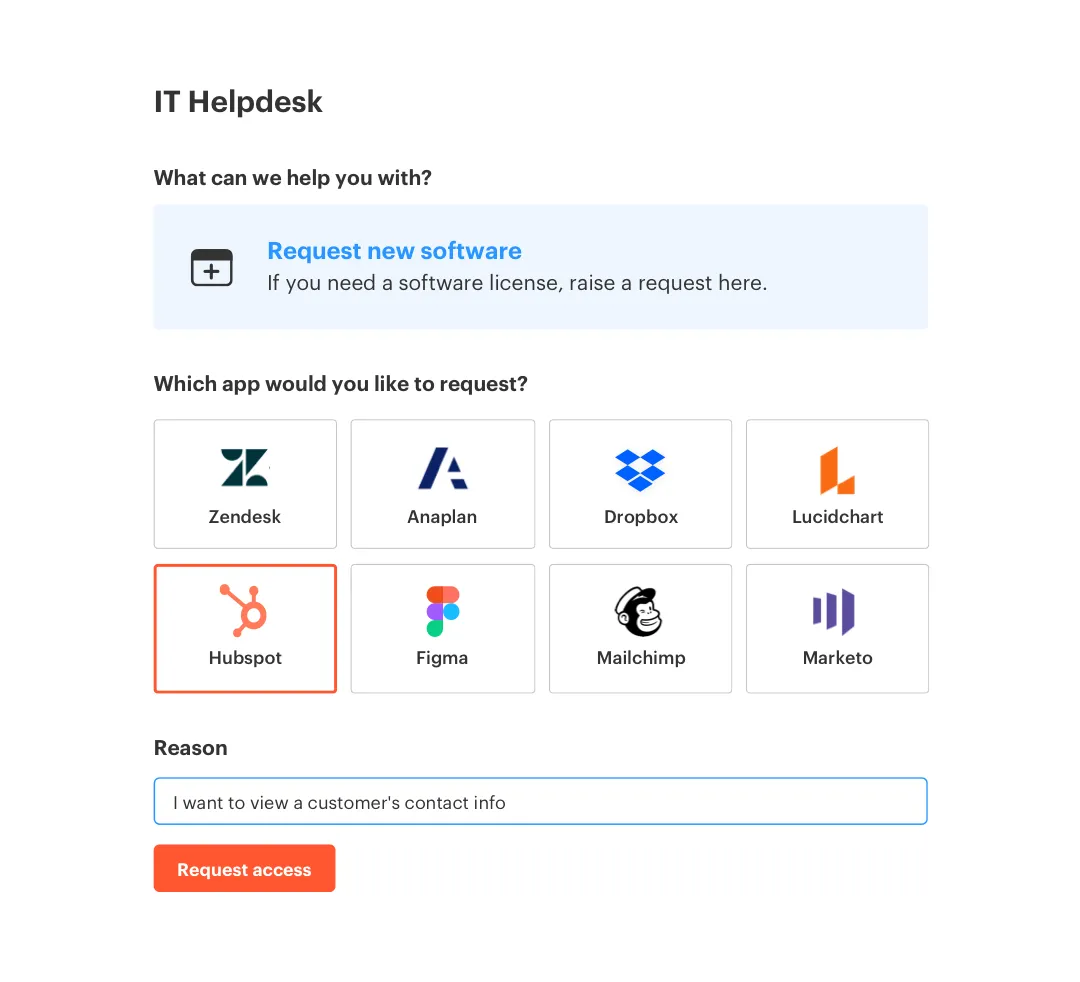
Picture Sarah, an IT admin at 4:40 PM on a Thursday. A product manager pings her for Figma admin access ahead of a Friday launch. The manager approves in a Slack thread, Sarah adds the user to the right Okta group, closes the Jira ticket, and goes home. Three months later, during the Q3 access review, security asks why that PM still has Figma admin. Sarah is now searching Slack for a thread from July, opening Okta admin logs, and trying to remember whether the access was supposed to expire. The launch happened. The audit story didn't.
Fragmented systems usually exist for a good reason. Jira is great for intake. Slack is where people actually respond. Identity providers are where access actually changes. Each tool makes sense on its own. The problem is the handoff between them. Once access governance becomes a relay race, every baton pass creates room for delay, missed revocation, or weak evidence.
Don't start by asking, "Which tool is broken?" Ask a harsher question: can one access request show who asked, who approved, what changed, when it changed, and whether it was later reviewed or revoked? If the answer takes more than 5 minutes to prove, the system is already costing you. If you want to see what Jira-native access governance looks like in practice, Learn more about Multiplier.
Access Reviews Become Spreadsheet Theater
Quarterly access reviews are where fragmented identity systems do their most visible damage. The campaign begins, someone exports users from apps, someone else cleans up the rows, and reviewers get asked to certify access with almost no context. Name, app, role. Maybe department. Maybe last login if someone remembered to pull it. Then everyone rubber-stamps because the review is too abstract to act on.
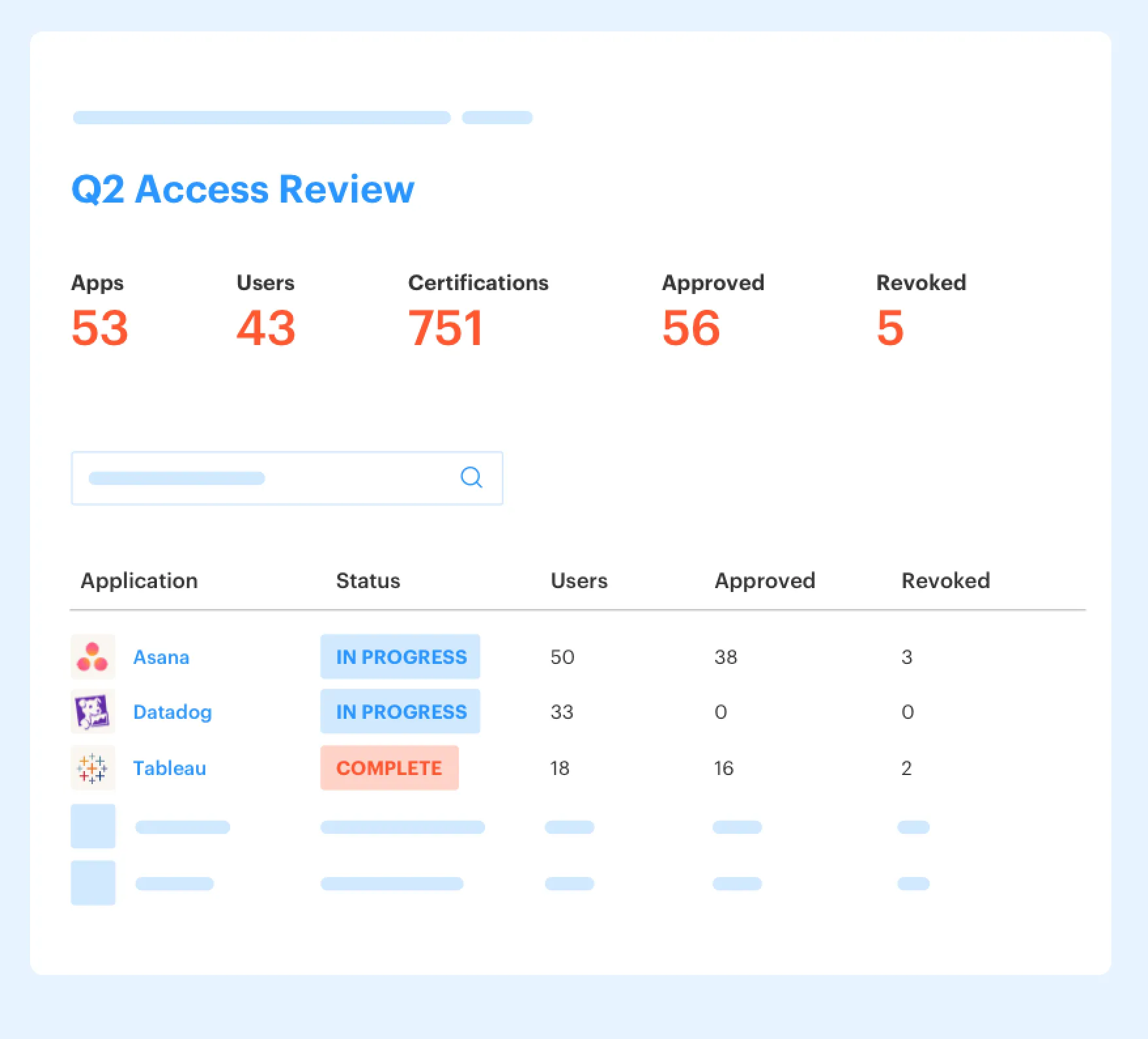
I don't blame reviewers for this. If you ask an app owner to certify 400 users without showing last login, group membership, title, department, and a clear recommendation, you're basically asking them to guess. A lot of them will keep access because revoking the wrong user creates noise, and keeping access feels safer in the moment. Wrong incentive, predictable result.
A stronger review has a simple threshold: if a reviewer can't decide "keep or revoke" in under 30 seconds per user, the campaign lacks context. That doesn't mean every decision is easy. Privileged access, contractors, executives, and service accounts need more care. For normal SaaS access, the reviewer should see enough usage and identity context to make a decision without opening four tabs.
The spreadsheet version feels like doing inventory in a warehouse where every shelf label is in a different language, half the boxes have no labels at all, and the inventory clerk is being timed. You can eventually count the boxes, but you'll spend most of your time translating instead of fixing the stock problem. Access reviews shouldn't feel like that. They should feel like a control system, not a scavenger hunt.
The Real Cost Is Standing Privilege
Standing privilege is the cost that hides behind access delays. If getting access is slow, people ask for broader access than they need. If revocation is manual, old access stays in place. If reviewers lack usage context, they keep access they don't fully understand. The pattern repeats until the company has thousands of entitlements no one feels confident owning.
Security teams already know this is a problem. The Verizon 2024 Data Breach Investigations Report keeps pointing back to credentials and misuse as major sources of risk, and access control guidance from NIST SP 800-53 is very clear that organizations need control over who has access and why. The hard part isn't agreeing with the policy. The hard part is making the policy operational.
That's where most teams get stuck. They have rules, but not enforcement. They have approvals, but not a connected record. They have reviews, but not real context. The fix isn't another place to click. The fix is changing how access work flows from request to proof.
How to Replace Fragmented Identity Workflows With Governed Access
The way out of fragmented identity workflows is to make Jira the operating record and the identity provider the execution layer. Requests, approvals, reviews, and evidence stay together. Group changes happen through Okta, Entra ID, or Google Workspace so access is fast, authoritative, and reversible.
Diagnose Where the Workflow Actually Breaks
Start with the workflow, not the tool list. A lot of teams buy more software because they think the problem is missing features, when the real issue is broken ownership between request, approval, provisioning, and review. You'll learn more from tracing 10 recent access requests than from reading any vendor matrix. Especially if those 10 requests include one admin role, one contractor, one offboarding case, and one app owner approval.
Run the test manually. Pick a closed Jira ticket and ask your team to prove five things without asking the original admin what happened. Who requested access? Who approved it? What identity group changed? Was the access time-bound? Was the access later reviewed or revoked? If any answer requires Slack search, screenshots, or tribal knowledge, you've found the break.
Use a simple scoring model:
- Green: The ticket shows request, approval, group change, and evidence.
- Yellow: The ticket shows approval, but provisioning evidence sits elsewhere.
- Red: The ticket doesn't prove what changed or who approved it.
- Black: Access exists in the identity provider with no clear ticket behind it.
The threshold matters. If more than 20% of sampled requests are red or black, stop tuning approval rules and fix the system of record first. More approvers won't solve missing evidence. More policy won't fix fragmented identity systems. You need the workflow to create proof as the work happens.
Make the Identity Provider the Source of Execution
The identity provider should execute access changes because it's the place where group membership, app assignment, and lifecycle state are already authoritative. Jira should capture the service process. Slack can collect fast decisions. Okta, Entra ID, or Google Workspace should be the mechanism that actually grants or removes access wherever possible. Otherwise, you're asking IT to manually sync reality.
The mechanism is pretty simple. Each access role maps to an identity provider group. When a request is approved, the workflow adds the user to the mapped group. When the access expires or gets revoked, the workflow removes the user from that group. For SSO apps, that group can flow downstream through SAML or SCIM. For non-SSO apps, you may still need manual work, but the ticket should still hold the decision and evidence.
A good conditional rule: if an app is SSO-backed and group-managed, automate provisioning through the identity provider. If an app isn't SSO-backed, still route the request through the same intake and approval flow, but tag it as manual so audit evidence stays complete. Mixing automated and manual paths is fine. Mixing records is where things go wrong.
One fintech team, Luno, hit this problem during rapid growth. They had hundreds of routine access requests coming through Slack, email, and Jira, and IT had to chase approvals before manually assigning Okta groups. After moving requests into a Jira-native flow with automated Okta group changes, they reported an 80% reduction in IT workload on access requests. That number doesn't surprise me. Once the identity provider becomes the execution layer, the copy-paste work starts disappearing.
Put Usage Context Inside Access Reviews
Access reviews should show reviewers the facts they need to make a decision, not just a list of users. Last login, department, job title, group membership, manager, and role all matter. Without that context, app owners can't tell the difference between someone who needs access weekly and someone who hasn't touched the app in 120 days. They'll keep access by default because guessing wrong is painful.
The review question should be brutally practical: would I re-approve this access today if the person requested it fresh? That frame changes the behavior. Instead of defending old access, reviewers evaluate current need. If a user hasn't logged in for 90 days, sits in a different department, and has an admin role, the revoke decision becomes obvious. If they're on an active project and logged in yesterday, keep it.
Run access reviews in three passes:
- Obvious revokes: Inactive users, former team members, stale contractors, duplicate licenses.
- Business judgment: Users with unclear need, department changes, app ownership changes.
- Privileged access: Admin roles, production access, finance systems, customer data tools.
The 30-second rule applies again. If reviewers need more than 30 seconds for every normal user, the campaign scope is too broad or the data is too thin. Narrow the scope by app risk, or enrich the review with identity and usage context. Access reviews shouldn't be a memory test.
Default Temporary Access for Elevated Roles
Temporary access works because it changes the default from "keep until someone remembers" to "remove unless still needed." That matters most for admin roles, production systems, databases, finance tools, and sensitive customer data. If a user needs elevated access for 1 hour, 6 hours, or 24 hours, don't turn that into a permanent entitlement because the cleanup step is annoying.
A practical rule: any access that can materially change production data, customer data, employee data, or financial data should have an expiry by default. Permanent access should require a separate reason. That may feel strict, and some operations teams will push back because incidents move fast. That's a fair pushback. During a Sev 1, no one wants a security process slowing down the fix.
The nuance is that temporary access can actually reduce friction if it's designed properly. Engineers get what they need quickly, approvers can act in chat, and access expires without a follow-up ticket. Stavvy is a good example. After moving to time-bound privileged access, they reduced privileged access by 85% and had over 1,300 access requests automatically revoked after approved windows. That's the model: fast access when needed, automatic cleanup when done.
Use a short policy table:
- 1 hour for emergency production access.
- 6 hours for troubleshooting or release work.
- 24 hours for project-based elevated access.
- Permanent only when the role is part of the person's job.
The exception is manual or non-SSO access. If the system can't automatically remove the entitlement, don't pretend the risk is solved. Put the expiry into the Jira workflow, assign the cleanup task, and review those apps more often until they're connected to identity provider groups.
Measure the Workflow by Evidence Speed
Most teams measure access by ticket SLA. That's useful, but incomplete. A ticket can close quickly and still leave weak evidence. The better metric is evidence speed: how long does it take to prove the full chain from request to approval to provisioning to revocation or review? If that takes 30 minutes per sample during an audit, your process is too manual.
I like three operating metrics here. First, percentage of access requests provisioned through identity provider groups. Second, percentage of elevated access with automatic expiry. Third, median time to produce evidence for a sampled access decision. The target I'd use: 80% of routine SSO access should be group-provisioned, 95% of elevated access should be time-bound, and evidence retrieval should take under 5 minutes per request.
Metrics also expose where the fix should happen. If approval time is slow, look at app ownership and Slack notifications. If provisioning is slow, look at group mappings. If audit prep is slow, look at where evidence is written. Don't treat all delays the same, because they don't have the same cause.
There's a case to be made for separate IGA portals in large enterprises with complex segregation-of-duties controls and deep certification needs. That's valid. For mid-market and high-growth companies already running Jira Service Management, the better starting point is usually to connect access governance to the system employees and IT already use.
How Multiplier Connects Jira and Identity Providers
Multiplier connects Jira Service Management to your identity provider so access work stays in Jira while changes execute through Okta, Entra ID, or Google Workspace. The important part is the loop. Requests, approvals, provisioning, expiry, reviews, and evidence stay tied to the originating Jira issue.
Jira-Native Requests With Identity Provider Provisioning
Multiplier turns the access request into a governed workflow instead of another ticket that needs manual follow-up. Employees request approved applications from an Application Catalog in JSM or through Slack. Each role can map to one or more identity provider groups, so when the Jira issue reaches the approved status, Multiplier calls the identity provider API to add the user to the right group. That keeps the change authoritative.

The part I like is that the evidence follows the work. Multiplier writes success or failure comments back to the Jira issue, so IT isn't taking screenshots or pasting admin logs into tickets later. Approval Workflows can route decisions to managers, app owners, or specific users, and approvers can act from Jira or Slack. For routine requests, that removes the 5 to 30 minute manual admin loop that teams like Luno were dealing with at scale.
Time-Based Access also fits the same model. A requester can choose a duration, such as 1, 6, or 24 hours, and after approval Multiplier provisions the mapped group access and removes it when the timer expires. That only works for access managed through identity provider group membership, which is an important boundary. For purely manual grants, automatic removal isn't magic. You still need a workflow.
Access Reviews With Usage Context and Enforced Revocation
Multiplier's Access Reviews run inside JSM and show reviewers user attributes, groups, last login, and recommendations. Access certification without usage context turns into rubber-stamping, which is the exact failure mode most quarterly reviews already hit. Reviewers can mark Keep or Revoke, provide reasons, and the revocation can remove users from the relevant identity provider groups. The campaign record tracks progress and exceptions, and results can be exported for auditors.
Auto Reclaim can also remove inactive SaaS access based on identity provider login telemetry, with inactivity thresholds, grace periods, and group exclusions. Worth noting, Auto Reclaim is available only on the Advanced edition, and it depends on accurate last-login data from the identity provider. That's the right kind of limitation to understand before rollout, because apps without reliable telemetry won't produce reliable reclamation.
The bigger point is that Multiplier makes the evidence a byproduct of normal work. Request in Jira or Slack. Approve in Jira or Slack. Provision through the identity provider. Review in Jira. Revoke through the mapped group. Instead of rebuilding the audit story later, the story is already sitting on the issue and campaign records. If that's the operating model you want, Get started with Multiplier.
Fix Fragmented Identity Systems Before Audit Season
Fragmented identity systems don't fail all at once. They fail request by request, review by review, and screenshot by screenshot until audit prep becomes a second job. The fix is to connect the workflow: Jira owns the record, the identity provider executes the change, and access reviews include the context needed to revoke with confidence.
The funny part is that most companies already have the pieces. Jira. Slack. Okta, Entra ID, or Google Workspace. The missing part is the connective tissue that turns those tools into one governed access flow. Get that right, and access gets faster while least privilege gets easier to enforce.
That's the whole game. Don't rebuild audit evidence after the fact. Design the workflow so the evidence is created the moment the access decision happens.
Frequently Asked Questions
How do I set up time-based access in Multiplier?
To set up time-based access with Multiplier, follow these steps: 1) When submitting an access request via the JSM portal or Slack, select the application and role. 2) Choose the duration for access—options typically include 1 hour, 6 hours, or 24 hours. 3) Once approved, Multiplier will automatically provision access and set a timer to revoke it when the time expires. This helps enforce least privilege and reduces the risk of standing access.
What if I need to revoke access for multiple users?
If you need to revoke access for multiple users, you can create an access review campaign in Multiplier. Here’s how: 1) Go to the Access Reviews section in JSM and create a new campaign. 2) Select the applications you want to include and assign reviewers. 3) Launch the campaign, and reviewers will receive notifications to certify access. They can easily mark users to revoke based on usage context, which Multiplier provides, ensuring a streamlined process.
Can I automate access requests through Slack?
Yes, you can automate access requests through Slack using the Multiplier Slack app. To do this: 1) Install the Multiplier app in your Slack workspace. 2) Employees can type `/request` to access the app catalog. 3) They select the application and role, and a Jira ticket is created automatically. This integration helps keep requests centralized and ensures that all approvals are captured in the same system.
When should I consider using the Application Catalog?
You should consider using the Application Catalog in Multiplier when you want to streamline access requests. This feature allows employees to browse a visual catalog of approved applications, making it easier for them to request access without confusion. It also ensures that requests include the necessary context and are routed to the correct approvers, which can significantly reduce the administrative overhead for your IT team.
Why does my access review process feel inefficient?
If your access review process feels inefficient, it may be due to a lack of context for reviewers. To improve this, use Multiplier's Access Reviews feature, which provides detailed information like last login dates and group memberships. This context allows reviewers to make informed decisions quickly. If reviewers can't decide to 'keep or revoke' access in under 30 seconds, consider narrowing the scope of your review or enriching the data available.


