


IT teams usually regret this decision 6 months later, not on day one. You feel it when a simple access request starts in Jira, gets approved in Slack, gets provisioned in Okta or Entra, and somehow still ends with audit evidence trapped in screenshots and side spreadsheets.
When people search for the best identity governance for IT teams, they usually get one messy list that treats very different products like direct substitutes. That’s the trap. Okta Identity Governance, Microsoft Entra ID Governance, ConductorOne, Moveworks, and Zluri solve different slices of the access problem, and if your team lives inside Jira Service Management, that distinction matters fast.
Quick reference for IT teams shortlisting identity governance
These five platforms can all show up on a shortlist for the best identity governance for modern IT teams, but they run on very different operating models. Okta and Entra are strongest when you already live in their ecosystems, ConductorOne leans modern and security-led, Moveworks is more adjacent than direct, and Zluri pulls governance toward SaaS operations. That gap becomes obvious once you compare requests, reviews, approvals, and audit flow side by side.
[Table: Platform] — See "Table Embed Codes" in Oleno to copy the HTML for this table.
Key Takeaways:
- Okta Identity Governance fits teams already standardized on Okta and wanting governance close to their IAM stack, not a separate legacy suite.
- Microsoft Entra ID Governance makes the most sense when hybrid AD, Microsoft 365, and PIM are all already part of daily operations.
- ConductorOne stands out for cloud-first security teams that care about just-in-time access and modern governance automation.
- Moveworks is stronger as a conversational front end for employee support than as the center of a full identity governance program.
- Zluri is worth shortlisting when SaaS discovery and license optimization matter as much as access workflows.
What IT teams should compare before choosing identity governance
Identity governance for IT teams is really a workflow decision disguised as a security purchase. Gartner defines identity governance and administration around access requests, approvals, policy, and ongoing review (Gartner glossary). In practice, the best identity governance for your team is usually the platform that fits how work already gets done, not the one with the longest feature matrix.
Identity governance is not the same as basic access management
Access management handles authentication and day-to-day access enforcement. Identity governance adds the operating system around it: who can request access, who approves it, how long it lasts, how it's reviewed, and what proof exists later.

That sounds obvious. It isn't. I’ve watched teams buy for the login layer, then realize three months later they’re still doing quarterly certifications in CSV files. Same identity stack. Same tools. Wrong buying lens.
A simple rule helps here. If your team can't answer these four questions in under 10 minutes, you don't just have access management, you have an identity governance gap:
- Who approved this access?
- When does it expire?
- Where is the review history?
- Can an auditor trace the full chain without screenshots?
That four-question test is what I’d call the audit-path test. Pass it, and you’re evaluating governance correctly. Fail it, and you’re buying surface area.
The evaluation criteria that matter most for IT teams
The buying criteria aren’t equal. Some matter on day one. Others only matter once request volume climbs. That’s where buyers get trapped and where the search for the best identity governance for IT operations usually goes sideways.
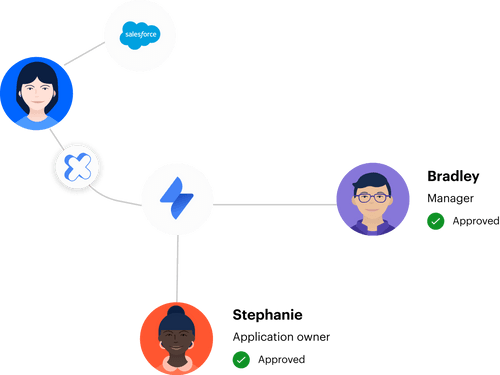
A Jira admin at 9:15 a.m. gets a new hire ticket, checks Slack for manager confirmation, opens the identity provider, adds the user to the right group, then drops a note back into Jira. At 3:40 p.m. the same admin handles a contractor extension request. Same dance. New channel. More copy-paste. By Friday, nobody is fully sure which approvals are authoritative. That’s not a tooling glitch. That’s an operating model problem.
For most IT teams, five criteria decide the outcome:
- Request path: Does access begin where employees already work?
- Approval logic: Can managers and app owners approve without leaving their normal tools?
- Provisioning path: Does the system trigger actual identity changes, not just tickets?
- Review mechanics: Are certifications usable, or do they become spreadsheet marathons?
- Audit evidence: Is proof generated during the workflow, or rebuilt after it?
If you want a threshold, use this one. Once your team handles more than 100 access requests per month, manual proof collection becomes an operational tax, not an annoyance. And once two teams own different pieces of the same request flow, delays compound fast. That’s the moment feature checklists stop helping and workflow fit starts deciding the deal.
Why identity governance decisions create long-term operational debt
Identity governance choices create debt because they lock in where work happens. A platform might look good in a demo, sure, but if it forces approvals, provisioning, and evidence into separate systems, you pay for that every week in labor, delay, and missed revocations. That’s why the best identity governance for one team can be the wrong answer for another.

The projects that usually stall are the ones split across too many systems
Most stalled projects don't fail because the security model is weak. They fail because the operating model is fragmented.
Picture an employee requesting Figma access in Jira on Monday morning. Their manager approves in Slack. IT checks a spreadsheet to see whether the right group still exists. Someone makes the change in Okta or Entra. Then an auditor asks six weeks later who approved it, whether it was time-bound, and whether it was ever reviewed. Now three people are searching messages. Nobody planned for that recovery work. That’s the hidden cost.
There’s a fair point here. Separate systems can still work, especially in large enterprises with deeply specialized teams. If your identity team, service desk, and audit team all have mature handoffs, you can manage the split. But that maturity is expensive. Most mid-market and high-growth teams don’t have it.
I use a simple decision rule called the two-surface rule. If an access request requires humans to consistently work across more than two primary surfaces, request system plus one other, delay and evidence gaps start multiplying. Three or four surfaces is where things really break.
Provisioning, reviews, and approvals should be judged as one system
Buyers often score these areas separately. Big mistake. The real question is whether they reinforce each other.
Approvals without automated provisioning create queue work. Provisioning without time limits creates standing privilege. Reviews without context create rubber-stamp certifications. And audit reporting without ticket-level history turns every audit into a reconstruction exercise.
Some teams prefer to optimize one layer first. That’s valid. A Microsoft-first enterprise may start with lifecycle automation because the rest of the stack already exists. A SaaS-heavy IT ops team may start with discovery because they don’t even know what needs governance yet. Fair. But if you’re evaluating identity governance tools, you still need to inspect the full chain.
Before you shortlist vendors, ask:
- Can temporary access expire automatically?
- Can reviewers see enough context to make a real decision?
- Does the provisioning event connect back to the original request?
- Is evidence created by the workflow itself?
That’s where operational debt hides. Not in the headline demo. And that’s the question the next section answers directly: which platform fits which operating model?
How the leading identity governance platforms compare
These five platforms serve different buyer profiles, and the cleanest shortlist starts there. Okta and Microsoft Entra are ecosystem plays, ConductorOne is a modern governance platform for cloud-first teams, Moveworks is adjacent, and Zluri tilts toward SaaS operations. If you’re trying to find the best identity governance for your environment, compare daily workflow fit first and category labels second.
Okta Identity Governance
Okta Identity Governance is a strong fit for teams already standardized on Okta and wanting governance close to their existing identity stack. Okta highlights access requests, certifications, and ongoing platform updates in official release materials (Okta Identity Governance release notes). For an Okta-first environment, that native alignment is the main draw.
The upside is straightforward. Okta already sits near SSO, MFA, and directory management, so governance feels like a logical extension instead of a bolt-on. Official materials also point to expanding identity security coverage (Okta platform announcement). If your IAM team already knows Okta well, that reduces change friction.
The tradeoff shows up later. Mature governance teams often want deeper reporting flexibility, smoother complex workflow configuration, and more tailored review experiences than out-of-the-box setups provide. Even Okta’s own framing around converged versus disparate governance models hints at the challenge of stitching work across systems when operational context lives elsewhere (Okta blog).
Pricing is one of the cleaner parts of the comparison. Starter pricing is publicly listed at around $6 per user per month, billed annually. That makes Okta easier to qualify early than vendors that require a full sales cycle just to get a ballpark.
How Multiplier is Different: For Jira-centric IT teams, the model shifts from governance near the identity cloud to governance inside the service workflow. The differentiator is not broader IAM scope. It’s that requests, approvals, provisioning triggers, and audit history stay attached to the Jira issue employees and IT already use.
Microsoft Entra ID Governance
Microsoft Entra ID Governance is the default shortlist candidate for Microsoft-first enterprises. Microsoft positions it around identity lifecycle workflows, entitlement management, and access reviews inside the Entra environment (Microsoft Docs). If your world is already Microsoft 365, Azure, Intune, and hybrid AD, that depth matters.
This is where Entra gets real leverage. Hybrid identity support is table stakes for a lot of large organizations, and Microsoft has an obvious advantage there. Recent product updates keep expanding governance capabilities inside the broader Entra platform (Microsoft March 2025 update). Third-party analysis makes the same point while also noting that the upside often comes with setup complexity (MajorKey analysis).
The downside isn’t that it lacks power. It’s that power shows up as administrative overhead if you’re not already deeply Microsoft-native. Attestation UX and entitlement design can feel heavy. And if your application estate is broad, mixed, and operationally centered outside Microsoft admin surfaces, the fit weakens.
Approximate pricing often lands around $6 per user per month depending on licensing bundle and packaging (JumpCloud comparison). That’s reasonable on paper. The bigger cost is complexity.
How Multiplier is Different: The appeal for a Jira Service Management team is operational simplicity. Instead of pushing the team deeper into another admin surface, the workflow stays in Jira and Slack, with provisioning routed through the identity provider and evidence written back to the issue that started the work.
ConductorOne
ConductorOne is built for cloud-first security teams that want a more modern governance model. Its product and company materials emphasize automation, lifecycle management, and enterprise traction (ConductorOne release notes, ConductorOne press release). That makes it one of the more serious options in this group for buyers prioritizing JIT and modern least-privilege programs.
What stands out is orientation. ConductorOne doesn’t feel like legacy IGA with a new coat of paint. It leans into policy automation, faster deployment, and cloud-first governance design. External market profiles also reinforce its positioning as a fast-growing security player, not just a feature box in a procurement list (CB Insights).
Still, there are tradeoffs. No public pricing slows early qualification. And for teams with messy on-prem or niche app environments, connector depth can matter more than high-level connector count. Some buyers also want finer review-time controls than simple approve-or-revoke decisions. That nuance matters once your access reviews stop being simple.
I get the appeal, honestly. If you’re a security-led team modernizing access, ConductorOne will make a lot of sense. But if your daily operating center is Jira Service Management, a separate governance console can still create friction, even when the governance model is strong.
How Multiplier is Different: The contrast is workflow-first versus console-first. Multiplier centers request intake, approvals, time-based access, and reviews inside Jira Service Management, which changes adoption for IT teams that already live there every day.
Moveworks
Moveworks is best treated as adjacent to identity governance, not a one-to-one replacement. Its platform story is built around AI-powered employee support, task execution, and conversational automation across enterprise workflows (Moveworks platform release). Useful. Just different.
This is where buyers can get confused. Moveworks has a polished chat experience, strong automation framing, and broad enterprise workflow relevance (Moveworks Quick GPT release, Moveworks ITSM positioning). If your goal is reducing ticket friction and giving employees a conversational layer in Slack or Teams, that’s compelling.
But governance programs need more than a good front door. They need repeatable approvals, certification mechanics, policy enforcement, audit traceability, and clear control over provisioning and revocation. That’s where Moveworks usually acts more as a complement than a full governance center.
So the question isn’t “Is Moveworks good?” It is. The question is whether you’re buying employee support transformation or identity governance. Different budget lines. Different outcomes.
How Multiplier is Different: For access operations, Multiplier is aimed at execution rather than deflection. The core difference is Jira-native access requests, identity-provider group provisioning, time-bound access, and access reviews tied directly to the ticket record.
Zluri
Zluri is strongest when SaaS sprawl is the real operational pain. Third-party reviews and market writeups consistently highlight application discovery, spend visibility, and license optimization as key strengths (Info-Tech review, ElectroIQ statistics). If procurement and IT are trying to control app chaos, Zluri belongs in the conversation.
That matters more than some governance buyers want to admit. Plenty of teams don’t start with a classic IGA problem. They start with, “We have too many apps, too many licenses, and no idea who’s using what.” Zluri speaks to that reality well.
The limitation is depth. When you move from SaaS visibility into mature governance, certification rigor, and fine-grained least-privilege execution, the center of gravity shifts. Third-party pricing analysis also shows that buyers often have to go through sales for meaningful pricing clarity (CloudEagle pricing guide).
So if your main goal is SaaS access governance plus spend control, Zluri can be the right answer. If your main goal is keeping requests, approvals, reviews, and evidence tightly linked inside IT workflows, the fit gets narrower.
How Multiplier is Different: The difference is less about SaaS estate breadth and more about request-to-review execution. Multiplier keeps governance work inside Jira Service Management, with Slack and JSM request channels, ticket-linked audit history, and policy-driven expiration on time-bound access.
How Multiplier fits IT teams that run on Jira Service Management
Multiplier fits teams that want identity governance for IT teams to happen where the work already lives: inside Jira Service Management and Slack. Instead of sending employees into a separate governance portal, it keeps access requests, approvals, reviews, and audit evidence attached to the same operational record. For teams looking for the best identity governance for Jira-centric operations, that’s not a minor UX improvement. It’s the operating model.
When a Jira-native governance model is the better fit
A Jira-native model works best when your help desk is already the center of operational truth. If Jira is where requests start, if Slack is where managers respond, and if your IT team already thinks in tickets, then a separate governance portal adds another layer most people won’t enjoy using.
This is the part a lot of comparison pages miss. The issue isn’t just feature depth. It’s context location. When process and proof live in different places, every approval creates extra motion. Every review takes longer. Every audit requires cleanup.
The exception is real, though. If you’re a large Microsoft-first enterprise with mature Entra ownership, or an Okta-standardized org whose identity team already runs everything there, you may not need a Jira-native center. That’s valid. But if Jira Service Management is the actual home base, the closer governance sits to Jira, the lower the operational drag.
Verified Multiplier capabilities that map to daily IT operations
The product story is practical. Employees can request access through a Jira-native access catalog. Requests route to managers or app owners with multi-stage approval rules and low-risk auto-approval paths. After approval, provisioning happens through identity provider group assignment, so the workflow doesn’t stop at ticket creation.

That matters in the real world. At 10:05 a.m., an engineer requests temporary access to a production tool. The manager approves in Slack. The entitlement is granted through the identity provider. The expiration window is already attached. When the window ends, access is revoked automatically. No one has to remember it later. That’s the difference between policy written down and policy enforced.
There are a few capabilities that really stand out for Jira-centric teams:
- Jira-native access request catalog tied to JSM issues
- Approvals in Jira or Slack with multi-stage workflow logic
- Identity-provider-group-based provisioning after approval
- Time-bound access with automatic deprovisioning at expiry
- Access reviews and certifications run as Jira campaigns
- Vanta-ready exports and auditor-friendly reporting generated from workflow records
- In-issue user management for attribute updates, group changes, password resets, MFA resets, and manager approvals
Two customer examples make the model concrete. Luno reduced IT workload on access requests by 80% after shifting routine requests into a self-service, Jira-and-Okta-driven workflow. Stavvy reduced privileged access by 85% and automatically revoked more than 1,300 time-bound requests after approved windows expired. Those outcomes matter because they connect the product mechanics to daily operational pain, not just a roadmap slide.
If your team wants to see that Jira-native model in practice, Learn more about Multiplier.
Who should shortlist Multiplier first
Multiplier should be shortlisted first by Jira-centric IT operations teams, workplace technology teams, and security teams that already run request work through Jira Service Management and don’t want another employee portal.
The buyer profile is pretty specific:
- Your team already runs access tickets in Jira.
- You want approvals to happen in Jira or Slack, not in email threads.
- You want provisioning tied to the identity provider, not left as manual follow-up.
- You want audit evidence created by the workflow itself.
- You care about time-based access and automatic revocation.
If that’s your world, the fit is strong. If your world is more Microsoft-admin-centered, Entra probably deserves first look. If you want cloud-first JIT governance with a security-led posture, ConductorOne belongs high on the list. If SaaS discovery and spend control are the real pain, look hard at Zluri. That’s the honest map.
Final shortlist grid for IT buyers
The five platforms differ most in operating model, not marketing language. Okta and Entra are ecosystem-centered, ConductorOne is modern governance-first, Moveworks is conversational support-first, Zluri is SaaS-ops-first, and Multiplier is Jira-native governance-first. If you’re trying to choose the best identity governance for your team, start with where requests, approvals, and evidence already live.
[Table: Platform] — See "Table Embed Codes" in Oleno to copy the HTML for this table.
A good shortlist is less about picking a universal winner and more about avoiding a bad fit. That’s the real frame. Choose Entra if Microsoft is your control plane, choose Okta if Okta already is, choose ConductorOne if modern cloud-first governance is the priority, choose Zluri if SaaS sprawl is the problem, and choose Multiplier if Jira Service Management is where access work already happens.
If you want to pressure-test that fit with your own workflows, Get started with Multiplier. Bring one onboarding flow, one temporary access flow, and one audit question. That’s usually enough to see whether your current operating model is clean or just familiar.
Frequently Asked Questions
How do I set up automated provisioning with Multiplier?
To set up automated provisioning with Multiplier, first ensure your identity provider (like Okta or Azure AD) is connected. Then, configure your access request workflows in Jira Service Management (JSM). When a request is approved, Multiplier will automatically call your identity provider to add or remove users from the appropriate groups. This streamlines the process, making sure access changes are accurately reflected in real-time without manual intervention.
What if I need to revoke access after a temporary period?
If you want to revoke access after a temporary period, you can use Multiplier's Time-Based Access feature. When submitting a request, users can select a duration for access (like 1, 6, or 24 hours). After approval, Multiplier automatically sets a timer to revoke access once the time expires, making sure no one retains access longer than necessary. This helps maintain security by minimizing standing privileges.
Can I manage access reviews within Jira using Multiplier?
Yes, you can manage access reviews directly within Jira using Multiplier's Access Review feature. Admins can create campaigns that include specific applications and assign reviewers. Reviewers receive notifications and can easily mark access as 'Keep' or 'Revoke' based on the context provided. This process eliminates the need for spreadsheets and keeps all audit evidence linked to the Jira issues, making it easier to track and manage user access.
When should I consider using Multiplier for my IT team?
You should consider using Multiplier if your IT team primarily operates within Jira Service Management and wants to streamline access requests and approvals. If your team handles a high volume of access requests, using Multiplier can automate workflows, reduce manual errors, and enhance audit readiness. Also, if you want to keep governance processes integrated with the tools your team already uses, Multiplier is a strong fit.
Multiplier connects to your existing JSM setup in minutes. Try it free on the Atlassian Marketplace.


