


Access reviews without SLA discipline turn into calendar theater. And that’s why most access review SLA escalation programs fail before they really start.
You set a due date. People ignore it. Security chases reviewers in Slack. IT exports a spreadsheet. Audit shows up later and asks who was escalated, when, and whether the revoke actually happened. Now you're reconstructing a control that should have been visible from day one.
Key Takeaways:
- Access review SLA escalation only works when you treat certification like an operating process, not a quarterly ritual
- Risk-tiered SLAs keep high-risk apps tight without forcing the same urgency on every low-risk review
- Jira automation should handle reminders, reviewer escalations, and backup routing before the campaign starts
- A review is not complete until the revoke or keep decision is executed and logged
- Auditor-ready evidence should come out of the workflow itself, not from screenshots and side notes
Why Most Access Review Programs Miss Their Dates
Access review SLA escalation breaks down because the process usually isn't designed like a service. It's designed like a task list. Someone launches a campaign, sends a notice, and hopes managers respond before the due date. When they don't, the whole thing gets sticky fast.

The real problem isn't that reviewers are lazy. It's that most companies run certification in a side channel. The app list lives in one place. Reviewer assignments live in another. Escalations happen in chat. Evidence gets dumped into a spreadsheet later. So nobody really owns the clock. And if nobody owns the clock, SLAs are fake.
Deadlines without ownership are just suggestions
An access review deadline only matters if there is a named reviewer, a backup path, and a consequence for delay. Otherwise the due date is just decorative. I’ve seen this a lot in IT operations. The team says the campaign ends Friday, but by Wednesday they already know half the reviewers haven't opened the email.
That creates a predictable mess:
- reviewers miss notices
- app owners change roles
- managers are on leave
- security starts manual follow-up
- revocations pile up after sign-off
And now the campaign is technically active, but operationally broken.
Separate systems create hidden delay
The ITSM and IGA split is where a lot of this goes wrong. Intake happens in Jira. Approvals may happen in email or Slack. User changes happen in the identity provider. Audit evidence gets rebuilt later. Every handoff adds delay. Every delay makes access review SLA escalation harder to enforce.
This is also why teams end up accepting weak controls. They don't trust the process to finish on time, so they lower the standard. They shorten review scope. They accept blanket keeps. They postpone revokes. It feels practical in the moment. It's expensive later.
The human cost shows up fast
When this drags on, your security team turns into a chasing function. Nobody likes that. Reviewers get annoyed. IT gets buried. Audit gets skeptical. And the people running the campaign start wondering if quarterly access reviews are worth the pain at all. Honestly, that’s usually the moment the process needs to be rebuilt, not patched.
The Root Cause Behind Broken Access Review SLA Escalation
Access review SLA escalation works when the workflow itself enforces time, ownership, and execution. It fails when teams treat escalation as a manual rescue move after the process is already late. That distinction matters a lot.
Most teams think the answer is more reminders. It isn't. More reminders just create more noise if the operating model is weak. What you actually need is a reproducible SLA framework tied to application risk, reviewer assignment logic, and proof that each decision turned into an actual change.
Start with app risk, not one global due date
A single SLA across every application sounds clean. It usually backfires. Your production admin groups, finance systems, and customer data tools should not run on the same review clock as low-risk collaboration apps.
A better access review SLA escalation model uses risk tiers:
- Tier 1 apps: short review windows, faster reminders, faster escalation
- Tier 2 apps: moderate review windows with manager backup
- Tier 3 apps: longer windows and lighter escalation
That one move changes the conversation. Now you're not asking why one reviewer is late. You're asking whether the SLA matches the real risk of the entitlement.
Escalation needs to be designed before launch
If you wait until day seven to decide who gets escalated, you're already losing. Backup reviewers, manager fallback, and security escalation paths should be set before the campaign goes live. Otherwise the team running the review becomes the routing engine by hand.
We were surprised how often this gets missed. Teams put a lot of energy into picking apps for the review, then almost none into escalation design. But escalation is the operating muscle. Without it, access review SLA escalation is just a phrase on a control document.
Completion must include action, not just decision
This is the overlooked part. A reviewer clicking "Revoke" is not the finish line. It's halfway. If the removal from the identity provider group doesn't happen, or if it happens but isn't logged cleanly, then your review is incomplete in any meaningful sense.
That's why good programs define completion as:
- reviewer submitted on time
- keep or revoke decision captured
- any revoke action executed
- evidence written to the system of record
Without that chain, you're measuring form completion. Not governance.
What this means for your metrics
If you want access review SLA escalation to be credible, track the right numbers:
- on-time reviewer completion rate
- overdue items by app tier
- escalation rate by reviewer type
- revoke execution success rate
- average time from decision to enforcement
Those numbers show whether the process actually works. And they show you where it breaks first.
If you want to see what this looks like in a Jira-native model, Learn More About Multiplier.
How to Build an SLA-Driven Access Review Process That Actually Holds
An SLA-driven access review process starts with clear review windows, prebuilt escalation logic, and hard checks that verify revocations happened. That’s the practical answer. Not more policy text. Not a prettier spreadsheet. The workflow has to carry the weight.
Back when teams were smaller, you could get away with brute force. Someone from IT or security knew every app owner, could send a few nudges, and wrap the review manually. That falls apart once the company grows, the app count grows, and ownership shifts every quarter. Then the old way starts to cost real time.
Define review windows by risk tier
Set SLA targets based on risk, not convenience. High-risk apps need tighter windows because the cost of standing privilege is higher. Lower-risk apps can tolerate a longer cycle.
A simple model works well:
- Tier 1: 5 business days to complete review
- Tier 2: 10 business days
- Tier 3: 15 business days
Then add escalation checkpoints inside each window. For a Tier 1 app, you might remind on day 2, escalate on day 4, and reroute on day 5. For a Tier 3 app, the timing can breathe a little more. The point is consistency. Not perfection.
In my experience, once teams define this up front, the chaos drops. People respond better when the clock feels intentional.
Assign reviewers and backups before campaign launch
Reviewer assignment is where a lot of access review SLA escalation pain starts. If reviewer ownership is vague, the campaign is late before it begins. Pick the primary reviewer for each app. Then define the backup. Then define the escalation owner. Do it before launch.
Your routing logic should answer three questions:
- Who reviews first?
- Who gets notified if they miss the window?
- Who takes over if they don't respond?
This doesn't need to be fancy. It just needs to be explicit. App owner first. Manager second. Security or IT governance third. That's a solid starting point for a lot of teams.
Build reminder and escalation rules into Jira
Jira is already where teams understand queues, due dates, statuses, and ownership. That’s why identity governance belongs there. You don't need another portal just to create delay in a different interface.
A practical automation setup looks like this:
- create issues for every in-scope review item or campaign task
- stamp due dates based on app tier
- send reminder notifications before due date
- transition overdue items to an escalated status
- notify backup reviewers or designated approvers
- flag exceptions for security follow-up
And keep it visible. If overdue items are buried, nobody feels the urgency.
Make revocation verification part of the control
A lot of teams stop at reviewer completion. Don't. The reviewer action should trigger a second check: did the entitlement actually change? If not, why not? And where is that captured?
For access review SLA escalation, this is where the process gets failure resistant. The control isn't just "someone reviewed the list." It's "someone reviewed the list, the revoke was executed where applicable, and the system logged it."
Use a simple validation layer:
- count revoke decisions
- confirm each one resulted in a user removal or documented exception
- log timestamps and outcomes
- hold open anything that failed execution
That’s the difference between a campaign that looks finished and one that is finished.
Create evidence as a byproduct
Auditors don't want your story. They want the record. Who reviewed. When they reviewed. Who got escalated. What changed after the review. And whether the timing matched policy.
So build the audit output into the operating flow:
- campaign scope
- assigned reviewer
- due date
- reminder timestamps
- escalation timestamps
- final decision
- revoke evidence or exception reason
- exportable campaign results
Honestly, this is one of the biggest shifts teams make once they mature. They stop preparing for the audit after the fact. The audit trail is just there.
Review the review program itself
After each cycle, look at the misses. Not just who was late. Look at why. Did app ownership change? Did high-risk apps have unrealistic due dates? Did backup routing work? Did revokes fail because of provisioning gaps?
Some teams prefer to keep this loose, and fair enough, that can work at very small scale. But once request volume rises, loose turns into drift. And drift is where access review SLA escalation quietly fails.
How Multiplier Keeps Access Reviews Operational in Jira
Multiplier keeps requests, reviews, approvals, provisioning actions, and evidence in Jira instead of scattering them across a separate IGA portal, chat threads, and spreadsheets. That matters because governance works better when the work and the proof live in the same place.
Jira-native reviews with visible reviewer context
Multiplier's Access Reviews run in Jira Service Management, which gives you one system for campaign creation, reviewer assignment, progress tracking, and evidence. Reviewers see user attributes, group memberships, last login, and recommendations in the JSM Help Center, then mark Keep or Revoke without needing a separate tool.
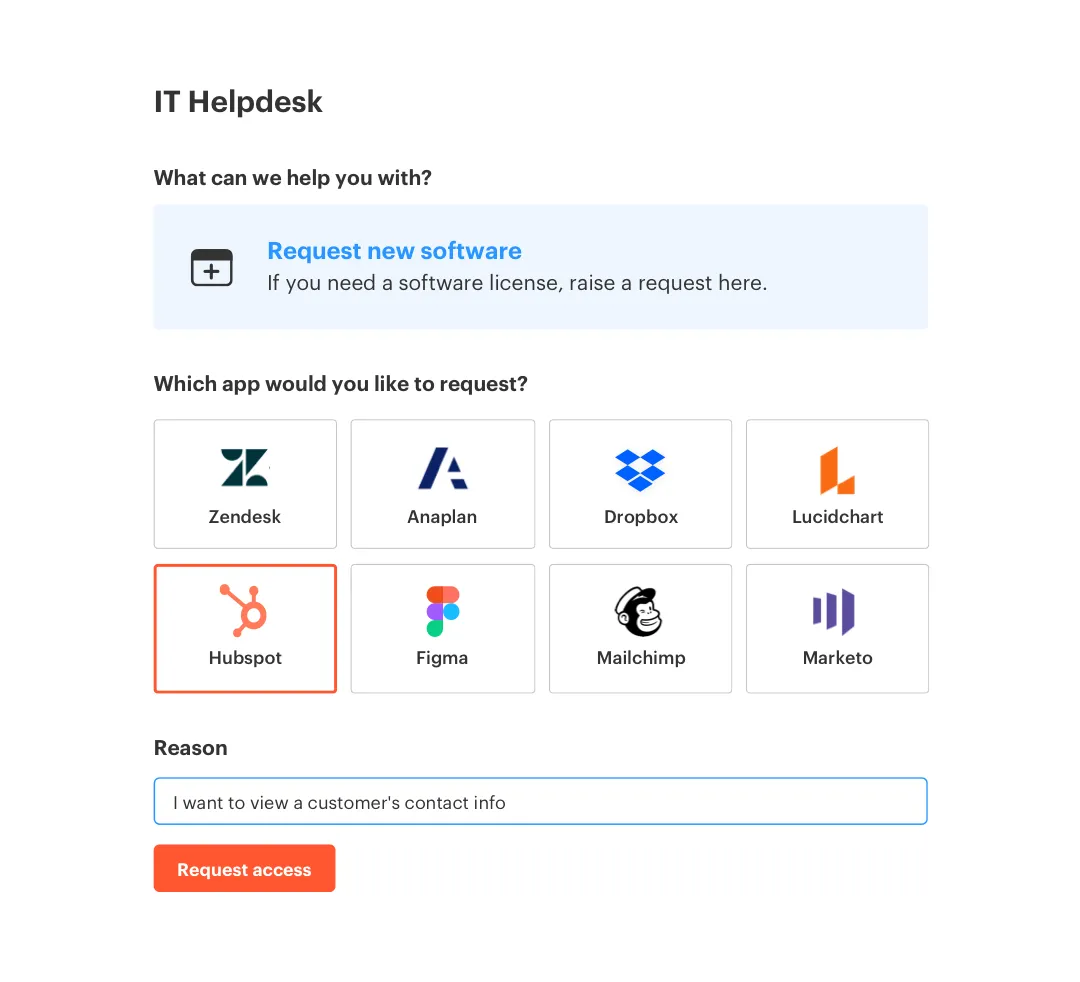
And when a reviewer marks Revoke, Multiplier can automatically remove the user from the relevant identity provider group, create a Jira ticket documenting the change, and update campaign progress. That's a big deal. It closes the gap between decision and enforcement, which is where a lot of review programs break.
Jira works better when it's the system of record
Multiplier is built around Jira as the operating system for governance. So your team can use Jira workflows, statuses, and automation rules around the review process instead of managing it in side channels. Pair that with Multiplier's Approval Workflows and Slack App, and you can keep approvals and related actions close to where people already work.

That doesn't mean every process is magically built for you. You still need to define your operating model and automation recipes. But Multiplier gives you the Jira-native review workflow, the linked evidence, and the identity-provider-based execution layer to make that model real.
Provisioning and revocation stay authoritative
This is another reason Multiplier fits the job. Automated Provisioning works through identity provider groups in Okta, Entra ID, and Google Workspace. Time-Based Access also removes group membership automatically when the approved window expires. So if your least privilege model depends on group-based control, Multiplier gives you a cleaner path to enforce and prove it.
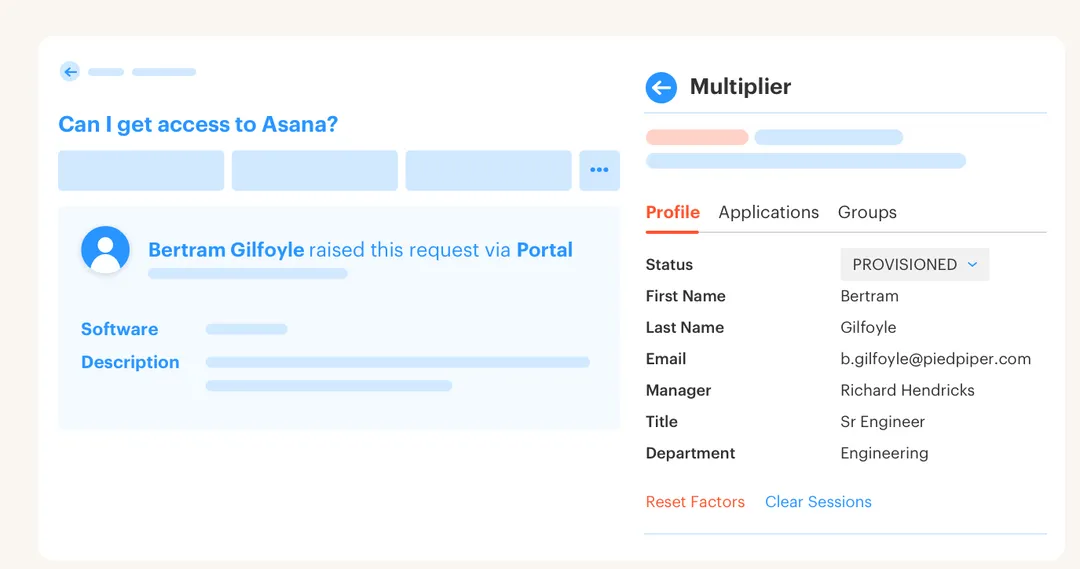
You also get the practical benefit of less manual chase work. The Application Catalog centralizes access requests in Jira or Slack, routes them to the right approvers, and keeps an audit trail even when provisioning is manual. Different teams will use that in different ways, but the pattern is consistent: centralize the workflow, reduce the manual drag, and the process starts behaving.
If your goal is on-time campaigns, fewer overdue reviews, and evidence that stands up in audit, Get Started With Multiplier.
Build Access Reviews Like a Service, Not a Chore
Most access review SLA escalation problems are not policy problems. They're workflow problems. The minute you treat certification like a service with owners, timers, escalation paths, and execution checks, the whole thing gets more stable.
That’s the path forward. Set SLAs by app risk. Predefine reviewer escalation. Verify every revoke. Keep the evidence in Jira. Do that well and you can push toward 95% plus on-time reviewer completion, cut manual chase time hard, and walk into audit with records that already make sense.
Frequently Asked Questions
How do I set up an access review campaign in Multiplier?
To set up an access review campaign in Multiplier, follow these steps: 1) Go to the Access Reviews section in Jira. 2) Click on 'New Review' and fill out the campaign details, including the name, applications (only those marked as Approved), start and end dates, and assign reviewers. 3) Once everything is set, click 'Create Access Review' and then 'Start Campaign' to notify the reviewers. This will help streamline your access review process and ensure timely certification.
What if a reviewer misses the deadline?
If a reviewer misses the deadline, you can take a few steps: 1) Use Multiplier's built-in escalation rules to notify backup reviewers or managers automatically. This ensures that someone else can step in to complete the review. 2) Regularly check the campaign's progress in Jira to identify overdue items. 3) Consider adjusting your SLA framework in future campaigns to better match the risk level of applications, ensuring tighter deadlines for high-risk apps.
Can I automate reminders for access reviews?
Yes, you can automate reminders for access reviews using Multiplier. Set up your access review campaign with defined timelines, and Multiplier will handle sending out reminder notifications to reviewers before the due date. This keeps everyone informed and helps ensure that reviews are completed on time, reducing the need for manual follow-ups.
When should I use time-based access in my reviews?
You should consider using time-based access when dealing with high-risk applications or roles that require temporary elevated permissions. With Multiplier, you can set specific durations for access requests (like 1, 6, or 24 hours), which helps enforce least privilege. This way, access is automatically revoked after the designated time, minimizing security risks and ensuring compliance.
Why does my access review process feel disjointed?
Your access review process may feel disjointed if you're using multiple systems for requests, approvals, and provisioning. To streamline it, use Multiplier within Jira Service Management. By keeping all access requests, approvals, and evidence in one place, you can reduce manual work and improve the overall efficiency of your access review process.


