


I learned the hard way that screenshots don’t win audits. Auditors want a story, not a collage. You need audit-ready access controls that record requests, approvals, provisioning, reviews, and revocations as one continuous trail you can export in minutes, not days. If you anchor on events, not images, the pipeline writes itself inside your system of record. That’s the shift.
Back when my team managed access across email, Slack, and a few ad hoc scripts, we burned hours chasing proof after the fact. For every visible hour on a ticket, two to three hours vanished into side channels. Sound familiar? If you’ve rebuilt evidence in a spreadsheet at 11 pm before a SOC test, you know the cost. You also know the relief when the story is already written to the ticket.
Key Takeaways:
- Stop using screenshots as evidence, model events that link the whole lifecycle instead
- Make Jira Service Management the single record, then write every decision and change back to it
- Quantify your hidden costs first, then target time, license, and risk reductions
- Design a canonical audit event, wire ITSM to your identity provider, and verify drift
- Capture approvals in Slack or email, but store structured identity, decision, and timestamp
- Persist an append-only log, set retention, and generate on-demand reports from the log
- Operationalize with Jira-native workflows so approvals and provisioning are verifiable
Stop Rebuilding Evidence: Audit-Ready Access Controls Start With Events
Audit-ready access controls start with events that tell a complete story across the access lifecycle. Screenshots are point-in-time artifacts, while events connect who asked, who approved, what changed in the identity provider, when it expired, and how it was revoked. That lifecycle view is what auditors trust, not detached images or chat threads. Sources like ISMS.online’s SOC 2 guidance and Compliance & Risks say the same thing.

Screenshots Break Under Audit Pressure
Screenshots feel quick until you try to reconcile them. One image shows an approval. Another shows a group change. Neither proves the two are linked, and neither proves expiry or revocation. Auditors ask for traceability end to end. They expect a request ID that stitches every action into one record with timestamps and identities. Without that, you’re juggling fragments and risking gaps.
I’ve seen teams walk in with folders of PNGs. The questions start, and confidence drops. Who approved? When? Did the IDP action match the request? Did access expire? If you can’t answer inside one source of truth, you’re left explaining. And that’s a tough spot to be in during testing.
Events Over Images: The Lifecycle Story
Events turn the workflow into a narrative you can verify. A request event opens the story. An approval event with approver identity and reason validates the control. Provisioning events with IDP group IDs prove the change happened where it should. Expiry and revocation events close the loop. Now the story is consistent, queryable, and exportable.
You’re not trading speed for control here. You’re building the control into how work gets done. When approvals happen where people already work and the IDP executes changes automatically, you generate evidence as a byproduct, not a second job.
Your Evidence Is Fragmented: Unify It In One System Of Record
Evidence stays reliable when everything writes to a single record your team actually uses. Pick Jira Service Management as the access hub, then route Slack and email approvals back to the same issue. Execute provisioning through the identity provider, and write results to the ticket. Now your record becomes the proof, not a placeholder. References like Hyperproof’s audit readiness overview and Kalp Systems echo the same principle.

Inconsistent Proof Comes From Split Systems
The symptom is missing evidence. The root cause is split systems. Email holds the “yes.” Slack holds the “please.” The identity provider holds the actual change. Jira holds a partial thread. None of them alone answers who, what, when, and why. You end up with brittle links that auditors won’t accept.
If you’ve ever pasted a screenshot into a ticket after provisioning, you’ve felt the fragility. It “documents” the moment, but it doesn’t bind cause to effect. Most teams don’t lack effort. They lack a place where the process and the proof live together.
Make Jira Service Management The Record Everyone Writes To
Pick the work hub you already have. Make it authoritative for access. Every request becomes an issue ID. Approvals in Slack and email resolve back to that ID. The IDP performs the change, and the outcome posts to the same record with the relevant group or license identifiers. Reviews and revocations follow the same pattern.
Now you’ve got a single story with durable links. And because it’s where people already work, adoption isn’t a fight. It’s a nudge.
The Real Cost Of Manual Proof And Why Audit-Ready Access Controls Save Time
Manual proof creates a time, license, and risk tax that compounds. For every hour on a visible ticket, two to three hours disappear into side channels. At 300 requests per quarter, even two hidden hours per request is 600 hours lost. Standing access that never expires wastes licenses and raises risk, which continuous controls frameworks, like the Cloud Security Alliance’s write-up, are trying to curb.
Time, License, And Risk: A Simple Model
Let’s pretend you process 300 access requests per quarter. If the visible work takes one hour and the hidden chasing takes two, that’s 900 total hours, 600 of which are avoidable. If 20 percent of those requests should have been time-bound but weren’t, and the average license is 30 dollars per month, you’re paying for access no one uses after the need passes.
Risk grows the same way. Standing privileges hang around because expiry wasn’t enforced or logged. Then a quarterly review rubber stamps because context is missing. The problem isn’t that your team is lazy. The workflow lacks an event trail that ties decisions to changes and expiry.
Common Audit Findings And Their Root Causes
Auditors flag a few misses over and over. Approvals without verified identity. Provisioning with no link to the originating request. Revocations without timestamps or reasons. Certifications that show a decision but no context. Each is a missing event or a broken link.
You can’t rely on memory to fix that in October. You need the system to capture actor, action, target, timestamp, outcome, and reason while people work. Otherwise, you pay in rework, license waste, and stress.
What It Feels Like Before And After The Pipeline
A reliable audit trail changes not just your metrics, but your day. Before the pipeline, you hustle at 11 pm, searching Slack, email, the IDP, and three spreadsheets to prove one high-risk change. After, you export a report from the request issue with the full chain. Same audit. Very different feeling.
The 11 pm Scramble You Know Too Well
Picture a SOC test where the auditor asks for request-to-revocation proof on a production role from six months ago. You search Jira. You search email. You dig through Slack. You find a screenshot that shows a group add, but not the link to the approval or the expiry. After two hours, you still can’t close the loop. That worry sticks.
I’ve been there. It’s not laziness. It’s entropy. Evidence scattered across tools decays the moment you hit save on a screenshot.
After The Pipeline, The Day Feels Different
Same request, different playbook. You open the request issue and click the audit tab. There’s the approval with approver identity, the IDP group change with IDs, the expiry policy, and the revocation event with a reason. You export a report that answers who, what, when, and why in a single view. You send it, then go work on improvements instead of rebuilding proof.
The shift isn’t theoretical. It’s the difference between firefighting and actually improving controls.
Build The Pipeline: Audit-Ready Access Controls In Practice
You build an audit-ready pipeline by standardizing events, wiring ITSM to your identity provider, capturing approvals wherever they happen, and persisting an append-only log with sane retention and export. The outcome is simple. You can generate evidence on demand without another scramble. A few sources, like Knox Systems on continuous audit readiness and an evidence packaging example, mirror the same pattern.
Design A Canonical Audit Event
Start by defining a single event shape every system can write. Aim for fields like event_id, request_id, actor_id, approver_id, action, target, system, timestamp, result, reason, and signature. Keep it append-only, then map each tool’s native payload into that shape at ingest so your log stays consistent.
Two notes from experience. Don’t let tools write free-form actions you can’t query later. And don’t bury identity details in comments. Treat approver identity and reasons as first-class fields. You’ll thank yourself when the review window closes and you need to prove why access changed.
A practical event model usually includes:
- Identity: actor_id, approver_id, and source of authority
- Action: request, approve, provision, revoke, certify
- Target: user, group, application, and relevant IDs
- Context: reason and risk tag
- Outcome: result, timestamp, and signature
Wire ITSM To The Identity Provider
The approved change must actually happen in the identity provider. Connect Jira Service Management to your IDP so approvals trigger group changes, license assignment, or account updates. Use post functions on the right workflow transitions to call the IDP API. On success or failure, write back to the same ticket with IDs and error details.
Then reconcile. Schedule a job that compares approved entitlements with actual group membership. If drift appears, fix it automatically or open a targeted ticket. That’s how you prevent the slow creep of standing access that never should have existed in the first place.
Here’s a simple wiring plan:
- Map request types to applications and roles that align to IDP groups
- Configure approver rules, then set “approved” and “done” statuses
- Add post functions to call IDP actions on approved transitions
- Write outcomes back to the ticket with group IDs and timestamps
- Run nightly reconciliation and correct drift with tracked events
Store, Retain, And Report Without Rebuilds
Persist your events to an append-only store, then mirror summaries to Jira for fast lookups. Set retention policies that match SOC, ISO, or SOX. Build transformations that generate auditor-ready reports and push to tools like Vanta. The key is that reports come from your event log, not hand-built spreadsheets.
I’d argue for one more safeguard. Create alerting on missing links. If a request is approved but no provisioning event appears within a window, flag it. If a time-bound grant passes expiry with no revocation, flag it. You’re not guessing anymore. You’re verifying.
Ready to build the pipeline without adding another portal? See How Multiplier Works
How Multiplier Operationalizes Audit-Ready Access Controls
Multiplier operationalizes this approach inside Jira Service Management and Slack, then executes changes through your identity provider. Requests become issues, approvals happen where people already work, and every decision and change writes to the same record. The result is a system of record that doubles as your audit trail, not a new destination to manage.
Jira-Native System Of Record, No New Portal
Employees request applications through a Jira-based catalog or Slack. Approvals route to managers or app owners with clear rules, and the decision writes back to the ticket with identity, timestamp, and reason. Because it lives in JSM, people don’t learn a new tool, and evidence sits with the work.
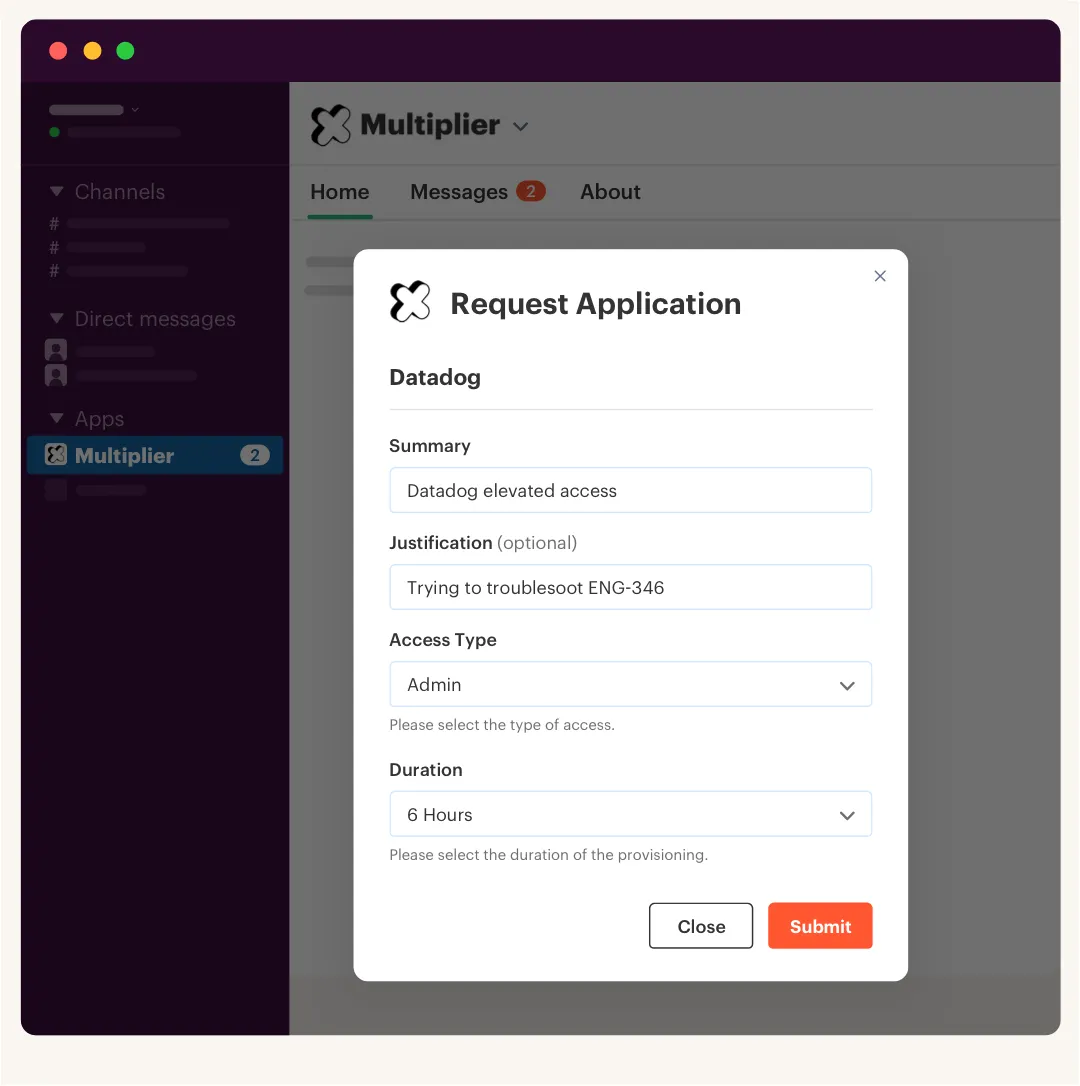
One more advantage shows up during audits. You can pull on-demand reports tied to issue IDs that include the full chain. Request, approval, provisioning outcome, expiry, and revocation. No screenshots needed. No scavenger hunts.
Provisioning Through Identity Provider Groups
Once approved, Multiplier calls your identity provider to add or remove a user from mapped groups. Outcomes land on the ticket with group identifiers and error details if anything fails. Time-based access enforces expiry by policy, then auto-deprovisions when the window ends. That directly cuts the two to three hours of rework per ticket you modeled earlier and reduces license waste that piled up when revocations were missed.
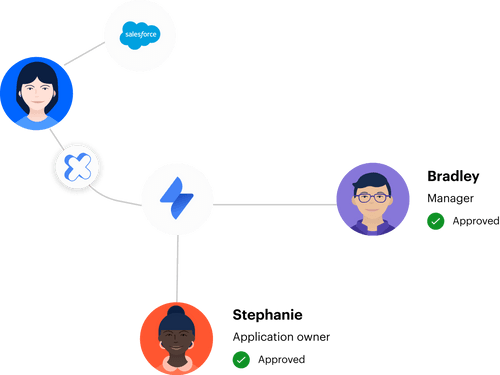
In practice, that looks like:
- Group mapping per application role, managed once and reused
- Post functions that trigger on the “approved” transition
- Ticket comments that capture success or failure with IDs
- Automatic revocation on expiry, plus a recorded reason
Reviews, Expirations, And Exportable Reports
Quarterly access reviews run in Jira with context reviewers actually need, like group membership and last login. Reviewers select keep or revoke. Revocations execute automatically and open a ticket that documents what changed and why. Results export to CSV and integrate with your audit workflows so you stop stitching together evidence at quarter-end.
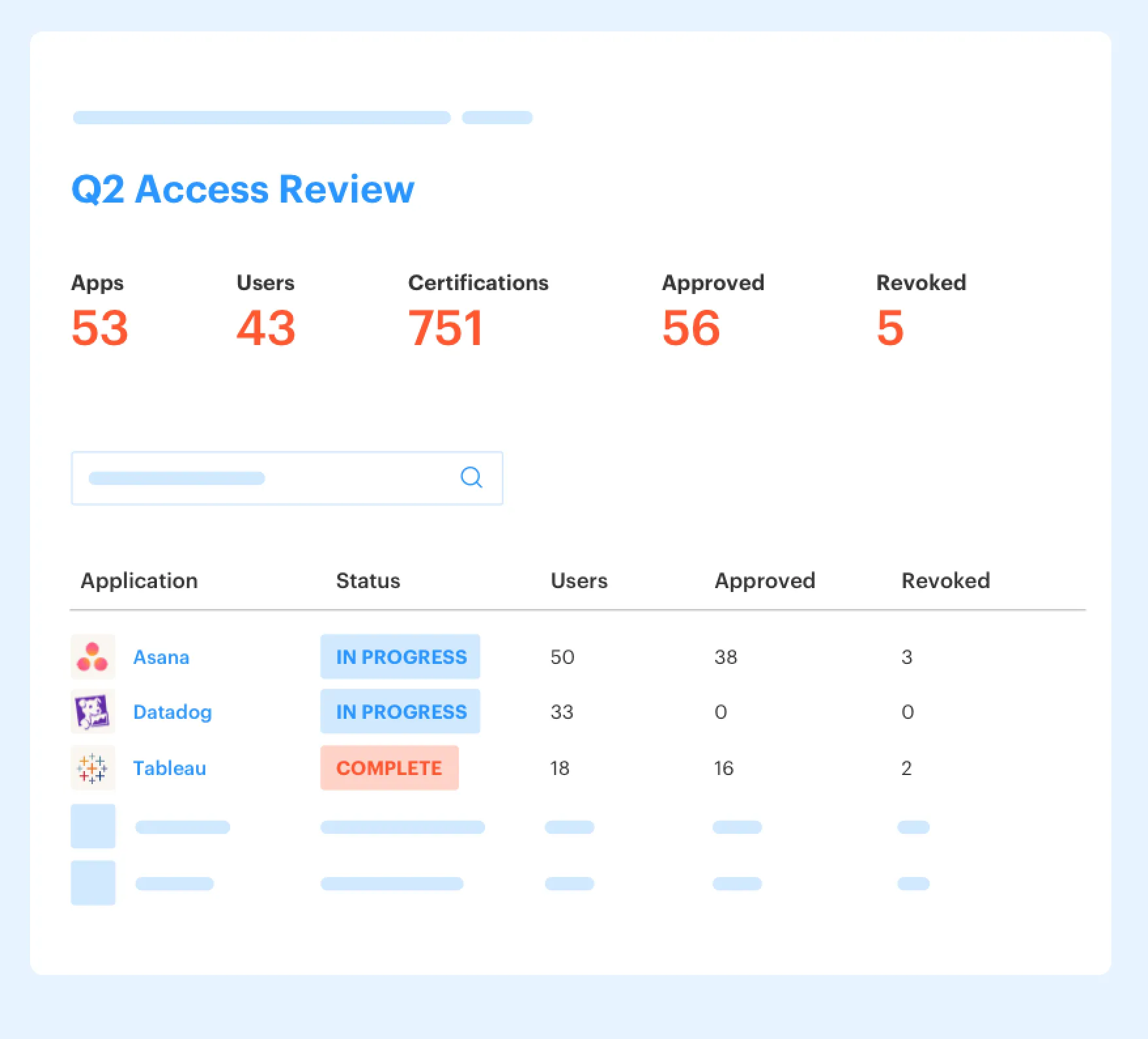
For spend control, inactive users can be flagged for license reclamation policies by pulling last login data from the identity provider. When a license is reclaimed, the action writes to Jira, creating a clean record of cost recovery tied to the user and application.
Teams that adopt this pattern don’t just move faster. They spend more time on improvements and less time chasing proof. What used to feel like “prove it” now feels like “export it.”
Seeing lean teams automate most requests while staying audit-ready is more common than you’d guess. Learn More About Multiplier
Before you wrap up, consider a feature-level shortcut. Multiplier’s access reviews in Jira and time-based access generate the expiry events and revocations auditors look for, then log outcomes to the ticket automatically. If you want to try it in your own environment, you can. Get Started With Multiplier
Conclusion
Audit-ready access isn’t a policy problem. It’s an evidence pipeline problem. When you design a canonical event, wire ITSM to your identity provider, capture approvals where they happen, and persist an append-only log, the audit trail writes itself as work happens. You stop rebuilding proof. You start verifying outcomes. And your system of record becomes the story, not a staging area.
Frequently Asked Questions
How do I set up time-based access with Multiplier?
To set up time-based access in Multiplier, follow these steps: 1) When an employee requests access through the JSM portal or Slack, they can select a duration for the access (e.g., 1 hour, 24 hours). 2) Once the request is approved, Multiplier automatically provisions access by adding the user to the appropriate group. 3) After the selected duration expires, Multiplier will automatically revoke the access, ensuring compliance with least privilege policies. This feature helps manage temporary access needs efficiently.
What if an employee needs to extend their access time?
If an employee needs to extend their access time, they can submit a new request through the JSM portal or Slack. If their previous request is still approved, Multiplier will automatically extend the access period without requiring re-approval. This streamlines the process and ensures that users maintain necessary access while adhering to time-bound policies.
How do I conduct access reviews using Multiplier?
To conduct access reviews with Multiplier, you can create a new review campaign in the Access Reviews section of the app. Start by clicking 'Create New Review' and fill out the necessary details, such as the name of the review, applications in scope, and the review period. Once everything is set, click 'Start Campaign' to notify the reviewers. They will receive a dashboard showing users, their groups, and last login dates, allowing them to mark users as 'Keep' or 'Revoke' easily. This process helps maintain an organized and compliant access management system.
When should I use automated provisioning with Multiplier?
Automated provisioning with Multiplier should be used whenever you have access requests that require quick turnaround times. For instance, when a new employee joins or when an existing employee needs access to new applications, you can set up automated workflows that provision access immediately upon approval. This reduces delays and ensures that employees have the tools they need to be productive right away. Additionally, using automated provisioning helps maintain an accurate audit trail linked to the original request.
Why does Multiplier integrate with Slack for approvals?
Multiplier integrates with Slack to streamline the approval process for access requests. By enabling approvals directly in Slack, approvers can quickly review and approve requests without switching between applications. This integration helps reduce delays caused by email notifications getting lost or overlooked. It ensures that access requests are handled promptly, enhancing the overall efficiency of your access management workflow.


