


Identity governance for enterprise isn’t really about policies, it’s about whether you can get approvals, provisioning, reviews, and audit evidence to happen in the same place your team already works. If your process lives across Jira tickets, Slack pings, IDP admin clicks, and a quarterly spreadsheet, you’ll feel it in three places: access delays, standing privilege, and audit scramble.
What Enterprise Teams Really Need From Identity Governance
Enterprise teams need identity governance that makes access requests and reviews fast, enforces time limits by default, and produces audit evidence without anyone “remembering” to document it. The best programs cut down standing access, route approvals to the right owner, and automate the last mile of provisioning. For example, a clean flow is: request in your service desk, approve in chat or ticket, provision in the IDP, and log everything to the same record.
[Table: Platform] — See "Table Embed Codes" in Oleno to copy the HTML for this table.
Key Takeaways:
- If you’re already all in on Okta, Okta Identity Governance is a natural governance layer, but day to day work may still sit outside Jira.
- If you’re Microsoft first with hybrid AD, Entra ID Governance plus PIM is hard to ignore, but it can feel heavy in mixed tool stacks.
- ConductorOne is a strong pick when you want modern JIT patterns and a dedicated IGA experience, with sales led pricing.
- Multiplier is a fit when Jira Service Management is where access work already happens and you want requests, approvals, and evidence anchored to tickets.
The Hidden Costs of Siloed Access Operations
Siloed access ops cost you time, money, and risk because the request, the approval, the provisioning action, and the audit proof live in different systems. That separation creates rework and missed revocations, even with good intentions. A typical example is a manager approves in chat, IT provisions in the IDP, and someone later reconstructs evidence from screenshots.
Manual approvals and missing audit evidence
Manual approvals break down because context gets lost, and evidence gets created after the fact instead of during the work. You’ll see the same pattern over and over: a Jira ticket exists, but the “real” approval happened in an email thread or a Slack DM, and now someone has to paste it back into the ticket for the record. That’s fragile.
I’ve watched teams do quarterly “audit prep weeks” where smart people spend days chasing down who approved what. Not because they’re sloppy. Because the system made it normal to decide in one place and document in another.
What the mess usually looks like in practice:
- A requester submits a ticket with vague info, because they’re just trying to get unblocked
- An approver asks questions in Slack, the answers never make it back to the issue
- IT provisions access manually, then drops a comment like “done”
- Audit asks for evidence, and the team goes hunting for screenshots and timestamps
That’s the hidden tax. It’s not the approval itself, it’s the proof.
Standing privileges, license waste, and slow revocation
Standing privilege sticks around because nobody owns the “end” of the access story. Access gets granted. The project ends. The employee changes roles. Nobody circles back. And six months later, someone still has elevated groups they don’t need.
License waste is the quieter version of the same problem. If access isn’t time bound, then licenses don’t naturally return to the pool. People keep what they got, even if they used it twice.
The common failure modes:
- Access is granted with no expiry because “we’ll clean it up later”
- There’s no reliable revocation trigger when a role or project changes
- Reviews become checkbox exercises because reviewers lack context and enforcement is manual
- Deprovisioning depends on one admin remembering to do it
This is where programs get cynical. The policy says least privilege. The reality is “least privilege when we have time.”
How the Top Identity Governance Platforms Compare
The top platforms split into three buckets: identity suite governance (Okta and Microsoft), modern dedicated IGA (ConductorOne), and adjacent automation or SaaS ops (Moveworks and Zluri). Your best choice depends on where your identity source of truth lives and where the work actually happens day to day. For example, if Jira Service Management is already the hub for access tickets, a Jira native approach will feel very different than a separate IGA portal.

A quick way to self sort before you get lost in feature lists:
- Decide your control plane: Okta, Microsoft Entra, or vendor neutral governance.
- Decide your workflow home: service desk tickets, chat first, or a dedicated governance portal.
- Be honest about enforcement: do you need time bound access and forced revocation, or just request and review workflows?
- Decide what “audit ready” means internally, exports, evidence trails, or both.
That last point matters more than people admit. A lot of tools can do reviews. Fewer make evidence effortless.
Okta Identity Governance: Fit, Strengths, and Trade-offs
Okta Identity Governance fits best for enterprises standardized on Okta Workforce Identity that want access requests and certifications close to their Okta tenant. It gives you governance features tied into Okta’s identity stack, which can simplify policy and entitlement management for Okta shops. For example, Okta’s own materials position governance as part of the Okta platform’s broader identity capabilities (Okta Identity Governance release notes).
Okta is also thinking about broader identity security scope, including non human identities, which matters if your “identity surface area” has expanded beyond employees (Okta Platform Innovations). That said, the biggest practical question is where the work lives: in Okta, or in your service desk.
Where Okta is strong
Okta Identity Governance is strong when Okta is already the heart of your workforce identity, because you’re building governance on top of an established directory, SSO, and lifecycle foundation. That usually means less debate about “which directory is the source of truth” and more focus on policy and execution.
Okta also publishes steady platform updates that show continued investment, which matters for enterprise buyers evaluating long term fit (Okta Identity Engine release notes).
In practical terms, Okta tends to be a good fit when:
- Your org already uses Okta broadly for workforce access
- You want governance concepts close to the Okta admin model
- You’re comfortable running requests and reviews in Okta’s UX, not in Jira
If that matches your world, Okta can feel like the “cleanest” stack. Not perfect. But coherent.
Where Okta may require workarounds
Okta can require workarounds when your operational reality is ticket driven. If the request starts in Jira Service Management and the decision happens in Slack, an Okta centered governance layer can feel like a second system that needs to be kept in sync. That’s when you get the swivel chair effect. People copy ticket details into the portal. They paste approvals back into Jira. Evidence ends up split.
There’s also the usual enterprise friction point: advanced governance programs want very specific expiration logic, proxy request patterns, and reporting formats. If the out of the box reporting doesn’t match how your auditors or internal controls team wants to see it, you end up exporting, transforming, and explaining.
Worth noting, even Okta discusses governance model choices and trade offs between approaches, which is basically an admission that architecture matters as much as features (Okta blog on identity governance models).
How Multiplier is Different: Okta Identity Governance centralizes governance in the Okta world, while Multiplier centralizes the day to day work in Jira Service Management. With Multiplier, access requests come from a JSM Application Catalog or Slack, approvals happen in JSM or Slack, provisioning runs via Okta group assignment, and the Jira issue becomes the audit record that ties request, decision, and change together.
Microsoft Entra ID Governance: Fit, Strengths, and Trade-offs
Microsoft Entra ID Governance fits best when you’re Microsoft first, especially in hybrid AD environments where Entra and related Microsoft services are already deeply embedded. It provides entitlement management, lifecycle workflows, and access reviews that align to Microsoft’s ecosystem and admin patterns. For example, Microsoft’s documentation frames identity governance as part of the Entra platform’s broader identity controls (Microsoft identity governance overview).
If you’re in the Microsoft world, the appeal is obvious: fewer moving parts, tight integration, and privileged identity controls that sit in the same ecosystem.
Where Entra is strong
Entra is strong when you want governance aligned to Microsoft 365 and Azure, and you don’t want to stitch together multiple vendors to get lifecycle plus reviews plus privileged access. Microsoft keeps shipping platform updates, and those updates tend to land where enterprise admins already spend time (What’s new in Microsoft Entra, March 2025).
Entra also has the advantage of being “native” for organizations with deep Microsoft licensing and operational muscle. You’re less likely to hit resistance from IAM teams who already have processes built around Microsoft admin centers.
Entra is often a good fit when:
- You run hybrid AD and need that bridge to cloud identity
- You want privileged identity management as part of the story
- Your app portfolio is heavily Microsoft aligned
If that’s you, Entra can be the default choice, for better or worse.
Where Entra may require workarounds
Entra can require significant effort when your environment is not Microsoft centered, or when your workflow home is Jira and Slack. The governance features may exist, but the experience can feel like you’re asking employees and approvers to live in another admin domain. That’s where adoption dies quietly.
A common theme in third party writeups is that Entra governance is broad, but can be complex to implement and operate, especially when you step outside the Microsoft happy path (Majorkey overview). Even Microsoft focused blogs tend to read like “there are a lot of knobs,” which is great if you have the team for it, and painful if you don’t (Dirteam update notes).
How Multiplier is Different: Entra ID Governance shines when Microsoft is the center of gravity, but Multiplier is built for teams where Jira Service Management is the operational center. Multiplier uses Entra ID as the provisioning system of record (group assignments and changes), while keeping requests, approvals, time windows, revocations, and evidence anchored to Jira issues and Slack approvals.
ConductorOne: Fit, Strengths, and Trade-offs
ConductorOne fits best for cloud forward organizations that want a modern IGA platform with a strong just in time access model and automation focused reviews. It’s positioned as a dedicated identity governance product rather than an add on inside an IDP suite. For example, ConductorOne publicly talks about enterprise traction and growth, which usually maps to demand from security led buyers (ConductorOne press release).

If you’re buying a standalone governance layer and you want it to move fast, ConductorOne is usually on the shortlist.
Where ConductorOne is strong
ConductorOne’s strength is its focus on governance as a first class product, not a side feature. That typically shows up in how teams run access reviews, automate workflows, and operationalize JIT access patterns.
They also ship release notes publicly, which is a small thing, but it helps when you’re trying to gauge roadmap momentum and platform maturity (ConductorOne release notes).
ConductorOne tends to fit when:
- You want a modern IGA UX and review experience
- You’re serious about JIT access concepts, not just annual certifications
- You’re willing to run governance in a dedicated system, separate from Jira
That last bullet is the trade. Some teams love it. Others hate adding yet another portal.
Where ConductorOne may require workarounds
ConductorOne requires validation work in two areas that matter in enterprise buying: connector depth for niche systems, and pricing predictability. Pricing is typically sales led, not public, so budgeting can be harder early in evaluation (you can see that even basic company profile info is often high level outside their own materials, which is normal for enterprise SaaS) (CB Insights company profile).
Also, if your IT org is deeply Jira based, a separate governance portal can reintroduce the split you were trying to fix. You’ll end up deciding where evidence lives and who has to log into what. That’s not a ConductorOne specific problem, it’s the “portal vs service desk” problem.
How Multiplier is Different: ConductorOne is a dedicated IGA portal, while Multiplier is Jira native governance that keeps the workflow in JSM and Slack. Multiplier standardizes intake with a JSM Application Catalog, routes approvals in Jira or Slack, provisions via IDP groups, and writes the evidence to the Jira issue so audits don’t depend on portal exports and manual stitching.
If you want to see what Jira native governance looks like in practice, See how Multiplier works for a walkthrough focused on your JSM workflows.
Moveworks: Fit, Strengths, and Trade-offs
Moveworks fits best for large enterprises that want conversational employee support and automation across many internal workflows, with identity related requests as one slice of the broader experience. It’s positioned around an AI platform for employee issues and request resolution, not identity governance as a category. You can see that framing in their product announcements and platform releases (Moveworks Dynamic AI Platform release).
If you’re trying to deflect tickets and automate service delivery, Moveworks can be compelling. If you’re trying to run strict access certifications and prove least privilege, you’ll need to be careful.
Where Moveworks is strong
Moveworks is strong when the primary goal is employee experience and fast resolution. That’s the point of an assistant led model. You want the employee to ask in Slack or Teams and get something done.
They also lean into approved paths for AI usage itself, which signals they’re thinking about enterprise controls and guardrails, at least in the AI support context (Moveworks Quick GPT announcement). And they highlight market validation, like Gartner related recognition, for their ITSM space (Moveworks Gartner ITSM recognition).
Moveworks tends to fit when:
- You want a front door for employee support that can do lots of things
- You’re optimizing for speed and ticket deflection
- Identity governance is important, but not the main purchase driver
Where Moveworks may require workarounds
Moveworks may require workarounds if you expect it to behave like an IGA system. Access reviews, certifications, time bound enforcement, and auditor friendly evidence are governance problems, not just request automation problems. You can automate a request flow and still fail an audit if the evidence chain is messy.
Another real world issue is tuning and integration effort. Assistant led automation can be amazing, but the “last mile” depends on connectors, policy mapping, and organizational ownership. If your environment has legacy systems, you’ll spend time making the assistant reliable.
How Multiplier is Different: Moveworks is an assistant overlay for many IT workflows, while Multiplier is purpose built for access governance inside Jira. Multiplier keeps requests, approvals, and evidence inside Jira issues, adds Slack approvals without losing the ticket record, enforces Time Based Access with automatic revocation, and runs Access Reviews in the JSM Help Center.
Zluri: Fit, Strengths, and Trade-offs
Zluri fits best for organizations trying to get control of SaaS sprawl, shadow IT, and license spend, with governance workflows as part of SaaS operations. It blends discovery, usage, and access management concepts in a single SaaS management motion. For example, third party writeups focus heavily on Zluri’s SaaS management and optimization angle (Zluri statistics and overview).
If your biggest pain is “we don’t even know what apps we have,” Zluri is in its element.
Where Zluri is strong
Zluri is strong on visibility and cost control, and that’s not a small thing in enterprise. A lot of identity programs fail because there’s no clean inventory of apps and entitlements, so reviews turn into guessing games.
Pricing is generally sales led, but there are guides that try to frame how Zluri pricing works, which is helpful during early research (CloudEagle Zluri pricing guide).
Zluri tends to fit when:
- SaaS discovery and spend are your headline problems
- You want workflows tied to usage and license optimization
- You’re okay running this in a SaaS ops console, not inside Jira
Where Zluri may require workarounds
Zluri may require workarounds if you need deeper governance controls, especially if your auditors expect strict certification evidence and you want governance fully integrated into ITSM ticketing. Some review sources also point to variability in user experience and enterprise fit depending on scale and complexity (Info-Tech Zluri reviews).
Also, if you already run your operational processes through Jira Service Management, adding a separate console can recreate the “two system” problem. It’s not that Zluri can’t do workflows. It’s that your team may still have to move evidence back into Jira to satisfy internal processes.
How Multiplier is Different: Zluri centers SaaS ops and spend, while Multiplier centers access governance execution in JSM. Multiplier uses a JSM Application Catalog and Slack approvals for requests, provisions via IDP group mappings, runs Access Reviews in the JSM Help Center, and can auto reclaim licenses, all while keeping the Jira issue as the audit record.
Final Comparison Grid and Selection Checklist
If you want a clean selection, start by deciding whether your governance system should be your IDP suite, a standalone IGA product, or your service desk. That choice will dictate adoption and audit outcomes more than one extra feature toggle. For example, a Microsoft first org often lands on Entra, while a Jira first org may prioritize keeping evidence and workflows inside JSM.
[Table: Capability] — See "Table Embed Codes" in Oleno to copy the HTML for this table.
A selection checklist that usually keeps teams sane:
- Where will approvers actually approve, Jira, Slack, or a portal?
- Can you enforce expiry on elevated access without relying on humans?
- Can you run access reviews with enough context to avoid rubber stamping?
- Where does audit evidence live, and can you export it without cleanup?
- Do you need PIM or deep SoD, or is operational enforcement your bigger gap?
If you answer those honestly, you’ll eliminate half the market in ten minutes.
Why Multiplier for Enterprise Identity Governance in JSM
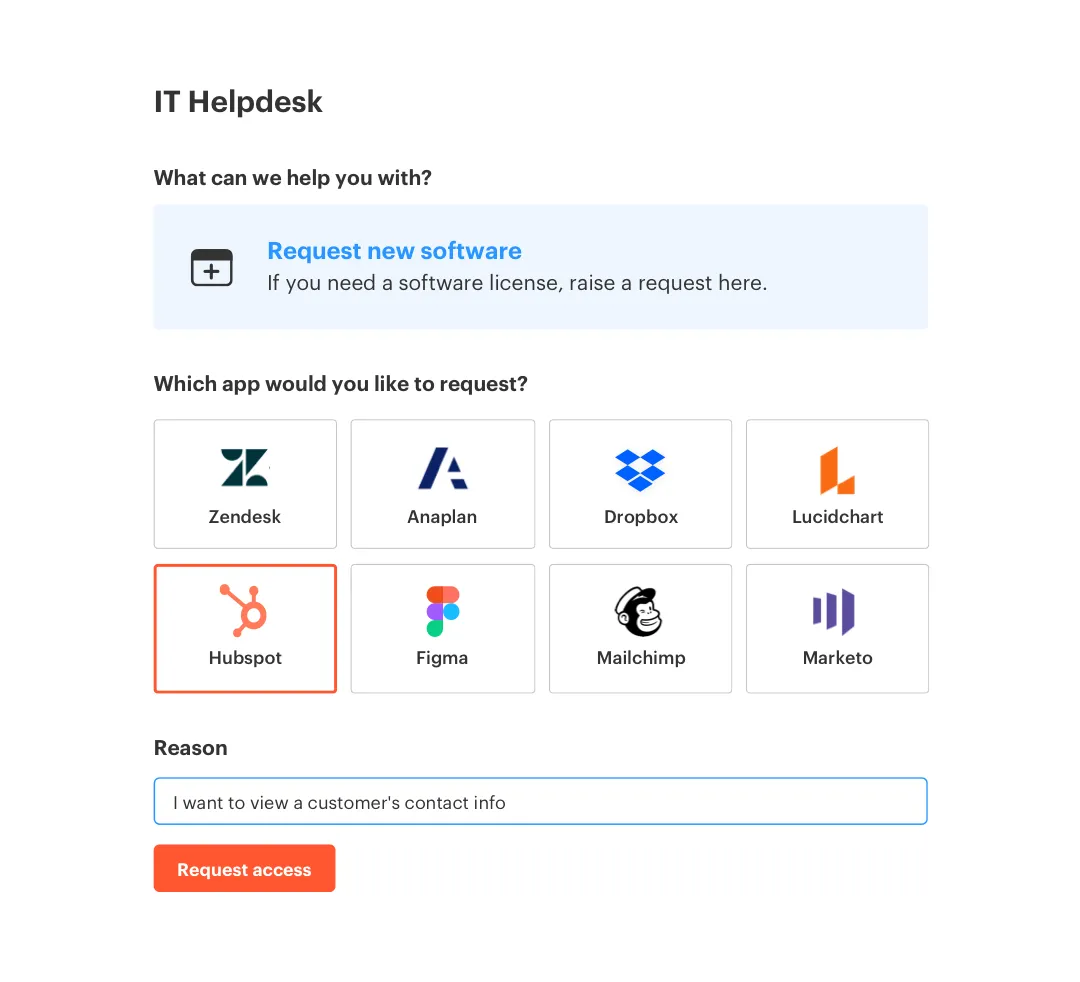
Multiplier is a strong fit when Jira Service Management is already the system your IT and security teams live in, and you’re tired of splitting access work across a service desk, chat, and spreadsheets. The core idea is simple: keep requests, approvals, reviews, and evidence inside Jira issues, while provisioning and revocation happen automatically through your identity provider. For example, an employee requests access in the JSM Application Catalog or Slack, an owner approves in Slack or Jira, and Multiplier provisions via IDP group assignment with the audit trail written back to the ticket.
I like this approach because it matches how teams actually operate. You don’t wake up excited to “log into the governance portal.” You wake up to a queue of Jira issues and a Slack inbox. That’s the work.
Core differentiators in JSM and Slack
Multiplier’s differentiators come down to where governance happens and how enforcement works when nobody’s paying attention. It embeds access governance directly into Jira Service Management and Slack, then uses your IDP (Okta, Entra ID, or Google Workspace) group assignments to execute changes and keep the system consistent.
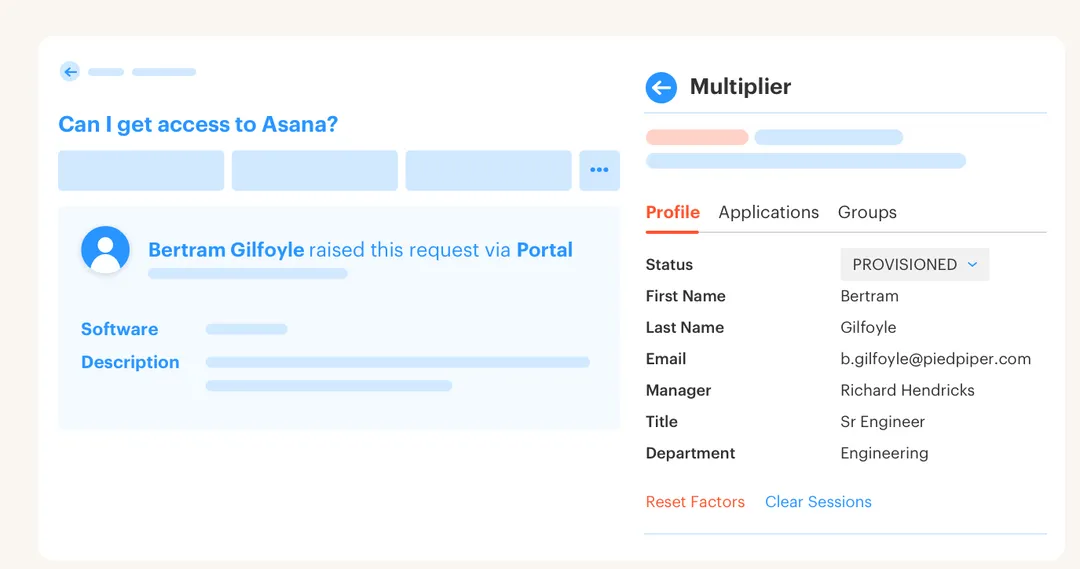
In practice, the capabilities that matter most are:
- Jira native access request catalog that lets employees request access via a JSM Application Catalog, with consistent intake and routing.
- Approval workflows in Jira and Slack so managers and app owners can approve quickly, without losing the ticket record.
- Automated provisioning through the identity provider via group assignment, so the “approved” state actually results in access, not a manual admin task.
- Time Based Access (just in time) with automatic revocation at expiry, so elevated access isn’t standing access by default.
- Access Reviews as Jira campaigns that notify reviewers, include context, and can execute revocations or open targeted tickets.
- Vanta ready exports and auditor friendly reports generated from Jira issues, so evidence isn’t rebuilt every quarter.
- Post Functions for lifecycle orchestration that chain onboarding and offboarding actions from Jira transitions without code.
- In issue user management for viewing and updating attributes, managing groups, resetting passwords and MFA, and adding the manager as an approver, with a traceable link to the request.
This is also where the earlier cost shows up. Remember the “one visible hour, two invisible hours” problem? Multiplier is basically designed to delete the invisible hours by keeping the process and proof in the same place.
Where Multiplier fits best
Multiplier fits best in mid market and high growth enterprises that run on Atlassian, especially when Jira Service Management is already the intake and tracking layer for access and IT work. If you’ve got Okta or Entra or Google Workspace as the IDP, you can keep that as the authority while making Jira the operational control plane.
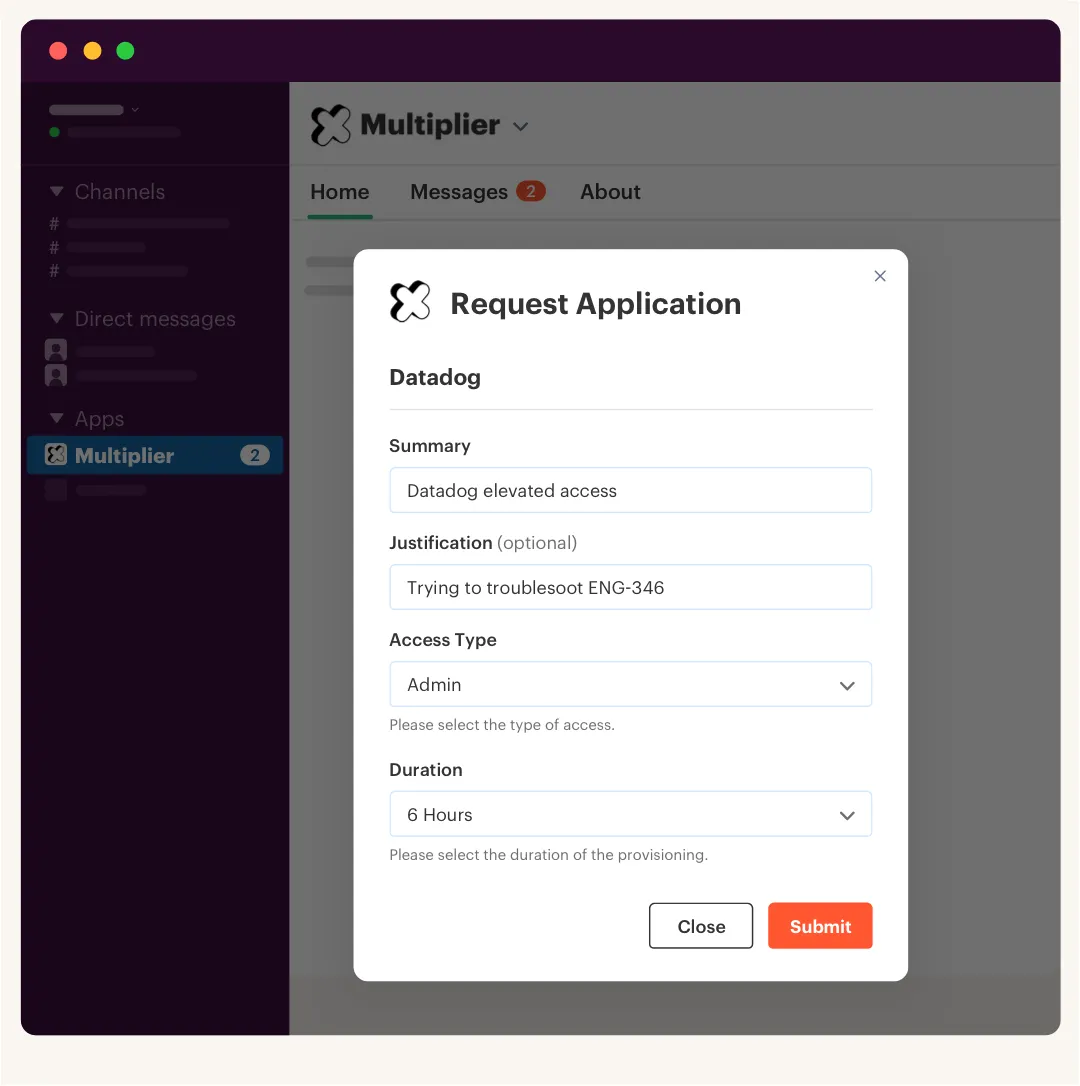
You’ll get the most value if:
- Your team already has an access ticket workflow in JSM, even if it’s messy.
- Approvals happen in Slack or email today, and you want them anchored to issues.
- You need time bound access and revocation to be enforced automatically.
- Audits currently trigger a scramble for screenshots and evidence trails.
A real world proof point from Multiplier customers is the operational lift: Luno reported an 80 percent reduction in IT workload on access requests after shifting routine access requests into automated JSM and Okta driven flows, cutting the 5 to 30 minute manual loops that add up fast when you’re scaling. Videoamp described 500 plus app requests processed in six months via a JSM app catalog pattern, with 70 plus hours saved and lower resolution times. Stavvy described cutting privileged access by 85 percent using time limited access and automatic revocation.
If you want to pressure test fit quickly, Learn more about Multiplier with a demo that maps to your existing JSM workflows and approval chains.
Final Comparison Grid and Selection Checklist
The “best” identity governance platform is the one your org will actually use, enforce, and audit without heroics. Okta Identity Governance and Microsoft Entra ID Governance are strong choices when your identity ecosystem is already standardized, ConductorOne is compelling if you want a modern dedicated governance layer, Moveworks shines for conversational IT automation, and Zluri stands out for SaaS discovery plus spend control. If your day to day access ops already live in Jira Service Management, Multiplier is the cleanest way to keep governance in the workflow and keep evidence in the ticket.
Three practical next steps that won’t waste your time:
- Pick your “workflow home” first (Jira, portal, or assistant), then shortlist tools that match.
- Run one real access request end to end in each candidate, including an expiry and a revocation.
- Ask for an audit evidence export example early, not at the end.
If you want to see how a Jira native approach works with Slack approvals and IDP based provisioning, Get started with Multiplier and walk through a real request, a Time Based Access window, and an access review campaign in JSM.
Frequently Asked Questions
How do I set up automated access requests in Multiplier?
To set up automated access requests in Multiplier, start by integrating it with your identity provider like Okta or Google Workspace. Next, create an Application Catalog within Jira Service Management (JSM) where employees can browse and request access to approved applications. Ensure that each application has defined roles and provisioning rules. When an employee submits a request through JSM or Slack, Multiplier will automatically handle approvals and provisioning based on your configured workflows, keeping everything documented in Jira for audit purposes.
What if I need to revoke access quickly?
If you need to revoke access quickly, use Multiplier's Time-Based Access feature. When users request access, they can specify a duration for their access. Once approved, Multiplier will automatically remove the user from the mapped group when the time expires, eliminating the need for manual follow-up. Additionally, you can initiate revocations through access review campaigns in JSM, where reviewers can easily mark users for removal based on their activity or role changes.
Can I track access requests and approvals in Multiplier?
Yes, you can track access requests and approvals in Multiplier directly within Jira. When an employee submits a request, a Jira ticket is created automatically. Approvals are routed to the designated approvers via JSM notifications or Slack DMs. Each action, including approvals and provisioning, is logged in the associated Jira ticket, providing a complete audit trail. This setup helps ensure that all access activities are documented and easily accessible for audits.
When should I use the Application Catalog feature?
You should use the Application Catalog feature in Multiplier when you want to streamline access requests and ensure consistency in how applications are requested. This feature allows employees to browse a visual catalog of approved applications, reducing confusion and ensuring that requests include the necessary context. It's particularly useful for organizations that experience high volumes of access requests, as it centralizes the process and integrates directly with your existing JSM workflows.
Why does Multiplier integrate with Slack for approvals?
Multiplier integrates with Slack for approvals to enhance the speed and efficiency of access management. Since many teams use Slack for daily communication, this integration allows approvers to receive notifications and approve requests directly within the chat interface. This reduces context switching and ensures that approvals are not lost in email threads, making the entire process smoother and quicker for both requesters and approvers.


