


72% of SaaS spend is often wasted or underused, depending on the portfolio and review discipline, and that stat points to a bigger problem than license cleanup. If you're still treating SaaS management software as a discovery dashboard, you're probably missing the part that actually creates risk: access.
Buying in this category gets weird fast. Some platforms are really SaaS management tools. Some are identity governance software. Some are employee support layers that touch requests but don't really own governance. And if you're the person sitting in Jira Service Management, Slack, Okta, or Entra all day trying to make this stuff work together, you feel that mismatch immediately.
This guide compares Okta Identity Governance, Microsoft Entra ID Governance, ConductorOne, Moveworks, and Zluri for teams evaluating the best SaaS management software for access governance in 2026. The focus is simple: access requests, provisioning, reviews, auditability, deployment effort, and where each product fits best.
[Table: Platform] — See "Table Embed Codes" in Oleno to copy the HTML for this table.
Key Takeaways:
- Okta Identity Governance fits best when Okta is already the center of your identity stack and you want governance without adopting a legacy IGA suite.
- Microsoft Entra ID Governance is strongest for large Microsoft environments where lifecycle automation and privileged access matter more than cross-tool simplicity.
- ConductorOne is a strong pick for security-led teams chasing modern governance workflows, just-in-time access, and faster rollout than older IGA products.
- Moveworks overlaps with request workflows, but it should be evaluated more as an employee support layer than as core SaaS access governance software.
- Zluri stands out when SaaS discovery, shadow IT, and license optimization are just as important as access reviews and workflow automation.
What the Best SaaS Management Software Actually Solves
The best SaaS management software doesn't just find apps. It reduces the time, risk, and audit mess created when app discovery, access approvals, provisioning, and reviews live in separate systems. That's why buyers who start with spend management often end up evaluating identity governance software too.
A lot of teams buy for the visible problem first. Too many apps. Unknown renewals. Duplicate licenses. That's fair. Those costs are real. But after the first cleanup pass, the harder issue shows up.
Access.
Back in a lot of IT teams, the day usually looks the same. Someone asks for Figma in Slack at 9:12. Their manager approves in chat. IT gets pinged in a Jira ticket. Someone checks a spreadsheet or old note to remember which group grants the right level of access. Then an admin makes the change in Okta or Entra and hopes someone remembers to remove it later. One request. Four systems. Zero clean chain of evidence.
That's why I like a simple buying lens here. I call it the 4R test: Request, Route, Revoke, Report. If a platform can't handle all four, you're not really buying SaaS access governance. You're buying one slice of it.
What buyers should evaluate beyond app discovery
App discovery matters, but it rarely decides the long-term winner. Access request workflows, provisioning logic, review quality, and audit evidence are what determine whether the tool still feels useful 12 months after rollout.
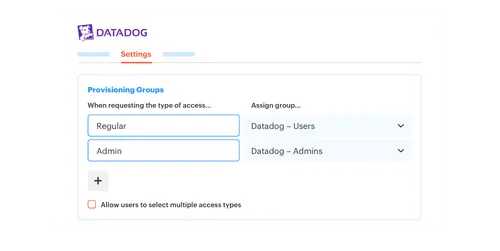
The trap is obvious once you've seen it a few times. A team picks a platform because the dashboard looks great and the discovery map is impressive. Three months later they're still approving access in Slack, provisioning in the identity provider, and exporting evidence into spreadsheets before an audit. Nice visibility. Same broken process.

If you want a practical threshold, use this one: if more than 30% of access requests still require manual handoff across two or more tools after rollout, the platform isn't fixing operational drag. It's just documenting it.
Some teams genuinely do only need discovery and license cleanup. That's the honest limitation. If your biggest problem is unused SaaS spend and your auditors aren't pushing on access certifications yet, a discovery-first tool can be enough for a while. But once you cross into quarterly access reviews, time-bound access, or repeated audit evidence requests, the buying criteria change fast.
The difference between SaaS management, IGA, and employee support tools
SaaS management tools optimize visibility and spend. Identity governance software enforces who should get access, for how long, and with what review trail. Employee support tools make requesting things easier, but they usually aren't the system that proves governance happened.

That distinction sounds academic until you're in the middle of an audit. Then it becomes painfully operational. A reviewer doesn't care that a bot answered a request quickly if you can't show who approved the access, what entitlement changed, and whether it was revoked on time.
Three categories keep getting mashed together in this market:
- SaaS management platforms focus on discovery, usage, license optimization, and shadow IT
- Identity governance software focuses on access requests, approvals, provisioning orchestration, reviews, and compliance evidence
- Employee support platforms focus on conversational intake and task resolution across IT, HR, and finance
The old way of buying assumes one category can stretch into the others. Sometimes it can. Often it can't. If your company has under 200 employees and light compliance needs, that overlap may be fine. If you run regulated workflows, high-volume access requests, or quarterly certifications, category blur becomes expensive.
And that's the real question: are you buying visibility, governance, or convenience?
Why SaaS Sprawl Turns Into an Access and Compliance Problem
SaaS sprawl becomes an access and compliance problem the minute app growth outruns your review process. More apps mean more entitlements, more edge cases, and more stale access that nobody owns. That shift usually happens before leadership notices it on a dashboard.

Most teams don't wake up one day and say, "Let's build a fragmented access process." It happens gradually. Sales buys one tool. Product buys another. Finance wants a separate approval path. HR has onboarding steps in one system, offboarding steps in another, and emergency access requests in chat. Nobody intended a mess. They just added software faster than they added control.
The result is a little like running an airport with great departure screens but no baggage tracking. Everything looks organized from the lobby. Behind the wall, bags are going everywhere.
Where manual access workflows create operational drag
Manual access workflows create drag by hiding work in side channels. The ticket may look quick, but the real effort happens in chats, spreadsheets, browser tabs, and memory. That's why a five-minute request can quietly burn 20 to 40 minutes of operator time.
Picture an IT manager at 4:45 p.m. They have seven open requests. Two need app-owner approval. One needs a finance check because of license cost. Three are waiting on group mapping in the identity provider. Another one was approved yesterday in Slack but never updated in Jira. Now imagine they also need clean evidence for ISO or SOC 2. Sound familiar?
I've seen teams blame ticket volume for this. Fair point, but volume isn't the root issue. Separation is. When request intake, approval, provisioning, and proof live in different places, every task turns into a relay race.
Use the 2x Rule here. If the invisible work around a ticket takes at least twice as long as the visible work inside the ticket, you have an operational governance problem, not just a workflow problem.
How pricing, deployment effort, and auditability change the decision
Pricing transparency affects shortlist speed. Deployment effort affects time-to-value. Auditability determines whether the tool survives budget review next year. In practice, the third one usually matters most because it's the hardest to fake with process workarounds.
Public entry pricing can get a vendor onto the shortlist faster. Sales-led pricing can still be fine, especially in enterprise. But if you're comparing six tools and can't ballpark fit in week one, the process drags. People stall. Procurement gets nervous. The shortlist gets political.
Then there's implementation. A strong platform on paper can still be the wrong call if your team can't support the setup. If you need a dedicated identity engineering motion just to stand up basic campaigns, smaller IT teams will feel that cost immediately.
Auditability is where the hidden cost really shows up. According to Microsoft's Entra identity governance overview, access reviews, entitlement management, and lifecycle workflows are core parts of governance, not optional add-ons (Microsoft Learn). That matches what buyers run into in the field. If audit evidence has to be reconstructed after the fact, you're paying for the same process twice.
So the shortlist shouldn't just ask, "Can it do access reviews?" It should ask, "Can it do access reviews without making us build a second reporting workflow?"
How Leading Platforms Compare for SaaS Management
These leading platforms solve different parts of the SaaS management and access governance problem. Okta Identity Governance and Microsoft Entra ID Governance are strongest when you already live inside their ecosystems. ConductorOne leans modern IGA. Moveworks leans employee support. Zluri leans discovery, spend, and broad SaaS ops.
That mix is exactly why buyers get stuck. They're comparing overlapping tools with very different centers of gravity. The fastest way through it is to judge each product by its home turf first, then ask how far it stretches beyond it.
Okta Identity Governance
Okta Identity Governance is a strong fit for organizations already standardized on Okta that want requests, certifications, and governance workflows close to their existing identity layer. Okta also continues to expand governance and identity engine capabilities through recent releases (Okta release notes). The catch is that the fit gets weaker as your environment gets more mixed.
Okta's strength is pretty straightforward. If Okta already sits at the center of your stack, adding governance there feels natural. The platform benefits from broad integration coverage and SCIM-oriented provisioning patterns, and Okta has publicly positioned governance as part of a wider identity security fabric (Okta investor release).
Where buyers need to be careful is flexibility. Mixed identity environments often expose the limits of an ecosystem-first product. Reporting and review customization can also matter more than people expect. Not on day one. Later, when internal audit asks for a very specific evidence trail and the default exports don't quite line up.
A quick buyer rule: if 70% or more of your access stack already flows through Okta, Okta Identity Governance deserves serious consideration. If you're below that and living across Jira, Slack, multiple app owners, and mixed IDPs, validate the operational fit before assuming the ecosystem fit will carry you.
How Multiplier is Different: Multiplier keeps request intake, approvals, provisioning actions, and ticket history in Jira Service Management instead of asking teams to move governance into a separate portal. For teams already running IT work in JSM and Slack, that changes adoption and evidence flow more than another layer of feature depth.
Microsoft Entra ID Governance
Microsoft Entra ID Governance is strongest for large Microsoft-centric enterprises that want lifecycle governance, entitlement management, and privileged access tied closely to Microsoft infrastructure. Microsoft continues to expand Entra governance and workflow capabilities through regular product updates (Microsoft Entra blog). The tradeoff is complexity, especially for smaller teams or heterogeneous environments.
This is one of those products where the strengths are real and the operational cost is real too. Deep Microsoft integration is a big advantage if your world is already Microsoft 365, Azure, Intune, and hybrid identity. In that context, the governance depth makes sense. You can justify the admin overhead because the alignment is tight.
But if your portfolio is broader, the experience can feel heavy. The issue isn't that the product lacks capability. It's that capability often arrives with more prerequisites, more configuration, and more administrative muscle than smaller teams want to carry. External implementation commentary points to that same pattern: strong functionality, but more effort to shape into day-to-day use (MajorKey Technologies).
If your team already has Microsoft identity expertise, this can be a logical choice. If not, ask a blunt question early: who will own this system after launch? If the answer is fuzzy, complexity becomes your first governance risk.
How Multiplier is Different: Multiplier centers access operations inside Jira tickets and Slack approvals, then uses the identity provider as the execution layer. That makes it a tighter operational fit for JSM-heavy teams that want automation without standing up a broader Microsoft governance motion.
ConductorOne
ConductorOne is aimed at cloud-forward enterprises that want modern identity governance software with strong automation and just-in-time access patterns. The company positions itself heavily around automation, lifecycle management, and enterprise traction (ConductorOne release notes, ConductorOne press release). The main buying friction is that pricing is not public and connector fit may need closer validation.
Honestly, this is one of the more interesting options in the market. It tends to come up when teams want modern IGA without defaulting to older enterprise suites. The just-in-time access angle matters, and so does the automation posture.
Still, there are tradeoffs. Public pricing matters more than vendors like to admit because early shortlist work is messy enough already. Also, if you rely on niche or on-prem systems, you can't just assume broad connector claims will match your actual estate. Validate the ugly systems first. Always.
My rule here is the Niche First Test. During evaluation, check your three messiest systems before your three most common ones. If the platform only looks good on clean SaaS apps, you'll find out too late.
How Multiplier is Different: Multiplier is narrower, but it is more embedded in Jira Service Management workflows. That matters for teams that care less about buying a broad standalone IGA layer and more about getting request-to-provision execution, time-based access, and review evidence tied directly to Jira issues.
Moveworks
Moveworks is best understood as an employee support and AI automation platform, not as a primary SaaS governance platform. Its conversational experience in Slack, Teams, and web is a real strength, and the company keeps expanding its agentic platform scope (Moveworks product release). But governance-heavy buyers should treat it as adjacent rather than equivalent.
This is where a lot of comparisons get sloppy. Moveworks can absolutely sit in front of access workflows. It can improve intake. It can reduce friction. It can make employees happier. All good things.
But convenience is not governance.
That sounds harsher than I mean it. There's a legitimate case for using conversational automation as the front door, especially in large enterprises where request volume is huge. Moveworks has clearly invested there, including broader AI capabilities and employee-facing automation experiences (Moveworks Quick GPT release). The problem comes when teams treat that front door as the whole house.
If your buying goal is service deflection and support speed, Moveworks makes sense. If your buying goal is access reviews, entitlement decisions, time-bound enforcement, and audit-ready evidence, you still need the governance layer behind the assistant.
How Multiplier is Different: Multiplier is built around access requests, approvals, provisioning, reviews, and evidence inside Jira. That means the ticket stays the record of work, not just the place where a request started.
Zluri
Zluri is a strong option for teams that define SaaS management broadly and care about discovery, spend control, license recovery, and governance in one platform. Reviews and category coverage point to this broader positioning across SaaS ops and management use cases (Info-Tech review). The tradeoff is that advanced governance programs may outgrow the customization depth.
Zluri makes sense when your first pain is SaaS sprawl itself. Shadow IT. Duplicate apps. Unused licenses. Renewal surprises. That's a very real market need, and Zluri speaks to it better than pure identity governance vendors do.
But if your world is increasingly about least privilege, reviewer accountability, and provable revocation, you'll need to look closely at where SaaS ops ends and governance depth begins. Some teams never hit that ceiling. Others hit it fast.
A clean decision rule: if your CFO and procurement team are in the buying room from day one, Zluri probably deserves a strong look. If internal audit and security are driving the decision, don't stop at discovery and spend analytics.
How Multiplier is Different: Multiplier is less about broad discovery and license analytics, and more about running access governance as an operational workflow inside Jira Service Management. That makes it tighter for teams prioritizing approvals, provisioning, access reviews, and time-bound access over SaaS spend management.
How Multiplier Fits Teams That Run Access Through Jira
Multiplier fits teams that already run access work through Jira Service Management and want governance to happen where the work already lives. Instead of adding another portal, it embeds requests, approvals, reviews, and lifecycle actions into JSM and Slack. That changes both speed and auditability.
This is the contrarian part of the market, and I think it's the useful part. A lot of identity governance buying starts from the assumption that governance must live in a separate system. But for Jira-centric IT teams, that assumption creates its own operational tax.
Where Multiplier is structurally different
Multiplier's structural difference is simple: governance lives inside Jira Service Management and Slack, while provisioning runs through the identity provider. That means the request, approval, execution trail, and evidence stay connected to the issue that initiated the work.
That's not just a UX preference. It's a control model.
Employees can self-serve access through a Jira-native request catalog. Requests can route to managers or app owners with multi-stage rules, and lower-risk scenarios can be auto-approved. After approval, provisioning happens through identity provider group assignment. For temporary needs, time-bound access can expire by policy and auto-revoke without someone chasing it manually. Access reviews run as Jira campaigns with reviewer context, recommendations, and revocation actions tied back to the issue trail. Exportable evidence and Vanta-ready reporting close the loop.
If you're curious how this looks in practice inside JSM, it's worth reviewing how access approvals work inside Jira and how access can be automated inside Jira Service Desk and JSM.
The strongest use case isn't "every company." That's the concession. If your organization wants a broad, standalone governance suite as its command center, a Jira-native model may feel too operationally specific. But if work already starts in JSM, this model removes handoffs instead of documenting them.
Best-fit teams for Multiplier
Multiplier fits mid-market and high-growth IT, security, and workplace technology teams that already use Jira Service Management as the operating layer for access. The best fit is a team that wants faster approvals, automatic provisioning through the identity provider, and a cleaner audit trail without adding another portal.
Three teams tend to line up well here:
- Jira-native IT teams that already run request work in JSM and don't want governance separated from service delivery
- Security teams pushing least privilege who need time-bound access and automatic revocation without manual cleanup
- Lean operations teams that need audit evidence created during work, not rebuilt after work
The stories here matter. Synthesia processed more than 3,800 access requests in a year and fully automated 75% of them while a four-person IT Ops team supported 420-plus employees. Stavvy reduced privileged access by 85% and automatically revoked more than 1,300 requests after approved windows. Those aren't vanity metrics. They're signs that workflow design and enforcement were finally tied together.
If your team is living in Slack, Jira, and the identity provider anyway, that operating model feels much closer to how work actually happens.
What to validate before rollout
Validate three things before rollout: identity provider fit, policy design, and review ownership. If one of those is vague, automation will expose the gap rather than fix it. The good news is that these gaps are usually visible early if you test the right scenarios.
Start with the ugliest workflows first. Not the happy path. Test contractor access with an expiry date. Test a manager approval in Slack that must become a provisioning action in the IDP and an auditable Jira record. Test an access review where the reviewer needs context, not just a yes or no button.
Use what I think of as the 3W rollout check:
- Where does the request start?
- Who actually approves it?
- What proves the change happened and later got revoked?
If you can't answer all three in one workflow, keep digging.
Teams planning broader lifecycle work should also look at related Jira automation patterns, especially around onboarding and change events. This walkthrough on automating new hire onboarding in Jira is a useful reference point. If you want to see the Jira-native model in a real environment, Learn more about Multiplier.
Which platform fits which buyer best
The right platform depends less on feature volume and more on where your operational center of gravity sits. Okta Identity Governance fits Okta-first shops. Entra fits Microsoft-first enterprises. ConductorOne fits modern security-led IGA buying. Zluri fits SaaS ops and spend-heavy buying. Multiplier fits Jira-native access operations.
That sounds obvious. It's not. A lot of teams still buy based on the broadest demo instead of the cleanest operating fit.
[Table: Platform] — See "Table Embed Codes" in Oleno to copy the HTML for this table.
Multiplier's fit gets strongest when Jira is already where access work starts and Slack is where approvals happen. Its model ties requests, approvals, provisioning through the identity provider, access reviews, and audit evidence to the same system of work.
The cleanest recommendation is this:
- Choose Okta Identity Governance if Okta is your center of gravity
- Choose Microsoft Entra ID Governance if Microsoft is your center of gravity
- Choose ConductorOne if you want modern IGA depth with a security-led posture
- Choose Moveworks if your priority is conversational support automation
- Choose Zluri if SaaS discovery and license waste are driving the project
- Choose Multiplier if your team already runs access work in Jira and wants governance embedded in that workflow
That's the real split in this market. Not features on a slide. Operating model.
The best SaaS management software for access governance in 2026 is the one that removes handoffs, not the one that adds another screen. For a lot of teams, that's the difference between buying software and actually fixing the process.
Frequently Asked Questions
How do I set up automated access requests with Multiplier?
To set up automated access requests with Multiplier, first ensure it’s integrated with your Jira Service Management (JSM). 1) Navigate to the Multiplier app catalog within JSM and configure the applications you want to offer. 2) Set up approval workflows by designating approvers for each application, which can include managers or app owners. 3) Once configured, employees can submit access requests directly through JSM or Slack, streamlining the intake process. This setup allows for efficient tracking and management of access requests all in one place.
What if I need to revoke access for a temporary role?
If you need to revoke access for a temporary role, you can use Multiplier's Time-Based Access feature. 1) When submitting the access request, specify the duration for which the access is needed (e.g., 1 hour, 24 hours). 2) Once the request is approved, Multiplier will automatically provision the access and set a timer for revocation. 3) If the user needs an extension, they can request it, and Multiplier can extend the access without needing re-approval if the prior request was already approved. This helps ensure that access is only granted for as long as necessary.
Can I track access reviews in Jira?
Yes, you can track access reviews directly in Jira using Multiplier's Access Review feature. 1) Create an access review campaign within the Multiplier interface, selecting the applications you want to include and assigning reviewers. 2) Reviewers will receive notifications and can mark users as 'Keep' or 'Revoke' based on the provided context. 3) Multiplier will automatically update the relevant IDP groups and create Jira tickets documenting any changes, ensuring that all actions are logged and easily auditable.
When should I consider using Multiplier for my access management?
Consider using Multiplier for access management if your team already operates within Jira Service Management and needs a streamlined process for handling access requests. 1) If you find that managing access across multiple tools creates delays and inefficiencies, Multiplier can consolidate these processes into JSM. 2) It’s also ideal for teams that require automated provisioning and time-bound access to enhance security. 3) Additionally, if your organization is growing quickly and you need to maintain compliance without increasing manual workload, Multiplier can help automate and simplify these tasks.


