


Best SaaS Management Software for Enterprise Teams
Enterprise teams looking for the best SaaS management software usually find out pretty quickly that app discovery and license tracking only solve part of the problem. The harder part is access governance: approvals, revocations, review cycles, and audit evidence spread across too many systems. That is why buyers often compare Okta Identity Governance, Microsoft Entra ID Governance, ConductorOne, Moveworks, and Zluri in the same cycle, even though they are solving slightly different problems.
What Enterprise Teams Actually Need From SaaS Management Software
The best SaaS management software for an enterprise cannot stop at counting apps or reclaiming unused seats. Large teams also need governed access, review workflows, clear ownership, and proof that least privilege is actually being enforced. A discovery tool can show you what you own. It cannot always show who should still have access to it, or whether that access should have expired already.
[Table: Platform] — See "Table Embed Codes" in Oleno to copy the HTML for this table.
Key Takeaways:
- Okta Identity Governance fits best when your identity stack already runs on Okta and you want governance close to that ecosystem.
- Microsoft Entra ID Governance makes the most sense for Microsoft-centric enterprises with hybrid identity and privileged access needs.
- ConductorOne stands out for cloud-first teams chasing just-in-time access and faster deployment, though pricing is still sales-led.
- Zluri is strongest when SaaS sprawl, shadow IT, and license waste matter as much as access workflows.
- Jira Service Management-first IT teams usually care less about another portal and more about keeping approvals, provisioning, and evidence inside existing work.
The difference between SaaS management and identity governance
SaaS management tracks apps, spend, usage, and renewals. Identity governance controls who gets access, who approves it, when it expires, and how that decision gets audited. The two categories overlap, but they are not interchangeable, which is exactly how buyers end up overbuying one and underbuying the other (Gartner definition).
This distinction matters more than most teams realize. A lot of organizations buy a SaaS management platform thinking it will clean up access chaos, then six months later they are still chasing approvals in Slack, revoking by hand, and rebuilding evidence in spreadsheets for audits. Same apps. Same noise. Just a nicer dashboard.
If your biggest issue is waste, duplication, and shadow IT, SaaS management is the right starting point. If your biggest issue is least privilege, access reviews, and proving control to auditors, you need identity governance in the mix.
Evaluation criteria for enterprise buyers
Enterprise buyers should evaluate these platforms on workflow fit, governance depth, automation, ecosystem alignment, and deployment friction. Price matters. Of course it does. But bad operational fit gets expensive faster than line-item software cost, especially once approvals start bouncing across Jira, Slack, email, and an identity provider.
A practical shortlist usually comes down to five questions:
- Where do requests start today, in a service desk, chat, or a separate portal?
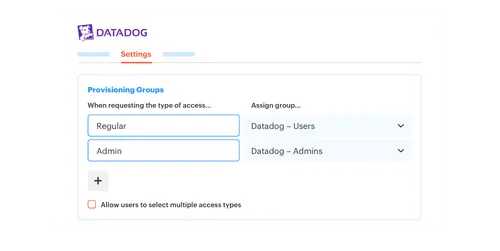
- How is provisioning enforced, manually or through identity provider group mapping?
- Can access reviews run with real context and revocations attached?
- Does the tool fit your main ecosystem, Microsoft, Okta, Jira, or mixed?
- Will audit evidence exist automatically, or will your team still rebuild it later?
That last one gets missed all the time. Then audit season shows up and suddenly everybody remembers.
Why Enterprise SaaS Management Gets Expensive Fast
Enterprise SaaS management gets expensive fast because the visible software bill is only part of the cost. The bigger drain is duplicated work across approvals, reviews, provisioning, and license cleanup. Once requests live in one tool, approvals in chat, and proof in spreadsheets, teams pay in labor, delay, and risk. That is where the search for the best SaaS management software usually shifts from cost control to workflow control.

License sprawl, shadow IT, and fragmented approvals
License sprawl usually starts as a visibility issue, but it turns into an access issue pretty quickly. Teams buy extra seats to avoid approval delays, old access sticks around because nobody owns removal, and shadow IT grows where the formal path is too slow. NIST is pretty clear on the principle here: least privilege is only real if access is constrained, reviewed, and adjusted over time (NIST SP 800-53 Rev. 5).
The expensive part is not just unused licenses. It is the operational drag around them. One person opens a ticket. Someone else approves in chat. An admin checks the right group manually. Another person screenshots the change for audit evidence. Then nobody remembers the expiry date. That pattern repeats hundreds of times a month in larger environments.
You can feel the leak. It is everywhere.
Why manual access reviews break at scale
Manual access reviews break because the reviewer usually gets a list of names with almost no context. They do not know usage. They do not know risk. They do not know whether revocation will actually happen after they click approve or revoke. So the review becomes theater.
That sounds blunt, but it is true in a lot of environments. Spreadsheet marathons. Rubber stamps. Lots of compliance motion without much confidence underneath it. Once you are reviewing thousands of entitlements across SaaS tools, the process has to live close to the workflow and close to the enforcement layer, or it falls apart.
What buyers should look for is simple:
- contextual reviews with ownership and usage signals
- direct links between decision and revocation
- time-bound access for temporary needs
- evidence generated as part of the workflow
- fewer handoffs across tools
Okta Identity Governance
Okta Identity Governance is a strong option for teams already centered on the Okta ecosystem. It combines access requests, certifications, and lifecycle-oriented workflows inside a familiar Okta operating model. For buyers already using Okta Workforce Identity, that familiarity can reduce adoption friction compared with standing up a separate IGA layer.
Key strengths for Okta-centric environments
Okta Identity Governance is strongest when the rest of your identity stack already runs through Okta. Okta positions governance as part of a converged identity security model, not a disconnected add-on, and recent product updates continue to expand governance and identity engine capabilities (Okta release notes, Okta Identity Engine updates).
That matters for operating simplicity. If your admins already live in Okta, and your provisioning patterns already depend on Okta workflows, adding governance there is a rational move. Okta also points to broad integration coverage and established provisioning patterns across its ecosystem.
Limitations to consider for mature governance programs
Okta Identity Governance can feel lighter for teams that want very deep review customization, advanced reporting flexibility, or broader governance outside an Okta-centered model. Okta itself frames part of the market problem as disparate governance models versus converged ones, which is fair, but it also shows that ecosystem fit is a big part of product fit (Okta blog).
Some buyers also want to validate how well the platform handles more specialized privileged access or disconnected app scenarios. Okta has been extending governance and adjacent identity security capabilities, but mature programs with mixed estates may still need to test workflow stability and evidence reporting in their own environment (Okta investor update). For teams comparing the best SaaS management software, that difference between ecosystem fit and broad workflow neutrality matters.
Pricing and deployment fit
Okta Identity Governance has public starter pricing around $6 per user per month, billed annually, though full enterprise cost depends on scope and surrounding Okta licensing (OneIdentity market overview). That makes the product easier to benchmark early than sales-only tools, even if the full cost picture still requires a conversation.
For buyers, the fit is pretty clean:
- good match for Okta-first enterprises
- easier early budgeting than fully opaque pricing models
- worth deeper validation for complex reporting and mixed-stack governance
- strongest when native ecosystem alignment matters more than neutral workflow design
Discover how Jira-native access workflows work with Multiplier
How Multiplier is Different: Multiplier keeps the workflow inside Jira Service Management and Slack instead of centering everything in a standalone identity console. For teams already running access work through JSM, that means requests, approvals, provisioning actions through the identity provider, and audit evidence all stay tied to the same Jira issue.
Microsoft Entra ID Governance
Microsoft Entra ID Governance is one of the strongest options for Microsoft-centric enterprises. It covers lifecycle workflows, entitlement management, access reviews, and privileged access inside the broader Entra and Azure universe. If your estate is already deeply tied to Microsoft 365, Azure, and hybrid Active Directory, that alignment is a serious advantage.
Where Entra is strongest inside Microsoft estates
Entra ID Governance is strongest when your infrastructure, identities, and admin muscle already sit inside Microsoft. Microsoft documents identity governance as part of a broader set of capabilities covering entitlement management, lifecycle workflows, and access reviews (Microsoft Learn). Recent updates also keep expanding Entra capabilities across governance and related administration workflows (Microsoft Entra March 2025 update, What's new in Entra).
This is where native fit really pays off. Hybrid identity support, Microsoft-linked lifecycle automation, and privileged access management all make more sense when you are already standardized there.
Tradeoffs for mixed-vendor application portfolios
Entra becomes less obvious when the environment is broad, mixed, and not especially Microsoft-led. Teams with a wide non-Microsoft SaaS estate often find that native depth in one ecosystem does not automatically create a clean operating model everywhere else. Some market commentary also points to UX and administrative friction in real-world governance work (MajorKey analysis, Infisign review overview).
That does not make Entra weak. It just means buyer fit matters a lot. If you are a Microsoft house, it is a strong option. If you are not, the configuration and administration overhead may feel heavier than expected.
Pricing and implementation considerations
Microsoft Entra ID Governance is commonly referenced around $6 per user per month, but actual enterprise cost depends on broader Microsoft licensing structure and bundling (JumpCloud comparison). That is why buyers should model total ecosystem cost, not just the visible governance SKU.
Implementation-wise, go in with open eyes:
- strong fit for Microsoft-centric enterprise security teams
- strong hybrid identity and privileged access story
- more complex when your SaaS environment is highly mixed
- worth pressure-testing for admin usability and rollout speed
How Multiplier is Different: Multiplier is narrower, but more operationally embedded for Jira Service Management teams. Requests can start from a JSM app catalog or Slack, approvals route to the right manager or app owner, and identity-provider-driven changes get logged directly on the Jira issue that authorized them.
ConductorOne for Best SaaS Management Software
ConductorOne is a serious option for cloud-first security teams focused on least privilege and automation. The company emphasizes AI-assisted identity operations, lifecycle management, and just-in-time access patterns. For buyers trying to avoid the slow rollout feel of older IGA suites, that is attractive. In a shortlist for the best SaaS management software, ConductorOne shows up more as a modern governance-first play than a classic SaaS spend platform.
Modern governance strengths and automation depth
ConductorOne leans hard into modern governance language, and not without substance. Its product materials and release notes point to active investment in lifecycle automation, access workflows, and product expansion (ConductorOne release notes, automated identity lifecycle guide). Company updates also show enterprise traction and growth (ConductorOne press release).
For cloud-first security programs, the appeal is clear. Faster deployment story. Strong least-privilege framing. A more modern product posture than old-school portal-heavy governance suites.
Where buyers may want more pricing or connector clarity
The first friction point is pricing transparency. ConductorOne does not publish starter pricing, which slows early evaluation when buyers are trying to narrow a shortlist fast. The second is connector and environment fit. In mixed or more specialized environments, teams should validate connector depth and review-time flexibility carefully rather than assume parity across edge cases (CB Insights company profile, Torii vendor roundup).
That does not kill the deal. It just means more diligence up front.
Best-fit buyer profile
ConductorOne fits cloud-first enterprises, least-privilege focused security teams, and buyers comfortable with a sales-led buying process. It is less ideal for teams that need early public pricing or that want governance to live primarily inside an existing service desk workflow.
Best fit usually looks like this:
- cloud-forward enterprise environment
- security-led buying motion
- high interest in JIT and automation
- willingness to validate connector coverage before purchase
How Multiplier is Different: Multiplier is more opinionated around where the work happens. Instead of asking users and approvers to adopt another governance destination, it uses Jira Service Management and Slack as the operating layer, then handles group-based provisioning, time-based access, and Jira-linked evidence from there.
Moveworks
Moveworks is valuable for enterprise employee support automation, but it is not a direct replacement for identity governance software. Its strength is conversational task execution across IT and other internal teams. That can improve request intake and employee experience, yet governance depth still needs to come from somewhere else.
Where agentic employee support adds value
Moveworks has built its story around AI-powered employee support, conversational workflows, and broad automation across enterprise systems (Moveworks product release, Quick GPT announcement). For big enterprises trying to improve Slack or Teams self-service, that can be genuinely useful.
You feel the value at the front door. Employees ask for something in natural language. The system routes, responds, or resolves. That cuts friction.
Why it is adjacent to, not identical with, IGA
Moveworks is adjacent to IGA because conversational support and governance are different jobs. One is about intake and employee experience. The other is about policy enforcement, access reviews, entitlement decisions, and audit evidence. Even Moveworks' own material is centered on self-service and AI application support, not full governance depth (Moveworks self-service portal article, release notes).
So if your main problem is support volume, Moveworks belongs on the list. If your main problem is access certification rigor, not by itself.
Commercial fit and deployment complexity
Moveworks is sold through an enterprise motion, and public starting prices are not available. Reviews and analyst coverage point to strong enterprise fit, but also to implementation depth that should be scoped carefully for broad automation programs (Verdantix analysis, G2 reviews).
That means:
- good fit for large enterprises prioritizing chat-first self-service
- not a like-for-like choice against governance-first platforms
- best evaluated as a layer in front of systems of record, not a replacement for them
Start mapping access requests and approvals in Multiplier
How Multiplier is Different: Multiplier is built for governed access operations rather than broad employee AI support. It uses Slack for approvals, not as the whole product story, and keeps the system of record in Jira Service Management where requests, decisions, and evidence can stay connected.
Zluri
Zluri is a strong fit when SaaS sprawl and license waste are the first fires you need to put out. It combines discovery, spend visibility, license optimization, and access workflows in a way that appeals to both IT and finance stakeholders. For teams trying to clean up the SaaS estate before going deeper on governance, that can be a practical entry point.
Strengths in discovery and license optimization
Zluri's appeal starts with discovery and spend control. Market reviews and pricing commentary consistently place it in the SaaS management bucket with strong visibility into apps, usage, and optimization opportunities (Info-Tech review, CloudEagle pricing guide). That makes it a natural fit for organizations where shadow IT and unused licenses are costing real money.
Honestly, this is where a lot of companies should begin. If you do not know what you own, you are not ready to govern it well.
Governance depth limitations to watch
Zluri includes access workflows and governance features, but buyers should validate how deep that goes for enterprise-grade review programs and more demanding policy requirements. Public materials show API and integration coverage, plus identity and access management messaging, yet the product still carries more SaaS operations DNA than pure IGA DNA (Zluri API page, Zluri identity trends blog). For teams comparing the best SaaS management software, that means Zluri can be compelling when spend control and visibility matter as much as governance depth.
That is not necessarily bad. It is just a different center of gravity.
Best use cases by team maturity
Zluri fits best when the organization is still maturing from SaaS visibility to governed control. It works well for IT teams, finance stakeholders, and operations leaders trying to reduce waste while adding some access structure.
A good fit usually looks like:
- shadow IT is still a major issue
- finance wants clearer license accountability
- the team needs discovery and optimization first
- full-scale governance depth is useful, but not the only buying driver
How Multiplier is Different: Multiplier is less focused on discovery and spend analytics, and more focused on access work itself. For Jira Service Management teams, that means standardized requests through an application catalog, approvals in Jira or Slack, automated provisioning and deprovisioning through identity-provider groups, and access reviews that run in the same operational system.
How Multiplier Fits Enterprise Access Management
Multiplier fits enterprise access management when the operating center is Jira Service Management, not a separate governance portal. It focuses on requests, approvals, provisioning, reviews, and evidence inside the workflows IT teams already use. For JSM-first organizations, that is a meaningful difference because adoption and auditability usually improve when work stays in one place. For some teams evaluating the best SaaS management software, that workflow choice ends up mattering more than a longer feature list.
Where Multiplier is different for Jira Service Management teams
This is the real angle. Not another governance product dropped on top of the stack. More like governance where the work already happens.

Multiplier embeds access governance into Jira Service Management and Slack, then orchestrates provisioning through the identity provider. Employees can request access from a Jira-native catalog. Approvals can route to managers or app owners. Every action stays attached to the issue that started the work. That is a very different operating model from asking everyone to bounce between a service desk, an identity console, and a spreadsheet.
If you have ever watched an IT team reconstruct approval history for an auditor, you know why that matters.
Verified workflows for requests, approvals, and provisioning
The workflow set is pretty concrete. Requests start in JSM or Slack. Approval routing supports multi-stage decisions and low-risk auto-approval paths. After approval, provisioning can happen through identity-provider group assignment. Temporary access can be time-bound, with automatic revocation at expiry. Access reviews can run as Jira campaigns with reviewer context and targeted revocations. Results can export into audit-ready reporting and Vanta workflows.

That combination is what makes the product interesting for JSM-first teams:
- Jira-native access request catalog
- Slack and JSM approval paths
- automated provisioning through IDP group mappings
- time-bound access with auto deprovisioning
- access reviews and certifications in Jira
- issue-linked audit trail and exportable evidence
Teams have reported 3,800+ access requests processed with 75% fully automated in a Jira Service Management-centered model using Multiplier. In one public example, a four-person IT Ops team supported more than 420 employees that way. That is a useful proof point for operational efficiency, even if every environment will vary.
When Multiplier is the better fit
Multiplier is the better fit for Jira Service Management-first IT teams, for companies that want fewer portals, and for security programs that care about audit evidence tied directly to operational tickets. It also makes sense when your identity provider is already Okta, Entra ID, or Google Workspace, and you want provisioning to follow approval without swivel-chair admin work.
Customer examples support that thesis. Stavvy reported reducing privileged access by 85% while automatically revoking more than 1,300 approved access windows after expiry. Vuori reported saving more than 100 workdays across onboarding, offboarding, and change workflows by pushing lifecycle work deeper into Jira-based automation. Those are not abstract outcomes. They are operational ones.
If your team wants to keep requests and approvals inside existing IT workflows, See how Multiplier works.
Why Shortlists Usually Come Down to Workflow Fit
Enterprise shortlist decisions usually come down to workflow fit more than feature checklists. The question is not only what a platform can do, but where your team will actually do the work. Ecosystem-native tools win when your world is already centered there, while Jira-native governance wins when the service desk is already the operating hub. That is also why the best SaaS management software can look very different from one enterprise to the next.
[Table: Platform] — See "Table Embed Codes" in Oleno to copy the HTML for this table.
A practical recommendation by buyer type
If you are a Microsoft-centric enterprise security team, Entra is the natural first look. If you are fully bought into Okta, Okta Identity Governance deserves that same first pass. If you are cloud-first and pushing hard on least privilege, ConductorOne is probably the most interesting governance-first alternative on this list. If your real pain is SaaS sprawl and wasted spend, start with Zluri. If employee support automation is the main initiative, Moveworks belongs in the conversation.
But if your team already lives in Jira Service Management, and you are tired of approvals scattered across tools, Multiplier is worth a close look. That is where the Jira-native model starts to feel less like a niche preference and more like the obvious operating choice.
The main thing is this: buy for where the work happens. Not just for the feature matrix. That is usually where teams go wrong.
Ready to simplify enterprise access workflows with Multiplier? Get started today
The right platform depends on your operating center. Microsoft shops should look hard at Entra. Okta shops should do the same with Okta Identity Governance. Cloud-first least-privilege programs should evaluate ConductorOne. SaaS cleanup programs should look at Zluri. And JSM-first IT teams should seriously consider keeping governance inside Jira rather than adding one more destination for employees and admins to manage.
Frequently Asked Questions
How do I set up automatic access provisioning?
To set up automatic access provisioning with Multiplier, follow these steps: 1) Ensure your identity provider (like Okta or Azure AD) is integrated with Multiplier. 2) Create an access request in your Jira Service Management (JSM) portal or via Slack. 3) Once a request is approved, Multiplier will automatically call your identity provider to provision the access based on group mappings. This process eliminates manual steps and reduces errors, ensuring that access is granted quickly and accurately.
What if I need to revoke access quickly?
If you need to revoke access quickly, you can use Multiplier's automated provisioning feature. After an access request is approved, Multiplier manages the user's group memberships through your identity provider. To revoke access, simply change the user's status in the JSM ticket, and Multiplier will automatically update the identity provider, ensuring that access is removed without manual intervention. This helps maintain security and compliance efficiently.
Can I track access requests in Jira?
Yes, you can track access requests directly in Jira using Multiplier. Every access request submitted through the JSM portal or Slack creates a Jira ticket. This ticket captures all relevant information, including the request status and approval history. You can view and manage all requests in one place, making it easier to maintain an audit trail and ensure compliance with access policies.
When should I use time-based access?
You should use time-based access when you want to enforce least privilege principles. With Multiplier, when an employee requests access, they can specify a duration (like 1, 6, or 24 hours). After approval, Multiplier automatically provisions access and sets a timer to revoke it when the time expires. This approach minimizes security risks by ensuring that elevated access is only granted for as long as necessary.
Why does my team need access reviews?
Your team needs access reviews to ensure that user access remains appropriate over time. With Multiplier's access review feature, you can create campaigns that allow designated reviewers to assess user access based on usage data and compliance requirements. This process helps identify inactive users or unnecessary permissions, allowing you to maintain security and optimize your license usage effectively.


