


Small teams lose the SaaS management plot fast, usually around app 40 to 60. Not because discovery is hard, but because access requests, approvals, revocations, and audit evidence start living in five different places at once.
If you're looking for the best SaaS management software for small business teams, that's the real split to watch. Some tools are great at inventory and spend. Others are much better at identity governance for small business environments. A few try to bridge both, but the tradeoffs show up quickly once you need access review software, self service app catalog software, and cleaner approval workflows.
Why Small Businesses Need More Than a SaaS Inventory
Small business SaaS management tools need to do more than count apps. Once your team needs approvals, provisioning, reviews, and cleanup, a simple inventory becomes a partial answer. Zluri can help with discovery and spend, while Okta Identity Governance, Microsoft Entra ID Governance, and ConductorOne go deeper on governance.

A 20-person company can still survive with shared docs and a few admin accounts. At 80 people, that breaks. The office manager is chasing app owners in Slack. Someone in IT is checking a spreadsheet to see who still needs Figma, GitHub, Notion, Salesforce, and half a dozen smaller tools. Then an auditor asks, "Who approved this access?" and now everyone's reconstructing history from screenshots.
That's the part a lot of buyers miss. SaaS management software for small business isn't really about dashboards first. It's about control surfaces. Where do requests start? Who approves? What gets provisioned automatically? What gets removed on time? If you don't answer those five questions, you're not managing SaaS. You're just counting it.
[Table: Platform] — See "Table Embed Codes" in Oleno to copy the HTML for this table.
Key Takeaways:
- Okta Identity Governance fits best when your identity stack already runs on Okta and you want governance without stitching together separate admin workflows.
- Microsoft Entra ID Governance makes the most sense for Microsoft-first teams, but setup complexity rises fast for lean IT groups.
- ConductorOne stands out for modern automation and JIT access, though custom pricing can slow down SMB shortlisting.
- Moveworks is stronger for conversational employee support than for deep SaaS access management software and governance controls.
- Zluri is compelling when SaaS discovery and license management software matter as much as access control.
What Actually Makes SaaS Management Hard for Small Teams
SaaS management gets hard for small teams when approval logic, provisioning, and evidence sit in different systems. Connector breadth helps, but it doesn't fix fragmented work. The teams that feel most buried usually aren't missing a vendor list, they're missing an operating model.
Where small business SaaS management breaks first
Small team SaaS operations usually break at the approval layer first. Not spend. Not discovery. Approval latency. I've seen this pattern over and over because the pain shows up before the metrics do.
Picture a 9:12 AM Monday. A new sales rep needs Salesforce, Gong, Slack channels, a CRM sandbox, and a contract tool before their first enablement call at noon. The request comes through Slack. The manager approves in email. IT provisions in the identity provider. A note gets pasted into Jira later. Nobody sets an expiry for the sandbox. Two months pass. Access stays.
That's the Separation Tax Framework. If requests, approvals, provisioning, and proof live in four places, expect 2 to 3 times more admin work than the ticket itself. If they live in one place, small teams stay small longer. That's a useful threshold.
And yes, inventory still matters. Fair point. If you don't know which apps exist, you can't govern them. But app discovery alone doesn't solve the thing that's actually burning your team's time this week.
Evaluation criteria for the best SaaS management software
The best SaaS management platform for a small business is the one that matches your operating system, not the one with the longest feature page. That's why "more connectors" is often the wrong first filter. What matters more is where your access work already happens.
Use the 4-Layer Fit Test:
- System fit: Does the tool align with your core identity and ticketing stack?
- Approval fit: Can managers approve in the tools they already use?
- Revocation fit: Does temporary access expire automatically?
- Evidence fit: Can you prove what happened without rebuilding it by hand?
If you're Microsoft-first, Entra gets a serious look. If you're Okta-first, Okta Identity Governance gets one too. If SaaS spend is your main problem, Zluri moves up the list. If your team runs everything through Jira Service Management, that's a different category entirely. Different motion. Different winner.
The hidden cost of manual access requests and approvals
Manual access requests cost more than the ticket time you see. The hidden cost is the side-channel labor around follow-up, validation, screenshots, and cleanup. For every hour spent on the visible request, small teams often lose another two to three hours in back-and-forth work.
That's not theory. It's just what happens when a requester opens one system, an approver responds in another, IT provisions in a third, and evidence gets thrown into a doc nobody trusts later. The process starts to look like an airport baggage belt. Bags keep moving, but nobody feels fully sure the right one lands in the right place.
There's a case to be made for staying manual when you're under 25 employees and under 20 meaningful SaaS apps. Really. The overhead of formal governance can feel silly at that stage. But once you cross either threshold, manual stops being lightweight and starts being expensive.
Why connector breadth alone does not solve governance
Connector breadth is useful, but governance depth is what keeps you out of trouble. A platform can advertise 300 or 600 integrations and still leave your team doing manual approval cleanup. That's why connector count should be a second-pass metric, not the first one.
Think of it like shelving in a warehouse. More shelves sounds good. But if the pick-and-pack process is messy, adding more shelves just lets you lose things faster. Same with SaaS management and license optimization. Discovery without policy creates tidy chaos.
If you need one blunt rule, use this one: if a tool can't enforce time-bound access or support structured reviews, it isn't enough for access-heavy teams, even if its app catalog is huge. That's the pivot into the vendor breakdown.
Okta Identity Governance
Okta Identity Governance is a strong choice for teams already standardized on Okta. It combines access requests, certification campaigns, and governance workflows within the broader Okta identity ecosystem. For small businesses already using Okta Workforce Identity, that native alignment matters a lot.
Okta Identity Governance strengths
Okta Identity Governance works best when Okta is already your control plane. Its value comes from staying close to Workforce Identity, provisioning, and directory workflows rather than asking you to stand up a separate identity model (Okta Identity Governance release notes), especially when evaluating best saas management software.
That matters for small businesses because context switching is a real cost. If your team already lives in Okta for SSO, MFA, user lifecycle work, and directory management, the case for extending governance there is pretty logical (Okta Identity Engine release notes). You keep requests, certifications, and provisioning closer to the existing stack.
Okta also benefits from a broad integration story, with 600+ integrations and SCIM-based provisioning positioning across its ecosystem ([Q4 Okta Platform Release Overview]). For Okta-first buyers, that lowers the risk of building around a platform that can't reach the apps you already use.
Okta Identity Governance limitations and pricing fit
Okta Identity Governance is less compelling when your team isn't already centered on Okta. Starter pricing is listed around $6 per user per month, billed annually, which can be workable for smaller teams but compounds as seat counts rise ([Getting Started with OIG]).
The bigger issue for some small teams isn't raw cost. It's fit. If your request workflow lives in Jira, your approvals happen in Slack, and your admins don't want another employee-facing portal, a native identity layer can still feel one step removed from daily operations. Okta has also framed the market around converged governance models, but that still assumes Okta sits at the center of the workflow (Okta blog on converged vs disparate governance).
How Multiplier is Different: For Jira Service Management teams, the center of gravity is the ticket, not the identity portal. Multiplier keeps the request, approval path, provisioning trigger, and audit trail attached to the Jira issue, with Slack-based approvals and time-bound access built around that flow.
Microsoft Entra ID Governance
Microsoft Entra ID Governance is a logical choice for Microsoft-first organizations. It offers lifecycle workflows, entitlement management, access reviews, and privileged identity controls inside the Microsoft stack. That depth is real, but so is the setup load for smaller IT teams.
Microsoft Entra ID Governance strengths
Entra shines when your environment is already built around Microsoft 365, Azure, Intune, and related directory services. The platform's identity governance overview centers on lifecycle, entitlement management, access reviews, and privileged controls that map neatly to Microsoft-first operations (Microsoft Learn).
Recent updates have continued that story with governance enhancements and workflow expansion across the broader Entra platform (Microsoft Entra March 2025 update). If your employee lifecycle already flows through Microsoft signals, the platform can feel like the shortest path between identity data and policy enforcement.
That's the Microsoft Gravity Rule: if more than 70% of your critical apps and identity workflows already sit in Microsoft, Entra usually deserves a spot on the shortlist. Not automatically the winner. But definitely on the shortlist.
Microsoft Entra ID Governance limitations and pricing fit
Entra becomes harder to love when you're running a mixed-vendor SaaS stack with a lean, generalist IT team. Licensing starts around $6 per user per month for governance-related capabilities, but actual cost and complexity depend on your broader Microsoft licensing posture (MajorKey analysis).
The sharper limitation is operational friction. Configuration can feel heavy for smaller teams, especially when the buyer wants a fast rollout and cleaner request handling more than deep Microsoft-native governance. Some review and attestation motions also remain more cumbersome than buyers expect from a small-team toolset (JumpCloud comparison).
How Multiplier is Different: Multiplier fits teams that already use Jira Service Management as the front door for access work. Instead of asking admins to translate approvals across systems, it keeps app requests, review issues, lifecycle actions, and evidence generation inside Jira, then provisions through the identity provider.
ConductorOne for Best saas management software
ConductorOne is a modern identity governance platform with a strong least-privilege story. It leans into automation, JIT access, and a cloud-forward operating model. For buyers who want modern IGA without legacy baggage, it's one of the more interesting options.
ConductorOne strengths
ConductorOne has built its reputation around fast time-to-value, automated lifecycle work, and policy-driven access governance. Its release notes and lifecycle materials show steady investment in automation and governance coverage (ConductorOne release notes, automated identity lifecycle guide).
The strong point here is posture. ConductorOne takes least privilege seriously, and its market narrative emphasizes enterprise traction and modern identity security direction (ConductorOne press release, CB Insights company profile). For teams thinking beyond basic SaaS inventory, that matters.
If JIT access is high on your list, ConductorOne deserves real attention. Few small business SaaS management tools make that a headline capability. ConductorOne does.
ConductorOne limitations and pricing fit
ConductorOne's biggest SMB obstacle is simple: pricing isn't public. For budget-sensitive teams, that slows shortlisting because you can't quickly rule it in or out without a sales cycle.
Some buyers will also need to validate connector depth and review-time controls more closely, especially in niche or hybrid environments. That's not a knock. It's just the kind of thing a mature governance buyer should test early. If you need a fast heuristic, use the 30-Day Proof Rule: if a vendor can't clearly show your top 10 apps, your review workflow, and your approval model in the first month, assume rollout friction later.
How Multiplier is Different: Multiplier takes a narrower path. It focuses on Jira-native access operations: request intake in JSM, approvals in Slack or Jira, provisioning through mapped identity-provider groups, and linked audit evidence written back to the issue that initiated the change.
Moveworks
Moveworks is better understood as an AI employee support layer than as a dedicated SaaS governance platform. It can automate internal tasks and create a strong conversational experience, but governance depth isn't the main story. That distinction matters a lot for small teams.
Moveworks strengths
Moveworks is strong at conversational automation across employee support workflows. Its product releases position it around dynamic AI, agentic reasoning, and internal support automation across channels like Slack and Teams (Moveworks dynamic AI platform, Quick GPT launch).
For small businesses trying to reduce repetitive support work, that's attractive. Employees like conversational interfaces. Admins like fewer repetitive tickets. Moveworks also keeps framing itself within ITSM and enterprise support contexts rather than pure identity governance (Moveworks on Gartner ITSM positioning).
So if your main goal is better employee support, Moveworks could be the right call. If your main goal is access review software, least privilege, and structured governance, the fit gets thinner.
Moveworks limitations and pricing fit
Moveworks isn't a direct substitute for a dedicated SaaS access management software platform. It can support automation around requests, but it isn't built first around certification depth, time-bound access enforcement, or governance evidence in the way a purpose-built identity governance product is.
There's also the enterprise-shape issue. Custom pricing and broader implementation scope can be more than many small businesses want if they're primarily trying to fix app requests and approvals. Some teams genuinely need that broader AI service layer. That's valid. But if your real bottleneck is access governance, buying a conversational shell first can be like buying a beautiful front desk before fixing the locks on the building.
How Multiplier is Different: Multiplier is more specific. It centers on app request intake, approval routing, automatic provisioning, time-bound access, and review workflows inside Jira Service Management, rather than broad employee-assistance use cases.
Zluri
Zluri is one of the more interesting options for teams that care about SaaS sprawl, shadow IT, and license cost at the same time. It sits closer to SaaS management and license optimization than pure IGA. For many small businesses, that's actually a feature, not a flaw.
Zluri strengths
Zluri's appeal starts with discovery and spend visibility. Industry sources and vendor materials position it around SaaS inventory, workflow automation, API access, and broader SaaS management use cases (Zluri statistics overview, Zluri API page), especially when evaluating best saas management software.
That makes it compelling when your main problem is SaaS sprawl. If you have duplicate licenses, unused tools, and lots of untracked app adoption, Zluri is operating in the right neighborhood. It also brings access workflows and review capabilities into the conversation, which helps it move beyond just inventory.
Reviews and market summaries suggest the platform is especially relevant when discovery plus cost control are both top priorities (Info-Tech reviews, CloudEagle pricing guide). For a finance-aware IT lead, that's a pretty practical mix.
Zluri limitations and pricing fit
Zluri pricing isn't public, so buyers still need a sales conversation to understand total fit. That isn't unusual in this category, but it does make quick comparison harder for small teams trying to move fast.
The bigger strategic question is governance depth. If you need strong enterprise-style least privilege controls, deeper certification rigor, or more formal identity governance for small business environments, Zluri may not go as deep as platforms built first for IGA. On the other hand, if license management software and shadow IT cleanup are central, Zluri can be a stronger fit than a governance-first tool. That's the tradeoff. Clean and simple.
How Multiplier is Different: Multiplier is narrower, but more embedded for Jira-centric teams. It focuses on Jira-native application catalog flows, manager or app-owner approvals, provisioning through Okta, Entra, or Google Workspace groups, and access reviews that leave evidence attached to the underlying Jira issue.
How Multiplier Fits Teams That Run Access Through Jira
Multiplier fits teams that already run access work through Jira Service Management and want governance where work already happens. It combines app requests, Slack-based approvals, identity-provider provisioning, time-bound access, and Jira-linked evidence in one operating flow. For small teams with JSM at the center, that changes the buying math.
The first thing to understand is category fit. Multiplier isn't trying to win on "biggest standalone governance portal" or "widest SaaS discovery story." It's making a narrower argument. Governance belongs where the work already lives. If your service desk is Jira, forcing employees and approvers into another portal adds friction, not control.
I think that's the right contrarian take for a lot of smaller IT teams. Especially the ones with two to six people doing everything.
Core differentiators for Jira Service Management teams
Multiplier's differentiation starts with Jira-native workflow design. Employees can request access from an application catalog inside Jira Service Management. Approvals can route to managers or app owners, including through Slack, and provisioning happens through mapped identity-provider groups. That means the Jira issue isn't just the intake form. It's the operational record.
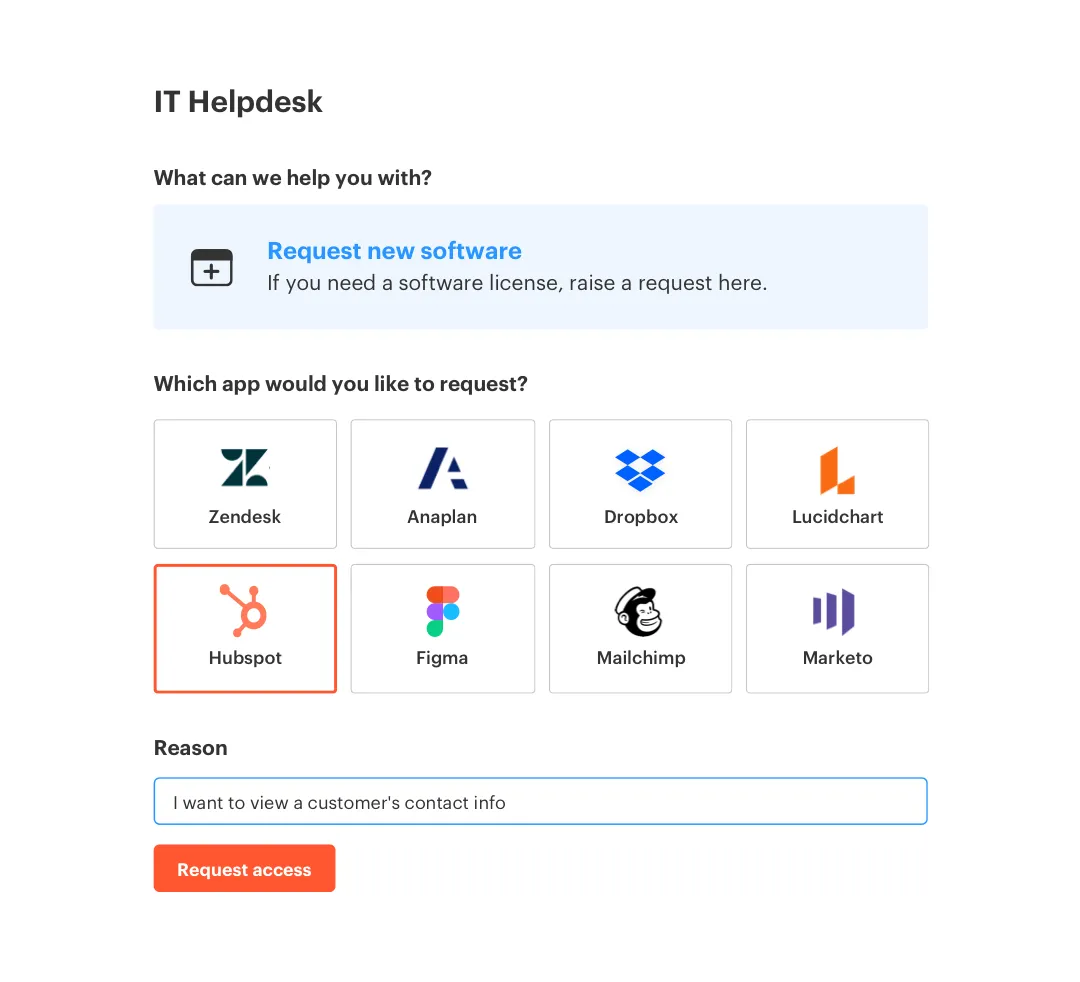
That matters because of the Ticket-as-Evidence Model. If the same issue contains the request, the approval, the provisioning link, the access window, and the review trail, audits stop becoming archaeology. They become exports. Multiplier also supports just-in-time and time-bound access with automatic deprovisioning at expiry, which is one of the clearest thresholds in this whole market. If your team grants temporary access more than 10 times a month, automatic expiry stops being a nice feature and starts being table stakes.
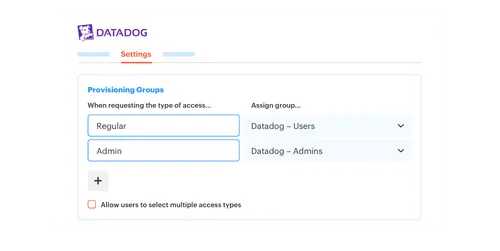
Access reviews also stay in the same system. Campaigns run as Jira issues, reviewers get context, revocations can be executed or turned into precise follow-up work, and results can be exported for audit readiness, including Vanta-ready outputs. If you want to look closer at that side of the workflow, Learn more about Multiplier.
Best-fit use cases and rollout path
Multiplier makes the most sense for JSM-based teams using Okta, Entra, or Google Workspace that want faster approvals without creating another operational surface. It also fits teams that feel the audit burden of screenshots, spreadsheets, and manual evidence gathering because the workflow writes proof into Jira as it runs.

A common rollout path is pretty straightforward:
- Start with a Jira-native app request catalog for the 10 to 20 highest-volume access requests.
- Map approvals to managers or app owners and provision via identity-provider groups.
- Add time-bound access for privileged or temporary requests.
- Launch access review campaigns in Jira for your riskiest apps first.
You don't need a giant governance program on day one. Honestly, that's one of the better parts. Small teams can start where the pain is worst, then expand. If you want to see the Jira-native flow in context, See how Multiplier works.
[Table: Platform] — See "Table Embed Codes" in Oleno to copy the HTML for this table.
If your shortlist is down to practical fit, the decision is cleaner than it first looks. Okta Identity Governance makes sense for Okta shops. Entra makes sense for Microsoft-heavy environments. ConductorOne fits cloud-forward governance teams that want modern JIT controls. Zluri fits buyers who care deeply about discovery and spend. Moveworks fits teams buying a broader AI support layer.
Multiplier fits the team that already treats Jira Service Management as mission control for access. That's a narrower audience. It is. But for that audience, the operational model is a lot cleaner because the ticket becomes the workflow, the approval record, and the audit trail. If that sounds like your environment, Get started with Multiplier.
Pick the tool that matches where your team already works. In this category, workflow gravity beats feature sprawl almost every time.
Frequently Asked Questions
How do I set up automated provisioning with Multiplier?
To set up automated provisioning with Multiplier, first ensure that you've integrated your identity provider, like Okta or Azure AD, with Jira Service Management. Next, configure your application catalog in Multiplier to sync applications and groups from your identity provider. Once that's done, map the access roles for each application to the corresponding identity provider groups. After approvals are granted, Multiplier will automatically provision access based on these mappings, which streamlines the process and reduces manual errors.
What if I need to revoke access quickly?
If you need to revoke access quickly, you can use Multiplier’s time-based access feature. When setting up access requests, you can specify a duration for how long access should be granted. Once the time expires, Multiplier will automatically remove the user from the mapped group in your identity provider. This ensures that access is only temporary and minimizes the risk of long-lived permissions, which can lead to security issues.
Can I track access requests in Jira with Multiplier?
Yes, you can track access requests directly in Jira using Multiplier. When an employee submits a request through the Jira Service Management portal or Slack, a Jira ticket is automatically created. This ticket captures all the details of the request, including approvals and provisioning actions. You can easily monitor the status of each request, ensuring that you have a complete audit trail linked to the original ticket, which simplifies compliance and reporting.
When should I use the access review feature in Multiplier?
You should use the access review feature in Multiplier when you want to ensure that user access remains appropriate over time. This is especially important for applications that contain sensitive data or for roles that require elevated permissions. By launching access review campaigns, you can assign reviewers to assess current access levels and make informed decisions about whether to keep or revoke access. This process helps maintain security and compliance while reducing the risk of overprovisioned accounts.
Why does Multiplier focus on Jira for access management?
Multiplier focuses on Jira for access management because it allows teams to manage requests, approvals, and provisioning all within a single system. This integration eliminates the need for multiple portals and reduces context switching, which can slow down operations. By keeping all access-related activities in Jira, Multiplier ensures that every action is logged and linked to the original ticket, providing a clear audit trail and enhancing overall efficiency.


