


Most IT and security teams are fighting the wrong battle. You call it “identity governance,” but day to day it’s ticket triage, Jira, Slack, IDP tweaks, and spreadsheet archaeology. The challenge of managing identity governance across multiple platforms isn’t policy. It’s fragmentation. Approvals stall. Provisioning drags. Revocations get missed. Because the work is scattered.
I learned this watching fast‑growing teams try to stay compliant while hiring like crazy. People want access now. Auditors want clean proof later. When those needs live in different systems, you pay a hidden tax in context switching and rework. Risky tradeoffs start to feel normal, until an incident or audit shows the cracks.
Key Takeaways:
- Put governance where work already happens, in Jira for the record, Slack for decisions, not a separate portal
- Route approvals to the right owner fast, then provision through your identity provider (IDP) for clean audit trails
- Make elevated access time‑bound by default to shrink risk windows and license waste
- Run access reviews in Jira with usage context so revocations stick and evidence is exportable
- Use chat for decisions, but anchor records and evidence to Jira so audits are “ready by design”
- Cut SaaS waste with usage‑based reclamation tied to real login activity, not guesses
Why Identity Governance Belongs in Jira, Not Across Multiple Platforms
Identity governance works best when requests, approvals, provisioning, and evidence live in one system of record. Splitting them across portals invites delays, missed revocations, and messy audits. Centralize the flow inside Jira, push approvals through Slack, and execute changes with your IDP. That fixes the root problem, not just the symptoms.
Approvals, provisioning, and evidence already live in Jira
Most intake starts in Jira anyway. Your teams file access requests, track SLAs, and escalate there. The moment those requests jump to email for approvals or a portal for provisioning, control slips. People copy data by hand, ask for clarifications, and lose time to back‑and‑forth. I’ve watched IT burn hours every week just translating tickets into actions.
A better pattern keeps the whole flow inside Jira. Approvers act in Slack without losing the audit trail. Provisioning runs through the IDP and writes back to the ticket. One source of truth. No screenshots. No side channels. And when auditors ask for proof, you export from the system people already use.
Portals create friction, not control
A separate IGA portal sounds good in theory. In practice, it asks employees to learn a new place, remember a new URL, and context switch for simple tasks. Adoption drops. Shadow requests pop up in Slack. Control fragments. If revocations need manual cleanup in yet another tool, privileges stick longer than anyone wants to admit.
Teams want control without extra clicks. Governance in Jira delivers both. People request where they already work. Approvers decide in the chat tool they check all day. The system writes authoritative evidence to the record in real time. Control that actually gets used.
The Real Cost of Managing Identity Governance Across Multiple Platforms
Managing governance across portals, tickets, and spreadsheets creates silent costs that add up fast. Teams lose time, carry standing privilege, and overspend on licenses. Consolidate flows inside Jira and provision through the IDP to remove friction and cut risk.
Context switching taxes every request
Every hop between tools adds seconds that become minutes. Minutes become hours when details are missing or unclear. I’ve seen a simple “add to group” change balloon into a 2‑day delay because the approver was out, the request lacked role detail, and the evidence got lost in email. Multiply that by dozens of requests and the backlog forces ugly choices.
People start granting broad access “just to unblock,” which is how risk creeps in. Or they push access changes to the end of the day, which is when mistakes happen. Not a great operating model.
Audits turn into screenshot archaeology
Auditors don’t want stories. They want proof. Fragmented systems make proof hard. Someone takes a screenshot of an Okta group change. Someone else pastes it into a ticket days later. Dates don’t line up. A few items are missing. Stress rises. Then the team promises to “fix the process” after the audit. Sound familiar?
Write decisions and changes to the same Jira issue and those problems fade. Evidence is born in the process, not rebuilt later. Audits stop being a fire drill.
Quantifying the Challenges of Managing Identity Governance Across Multiple Platforms
The costs aren’t abstract. Teams lose hours each week to manual approvals, license waste, and late revocations. Least privilege suffers when elevated access sticks. Moving governance into Jira and provisioning through your IDP reduces each of these measurable costs.
Time lost per routine request
A routine request too often means 10 minutes to gather context, 20 minutes chasing an approver, and 5 minutes for the change. That’s 35 minutes for something that should be near‑instant for low‑risk roles. At scale, that’s dozens of hours per month. Least privilege also lags because cleanup takes another round of manual effort.
Least privilege guidance isn’t new. NIST has preached it for years, including in NIST SP 800‑53 Rev. 5. The gap is operational. Without automation where people already work, you can’t enforce it day to day.
License waste from inactive seats
Inactive licenses hide in big numbers. A few dozen seats that haven’t logged in for 30 days doesn’t sound like much, until finance tallies the bill. Many teams reclaim licenses by running monthly reports and sending “please confirm usage” emails. Slow and manual. People miss the email. Nothing changes.
Tying reclamation to real login activity from your IDP closes the loop. The policy runs on facts, not hunches. For Microsoft environments, group management patterns are well documented in Entra group guidance. The point is simple: drive change through the IDP so evidence and reversibility are built in.
Incident response and JIT gaps
During incidents, elevated access should be temporary. Teams know this, but the revocation step is where things break. People forget. Tickets close early. Admin rights linger. Policies say one thing; operations do another. Group‑based grants through the IDP with clear expiry windows solve the gap. The trick is making it the default, not the exception.
Okta admins have lived this for years with group‑centric designs, documented in Okta group management. The missing piece is orchestrating requests, approvals, and expiry from inside Jira so the human steps don’t derail the policy.
What It Feels Like When Access, Approvals, and Evidence Live Everywhere
Fragmentation isn’t just a process problem. It wears people down. You feel it in Slack pings after hours, stalled tickets, and ad hoc spreadsheets that won’t die. The work becomes chasing rather than solving. Morale drops because progress feels fragile.
Chasing approvals in three tools
You send a Jira notification. Then a Slack DM. Then an email, just in case. Two days pass. The requester pings again. Everyone’s annoyed. No one’s malicious, they’re just busy. Approval fatigue is real when the system forces context switching for every small decision.
Bring the decision to where they already are and they click. It’s that simple. And when that click updates the Jira issue automatically, you keep flow without losing control.
Night and weekend firefighting
Manual governance leaks into nights and weekends. An engineer needs temporary production access on Saturday. The on‑call IT person fumbles through a wiki page, flips a switch, and promises to remove it later. Sunday becomes cleanup day. People burn out when processes only work during business hours.
Time‑bound access by default lowers the stress. The access should end on its own. Humans shouldn’t need calendar reminders to uphold a security policy.
Put Governance Where Work Happens: Jira + Slack + Your Identity Provider
Anchor governance in Jira, route approvals in Slack, and execute changes through your IDP. That combo makes least privilege operational, fast, and auditable. You reduce standing privilege, cut license waste, and walk into audits ready.
Centralize intake with a catalog inside JSM
Give employees a single way to ask for access. A visual catalog in Jira Service Management solves the “what do I ask for” problem before it reaches IT. Roles are clear. Owners are set. Requests arrive with the right context. I prefer catalogs that mirror the IDP so group mappings are deterministic and auditable.
Two wins show up immediately. First, request quality improves, so back‑and‑forth drops. Second, intake is standardized, so you can automate more of the path for low‑risk roles without sacrificing control.
Route approvals to managers or owners in chat
Map owners for each app or role. For many orgs, the requester’s manager handles basic roles and an app owner approves elevated ones. Send that decision to Slack with one‑click actions. The right person responds fast when the decision lives in their flow. The Jira issue moves automatically. No manual follow‑up. No “did you see my email” pings.
Resist the urge to pile on approvers everywhere. Use data to keep auto‑approve for safe roles and enforce approvals for higher‑risk ones. Keep speed where speed is safe.
Provision through the identity provider, not the app
Groups are your levers. When the ticket hits Approved, add the user to mapped groups in Okta, Entra, or Google Workspace. For SSO apps, SCIM or SAML mappings push entitlements. The change is authoritative, reversible, and written to the Jira issue. Most importantly, revocation mirrors grant, so cleanup actually happens.
Do this well and you also shrink incident blast radius. Elevated access is granted on demand and removed on schedule. The security team sleeps better.
How Multiplier Makes Least Privilege Fast, Auditable, and Jira Native
Multiplier embeds governance into Jira Service Management, routes approvals in Slack, and provisions through your IDP. The result: faster access, automatic expiry for elevated roles, and audit evidence written to the ticket. You cut the time tax from manual requests and reduce the license waste you saw earlier.

Application catalog that employees actually use
Multiplier ships a Jira‑native app catalog with roles mapped to your IDP groups. Employees request access in the portal or from Slack, and requests include the right context from the start. Approvals go to the right people without hunting for owners. The ticket stays the source of truth for every decision and change.
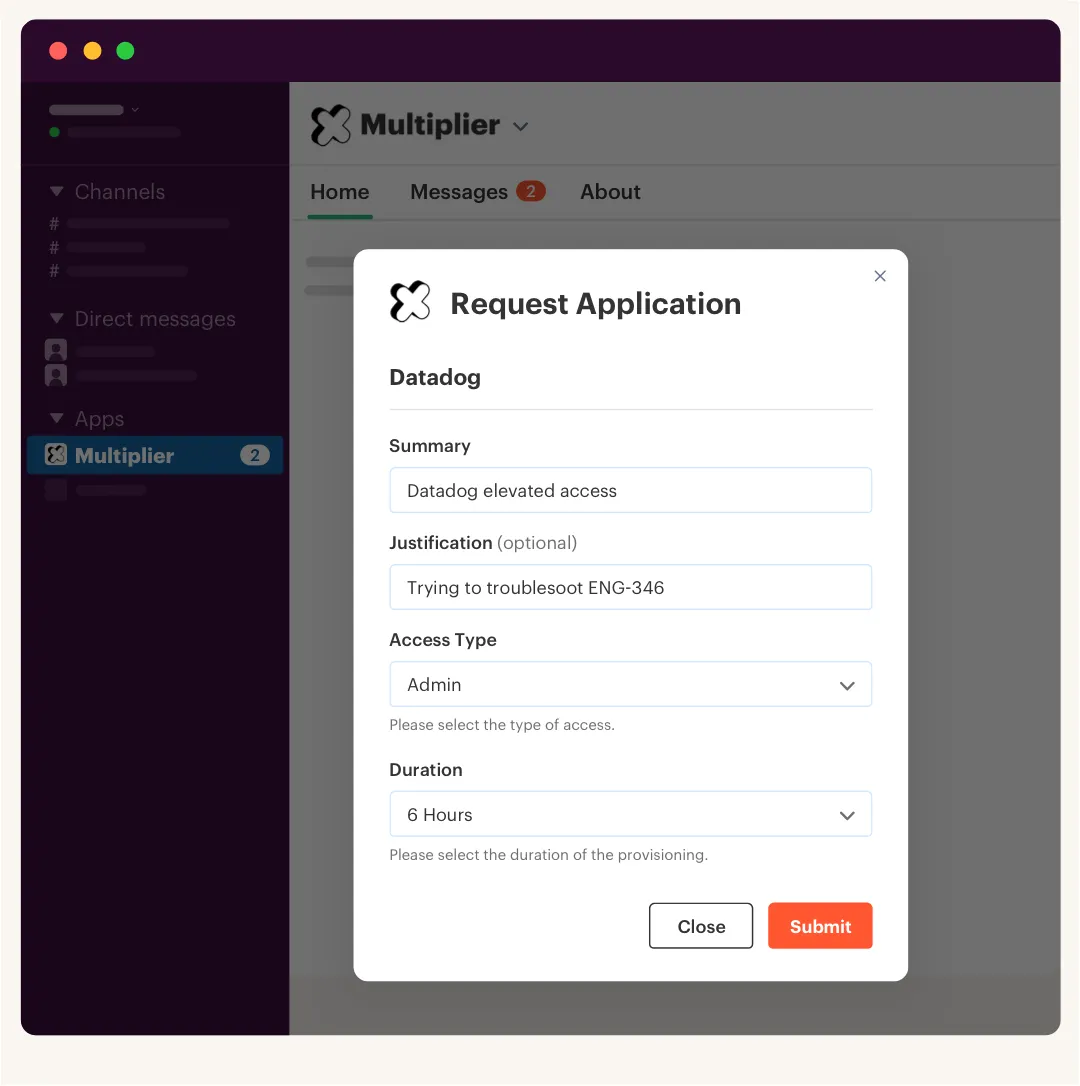
Benefits you feel on day one:
- Single intake that kills Slack DMs and random emails
- Role clarity that reduces back‑and‑forth and rework
- Owner routing that keeps approvals fast and accountable
- Clean evidence on the ticket for every request and decision
Provisioning and revocation through your identity provider
Once approved, Multiplier calls your IDP to add the user to the mapped groups and, where configured, assign licenses. For SSO apps, entitlements flow through SCIM or SAML, and Multiplier writes success or error back to the issue. When access should end, Multiplier removes the same group membership and records it, closing the loop that used to fail.
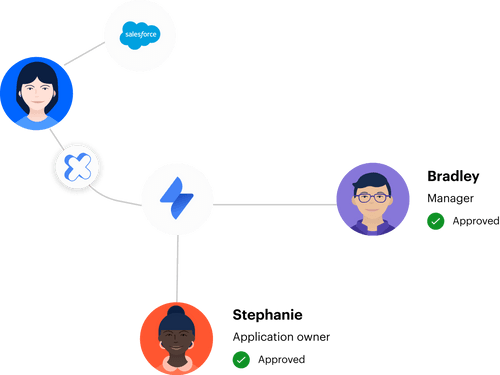
Two earlier costs get hit directly. The 30‑plus minutes per routine request compress to minutes because human handoffs disappear. Revocations no longer rely on memory or spreadsheets, so standing privilege stops creeping.
Tired of manual provisioning? Get started with Multiplier
Time‑based access and access reviews that write their own evidence
Elevated access should never be permanent. Multiplier lets requesters choose a duration for sensitive roles, grants it after approval, then removes it automatically at expiry. Every step is linked to the Jira issue for proof. Quarterly access reviews run inside Jira too, with usage context and one‑click Keep or Revoke. When reviewers choose Revoke, Multiplier executes the change through the IDP and updates the campaign record.
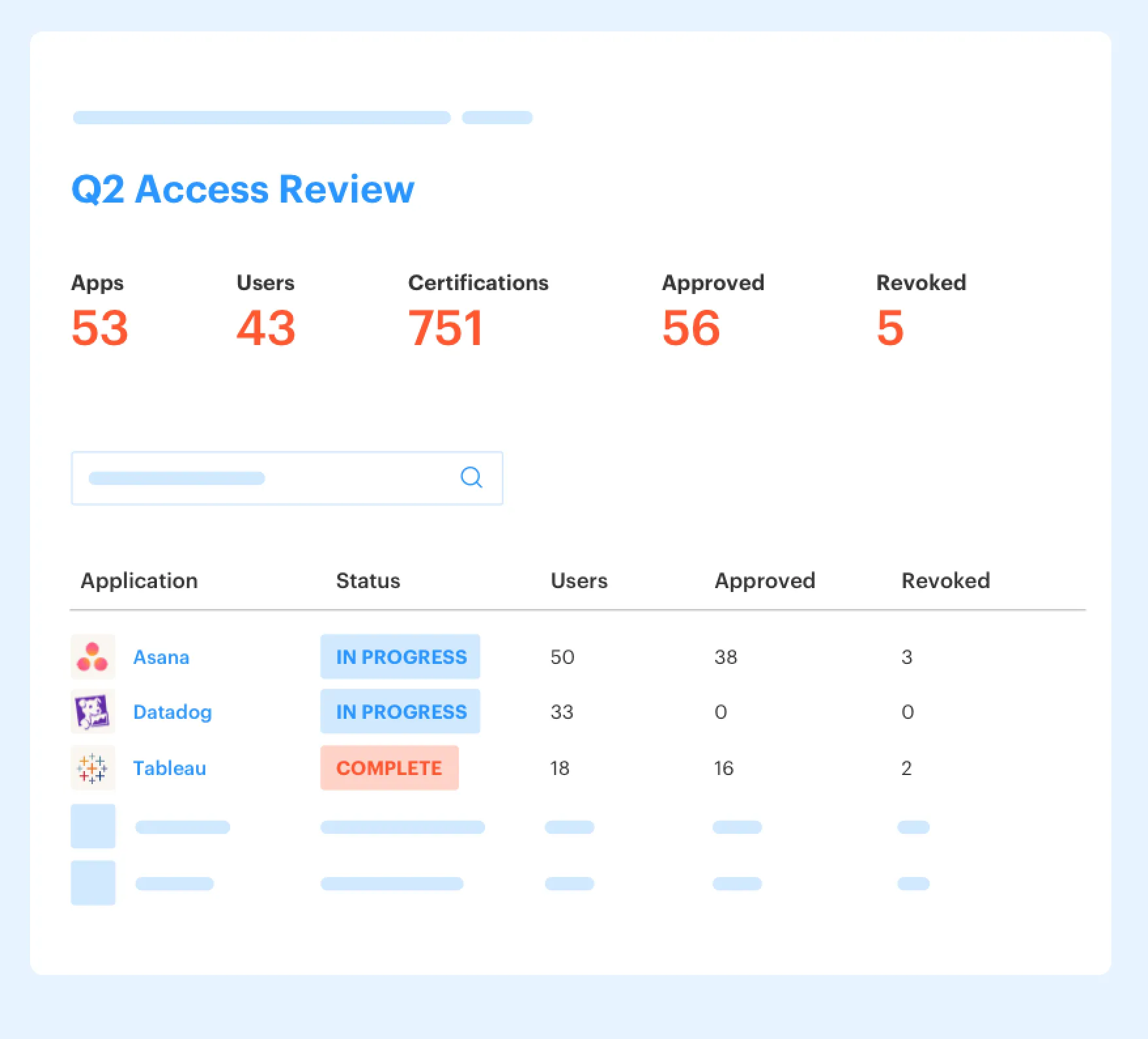
License waste gets handled as well. Auto‑reclaim policies watch real login activity and reclaim unused seats without spreadsheets. Finance sees fewer idle licenses. Security sees less standing access. IT sees fewer “can you just check” emails.
Conclusion
The split between ITSM and IGA is the real problem. Fragmentation slows approvals, keeps elevated access around longer than it should, and turns audits into detective work. Put governance where work happens, inside Jira and Slack, and run grants and revocations through your IDP. Speed and control stop fighting each other.
If you want the shortest path to that new operating model, anchor requests in a Jira catalog, route approvals in chat, and enforce time‑bound access by default. Multiplier makes that approach real without asking people to learn a new portal, and it writes clean evidence to the record you already trust. Move fast without adding risk.
Frequently Asked Questions
How do I set up automated provisioning with Multiplier?
To set up automated provisioning with Multiplier, first ensure your identity provider (like Okta, Azure AD, or Google Workspace) is properly integrated. Then, create access requests through the Jira Service Management (JSM) portal or Slack. Once a request is approved, Multiplier will automatically call your identity provider to add or remove users from the appropriate groups. This process eliminates manual steps and keeps your audit trail intact within Jira, making it easier to track changes and maintain compliance.
What if I need to revoke access quickly?
If you need to revoke access quickly, you can use Multiplier's automated provisioning feature. When a user's access is no longer needed, simply change their status in the Jira ticket, and Multiplier will automatically remove them from the relevant identity provider groups. This ensures that access is revoked promptly without relying on manual follow-up, helping to maintain security and compliance effectively.
Can I track access requests in real-time?
Yes, you can track access requests in real-time using Multiplier within Jira. Each access request creates a Jira ticket that reflects its current status—whether it's waiting for approval, approved, or provisioning. This centralized tracking helps you see the progress of requests and ensures that all actions are logged for audit purposes. By keeping everything in Jira, you eliminate the need for separate tracking systems and reduce the risk of missed approvals or delays.
When should I use time-based access with Multiplier?
You should use time-based access when granting elevated permissions that are only needed temporarily. With Multiplier, requesters can choose a duration for access (like 1, 6, or 24 hours) during the request process. This feature automatically revokes access once the time expires, reducing the risk of standing privileges and ensuring compliance with least privilege principles. It's particularly useful during high-risk situations or for sensitive tasks that require additional access.
Why does Multiplier integrate with Slack for approvals?
Multiplier integrates with Slack for approvals to streamline the decision-making process. By allowing approvers to receive notifications and make decisions directly in Slack, you reduce context switching and speed up approvals. This integration ensures that the approval workflow remains tied to the original Jira ticket, maintaining an auditable record of all actions taken. This approach helps keep the process efficient and minimizes delays in granting access.


