


Designing identity governance processes for scalability starts with a blunt choice: keep splitting work across tools and watch the wheels wobble, or bring governance into Jira and let the flow do the heavy lifting. You don’t need another portal. You need tight loops between requests, approvals, provisioning, and evidence, all inside the system your team already lives in.
I’ve watched the old way break under growth. Tickets in Jira. Approvals in email. Group changes in the IDP. Screenshots in spreadsheets for auditors. It looks fine at 50 people. At 500, it’s chaos. If you want scale, you need the process wired to the execution, not bolted on at the edges.
Key Takeaways:
- Put governance where work happens, inside Jira and Slack, or you’ll pay a hidden context-switch tax.
- Design around the identity provider so provisioning, revocation, and evidence are authoritative and fast.
- Enforce least privilege with time-bound access by default, then backstop it with regular access reviews.
- Automate the moments that burn time: approvals, group changes, and license reclamation.
- Measure flow time end to end, not just ticket SLAs. The goal is faster, safer access with fewer touch points.
- Treat standing privilege as a process smell to eliminate, not a policy to document.
Stop Splitting ITSM and IGA: Identity Governance Belongs in Jira
Identity governance works best when it lives in Jira, because intake, approvals, and audit already live there. Keeping governance in a separate portal adds friction, increases risk, and slows access. Move the work to Jira and Slack so approvals are quick, provisioning is automatic, and evidence is written to the record.
Where Work Actually Happens
Your employees file tickets in Jira, ask questions in Slack, and expect access the same day. Forcing them to jump to a separate IGA portal is a mistake. They miss steps, approvals drift into email, and you lose the clean chain from request to change. I’ve seen teams bolt on chat bots or spreadsheets to close gaps. It always gets messy.
When you align governance to Jira, you pull the work into one flow. Approvers see context right in the issue. Decisions are captured. The next step can trigger provisioning, not another handoff. You remove the easy-to-miss paths where things go wrong, like granting access without expiry or losing evidence.
Why Portals Create Drag
Extra portals look organized on paper. In practice, they fragment the process. The manager approves in one system, IT acts in another, and audit evidence sits in a folder no one remembers. People work around it to move fast, which creates shadow access and weak reviews. The hidden cost shows up in audits and incident reviews.
A Jira-native approach flips the script. The ticket is the system of record. The approver clicks once, the IDP group change happens automatically, and the issue logs the result. Slack stays in play for speed, not as a side channel that breaks the trail. Clean, fast, repeatable.
The Real Bottleneck: Broken Handoffs Kill Scalability
Scalability breaks at the handoffs, not the tools. Every time a request leaves Jira for email, then jumps to the IDP, and comes back as a screenshot, you add delay and risk. Removing those handoffs is how you scale governance without adding headcount.
Symptom vs Root Cause in Access
The symptom is slow access and noisy backlogs. The root cause is the split between ITSM and IGA. You’re reconciling two systems by hand and hoping the audit trail lines up. That’s why least privilege often fails in practice. It’s not a policy problem. It’s a process integration problem.
When governance rides inside Jira, the integration problem disappears. Intake, approval, and the resulting change through your identity provider become one flow. That’s the leverage point. You’re no longer “checking the box” after the fact. You’re enforcing the right outcome in the moment.
Standing Privilege as a Process Smell
Long-lived access looks like a policy choice. It’s usually a process bandage. People keep access because you don’t trust the revocation to happen fast, or you can’t see last-login data easily. If you need fire access, you grant admin forever. It’s safer than waiting, until it isn’t.
Treat standing privilege as a signal the system isn’t designed for change. Shorten the path to provision and revoke. Put a clock on elevated roles. Connect it to the IDP so reversals are reliable. Now least privilege becomes the default, not a heroic effort.
The Cost of Fragmentation: Time, Risk, and Wasted Licenses
Fragmented governance burns time, increases risk, and wastes money. IT spends hours chasing approvals, access lingers after projects end, and unused licenses pile up. A unified flow inside Jira cuts these costs by removing the swivel chair work and making expiry real, not theoretical.
Time Lost to the Chase
Every minute you spend finding the right approver, copying a group name, or collecting screenshots is work you should never do twice. Approvals belong in your service desk. Provisioning should run through the IDP automatically. Evidence should attach to the issue without a human hunting it down. Atlassian shows how approvals belong in the request itself in their own JSM approvals guide.
When those loops are tight, IT shifts from ticket shepherds to system stewards. Response times drop, and so does human error. You’re not perfect, but the failure modes shrink. And when something does go wrong, the audit trail tells the whole story in one place.
Audit Effort and License Waste
Auditors don’t want screenshots. They want traceable decisions tied to actual changes. If your trail crosses tools, you’ll end up rebuilding it in spreadsheets. That costs weeks. License waste follows the same pattern. Without real login data and automated reclaim, you pay for seats no one uses. Least privilege is a core security principle for a reason, and NIST defines it plainly in their least privilege guidance.
Design the process so evidence is a byproduct and license reclamation is policy-driven, not a quarterly “clean up day.” If the identity provider shows no login for 30 or 60 days, reclaim the license. If a role is temporary, remove it at expiry. Simple rules, enforced by the system, not memory.
What It Feels Like in the Trenches
When the process is broken, you feel it. Tickets ping-pong. Slack DMs pile up. Access lingers because no one trusts revocation to stick. The pressure to “just grant it” grows. That’s the daily grind you can’t sustain at scale.

The 11 PM Cleanup
Picture a late-night production issue. An engineer needs elevated access right now. You grant admin because the incident matters more than the process. Two weeks later, they still have it. No one set an expiry, and no one checked. That’s not negligence. It’s a system that makes the right action hard.
Make the right thing automatic. Approve in Slack or JSM, set a short window, and let the system revoke at the end. When fire access becomes temporary by default, security stops feeling like a brake pedal. You get speed without the hangover.
The Approval Ping-Pong
Nothing kills momentum like unclear ownership. One app has an owner, another doesn’t. Requests stall because managers are on vacation. IT steps in to keep work moving, then owns cleanup forever. You can’t scale that. And you shouldn’t try.
Route approvals to the right person in Jira, surface the context they need, and give them one-click decisions. Pull managers from the IDP automatically. Send the prompt in Slack so people actually see it. The goal is obvious: fewer touches, faster answers, better records.
Designing Identity Governance Processes for Scalability: The Playbook
Scalable governance uses Jira for intake, Slack for speed, and your identity provider for authoritative change. The pattern is simple: centralize decisions, automate group changes, time-bound elevated access, and review regularly with real usage data.
Start With a Single Source of Truth
Governance fails when your “truth” spreads across tools. Start by making Jira the system of record for requests and approvals. Tie every change back to the issue that triggered it. Then drive the change through the IDP so the entitlement is authoritative and reversible.
When Jira owns the record, audit gets easy. When the IDP owns the change, you stop copying and pasting group names. The combo is what scales. It’s obvious once you feel it working, but you have to commit to the flow.
Automate the Moments, Not Just the Policies
Policies are table stakes. Automation is what keeps them alive. Route approvals to owners or managers. Provision through group mappings. Put a clock on elevated roles. Reclaim unused licenses from login telemetry. Review access quarterly with usage context so revocations stick.
A lot of teams overthink steps and underbuild the triggers. Focus on the handoffs. That’s where you lose time and create risk. When the handoffs are automatic, the policy finally does what it promised.
To operationalize the playbook, follow this sequence:
- Document the request types inside Jira, including apps, roles, and risk tiers.
- Map each role to IDP groups so provisioning is deterministic and auditable.
- Enable time-bound windows for elevated roles, with automatic revocation.
- Run quarterly access reviews with last-login context, then enforce revokes.
How Multiplier Enables Jira-Native Governance
Multiplier embeds governance in Jira and Slack, then executes changes through your identity provider. That means requests, approvals, time-bound access, and access reviews all live where you already work, while the IDP remains the source of truth for provisioning and revocation.

Self-Service App Catalog in JSM and Slack
Employees browse an application catalog in the JSM portal or submit the same request in Slack, selecting the exact role they need. Approvals route to owners or managers without leaving Jira, and the ticket remains the evidence. You cut the “what’s the right form” problem and the “who approves” guesswork in one move.
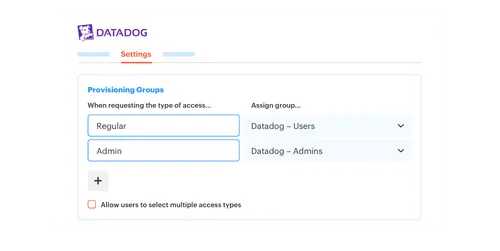
Once the catalog is live, intake becomes consistent. Roles are visible. Context lands with the request. And because the catalog syncs from your identity provider, IT isn’t maintaining parallel lists. Slack supports fast adoption for daily requests, while Jira keeps the record clean. The result is less chase, more flow.
Key capabilities you get out of the box:
- Approved, visual catalog in JSM and Slack, including roles per app
- Approvals routed to the right person, recorded in the ticket
- Catalog tied to IDP groups for deterministic downstream changes
- Evidence written to Jira automatically after each action
Provisioning and Time-Bound Access Through Your IDP
After approval, Multiplier calls your identity provider to add users to mapped groups, assign or unassign licenses, and start the clock on temporary roles. On expiry, it removes the group membership and records the change in the issue. You get speed, plus real least privilege.
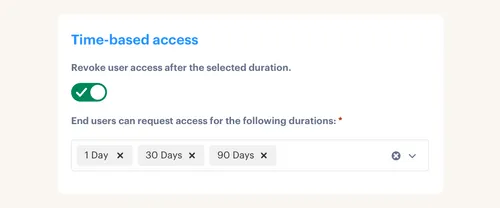
Because changes run through the IDP, the audit trail is both complete and authoritative. You don’t need screenshots. You don’t need side-channel notes. Elevated access windows become normal, not a special project. And when you need incident access, the window extends without creating new exceptions.
What changes in practice:
- Faster approvals with automatic group updates after the decision
- Temporary admin or production roles that auto-revoke on schedule
- Clear ticket comments showing success or failure, ready for audit
- Fewer standing privileges, less risk during audits and incidents
Access Reviews, Auto Reclaim, and No-Code Lifecycle
Multiplier runs access reviews inside Jira, shows last-login data, and lets reviewers keep or revoke with one click. When revokes happen, Multiplier executes the group removal and logs it. Auto Reclaim watches for inactivity and reclaims licenses after a grace period. No-code post functions let you connect onboarding, transfers, and offboarding to real identity changes.
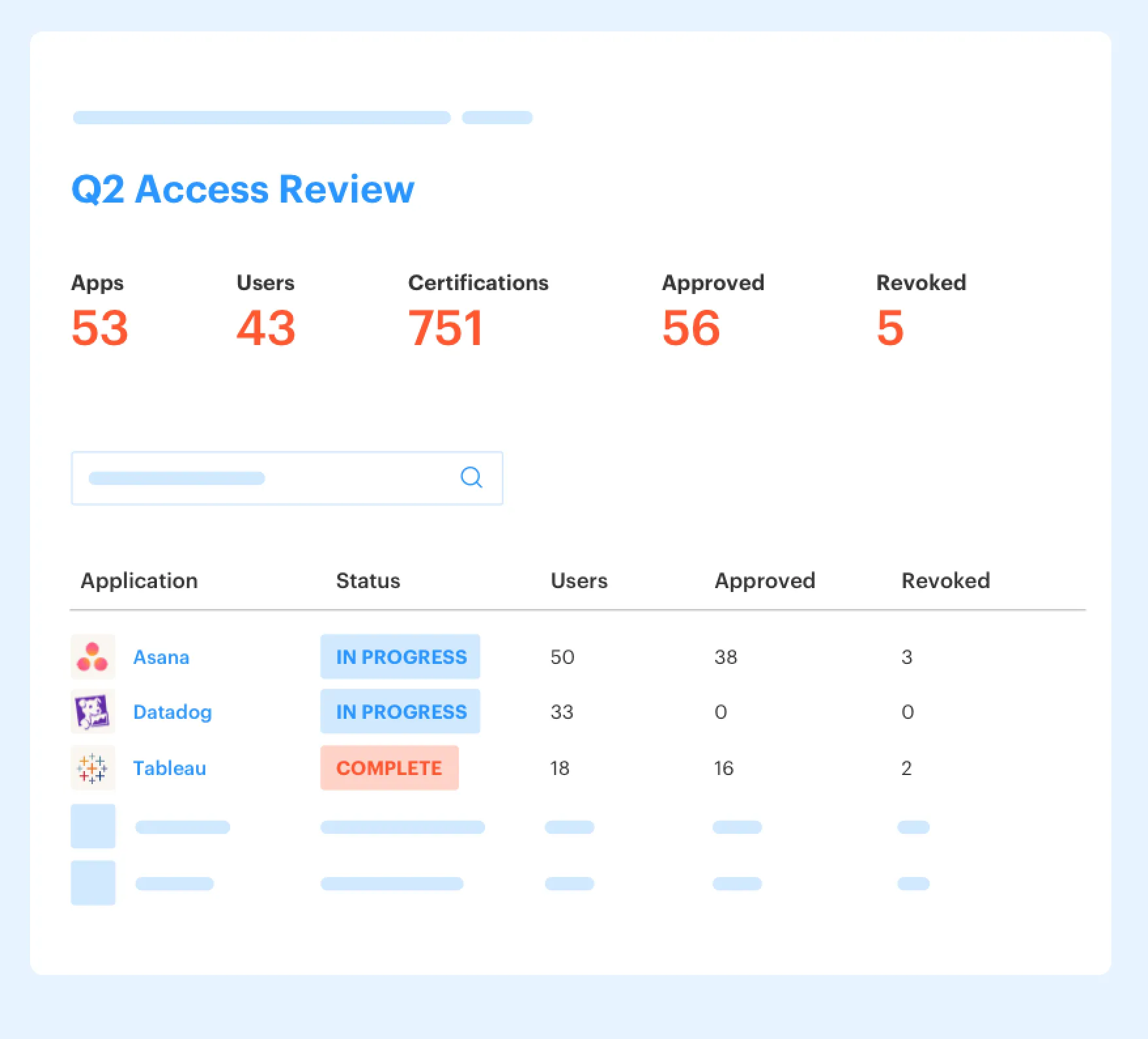
You move from spreadsheet campaigns and rubber stamps to a review that actually enforces outcomes. License reclamation stops being a quarterly clean up. Lifecycle events stop being a pile of scripts and become predictable transitions with comments in the ticket for every step.
Operational benefits you bank:
- Review dashboards in JSM with usage context and recommendations
- One-click revocations that remove IDP group membership automatically
- License reclamation policies based on real last-login data
- No-code actions on Jira transitions for onboarding and offboarding
Conclusion
If your goal is scale, stop spreading identity governance across portals and side channels. Put it in Jira with Slack for speed, drive changes through the identity provider, and let the audit trail write itself. The payoff is simple. Faster access, fewer standing privileges, cleaner audits. That’s how you design identity governance processes for scalability and keep your team lean without losing control.
External references:
- NIST explains least privilege clearly in their glossary entry.
- Atlassian documents approval patterns inside the request in their JSM approvals guide.
- Okta shows how group-based provisioning works with SCIM in their SCIM integration overview.
Frequently Asked Questions
How do I set up automated access requests with Multiplier?
To set up automated access requests with Multiplier, follow these steps: 1) Ensure Multiplier is integrated with your identity provider (like Okta or Azure AD). 2) Create an application catalog in your Jira Service Management (JSM) portal to display approved applications. 3) Configure access roles for each application and set up approval workflows to route requests to the appropriate managers. Once this is done, employees can easily request access through the JSM portal or Slack, and approvals will trigger automatic provisioning through your identity provider.
What if I need to revoke access after a project ends?
If you need to revoke access after a project ends, you can utilize Multiplier's time-based access feature. When granting access, set a specific duration for how long the access should last. Once the time expires, Multiplier will automatically revoke the access without any manual intervention. This ensures that users only have access for as long as they need it, minimizing security risks and license waste.
Can I track access requests in Jira?
Yes, you can track access requests in Jira using Multiplier. Every access request submitted through the JSM portal or Slack creates a Jira ticket that serves as the system of record. You can view the status of each request, including approvals and provisioning actions, directly within Jira. This centralized tracking helps maintain a clear audit trail and ensures that all changes are documented in one place.
How do I conduct regular access reviews?
To conduct regular access reviews using Multiplier, start by creating an access review campaign in Jira. Select the applications you want to include, assign reviewers, and set a start and end date for the campaign. Reviewers will receive notifications and can easily mark users to keep or revoke access based on their last login data. Multiplier will automatically handle the revocation process and document changes in Jira, making audits easier and more efficient.
When should I use the Slack app for access requests?
You should use the Slack app for access requests when you want to streamline the process and reduce context-switching for your team. The Slack app allows employees to submit access requests directly from their chat interface, making it quick and easy. Approvals are routed through Slack, ensuring that decisions are made promptly without leaving the platform. This integration keeps the workflow efficient and maintains a complete audit trail linked to the Jira ticket.


