


Most orgs treat cloud privileges like a forever gift. Once you get them, you keep them. That’s the mistake. Ephemeral cloud privileges, paired with session capture, cut exposure at the root by removing standing admin and tying every elevated session back to a ticket. If you want real least privilege, you can’t fake it with policy alone. You need short-lived access that ends on its own.
I learned this the hard way. You approve a one-off AWS admin grant to fix a prod bug. Two months later, that access still exists. No one remembers why. You overpay for licenses, you accept more risk than you think, and your audit trail is a patchwork. Ephemeral access flips the script. You grant for an hour, log the session, then it’s gone. No clean-up sprint. No guesswork. Just control. We’re going to walk through how to wire that up end to end, how to connect Jira or Slack approvals to short-lived tokens, and how to prove it to auditors. And yes, we’ll keep it simple and real. The phrase you’ll see a lot: ephemeral cloud privileges.
Key Takeaways:
- Ephemeral cloud privileges remove standing admin and shrink blast radius by default
- Map Jira or Slack approvals to short-lived cloud tokens without humans in the middle
- Use AWS STS, GCP short‑lived credentials, and Azure PIM for the actual ephemeral sessions
- Capture and correlate every elevated session recording back to the originating ticket
- Renew leases safely, revoke on time, and test that failures close access, not leave it open
- Keep governance in Jira and Slack, and push changes through your identity provider
- Build audits from the ticket record, not spreadsheets
Why Ephemeral Cloud Privileges Beat Standing Access
Ephemeral cloud privileges enforce least privilege by making elevation short, auditable, and automatic to revoke. You grant access for a narrow window, record what happened, then remove it without manual follow up. That reduces credential exposure, license waste, and noisy audits with a single design choice.
Most breaches start with long-lived access that lingers. Even well-meaning teams forget to remove it after an incident or a project. You also get drift, ad hoc exceptions, and gaps in evidence. Short-lived tokens with clear start and end times stop the sprawl. They’re predictable. They’re measurable. And they make audits boring, which is the goal.
I’d argue you can keep writing new policies, or you can remove the risk surface. Time boxing wins every time. You’ll see the difference in the first month. Fewer approvals to chase. Fewer debates about who still needs what. Less noise.
Why “set it and forget it” creates real exposure
Standing access grows quietly, then bites you at the worst time. You onboard fast, you rush a hotfix, you let a vendor in for a week. None of it gets fully rolled back. The risk climbs, one unchecked privilege at a time. That’s the hidden cost of convenience.
When you anchor elevation to a timer, you force an end date up front. No more “we’ll remove it later.” You also force purpose. If the task takes an hour, grant an hour. If the role is too broad, you’ll see it in the request and design a narrower path. The habit changes the outcomes.
Auditors love it, too. They don’t want your promises. They want proof. A ticket that shows approval, start time, end time, and what changed. That’s stronger than any policy doc.
Make ephemeral the default, not the exception
Teams get stuck when ephemeral is “special.” That invites bypasses and one-off deals. Flip it. Make every elevated path time bound unless there’s a rare, documented reason. Keep your exceptions short, specific, and visible.
You’ll also find people ask for less than they used to. When access is easy to request and ties to a reason and timer, folks get precise. They pick a smaller role. They pick a shorter window. Least privilege starts to happen on its own.
The Real Bottleneck: Approvals and Provisioning Live Apart
Least privilege fails when approvals, provisioning, and evidence live in different tools. Requests start in Jira, approvals happen in email or Slack, and someone makes changes in the identity provider. Evidence is recreated later. That split is where delays and errors creep in.
Most teams think the cloud is the problem. The real problem is the handoffs. If the approver never sees the right context, they rubber-stamp. If provisioning is manual, it takes days. If evidence sits in screenshots, it gets lost. By the time you review, the story is fuzzy and the cost is sunk.
Put governance where the request starts, connect decisions to the actual change, and write the results to the same record. That’s the foundation that makes ephemeral work day to day, not just on a slide.
Put governance where work already happens
Your teams live in Jira and Slack. So run approvals there. Keep the context in the same place the request came from. Manager sign-offs, app owner checks, and risk flags should be visible to everyone on the ticket. No chaser emails. No mystery threads.
Once you do that, the rest gets easier. Status moves are real signals. Approved means approved. Provisioning can listen for that state and act. Evidence writes back where the request lives. The loop closes itself.
It feels simple. It is. That’s why it works.
Provision through your identity provider, not side scripts
Provisioning through your identity provider keeps changes authoritative, fast, and consistent. Assign users to IDP groups that map to cloud roles. Let SSO and federation handle the short-lived session on the cloud side. No brittle scripts. No shadow systems.
This pattern reduces drift. It also makes rollbacks clean. Remove the group membership and the entitlement goes away. Your audit trail shows exactly who approved, what changed, and when it ended. That’s the chain you need when someone asks the hard questions.
The Hidden Cost of Skipping Ephemeral Cloud Privileges
Skipping ephemeral cloud privileges looks cheap, then costs you later. You pay in incident blast radius, license waste, and audit scramble. Quantify it and you’ll see why “we’ll do it later” is the expensive path.
Standing admin expands the attack surface. One phished laptop with a cached credential can open doors it shouldn’t. AWS tokens can be scoped tightly, but if the role is broad and always available, you still face real risk. Short-lived sessions with narrow roles change that calculus. For reference, see AWS STS AssumeRole for how session durations and conditions constrain access.
Time is money in audits. Rebuilding evidence from chat and screenshots eats weeks. When approvals, group changes, and revocations are logged on the ticket that triggered them, you export once and move on. You also avoid overpaying for licenses you forgot to remove. That’s a direct budget win.
GCP and Azure tell the same story. Google encourages short‑lived credentials to reduce exposure. Microsoft’s Privileged Identity Management requires elevation and records each activation, which limits standing rights by design. Read the overview for Azure AD Privileged Identity Management to see the operational model.
Bigger blast radius during incidents
When every engineer can touch prod by default, a mistake travels far. A bad CLI command. A wildcard IAM policy. One wrong delete. The cost isn’t theoretical. It’s hours lost and revenue at risk, especially when evaluating ephemeral cloud privileges.
Short-lived elevation makes those mistakes harder to make and faster to trace. If only two people had elevation last night for one hour each, you know where to look. You also know it ended. That matters.
Audits that drag, and revocations that lag
Manual evidence rebuilds delay audits. Delays create stress. Stress leads to rushed work and more mistakes. It’s a spiral.
With time-bound access and automatic revocation, your offboarding and quarterly reviews get lighter. Less rubber-stamping. More real decisions. And when someone clicks Revoke, the system actually removes it. Not tomorrow. Now.
What It Feels Like When Standing Privilege Runs the Show for Ephemeral cloud privileges
You feel it before you see it. Incidents pull senior folks in at midnight. They rush fixes with broad roles because they can. No timer. No trail beyond a Slack thread. It works, then the same access sticks around. That’s the cycle.

The next morning you wonder who still has what. No one is sure. The checklist says it’s fine, but the checklist isn’t the source of truth. You carry that risk in your gut until the next review. That’s not a system. That’s hope.
Meanwhile, audits become a slog. You dig up emails. You paste screenshots. You staple it all together and pray the story holds. It’s not wrong to hate it. It’s just not necessary anymore.
The late-night elevation that never got removed
You approve an hour of admin to unblock a deploy. The work wraps fast. No one remembers to remove the role. Two months later, a junior dev still has prod access. Not malicious. Just messy.
When elevation is time bound, that same grant ends on its own. The difference is night and day. You sleep better. Your CISO sleeps better. Your budget looks better.
The audit panic that eats your quarter
An auditor asks for who approved which access, and where the revocation evidence lives. You scramble. The data exists, but spread across tools. People move on. Memory fades. You rebuild what should have been obvious.
If the approval, the group change, and the expiry all write to the same ticket, you answer in minutes. That’s the payoff you feel.
The New Way: Ephemeral Cloud Privileges Mapped From Jira Approvals
The new way ties Jira or Slack approvals to short-lived cloud sessions through your identity provider. You approve in the service desk, membership changes in the IDP, and the cloud issues the short-lived session. Session data and evidence flow back to the ticket.

Here’s the shape. Use an application catalog so users ask for the right role. Route approvals to managers or app owners. On approval, add the user to an IDP group mapped to a constrained cloud role. Enforce a time box. When it expires, remove the group and log it. Every action ties to the same record.
If you want a mental model, think of it as “request, approve, assume, record, revoke.” That’s it. Simple beats clever.
Map approvals to cloud role assumption across AWS, GCP, and Azure
Start with groups in your identity provider. Each group maps to a cloud role with narrow permissions. For AWS, the SAML assertion or OIDC trust allows users in that group to assume a role with an STS session. For GCP, grant a role to a Google group and issue short‑lived credentials. For Azure, elevate with PIM so admin isn’t standing by default.
Keep roles thin. Give folks only what they need to do the job for the time they asked for. That’s the heart of least privilege.
Capture and correlate sessions back to the originating ticket
Tie the session to the ticket. That means writing who asked, who approved, when the group add happened, when it expired, and, if you have it, the session ID or recording reference. Auditors care about the link between approval and action. Make it easy to see.
You don’t need to store the recording in the ticket itself. A reference is fine. What matters is the correlation. If someone asks “why did this person have admin at 2:07 AM,” you answer in one click.
Safe lease renewal and fail‑closed patterns
People need extensions. Design for that without opening the door. If a user asks to extend inside the same ticket and the previous request was approved, allow a short renewal and log it. If anything in the chain fails, remove access, not keep it, especially when evaluating ephemeral cloud privileges.
Test the ugly paths. Kill the callback from the IDP and confirm access ends. Fail the approval transition and confirm nothing is provisioned. Pull a cloud role and verify your mapping denies assumption. You want to see systems fail closed.
Making Ephemeral Cloud Privileges Real in Jira With Multiplier
Ephemeral only sticks when the mechanics are easy. Multiplier lives inside Jira Service Management and Slack, provisions through your identity provider, enforces time-based access, and writes evidence to the ticket. That’s the loop you need to make this real without a new portal or brittle scripts.
Think in capabilities, not buzzwords. Employees request access from a visual catalog. Approvers act in Slack or JSM. On approval, Multiplier adds the user to mapped IDP groups. If time-bound access is set, it auto-revokes at expiry and records it. Access reviews run as Jira issues when you need certification at scale. All of it ties back to the same record.
Time‑Bound Access anchored to the ticket
Time-based access makes elevated rights temporary by default. Requesters pick a duration during submission, approvers confirm, and Multiplier provisions immediately. When the clock runs out, Multiplier removes the group membership and logs the change on the issue. If someone needs a short extension and the prior request was approved, you can allow it without another approval round.
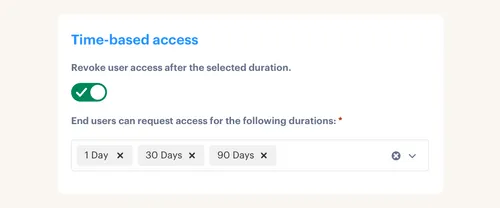
Security teams like the smaller exposure window. Ops likes the speed. Everyone likes not chasing clean-up.
Provision through identity provider groups
Automated Provisioning pushes changes through Okta, Entra, or Google Workspace. Each catalog role maps to one or more groups. When a request hits the Approved status, Multiplier calls the IDP to add or remove the user from those groups, then posts success or failure back to Jira for audit.
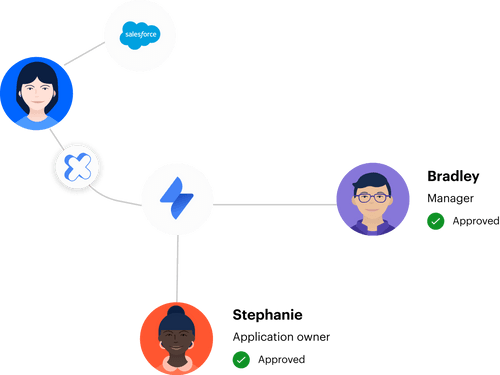
This keeps the IDP as the source of truth. It also makes rollbacks clean. Remove the group and access is gone. No side scripts to maintain.
Slack approvals without a new portal
The Slack App lets employees start a request with a simple command, and lets approvers make one-click decisions in chat. Under the hood, it still creates a Jira issue, routes approvals, and provisions through the IDP. Evidence stays complete because Slack is just the front door, not the system of record.
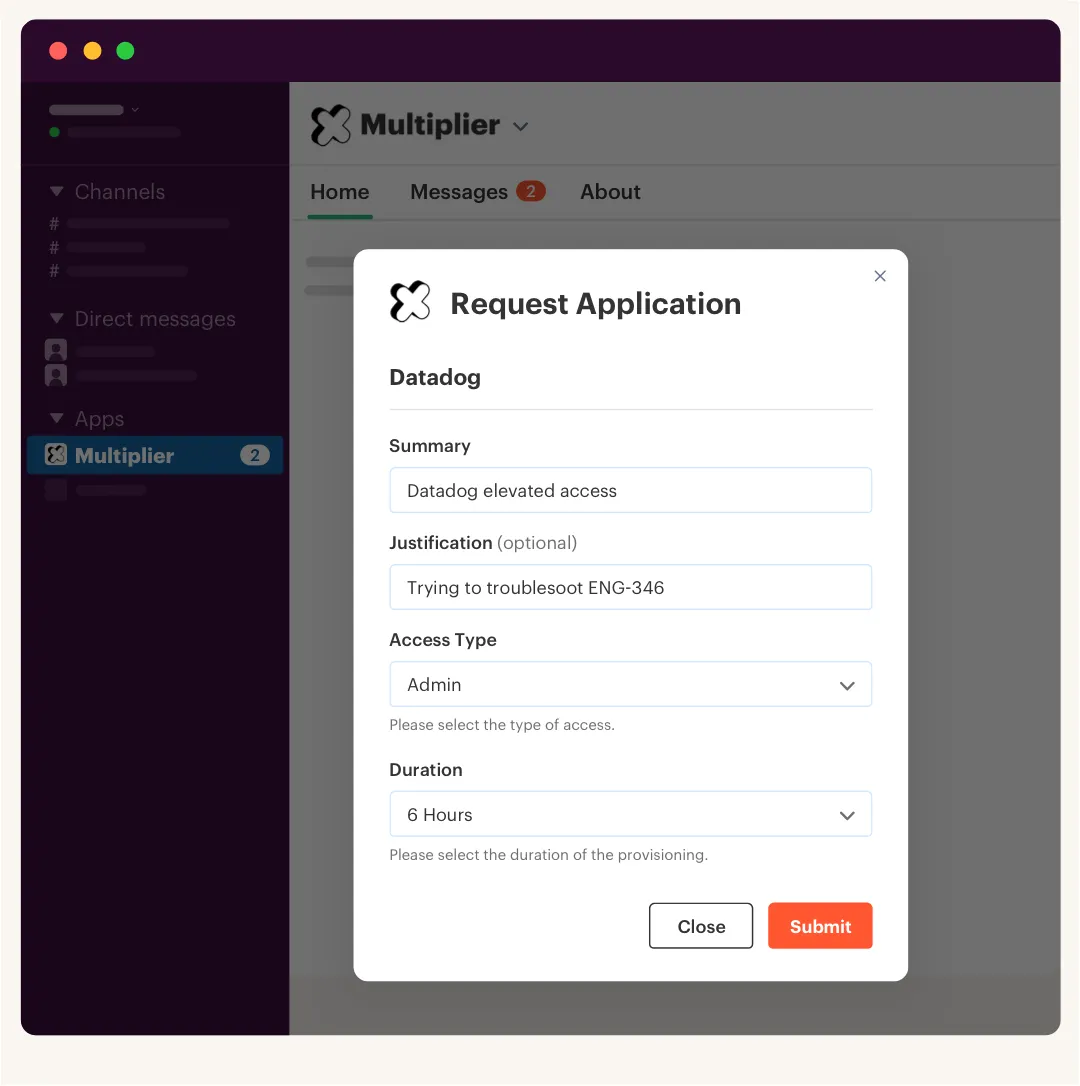
People actually use it because it’s where they already work. Adoption matters. Otherwise you’re back to side channels and missed evidence.
Access reviews and exportable evidence
Access Reviews replace spreadsheet-driven certifications with a Jira-native flow. Reviewers see users, groups, last login info, and recommendations. Keep or Revoke actions execute and write back to the campaign. Exports are ready for auditors. That closes the loop on “who should still have what” without manual merges.
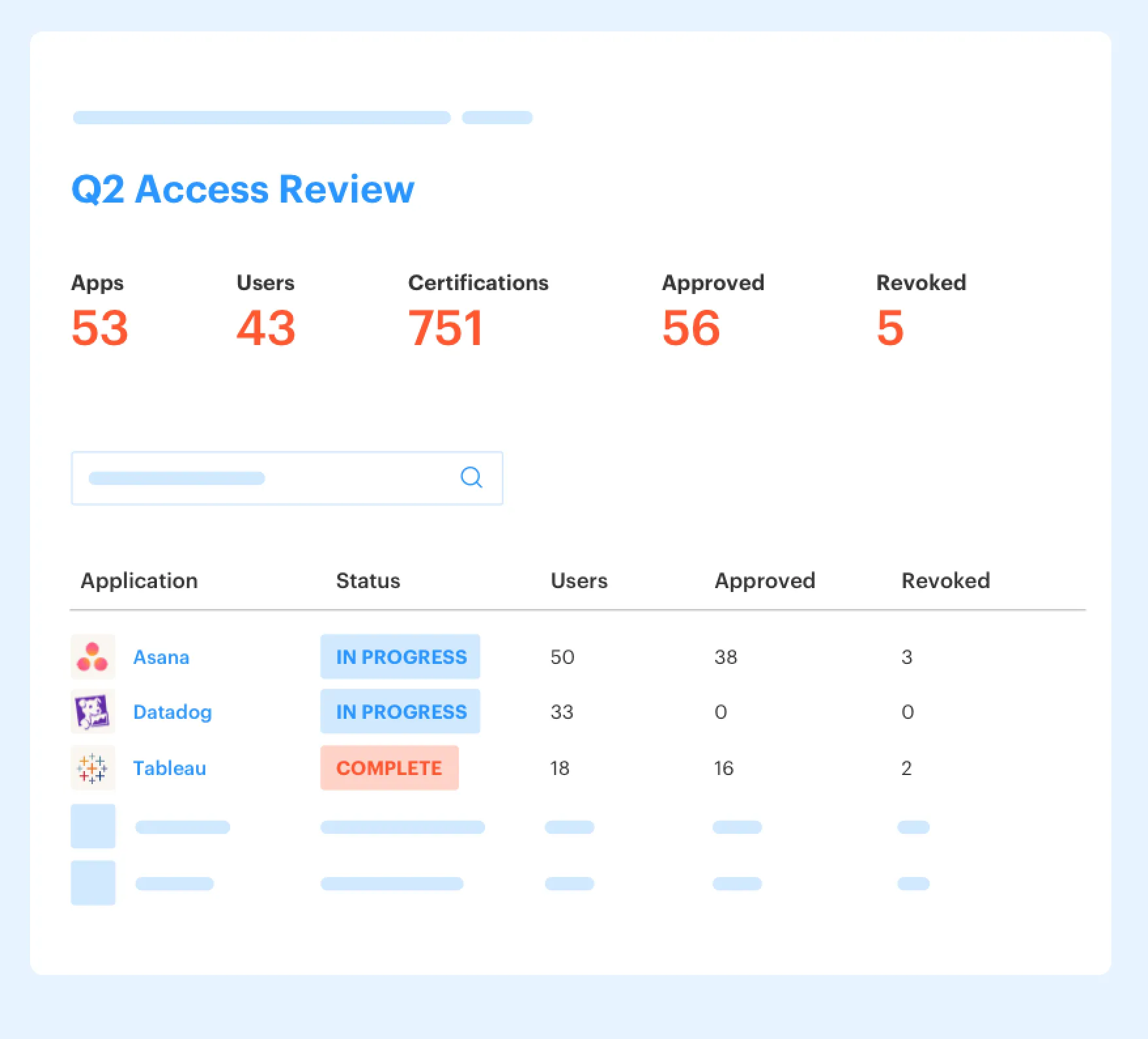
This also pairs nicely with Auto Reclaim for license waste. If someone is inactive for 30 days, notify them, then revoke if they don’t log in. Less waste. Less drift.
Faster approvals and fewer standing privileges. That’s what Multiplier delivers. Learn more about Multiplier
What teams wire up first
You don’t need a big-bang rollout. Most teams start with three moves, then iterate:
- Catalog the top 20 apps with clear roles, map each role to IDP groups
- Route approvals to managers or app owners in JSM and Slack
- Turn on time-based access for sensitive roles and verify auto-revocation

From there, layer in access reviews for quarterly certs and Auto Reclaim for spend control. Keep changes small and testable.
Why audits get easier, not harder
When approvals, provisioning, and revocations live in one record, you stop rebuilding history. Multiplier writes evidence to the Jira issue as the work happens. You export, share, and move on.

Auditors ask better questions when you give them cleaner data. You answer faster. You free up weeks you used to waste.
Conclusion
Permanent cloud privileges are the quiet risk that never leaves. Ephemeral cloud privileges fix that by shrinking access to the smallest useful window and tying every elevated session to an approval you can prove. The mechanics are simple: approve in Jira or Slack, change membership in the identity provider, let the cloud issue a short-lived session, then record and revoke.
Do this well for 30 days and you’ll see it. Fewer late-night escalations. Fewer debates about who still needs what. Cleaner audits. The target is clear: eliminate the vast majority of standing privileged credentials and correlate every temporary session back to a ticket. That’s how least privilege stops being a slogan and becomes your normal.
Frequently Asked Questions
How do I set up time-based access with Multiplier?
To set up time-based access using Multiplier, follow these steps: 1) In the Jira Service Management portal, navigate to the Multiplier application catalog. 2) Select the application you want to grant access to and choose the desired role. 3) During the request submission, specify the duration for access (like 1 hour or 24 hours). Once approved, Multiplier will automatically provision the access and set a timer to revoke it when the time is up. This ensures that elevated access is temporary and minimizes security risks.
What if I need to extend access for a user in Multiplier?
If a user needs to extend their access in Multiplier, you can allow a short renewal without re-approval if the prior request was already approved. Just go to the existing Jira ticket where the initial request was made, and select the option to extend the access duration. Multiplier will update the access automatically, ensuring that the user retains the necessary permissions without creating additional friction during incidents.
Can I capture session recordings with Multiplier?
While Multiplier itself does not capture session recordings, it allows you to correlate elevated access sessions back to the originating Jira ticket. This means that when a user is granted temporary access, you can log the details of that session, including who approved it and when it expired. This creates a clear audit trail, which is essential for compliance and security reviews.
When should I use the Application Catalog in Multiplier?
You should use the Application Catalog in Multiplier whenever employees need access to various applications. This feature streamlines the request process by allowing users to browse sanctioned applications and select roles directly from the Jira Service Management portal or Slack. It's particularly useful during onboarding or when teams require quick access to tools without going through lengthy approval processes, ensuring that requests are logged and tracked efficiently.
Why does Multiplier integrate with identity providers?
Multiplier integrates with identity providers like Okta, Azure AD, and Google Workspace to automate provisioning and ensure that access management is efficient and secure. By linking access requests to your identity provider, Multiplier can automatically add or remove users from the appropriate groups based on approvals in Jira. This reduces manual errors, speeds up access provisioning, and maintains a consistent audit trail, making it easier for teams to manage user access effectively.


