


Fragmented IAM compliance risks rarely surface as failed controls first. They show up as Jira tickets, Slack approvals, Okta group changes, and spreadsheets that almost match each other.
Most IT teams don't have an identity governance problem because they lack policy. They have a governance problem because the work is split across too many places, and every handoff creates a gap someone has to explain later.
Key Takeaways:
- Fragmented IAM compliance risks usually come from tool gaps, not bad intent.
- If access approval, provisioning, expiry, and evidence live in different systems, your audit trail is probably weaker than it looks.
- The cleanest control is the one that creates evidence while the work happens.
- Time-bound access beats standing privilege when elevated access is common.
- Access reviews should test whether the workflow is enforceable, not whether someone can clean up a spreadsheet.
- Jira-native governance works because IT already lives in tickets, not because Jira magically solves identity.
Why Fragmented IAM Creates Compliance Risk So Fast
Fragmented IAM creates compliance risk because access decisions, system changes, and audit evidence drift apart. A user gets approved in one place, provisioned in another, and reviewed later in a spreadsheet. Once those records don't line up, compliance becomes reconstruction instead of proof.

Access Decisions Split Across Too Many Systems
A pretty normal access request can touch 4 systems before anyone thinks about compliance. The employee asks in Slack. The manager replies there because it's easy. IT opens Jira because that's where work gets tracked. Then someone logs into Okta or Entra to add the user to a group.
Now the access exists. Great. But where's the proof? The Slack thread has the approval, Jira has the ticket, the identity provider has the change, and the spreadsheet gets updated later if someone remembers. Fragmented IAM compliance risks start right there, in the gap between “work got done” and “work can be proven.”
I get why teams end up here. Nobody wakes up and decides to build a messy access process. The stack grows one workaround at a time, like a network closet where every cable made sense on the day it was plugged in. Six months later, nobody wants to touch it because one wrong move might take something important offline.
The Audit Trail Looks Fine Until Someone Tests It
Auditors don't usually ask, “Did the person eventually get the right access?” They ask who approved it, why it was needed, when it was granted, whether it was removed, and whether the removal actually happened. That's a very different standard. And it's where fragmented IAM starts to cost you.
A workplace technology manager is in Jira at 4:47 PM trying to close 18 access tickets before the end of the day. One request says “Need admin for production issue.” The approval happened in Slack 2 hours ago, the Okta group was added manually, and the Jira ticket has a comment that says “done.” Three months later, during a SOC 2 review, that same ticket has to explain the full chain. Not fun.
The NIST access control guidance is pretty clear that access should be authorized, managed, reviewed, and removed based on defined controls. The hard part isn't understanding that. The hard part is proving it when your evidence is scattered. If you're trying to make sense of that right now, Learn more about Multiplier and look at what changes when access governance stays tied to Jira.
Standing Access Is Usually a Process Shortcut
Standing privilege often happens because temporary access is annoying to manage. Someone needs elevated permissions for 1 hour, but the request takes 2 days, so IT grants broader access and promises to clean it up later. That feels practical in the moment. Honestly, I get it.
The problem is the cleanup rarely gets the same urgency as the request. Incidents end. Launches end. The person keeps the group membership. In fintech and AI companies, where customer trust and security reviews matter a lot, that creates a weird tension. Everyone agrees least privilege is the goal, but the process rewards permanent access because temporary access creates more admin work.
A fintech team like Stavvy saw this directly as they grew after funding and acquisitions. Long-lived privileged access became the thing they needed to reduce, not because people were careless, but because their access model had outgrown manual follow-up. They later cut privileged access by 85% and had 1,300+ requests automatically revoked after approved windows. That number matters because it proves the point: expiry has to be built into the workflow, or it becomes another spreadsheet promise.
The real risk isn't that someone forgot a control. The risk is that the control depends on remembering.
How to Diagnose the IAM Gaps Auditors Will Notice
You diagnose fragmented IAM compliance risks by tracing one access request from intake to revocation. If you can't show the request, approval, provisioning change, expiry, and review decision in a connected record, the process has an evidence gap. Start with the path, not the policy.
Test One Request From Start to Finish
Pick 10 access requests from the last 30 days. Not the clean ones. Pick a mix of routine app access, admin access, contractor access, and one emergency request. Then ask one blunt question for each request: could someone outside the team understand exactly what happened without asking you?
The test is simple. Find the original request, the approver, the role granted, the system of change, the timestamp, and the removal event if the access was temporary. If any of those live in a separate place without a link back to the ticket, mark it as a gap. If more than 3 of 10 requests require Slack search or screenshots, you don't have an audit trail. You have a memory exercise.
A strong review should answer:
- Who requested access and for what role?
- Who approved it and under what rule?
- Which identity provider group changed?
- Was the access time-bound or standing?
- Where's the proof of removal or review?
I like this test because it cuts through the debate. You don't need a 6-week assessment to see the pattern. You need 10 tickets and 45 minutes. If the evidence is hard to follow on a random Tuesday, it won't magically become easier during an audit.
Separate Intake Problems From Enforcement Problems
Not every fragmented IAM issue is the same issue. Some teams have clean approvals but messy provisioning. Others have good Okta hygiene but terrible intake. A few have decent tickets and provisioning, then fall apart during quarterly access reviews because all the context gets exported into a spreadsheet and loses its connection to the original work.
Split the workflow into 4 parts: request, approve, provision, revoke. Then score each part from 1 to 3. A 1 means mostly manual and not reliably tracked. A 2 means tracked, but split across systems. A 3 means tied to the ticket and enforceable. Any workflow with a 1 in provisioning or revocation carries higher compliance risk because that's where intent becomes actual access.
A fair objection: separate IGA tools can enforce policy really well. True. Some larger enterprises need deep identity governance suites because they have complex role mining, segregation-of-duties rules, and heavy certification needs. The point isn't that those tools are bad. The point is that if employees still request access in Jira, approvals happen in Slack, and evidence gets rebuilt later, the operational gap still exists.
The better question is more practical. Where does the work actually happen? If the answer is Jira and Slack, forcing governance into a separate portal can create more compliance risk than it removes.
Put Numbers Around the Manual Tax
Manual IAM work feels small because each task is small. Add a user to a group. Comment on a ticket. Nudge an approver. Export a CSV. None of those sound scary. Then you multiply them by headcount growth, app sprawl, and quarterly review cycles.
One AI company, Synthesia, grew from 100 to 400+ employees in 2 years and had access requests tracked through Slack and Notion. A 4-person IT Ops team supporting that kind of growth can't spend the day translating chat messages into provisioning tasks. After moving to a Jira-based request and automation model, they processed 3,800+ access requests in a year, with 75% fully automated. That's not a vanity metric. That's the difference between running IT Ops and just reacting all day.
Use a rough benchmark for your own team. If one access request takes 12 minutes of human coordination and you process 500 requests a month, that's 100 hours. If 25% of those requests should have an expiry but require manual cleanup, you've created a second backlog before the first one is even done. Fragmented IAM compliance risks compound because every request creates a future evidence problem.
The hidden cost isn't the ticket. It's the cleanup nobody scheduled.
Treat Access Reviews Like a System Test
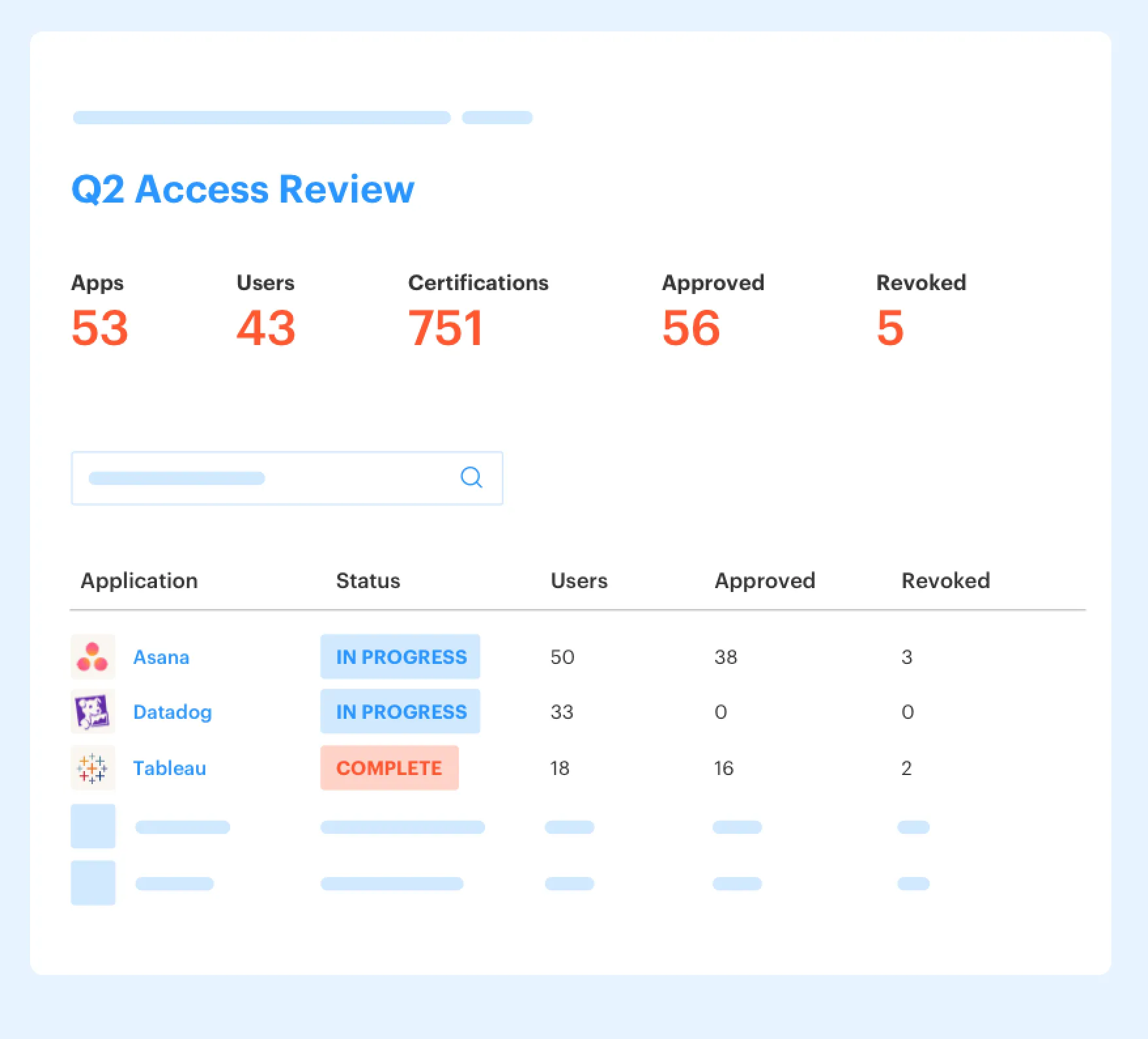
Quarterly access reviews shouldn't be a heroic spreadsheet project. They should test whether your access system is healthy. If reviewers don't know why someone has access, if last login data isn't visible, or if revocations require a separate manual ticket, the review is exposing a workflow problem.
Run a red flag check before your next review:
- More than 20% of reviewer decisions are “keep” without a reason.
- Reviewers need to ask IT for basic context like department, title, or last login.
- Revocations are approved in the review but executed later by someone else.
- Evidence is copied into a spreadsheet after decisions are made.
- Apps outside SSO are tracked differently from approved SSO apps.
Not everyone agrees with pushing reviews into the service desk. Some security teams prefer dedicated certification tools, and for very complex environments, that can be valid. But for Jira-heavy companies, the review should live close to the access history. Otherwise you ask reviewers to make decisions without the story. And when reviewers lack context, they rubber-stamp. They don't govern.
If a review decision doesn't trigger the change, the review isn't finished. It's just paperwork.
Make Time-Bound Access the Default for Risky Roles
The simplest way to reduce standing privilege is to stop treating elevated access like a permanent state. Admin roles, production access, finance systems, customer data, database access, and sensitive internal tools should have an expiry option by default. If someone needs it for 1 hour, don't grant it for 6 months.
A useful rule: if access is used for a task rather than a job function, make it time-bound. A developer debugging production needs a window. A finance admin doing month-end close might need temporary elevated permissions. A manager approving invoices every week probably needs ongoing access. Those are different patterns, and your IAM workflow should reflect that.
The counterpoint is friction. Time-bound access can annoy people if every request needs 4 approvals and a long wait. That's fair. Bad just-in-time access is worse than no just-in-time access because people route around it. The trick is to pair expiry with fast approval and automatic provisioning. Fast in. Automatic out. That's the model.
For teams already buried in Jira tickets, the goal isn't more control theatre. The goal is fewer standing privileges without making IT the blocker for every normal workday.
Keep Identity Provider Groups as the Control Point
The identity provider should be the place where access changes become real. Jira can own the request, Slack can speed up the approval, and the access review can capture the decision. But the group assignment in Okta, Entra, or Google Workspace is what actually grants or removes access for SSO apps.
Map each approved catalog role to a group. Viewer, Editor, Admin, whatever makes sense. Then make the workflow move people into and out of those groups based on approval, expiry, review, or lifecycle event. If someone can't explain which group maps to which role, the process is too fuzzy to automate safely.
One thing we learned in access operations is that automation doesn't fix unclear ownership. It exposes it. If nobody owns the app, nobody should pretend the approval process is mature. If role names don't match actual permissions, automation will just make the wrong thing happen faster. Fix the mapping first, then automate the workflow. See how Multiplier works if you want to compare that model against a separate portal approach.
For compliance, group-based control gives you a cleaner story. The ticket says why. The approval says who allowed it. The identity provider shows what changed. The expiry or review shows when it ended.
Build Evidence While the Work Happens
Audit readiness shouldn't require rebuilding the past. It should come from the normal workflow. Request created. Approval captured. Provisioning executed. Expiry logged. Review decision recorded. Export only when needed.
The Verizon Data Breach Investigations Report keeps showing how much security risk ties back to credentials, privilege, and human process. You don't need to overcomplicate the lesson. If access is easy to grant and hard to track, risk grows. If access is easy to track and easy to remove, compliance gets much less dramatic.
A good evidence workflow has 3 traits:
- The ticket is the record of why the access exists.
- The identity provider is the source of what access exists.
- The review or expiry is the proof that access didn't last forever.
That sounds basic. But basic is usually where audits hurt. Teams don't fail because they can't explain their policy. They fail because the proof is spread across 5 systems, 2 people, and one spreadsheet named “final-final-access-review-v3.”
The cleanest audit trail is the one nobody has to rebuild.
How Multiplier Keeps Access Governance Inside Jira
Multiplier keeps access governance inside Jira by connecting requests, approvals, identity provider group changes, time-bound access, and access reviews to Jira Service Management records. That means the workflow and the evidence stay together. For Jira-heavy teams, that removes a lot of the manual glue work.
Jira-Native Requests With Identity Provider Provisioning
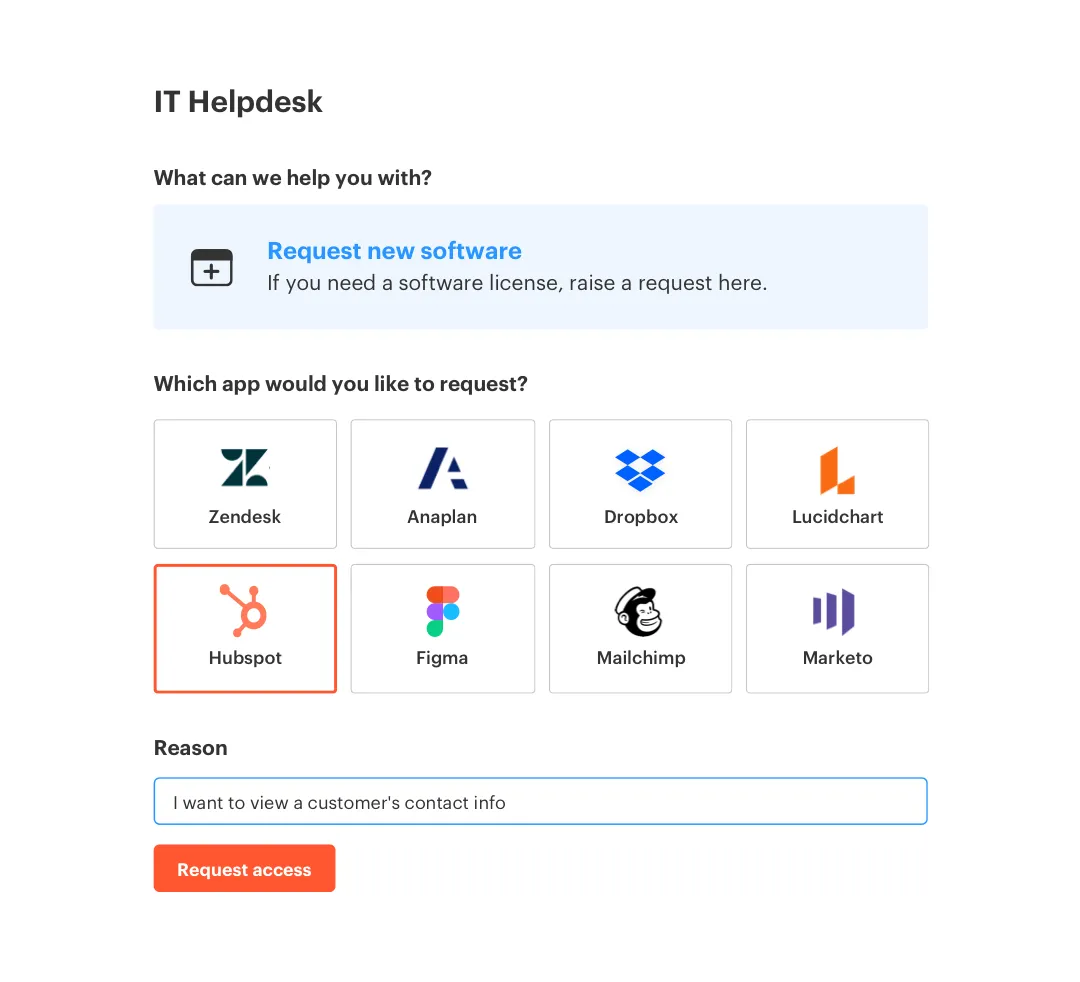
Multiplier's Application Catalog gives employees a Jira-native place to request approved apps and roles. Behind the scenes, those roles map to identity provider groups in Okta, Entra, or Google Workspace. Once the request is approved, Multiplier adds the user to the mapped group and writes the result back to the Jira issue.

That matters because fragmented IAM compliance risks usually come from separation. Request in one place. Approval somewhere else. Provisioning in the identity provider. Evidence stitched together later. Multiplier pulls those steps into one Jira-based flow, while still using the identity provider as the authority for access.
The practical change is pretty simple:
- Employees request sanctioned apps from the catalog in JSM or Slack.
- Approvers make decisions in Jira or Slack.
- Multiplier provisions through identity provider group mappings.
- The Jira issue records the approval and provisioning status.
- Access reviews can happen in JSM with user context and revocation actions.
Multiplier doesn't directly provision inside every individual SaaS app. It provisions through identity provider groups, which is exactly the boundary you want to understand before you automate. For SSO apps using group-based access, that's a clean control point. For manual or non-SSO grants, you can still track approvals and evidence, but automatic removal depends on group-based provisioning.
Time-Bound Access and Reviews That Actually Enforce Decisions
Multiplier's Time-Based Access is built for the standing privilege problem. A requester can choose a duration like 1, 6, or 24 hours, and after approval, Multiplier adds the user to the mapped identity provider group. When the window expires, Multiplier removes the group membership and records the change in Jira.
That directly addresses the 1,300+ temporary access revocations pattern from Stavvy. The win wasn't just faster access. The win was that access ended without someone remembering to clean it up. For compliance, that's a very different posture. Least privilege becomes an operating model, not a slogan in a policy doc.
Access Reviews work the same way philosophically. Reviewers see context in JSM, including group memberships, user attributes, last login data, and recommendations. They mark Keep or Revoke. For supported group-based access, Multiplier removes users from the relevant identity provider groups and creates Jira evidence for the change.
Multiplier also supports Slack-based requests and approvals, which is important because people already live there. The difference is that Slack isn't the system of record. Jira is. That means the fast decision in chat still ties back to a ticket and the identity provider action. If your team is trying to reduce fragmented IAM compliance risks without adding another portal, Get started with Multiplier and test one risky access workflow first.
Start With the Workflow That Creates the Most Risk
The fastest way to reduce fragmented IAM compliance risks is to pick one workflow where access is high-risk and evidence is weak. Don't start with a giant IAM transformation. Start with production access, finance admin access, or quarterly reviews for 5 key apps. Map the request, approval, group change, expiry, and evidence.
Once that workflow is clean, repeat it. That's how the system gets better. Not through another policy deck. Through fewer handoffs, less standing access, and records that prove what happened without making IT rebuild the story later.
Frequently Asked Questions
How do I set up time-bound access in Multiplier?
To set up time-bound access using Multiplier, follow these steps: 1) When submitting an access request through the Application Catalog in Jira Service Management (JSM) or Slack, select the duration for access (e.g., 1, 6, or 24 hours). 2) After approval, Multiplier will automatically provision access and set a timer to remove the user from the mapped identity provider group when the time expires. 3) Ensure that the app is configured to allow time-based access for this feature to work effectively. This helps enforce least privilege by ensuring access is granted only when necessary.
What if I need to revoke access after an access review?
If you need to revoke access after an access review, you can do so easily with Multiplier. First, during the access review process, reviewers can mark users for revocation directly in JSM. Once a decision is made, Multiplier will automatically remove the user from the relevant identity provider groups and create a Jira ticket documenting the change. This ensures that the revocation is logged and can be audited later, maintaining a clear record of access changes and compliance.
Can I automate access requests for non-SSO apps?
You can automate access requests for non-SSO apps using Multiplier, but keep in mind that provisioning will remain manual. To do this, add custom applications to the Application Catalog in JSM. Employees can request access to these apps through the catalog, and approvals will be captured in Jira. While Multiplier will track the approvals and maintain an audit trail, an IT agent will need to manually provision access for these non-SSO applications.
When should I conduct access reviews with Multiplier?
You should conduct access reviews with Multiplier at least quarterly to ensure compliance and security. To initiate a review, create an access review campaign in JSM, select the applications in scope, and assign reviewers. Multiplier will facilitate the review process by providing context such as user attributes and last login data, making it easier for reviewers to make informed decisions. This regular review helps identify inactive users and ensures that access remains appropriate, reducing compliance risks.
Why does my team need to use Jira for access requests?
Using Jira for access requests is essential because it centralizes the entire process, reducing fragmentation. When your team uses Multiplier within Jira, all requests, approvals, and provisioning actions are logged in one system, which simplifies tracking and auditing. This integration eliminates the need for multiple tools and manual follow-ups, making the process more efficient and less prone to errors. Ultimately, it helps maintain a clear audit trail, ensuring compliance with governance requirements.


