


82% of access work is still manual in many orgs, and that's the real reason audits turn into spreadsheet season. If you're trying to automate access requests in Jira but still bouncing between Slack, email, your identity provider, and a pile of screenshots, you don't have an automation problem. You have a systems split.
A lot of teams think the answer is adding a separate IGA portal. I think that's backwards. The minute you split intake from approvals, provisioning, and evidence, you create drag. Slow access. More standing privilege. Messy audits.
Key Takeaways:
- Automate access requests in Jira by keeping request, approval, provisioning, and evidence tied to the same Jira issue
- If approvals happen outside the system of record, your audit trail breaks first
- Provision through your identity provider, not by manual app-by-app changes, if you want changes to stay authoritative
- Time-bound access is the fastest way to reduce standing privilege without slowing teams down
- If your review process still ends in spreadsheets, your governance model is already leaking
- The best setup doesn't add another portal. It makes Jira and Slack the front door, and the identity provider the enforcement layer
Why most attempts to automate access requests in Jira stall out
Automate access requests in Jira by itself is not enough. The hard part isn't getting a form into JSM. The hard part is making the request actually drive approval, provisioning, revocation, and evidence without people stitching the rest together by hand.

A pretty common setup looks fine on paper. Employee asks for access in Jira. Manager approves in Slack or email. IT jumps into Okta or Entra. Someone leaves a comment on the ticket. Later, during an audit, the team tries to prove what happened. That's not one workflow. That's four workflows pretending to be one.
The hidden bottleneck is the ITSM and IGA split
Most teams blame slow access on ticket volume. That's only part of it. The real bottleneck is that service management and governance live in different places, so humans end up being the integration layer.
Back in a lot of scaling teams I've seen, this is where things get weird fast. The service desk owns intake. Security owns policy. IT owns provisioning. Managers own approvals, sort of. Nobody owns the whole chain. So every request gets slower as headcount grows.
You can see it in the day-to-day. A new engineer joins on Monday. By Tuesday, there are six requests open for GitHub, Jira, AWS, Slack admin access, a couple internal tools, and one oddball app no one really owns. One approver responds in Slack, one in email, one forgets. IT manually assigns groups in the identity provider. Then someone pastes notes back into Jira. It works. Until volume hits.
The old belief is that more control means more systems. I'd argue the opposite. More systems usually means less control, because evidence gets scattered.
Manual evidence creation is the first thing that breaks
Audits should be ready by design in Jira, not rebuilt in spreadsheets. That's the contrarian take here, and honestly it shouldn't be contrarian at all.
When evidence is created after the fact, it's already compromised. Not in a dramatic way. In a normal, boring, expensive way. Screenshots are missing. Comments are vague. Nobody remembers why an exception got approved three months ago. The issue isn't that teams don't care. They do. They just don't have a workflow that produces clean evidence as a byproduct.
Research from NIST's access control guidance keeps coming back to the same idea: access control only works when enforcement and traceability are built into operations. Same story from Okta's identity governance framing. Policy without operational follow-through creates gaps. Big ones.
And yeah, there's an emotional side to this too. Your team knows the audit is coming. Everyone hopes the screenshots are somewhere. Nobody wants to be the person rebuilding six months of access history from comments and exports.
Separate portals create adoption drag you don't notice at first
A separate portal sounds manageable when you have 80 people. At 400, it's a tax. At 1,000, it's a problem.
Employees already know Jira. They already live in Slack. If you ask them to request access in one system, watch approvals in another, and then check status somewhere else, usage drops. Or worse, they go around the process. They DM IT. They tag someone in Slack. They ask a manager to "just grant it quickly."
One mid-market fintech team hit this wall after growing to nearly 1,200 employees. Hundreds of routine access requests were coming through Slack, email, and Jira, and IT had to chase approvals and manually assign Okta groups. The result was predictable: more work, more waiting, more room for error. After centralizing the process, they reduced IT workload on access requests by 80%. That's not a minor tweak. That's a workflow reset.
If you want to Learn more about Multiplier, that's the basic promise: keep governance inside the systems people already use, so automating access requests in Jira actually means the full workflow gets automated.
The real problem is not request intake, it's authoritative provisioning
The core issue with most access workflows is that approval and execution are disconnected. You can automate the front half and still fail badly on the back half. If provisioning isn't driven through your identity provider, the request might be tidy while the outcome is messy.
This is the reframe. The problem isn't "how do we automate access requests in Jira." The problem is "how do we make the approved change authoritative, fast, and auditable."
Use the identity provider as the enforcement layer
Provision through your identity provider if you want the change to stick. That's the rule. If access is being granted manually inside individual apps every time, you haven't solved the real problem yet.
A lot of teams miss this because ticket automation feels like progress. And it is, sort of. But if the actual entitlement change still depends on a human logging into Okta, Entra, or Google Workspace and assigning the right group, then you're still running a manual governance model.
The better model is simple:
- Request starts in Jira or Slack
- Approval happens in Jira or Slack
- Approved state triggers identity provider group changes
- Jira becomes the record of what happened
That sequence matters. It means the identity provider stays the source of truth for access changes. It also means revocation gets easier later, because the same group mapping can remove access cleanly.
If your access model is role-to-group mapped, automation gets much easier
This is where teams either speed up or get stuck. If each app role maps to one or more identity provider groups, you can automate access requests in Jira in a way that actually scales. If roles are tribal knowledge in someone's head, you're going to struggle.
I like thinking about it like airport baggage routing. If every bag has a clear tag and destination, the system can move it fast. If every bag needs a human to stop, inspect, and guess where it goes, the belt backs up. Same thing here. Requests need deterministic routing.
So use what I'd call the Group Mapping Threshold:
- If an app role maps cleanly to an IDP group, automate it
- If it needs judgment every single time, keep approval but standardize the route
- If nobody can explain who owns the entitlement, don't automate yet, fix ownership first
That sounds obvious. It rarely happens.
Time-bound access is where least privilege becomes practical
Least privilege usually dies in execution. Not because the policy is wrong. Because manual cleanup never wins against real work.
That's why time-limited entitlements matter so much. If elevated access has a built-in duration, the system cleans up after the task is done. No follow-up ticket. No reminder. No hoping someone remembers to remove admin rights on Friday.
One fintech company dealing with privileged access sprawl cut privileged access by 85% after shifting to a just-in-time model and automatically revoking more than 1,300 access requests after approved windows expired. That result matters because it changes behavior. People don't need permanent access if temporary access is actually fast.
There is a fair counterpoint here. Some teams hear "time-bound access" and worry about slowing down incidents or frustrating engineers. That's valid. If the workflow is clunky, they will hate it. But if approval is quick and extension logic is clean, time-boxed access becomes easier than standing access, not harder. That's the goal.
The real test is simple: if getting temporary elevated access takes more than five minutes for common scenarios, your process will get bypassed.
What a better Jira-native access model actually looks like
A better access model keeps work in Jira and Slack, pushes entitlement changes through the identity provider, and makes evidence automatic. That's how you automate access requests in Jira without creating a second layer of operational debt.
This isn't theoretical. The pattern is pretty repeatable.
Start with one front door for every request
The first move is boring. And important. Pick one front door.
That means employees request access in Jira Service Management or in Slack tied to Jira, not through side-channel messages, not through random forms, not through email. Every request should create a ticket. Every time.
If you're diagnosing your maturity, ask these five questions:
- Can every request be traced to a Jira issue?
- Can you see who approved it without opening Slack history?
- Can you tell what changed in the identity provider?
- Can you prove whether access expired on time?
- Can you export evidence without rebuilding it manually?
If you answer no to two or more, you're not really automating access requests in Jira yet. You're digitizing intake.
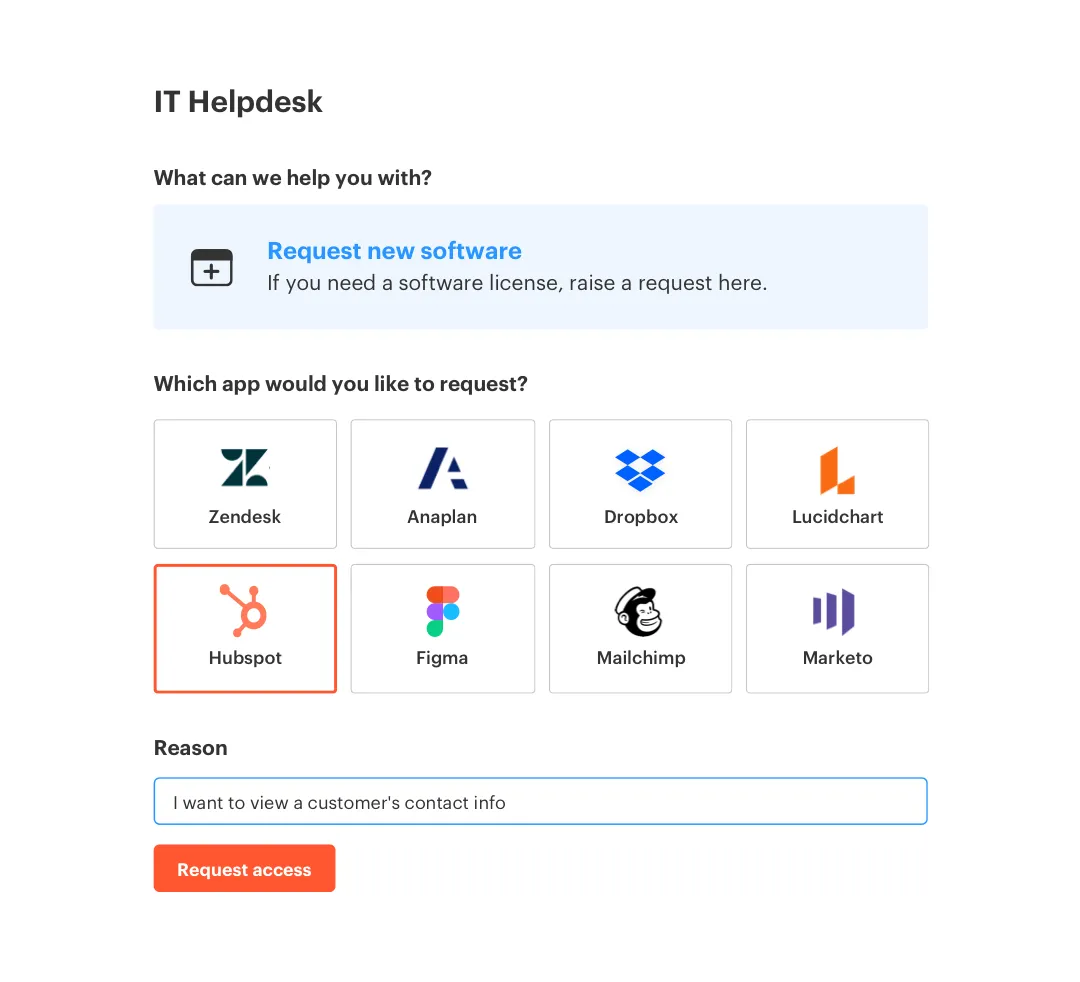
The easiest place to start is a sanctioned app catalog. Employees pick the app, choose the role, and submit with the right context up front. That alone cuts a lot of back-and-forth because IT isn't triaging vague requests like "need access to analytics ASAP."
Route approval to the right owner, not the nearest admin
Approval speed depends less on tooling than on routing quality. Wrong approver, slow cycle. Every time.
So define approval using what I call the 3-owner rule:
- Manager approval for low-risk standard access
- App owner approval for business tool entitlements
- Specific user approval for sensitive or exception-based access
If an app doesn't fit one of those three, you probably haven't defined ownership well enough. That's the uncomfortable truth. And yes, some orgs prefer broad IT ownership because it's simpler. I get it. Early on, that's often pragmatic. But past a certain scale, centralized approval becomes a queue problem, not a control model.
One advertising company scaled from 100 to 500 employees and ran into this exact issue. Tuesdays became a flood of repetitive access requests, often missing details and stuck because ownership was unclear. Once they launched a self-service catalog inside Jira Service Management, they processed more than 500 app requests in six months and saved more than 70 hours of IT time. Not magic. Just clearer routing and less rework.
Make revocation part of the original design
Most access workflows are built for grant, not revoke. That's a mistake. If revocation isn't in the design on day one, you end up with standing privilege by default.
Think of access like a hotel keycard. It should open the door for the stay you approved, then stop working. You shouldn't need a separate process to remember the guest checked out.
That means your workflow should answer three revocation questions before launch:
- Does this entitlement expire automatically?
- Can the same mechanism remove access that granted it?
- Will the revocation write back to the Jira record?
If the answer is no, expect privilege creep.
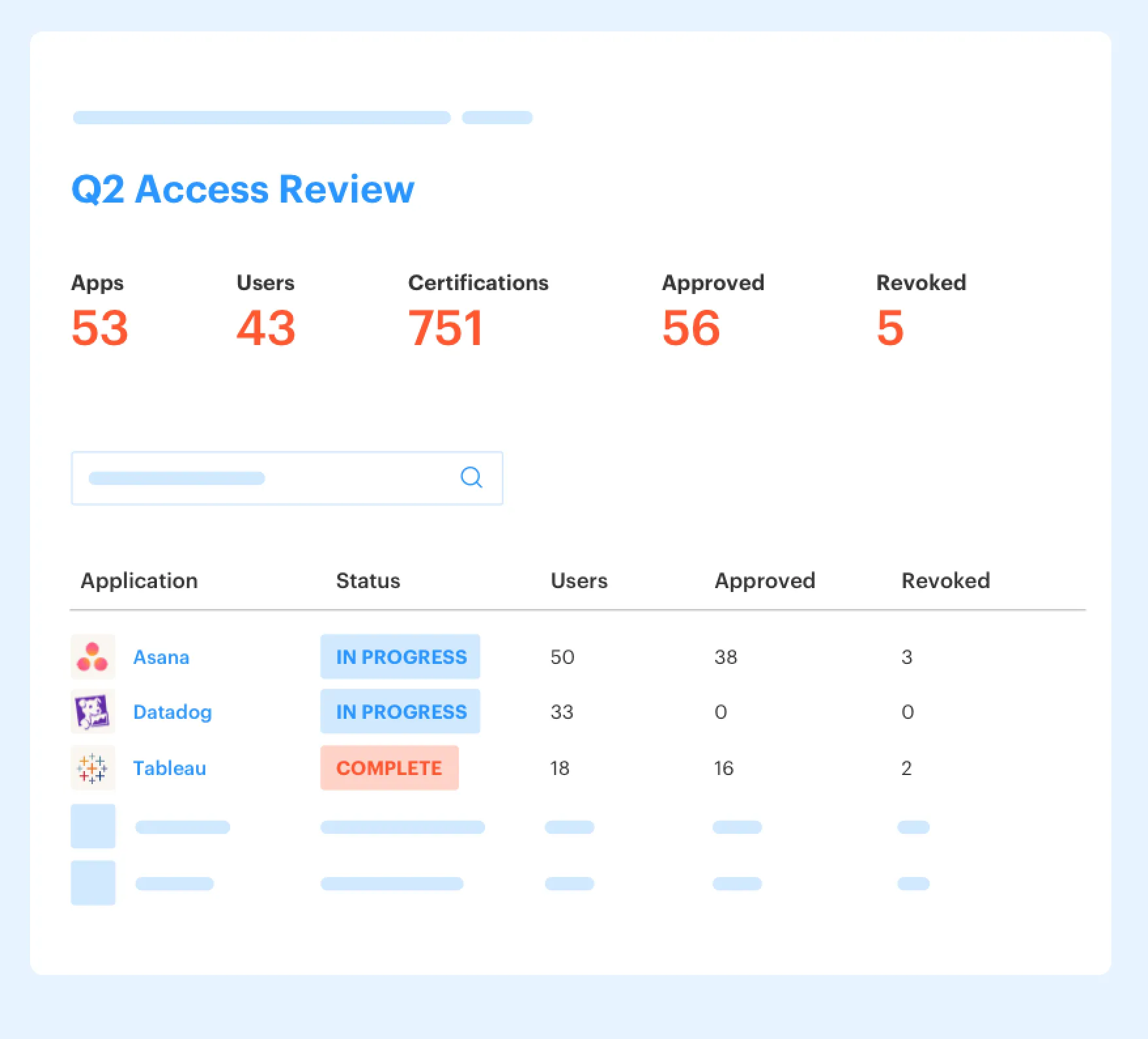
This is also where access reviews matter. Reviews shouldn't be a disconnected spreadsheet ceremony. They should sit close to the original grant data, with usage context, reviewer accountability, and enforced revoke actions. Otherwise teams rubber-stamp because the process is too annoying to complete honestly.
Use a maturity ladder, not a big-bang rollout
Big-bang governance rollouts usually fail because they ask teams to redesign everything at once. Better move: climb in layers.
Here's the Jira-Native Governance Ladder I prefer:
- Centralize requests in Jira
- Standardize approvals in Jira and Slack
- Automate provisioning through IDP groups
- Add time-based access for elevated entitlements
- Run access reviews in the same system of record
- Add lifecycle actions and license cleanup where volume justifies it
If you're under 200 employees, steps 1 through 3 are often enough to create real lift. If you're over 500, you probably need steps 4 and 5 soon, because standing privilege and review debt pile up fast. If onboarding and offboarding volume is high, add lifecycle orchestration next.
That's the sequence. Not because it's elegant. Because it works.
Around this point, it helps to See how Multiplier works if you're trying to connect Jira, Slack, and your identity provider without rolling your own glue.
How Multiplier automates the access workflow inside Jira
Multiplier automates access requests in Jira by keeping the request in JSM, routing approvals in Jira and Slack, executing changes through the identity provider, and writing the evidence back to the Jira issue. That's the point. One operational thread. Fewer handoffs.
Multiplier turns Jira into the system of record for access work
Multiplier's Application Catalog gives employees a Jira-native self-service experience for sanctioned apps and roles. They can request through JSM, and the Slack app can mirror that same catalog for chat-based intake. No extra portal. No new workflow to teach users.
That matters more than people think. Adoption lives or dies on familiarity. If employees already use Jira and Slack, they use the process. If they need to remember some separate governance portal, they fall back to DMs.
Approval Workflows then route requests to the right people in Jira or Slack. Managers, app owners, or specific users can approve, and the action stays tied to the original issue. That closes one of the biggest audit gaps right away. You don't have a ticket in one place and a decision in another.
Multiplier provisions through your identity provider, not around it
This is the part I like most from an architecture standpoint. Multiplier's Automated Provisioning works through identity provider group mappings. So when a request reaches the approved state, it can call Okta, Entra ID, or Google Workspace to add or remove the user from mapped groups.
That's a better model than manual app-by-app provisioning for one reason: authority. The identity provider stays central. Changes are faster, easier to reverse, and easier to audit.
For elevated access, Multiplier's Time-Based Access can make access temporary by default. Requesters choose a duration such as 1, 6, or 24 hours. Once approved, the platform adds the user to the mapped group, starts a timer, and removes the membership at expiry. The grant and revocation both land on the Jira issue. Clean trail. Less standing privilege.
And for review cycles, Access Reviews run in JSM rather than spreadsheets. Reviewers see user and group context, plus last login data and recommendations. Keep or revoke becomes an actual decision with an actual enforcement path, not a checkbox exercise.
Multiplier also covers lifecycle work and license cleanup where teams need it
Some teams start with access requests only. Fair. Others quickly realize the same problem shows up in onboarding, transfers, offboarding, and unused licenses.

Multiplier's Post Functions let teams trigger identity lifecycle tasks directly from Jira workflow transitions. So onboarding can create accounts and add users to the right groups through supported identity providers, while offboarding can disable accounts and remove key memberships. No scripts required.
Auto Reclaim is another practical one, especially if SaaS waste is creeping up. It uses last-login telemetry from the identity provider to identify inactive users, warn them, and then revoke access if they stay inactive after the grace period. Important caveat: it's available on the Advanced edition, and it depends on accurate login data from the identity provider.
The broader point is this. Multiplier doesn't ask you to adopt a separate governance stack beside Jira. It makes Jira-native governance real by connecting catalog, approvals, provisioning, time-bound access, reviews, and lifecycle work through the same operational record.
If you want to stop rebuilding evidence by hand and start making audits ready by design, Get started with Multiplier.
The teams that move fastest make audits boring
Automate access requests in Jira isn't really about speeding up tickets. That's part of it. The bigger win is that speed, least privilege, and audit readiness stop fighting each other.
Most teams don't need another portal. They need fewer seams. Keep requests and approvals where work already happens. Push changes through the identity provider so they're authoritative. Make expiry and evidence automatic. That's how you get fast access without creating a bigger compliance mess later.
The best governance workflows are almost boring. Someone requests. The right person approves. Access is granted. It expires when it should. The Jira issue tells the story. That's the bar now.
Frequently Asked Questions
How do I set up time-based access requests in Multiplier?
To set up time-based access requests in Multiplier, follow these steps: 1) When submitting an access request through the Application Catalog in Jira or Slack, select the desired application and role. 2) Choose a duration for access, such as 1, 6, or 24 hours. 3) Once the request is approved, Multiplier will automatically provision access and set a timer to revoke it when the duration expires. This approach helps enforce least privilege and reduces the risk of standing access.
What if I need to revoke access after granting it?
If you need to revoke access after it's been granted, Multiplier makes this easy. Access revocation is built into the workflow: 1) Ensure that the access was provisioned via the identity provider groups. 2) When the access request is approved, Multiplier automatically tracks the grant and sets an expiry. 3) If you need to revoke access before the expiry, simply update the Jira ticket to remove the user from the group, and Multiplier will handle the rest, ensuring a clean audit trail.
Can I customize the approval workflow in Multiplier?
Yes, you can customize the approval workflow in Multiplier to fit your organization's needs. Start by: 1) Mapping workflow statuses in Jira to define who approves what. You can set default approvers globally or on a per-app basis. 2) Use the 3-owner rule to designate approvers based on the type of access requested. 3) Ensure that approvers receive notifications in Jira and Slack, allowing them to approve or deny requests quickly, keeping the process streamlined and efficient.
When should I consider using the Application Catalog?
You should consider using the Application Catalog when: 1) You want to streamline access requests and ensure that employees have a user-friendly way to request access to sanctioned applications. 2) You need to capture context upfront to avoid vague requests that slow down approvals. 3) You aim to maintain centralized control and auditability for all access requests, which Multiplier’s catalog provides by syncing with your identity provider.
Why does Multiplier integrate with identity providers?
Multiplier integrates with identity providers to ensure that provisioning is authoritative and efficient. This integration allows: 1) Automated provisioning of user access based on approved requests, reducing manual errors. 2) A consistent and reversible record of access changes, which is crucial for audits. 3) The ability to manage user entitlements directly through identity provider groups, making sure access is granted and revoked based on real-time needs.
Multiplier connects to your existing JSM setup in minutes. Try it free on the Atlassian Marketplace.


