


Getting started with Multiplier usually looks easier on a slide than it does in real life. The mistake most teams make is thinking access governance gets hard because approvals are complex. It usually gets hard because the work is split across Jira, Slack, your identity provider, and a pile of manual cleanup that nobody really owns.
I’ve seen this pattern a lot. A team buys a separate governance tool because it sounds more “complete,” then still runs intake in Jira, still nudges approvers in Slack, still provisions in Okta or Entra, and still rebuilds evidence for auditors by hand. So they added software, but didn’t remove the bottleneck.
Key Takeaways:
- Getting started with Multiplier works best when you start with one access workflow, not a giant governance rollout
- The real problem is usually tool sprawl, not lack of policy
- Fast access and least privilege can work together when provisioning and revocation run through your identity provider
- Jira-native governance gives IT and security teams one record for requests, approvals, changes, and evidence
- A good rollout starts with intake and approvals, then adds provisioning, time-based access, and reviews
- Slack matters more than most teams think because approvals die when people have to leave their normal workflow
Why Access Governance Gets Messy So Fast
Access governance gets messy fast because most companies split one workflow across four systems. The request starts in Jira, the approval happens in Slack or email, the change happens in the identity provider, and the evidence ends up in a spreadsheet. That structure creates delay by default. It also creates audit risk by default.

The old model creates work that doesn't need to exist
Most teams don’t actually have an access problem first. They have a coordination problem. You can write all the policies you want, but if every access request still depends on a human remembering the right group, chasing the right manager, and pasting screenshots into a ticket, the system is broken before the audit even starts.
That’s why separate IGA portals so often disappoint mid-market and high-growth teams. They add another place to log in, another workflow to manage, another admin surface to maintain. And the rest of the company still lives in Jira and Slack anyway. So now you’ve got two systems pretending to own the same process.
The cost shows up everywhere:
- slower approvals
- more standing access because nobody wants the backlog
- higher license waste
- ugly audit prep
- frustrated employees who just need the right app to do their job
Luno talked pretty openly about this kind of problem when access requests were coming in from Slack, email, and Jira at the same time. Once that happens, your team isn’t really doing governance. They’re triaging chaos. Luno’s case study makes that pretty clear.
The hidden bottleneck isn't policy. It's separation.
The real issue isn’t that IT and security teams don’t care about least privilege. It’s that their operating model fights them. Intake lives in one place. Approval lives somewhere else. Provisioning happens in the identity provider. Review evidence gets rebuilt later. So every request has handoffs. And handoffs are where speed dies.
I’d argue this is the core reframe if you want to get started with Multiplier the right way. Identity governance belongs in Jira, not another portal. Because Jira already owns service delivery. Slack already owns fast human response. Your identity provider already owns authoritative group membership. If you glue those together properly, a lot of the manual work just disappears.
And yeah, that emotional part is real too. It’s exhausting when your team is doing routine access work all week, then still gets blamed for being slow.
Manual governance breaks faster as headcount grows
Headcount growth exposes every weak spot in your process. A company can survive with a half-manual model at 80 people. At 400 people, it starts to crack. At 1,000, it gets expensive and risky.
Synthesia is a good example. They grew from roughly 100 to 400 employees in two years, and their IT requests were getting handled in Slack with tracking in Notion. That’s fine for a minute. Then it isn’t. Their Head of IT said a team of four could run IT Ops for a billion-dollar company with Multiplier in place. That’s the difference between adding headcount to absorb admin work and fixing the operating model itself. Atlassian also sees this same pattern in employee service management rollouts.
A Better Way to Get Started With Multiplier
Getting started with Multiplier works when you treat it like an operating model change, not a software install. You’re not just adding a plugin to Jira Service Management. You’re deciding that requests, approvals, provisioning, revocation, and evidence should live in one connected system. That’s the new way.
Start with one request path and make it the default
The best first move is simple. Pick one access request path and standardize it. Usually that means your JSM portal first, then Slack if your team approves heavily in chat. Don’t start with every edge case. Don’t start with every app in the company. Start with the highest-volume, lowest-drama requests.

This matters because early adoption depends on clarity. If employees still have three ways to ask for access, they’ll use all three. Then you’re back where you started. A visual app catalog inside JSM gives people one front door. That sounds small. It’s not.
VideoAmp saw this during growth. Their IT team was getting flooded with repetitive onboarding-related requests, and the issue wasn’t only volume. It was missing context and inconsistent routing. A self-service catalog changed that. New hires could find what they needed, and IT stopped being the choke point for routine asks.
In practice, your rollout can start with:
- choosing the request types that should show the catalog This is particularly relevant for get started with multiplier.
- deciding which apps are approved and visible
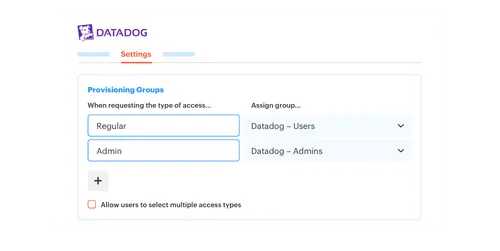
- mapping roles to the right identity provider groups
- setting the approval path for each app
Once that’s done, the process gets a lot cleaner. People request from one place. The issue gets created in Jira. The rest of the workflow has something solid to build on.
Put approvals where people already respond
Approvals don’t fail because managers hate governance. They fail because approval lives outside the flow of work. If someone has to leave Slack, find an email, remember context, and then click through some separate portal, your cycle time will suffer. Every time.
That’s why chat-based approvals matter more than vendors like to admit. A lot of governance products still treat approvals like a formal ceremony. Real companies don’t operate that way. Real companies approve things in the middle of everything else going on.
So if you want to get started with Multiplier and actually see adoption, make approvals easy and visible. Decide who should approve what:
- manager
- app owner
- specific user
- auto-approve for low-risk access
Then send those approvals into the channels where people already pay attention. Slack is usually the obvious move. Honestly, this is one of those details that sounds tactical but changes everything. When approvals are one click inside Slack or JSM, requests stop rotting in side channels.
If you want a closer look at how Jira-native governance changes the flow, see how Multiplier works.
Automate provisioning through the identity provider, not around it
This is where a lot of teams get confused. They think “automation” means some brittle direct connection into every SaaS app. That’s usually the wrong mental model. The cleaner approach is to provision through your identity provider groups, because that keeps the source of truth authoritative.

When you get started with Multiplier, this is one of the biggest shifts. After approval, the system can add or remove users from mapped groups in Okta, Entra ID, or Google Workspace. That means the Jira issue triggers the process, but the identity provider remains the control point. That’s a much better operating model than ad hoc manual changes or random scripts.
A few practical benefits show up fast:
- less copy and paste into admin consoles
- fewer group assignment mistakes
- faster access for common requests
- cleaner evidence written back to the Jira issue
Worth noting, this approach is especially strong for SSO apps where group membership drives entitlements downstream. It’s not magic for every weird legacy edge case. And that’s fine. Most teams get a lot of value by automating the clean 75% first.
Make elevated access temporary by default
Standing privilege is one of those problems everybody agrees is bad, but plenty of teams still tolerate because the operational alternative feels painful. That’s the old way. Policy-heavy least privilege without operational enforcement usually collapses under speed pressure.
The better move is to make elevated access temporary by default. If someone needs admin rights, production access, or a sensitive role, they should request a duration with the request itself. Then access should expire automatically without someone remembering to clean it up later.
This is one of the most important ideas if your goal is to get started with Multiplier for security outcomes, not just workflow speed. Time-based access changes the default from “grant and forget” to “grant and remove.” Small wording difference. Huge operational difference.
Stavvy is a good case here. They were trying to reduce privileged access and long-lived entitlements. They ended up cutting privileged access by 85%, which tells you what happens when you stop treating expiry as a manual chore and start treating it as part of the workflow. Their story is worth reading.
Run access reviews in the same system as the request history
Quarterly access reviews are where a lot of teams rediscover how broken their process is. Someone exports data. Someone massages a spreadsheet. Reviewers get a sheet with no context. Revocations lag behind decisions. Then auditors ask for proof and everyone goes digging, especially when evaluating get started with multiplier.
A cleaner model is to run reviews in the same system that already has the request history and change log. That way the reviewer sees who has access, what group they’re in, job title, department, last login, and the decision path tied back to Jira. Then revocations can actually execute instead of sitting in a spreadsheet as good intentions.
I’ve found this is where teams really start to trust the system. Because audits stop being a separate project. They become the output of normal work. That’s how it should be. If your audit posture depends on heroic spreadsheet cleanup, it isn’t strong.
Extend into lifecycle workflows once the access foundation is stable
A lot of teams want to start with onboarding, transfers, offboarding, app access, reviews, license control, and policy all at once. I get the instinct. But it usually slows the rollout down. Better to get one clean app access motion working first, then extend into lifecycle orchestration.
Once your team trusts the request and approval flow, you can add no-code workflow actions tied to Jira transitions. That means onboarding can create accounts, add users to the right groups, and assign licenses through the identity provider. Transfers can update access. Offboarding can disable accounts and remove key memberships.
That progression matters. First get the front door right. Then automate the rooms behind it.
How Multiplier Makes Jira-Native Governance Practical for Get started with multiplier
Multiplier makes Jira-native governance practical by connecting the systems your team already uses instead of forcing another portal into the stack. The product sits inside Jira Service Management, uses Slack for fast approvals and requests, and executes changes through your identity provider. That means the workflow stays unified from request to evidence.
One intake layer for requests, roles, and approvals
Multiplier starts with the Application Catalog inside JSM. Employees can browse approved apps as tiles, choose the right role, and submit a request through the portal or through the Slack app. That fixes one of the biggest problems from the old model: scattered intake across email, chat, and tickets.
From there, Multiplier applies Approval Workflows inside Jira and Slack. Admins can route approvals to a manager, app owner, or specific user depending on the app. Approvers get notified in JSM and Slack, and they can act without leaving the workflow. That alone cuts a lot of the delay that usually comes from chasing people around.
Then comes Automated Provisioning via identity provider groups. Once a request is approved and the Jira issue reaches the configured status, Multiplier can call Okta, Entra ID, or Google Workspace to add the user to the mapped groups. The action is written back to the Jira issue so the evidence is attached to the same record that started the request. That’s the operational win. Fewer handoffs. Less waiting. Less manual proof gathering.
Least privilege and audit evidence happen inside the workflow
This is where Multiplier gets interesting for security and compliance teams. Time-Based Access lets requesters choose a duration like 1, 6, or 24 hours during submission. After approval, Multiplier provisions the access and starts a timer. When the window ends, it removes the user from the mapped identity provider group and records the change in Jira. So least privilege gets enforced through the workflow, not just described in a policy doc.
Access Reviews stay in that same Jira-native model. Admins can create campaigns, set the apps in scope, assign reviewers, and let reviewers make Keep or Revoke decisions with user context and last login data in front of them. Revocations can then remove users from relevant identity provider groups and create Jira records documenting the change. That’s a much cleaner answer to quarterly review fatigue.
If SaaS waste is part of your problem, Auto Reclaim adds another layer. It uses real login telemetry from the identity provider to identify inactive users, warn them, and revoke access after the grace period if they stay inactive. That feature is on the Advanced edition, so teams should factor that into planning. Still, it’s a good fit if you want license control tied to the same governance workflow instead of living in a separate spreadsheet exercise.
Start Small, Then Let the System Do the Heavy Lifting
Getting started with Multiplier doesn’t require a giant transformation project. It requires one good decision first: put identity governance where the work already happens. For most Jira-centric IT and security teams, that means requests in JSM, approvals in Slack or JSM, changes through the identity provider, and evidence written back to Jira by default.
If you do that, a bunch of chronic problems get smaller fast. Access moves faster. Standing privilege drops. Reviews stop living in spreadsheets. Audits stop feeling like archaeology. And your team gets time back for work that actually matters.
Frequently Asked Questions
How do I set up the Application Catalog in Multiplier?
To set up the Application Catalog in Multiplier, start by navigating to your Jira Service Management (JSM) portal. 1) Choose the request types that will display the catalog. 2) Add approved applications and roles that users can request access to. 3) Ensure that the catalog is linked to the right identity provider groups for automated provisioning. This way, employees can easily browse and request access to the applications they need, streamlining the intake process.
What if I need to revoke access for a user?
If you need to revoke access for a user, you can do this directly through Multiplier. 1) Navigate to the relevant Jira ticket where the access request was made. 2) Use the Access Review feature to mark the user for revocation. 3) Multiplier will automatically remove the user from the mapped identity provider group and document the change in Jira. This ensures that your access management is both efficient and auditable.
Can I automate approvals in Multiplier?
Yes, you can automate approvals in Multiplier. To do this: 1) Set up Approval Workflows in your JSM portal, assigning approvers like managers or app owners based on the application. 2) When a request is submitted, the approver will receive notifications in both JSM and Slack, allowing them to approve or deny with a single click. 3) This integration keeps the process fast and ensures that all approvals are documented in the same system, reducing delays.
When should I use Time-Based Access in Multiplier?
You should use Time-Based Access in Multiplier when granting elevated permissions that need to be temporary. 1) During the access request, users can specify how long they need access (e.g., 1, 6, or 24 hours). 2) After approval, Multiplier will provision access and set a timer to automatically revoke it when the time expires. This approach minimizes the risk of long-standing privileges and helps maintain security compliance.
Why does Multiplier integrate with identity providers?
Multiplier integrates with identity providers like Okta, Azure AD, and Google Workspace to streamline user provisioning. 1) This integration allows Multiplier to automatically add or remove users from the appropriate groups based on access requests. 2) It ensures that the source of truth for user access remains authoritative and reduces manual errors. 3) By automating these processes, Multiplier helps your team save time and improve security.


