


If you are asking how to prepare for audits in identity governance, start months earlier inside Jira and Slack. The work that produces clean evidence, fast approvals, and least privilege is daily, not seasonal. I learned the hard way that firefighting in Q4 is a tax on everyone, and the funny part is you can avoid most of it with a few structural decisions.
Auditors do not want stories. They want proof. Who asked, who approved, what changed in the identity provider, when it expired, and where the evidence lives. If that proof is split across tickets, emails, and spreadsheets, you will be stuck reconciling gaps. Put the process where your team already works, then let the right system write the receipts for you.
Key Takeaways:
- Treat “How to Prepare for Audits in Identity Governance” as year-round operations, not a once-a-year scramble
- Keep requests, approvals, provisioning, and expiry in Jira so the audit trail writes itself
- Run approvals in Slack for speed, but anchor evidence to the Jira record
- Enforce time-bound access so standing privileges do not creep back in
- Automate provisioning through your identity provider for authoritative, auditable changes
- Run access reviews in Jira and revoke access automatically when reviewers say remove
- Reclaim inactive licenses based on real login data to cut waste before audit season
Why Preparing for Audits in Identity Governance Starts in Jira
Audit readiness in identity governance starts where the work happens, inside Jira and Slack. The fastest path to clean evidence is unifying requests, approvals, provisioning, and expiry in one system of record. When the record is complete by default, you stop rebuilding proof later.
Evidence Lives or Dies Where Work Happens
Auditors ask a simple question that scares teams every year. Show the proof. If your approvals sat in email, your changes happened in Okta or Entra, and your notes live in a spreadsheet, you just created a reconciliation project. I have watched teams lose days stitching this together after the fact.
Put the entire flow into Jira, from intake to completion. Approvers can still act in Slack for speed, but the anchor is the ticket. The identity provider handles the add or remove, and the result lands back on the issue as evidence. That is the difference between a clean pull and a fishing expedition.
The bonus is operational. New agents onboard faster, managers see status at a glance, and leadership trusts the numbers. You get audit readiness as a side effect of doing the work in one place, not as a separate chore.
Least Privilege Is an Operations Problem, Not a Policy Doc
Policies do not enforce themselves. If you rely on “should” and “must” in a PDF, you will drift. The fix is operational, not philosophical. Make elevated access temporary by default, drive changes through group assignments in the identity provider, and ensure every grant has a planned end.
You can love control frameworks and still miss the point. Real least privilege is the combination of time-bound access, fast approvals for the right roles, and automatic revocation. Embed those rules in the workflow, then let the system do the boring part.
Auditors notice when expiry is enforced, not just promised. They also notice when you can show last login data for a user who somehow still had a paid seat. That is not a fun moment.
The Real Bottleneck: Split ITSM and IGA Make Audits Hard
The split between ITSM and a separate IGA portal creates slow access, standing privileges, and messy audits. Tickets in Jira, approvals in email or chat, and manual changes in the identity provider invite errors. Pulling evidence later becomes guesswork.
Tickets in Jira, Approvals in Email, Changes in the IDP
That workflow sounds normal because most teams run it. A requester opens a Jira ticket. Someone approves in email. An admin adds the user to a group in the identity provider. A screenshot may get pasted into the ticket. Weeks later, no one remembers to remove the access.
Fragmentation is why audits feel risky. Each handoff drops context. Each channel becomes a source of truth. When the auditor asks for a 90-day sample, you end up matching timestamps across systems and hoping they line up.
There is a cleaner way. Keep the request in Jira, route the approval in Slack tied back to the ticket, and execute the change through the identity provider with results posted to the issue. Now you have one story, not three.
Spreadsheets Are Not an Audit System
Spreadsheets have a role. They are not a system of record. Review cycles in a sheet drift, comments disappear, and revocations depend on someone remembering to run the playbook. Auditors know this. You know this.
Control frameworks expect consistent, repeatable processes with traceable outcomes. The AICPA SOC 2 Trust Services Criteria call for change management and access control evidence that you can actually verify. The NIST SP 800-53 access control family is explicit about authorization, least privilege, and periodic review.
What wins audits is not a nicer spreadsheet template. It is treating governance as an operational workflow that captures decisions and enforces outcomes automatically.
Audit Costs You Can Measure Right Now
Audit preparation has hard costs you can measure. Time chasing approvals. Time provisioning. Time assembling evidence. Risk from standing access. Waste from unused licenses. Tally it honestly, then decide if you want to keep paying that bill.
Time Lost to Chasing Approvals and Screenshots
Teams lose hours every week pinging managers for approvals. Add more hours for copying data into tickets, grabbing screenshots, and updating sheets. Across a quarter, that turns into weeks. I have seen small IT teams give up on clean evidence because they ran out of patience.
The more fragmented the flow, the more delay you accept. Approval in email, change in the IDP, evidence in a drive folder. Meanwhile, a requester waits, a project stalls, and leadership wonders why access takes so long. That is the quiet cost that never shows up on a budget line.
There is also error risk. Manual steps cause drift. Drift causes rework. Rework burns time during audit week when you can least afford it. The loop is expensive.
Standing Access, License Waste, and Risk Exposure
Standing access is the opposite of least privilege. It creates risk. It also creates license waste. If you cannot show last login history and revoke unused seats, you will pay for accounts no one touches. A lot of companies quietly accept this.
You do not need to. Usage-based reclamation plus time-bound access cuts both risk and cost. ISO 27001 expects operational controls that reduce exposure, and the ISO/IEC 27001 overview makes the case for measurable controls over access.
The punchline is simple. If you automate removal on expiry and reclaim licenses based on actual login activity, you walk into audits with fewer exceptions and a cleaner spend profile.
What Audit Week Actually Feels Like for Your Team
Audit week exposes fragility. If your system is solid, it feels calm. If not, it feels like a fire drill. You can sense the difference by lunchtime on day one.
Fire Drills, Late Nights, and Second Guessing
Ever had that sinking feeling when an auditor’s sample list hits your inbox and half the approvals live in email threads you cannot find? You ping five people. Someone is on vacation. Screenshots are missing. The ticket is vague. You start second guessing everything.
I have been there. You tell yourself it will be fine. It is not fine. Slack messages pile up. You start exporting CSVs from your IDP and hope the dates align with the tickets. It gets late. The team is tired. People get defensive.
A lot of this pain is optional. Not easy, but optional. The cure is building processes that make the right thing the default. Then audit week turns into a week, not a month.
The Hidden Toll on Trust and Focus
Leaders want to trust that access is under control. When the system is broken, trust erodes. Security doubts IT. IT doubts the business. The business doubts the process. Meanwhile, product teams lose focus because they cannot get the access they need on time.
You can restore that trust. Show fast approvals that are still governed. Show expiry that actually triggers. Show a review cycle that removes what is not used. When you do, the conversations change. People stop arguing about process and start talking about outcomes.
That shift is worth more than any single control. It is cultural. It sticks.
A Jira-Native Way to Prepare for Audits in Identity Governance
The most reliable way to prepare for audits in identity governance is to run a Jira-native workflow that produces evidence every day. Route approvals in Slack, execute changes through your identity provider, and enforce expiry automatically. Auditors ask for proof, and you already have it.
Design Principles That Stand Up in Front of an Auditor
Good design wins audits. The system should be simple to follow and hard to bypass. Keep these principles in mind, especially before growth spikes or a new audit cycle starts.
Build on one source of truth. Jira is the anchor. Slack is for speed. The identity provider is authoritative for adds and removes. Every change ties back to the ticket that kicked it off. No detours, no side channels.
Limit standing privilege. Time-bound access is the default, especially for elevated roles. Your process should make it easier to request a short window than to keep access forever. The evidence will speak for itself later.
Signals you are on the right track:
- Each request has a ticket that shows who asked, who approved, and what changed
- Approvals happen in Slack, but the record lives in Jira
- Provisioning and revocation run through group assignments in the identity provider
- Elevated access always has an expiry, with automatic removal on end
- Review campaigns run in Jira with usage context and enforced revocations
Daily Workflows That Produce Evidence By Default
Your team should not have to remember to collect evidence. The workflow should write it for them. That is the whole game. If you get this right, audit prep becomes a filter, not a construction project.
Start by centralizing access requests in a Jira portal with a clear app catalog. Make approvers obvious. Push approvals to Slack so people act fast. When approved, call the identity provider to add the user to the right group. Post the result back on the ticket. Done.
Next, enable time-bound access for anything sensitive. Expiry should remove the group membership without a reminder. Round it out with access reviews that live in Jira. Reviewers see usage, make a call, and the system enforces it. That is governance that survives growth.
Ready to turn this into a system your team will actually use? Learn more about Multiplier.
How Multiplier Makes Audit Readiness Real Inside Jira
Multiplier makes audit readiness real by embedding the entire identity governance flow in Jira and Slack, then executing changes through your identity provider. Requests, approvals, provisioning, expiry, and reviews all land on the ticket. That is the evidence auditors ask for.

From Request to Provisioning Without Leaving Jira
Multiplier’s Application Catalog puts a visual app store on your Jira Service Management portal or in Slack. Employees pick the sanctioned app and role, submit, and a Jira issue is created with the right fields. Approval Workflows route to managers or app owners, and approvers can act in Slack or in JSM without breaking the chain of custody.
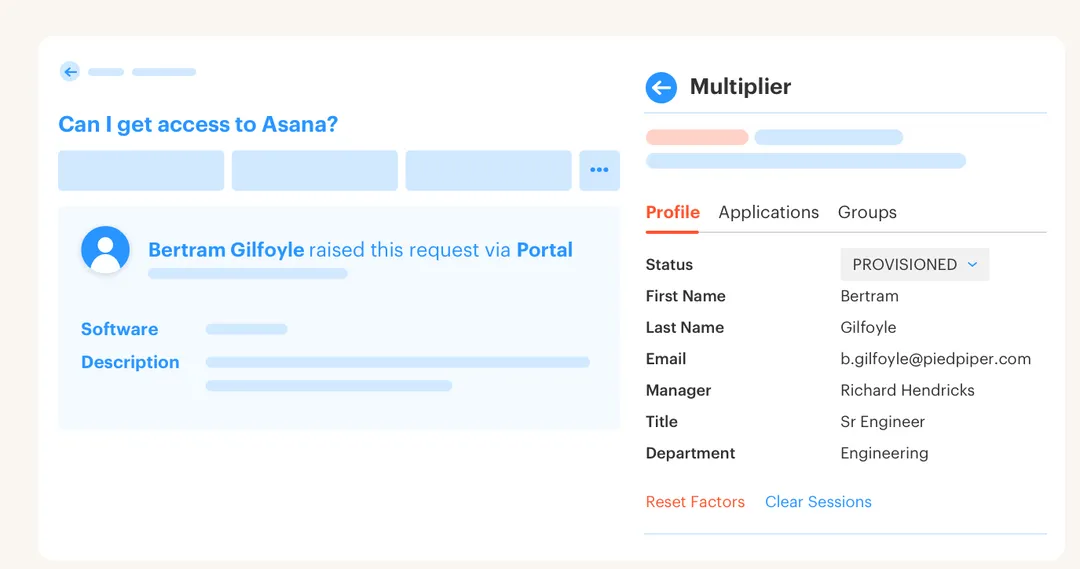
Once approved, Automated Provisioning calls your identity provider to add the user to mapped groups. Success or failure posts back to the ticket. No copy and paste, no screenshots, no guesswork. For audit requests that ask for who changed what and when, the record is already there.
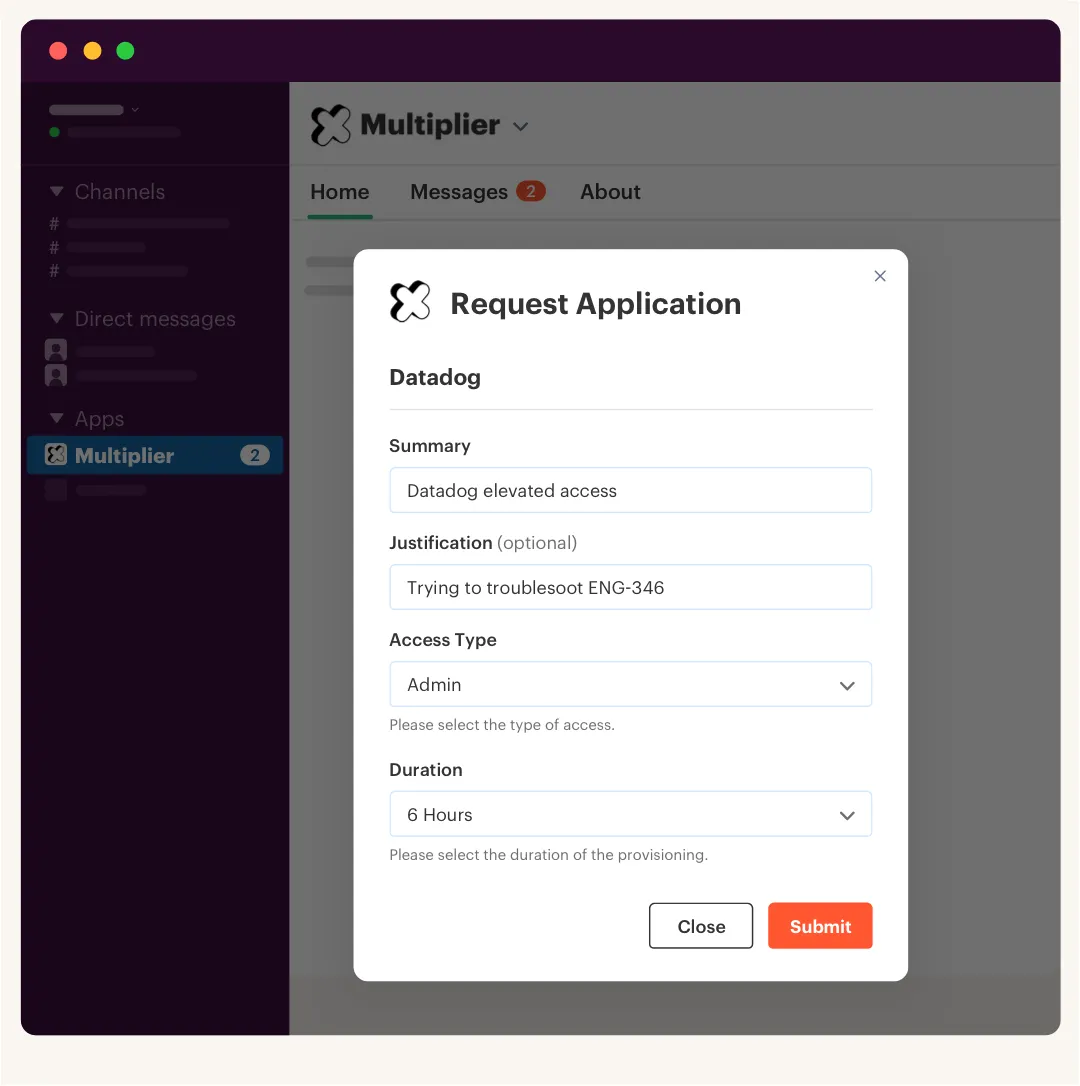
You feel the impact in two places. Cycle time drops because the system removes manual handoffs. Exceptions drop because the path is guided. That is what auditors notice, fewer gaps and faster answers.
Want to see the catalog, Slack approvals, and group-based provisioning in action end to end? See how Multiplier works.
Time-Bound Access and Reviews That Actually Enforce Change
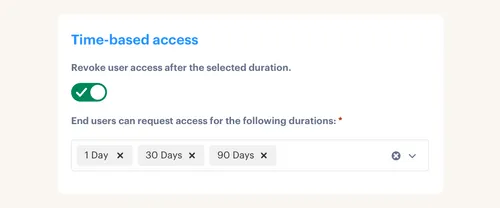
Least privilege only holds if expiry is enforced. Multiplier’s Time-Based Access makes elevated access temporary by default. Requesters pick a duration, the system provisions through the identity provider, and removal happens automatically on expiry. The Jira issue logs the grant and the revocation for clean proof.
Access Reviews replace spreadsheets with a Jira-native campaign. Reviewers get usage context like last login, then mark Keep or Revoke. Multiplier removes the group membership automatically and records the outcome. If you care about cost, Auto Reclaim can remove unused licenses based on real login telemetry on the Advanced edition, which reduces waste that auditors often flag.
The callback to earlier pain is clear. The hours you spent chasing approvals and screenshots shrink because approvals happen in Slack and evidence writes to Jira. The risk from standing access drops because expiry is automatic. The waste from unused licenses falls because removal is based on facts, not hunches. That is audit readiness you can prove.
Before we wrap, if you want a lean IT footprint that still passes tough audits, you can start small and expand as you go. Get started with Multiplier
Conclusion
Audit readiness is not a slide deck. It is a daily system that makes the right outcome easy and the wrong outcome hard. Put governance where work happens, enforce time-bound access by default, run reviews that actually remove access, and let the identity provider be the source of truth. You will feel the calm during audit week. And your auditor will see it in the evidence.
Frequently Asked Questions
How do I set up time-bound access in Multiplier?
To set up time-bound access in Multiplier, follow these steps: 1) When submitting an access request through the Jira Service Management portal or Slack, choose the duration for access (like 1, 6, or 24 hours). 2) After approval, Multiplier will automatically provision access and set a timer to remove the user from the group once the time expires. 3) Ensure that your apps are configured to allow time-based access to take full advantage of this feature. This helps enforce least privilege and reduces the risk of standing access.
What if I need to revoke access quickly during an audit?
If you need to revoke access quickly during an audit, you can use Multiplier's access review feature. 1) Launch an access review campaign in Jira, selecting the relevant applications and reviewers. 2) Reviewers will see user details, including last login dates, and can mark access as 'Keep' or 'Revoke'. 3) Once decisions are made, Multiplier automatically revokes access and documents the changes in Jira, ensuring you have a clear audit trail. This process streamlines revocation and helps maintain compliance.
Can I automate access requests through Slack?
Yes, you can automate access requests through Slack using Multiplier. 1) Employees can type '/request' in any Slack channel or use the Multiplier Slack app to open the app catalog. 2) They select the application and role they need and submit the request. 3) A Jira ticket is automatically created, and approvers receive notifications in Slack to act quickly. This integration reduces context switching and speeds up the approval process.
When should I conduct access reviews?
You should conduct access reviews regularly, ideally quarterly, to ensure compliance and security. 1) Use Multiplier's access review feature to create campaigns that allow reviewers to assess user access based on their activity. 2) Set specific dates for the start and end of the review campaign to keep it structured. 3) Regular reviews help identify and revoke unnecessary access, ensuring your organization maintains least privilege and reduces potential risks.
Why does my team need a centralized access request system?
A centralized access request system, like the one provided by Multiplier, helps streamline operations. 1) It consolidates requests, approvals, and provisioning into one platform, reducing manual errors and delays. 2) By using Jira as the system of record, all evidence is automatically documented, making audits easier. 3) This approach enhances visibility and accountability, ensuring that access is managed efficiently and securely.


