


82% of access work disappeared off IT’s plate at one fintech once they stopped pretending Slack messages were a workflow. If you’ve spent even one ugly Tuesday integrating communication tools with access workflows, you know the feeling: the requests come in faster, but the governance gets sloppier.
That’s the part people don’t say out loud. Chat is great at creating motion. It’s terrible at creating control unless the workflow underneath is built to hold it. So yes, integrating communication tools with access can absolutely speed things up. But if Jira, your identity provider, and your evidence trail aren’t tied together, all you really did was make the mess arrive sooner.
Key Takeaways:
- Integrating communication tools with access workflows only works if Jira stays the system of record
- The real bottleneck isn’t chat speed, it’s the split between ITSM, identity, and evidence
- If approvals happen in Slack but provisioning is still manual, you’ve only moved the queue
- Time-bound access should be the default for elevated roles over 1 hour, 6 hours, or 24 hours
- Access reviews get cleaner when review decisions and revocations happen in the same workflow
- Usage-based license cleanup matters once you cross roughly 200 employees or 100+ SaaS apps
- Governance inside Jira creates audit evidence as a byproduct, which is the whole point
Why Integrating Communication Tools With Access Workflows Usually Breaks
Integrating communication tools with access management usually breaks in the exact same spot: the front door gets modernized, the back office stays manual. Chat makes intake feel clean. It does not fix approval logic, provisioning, revocation, or evidence. So the request looks slick while the operating model underneath is still held together with browser tabs and good intentions. Which raises the real question: where does a governed workflow actually need to live?

The chat-first trap looks good in week one
At 80 employees, almost any access process can fake competence. Someone asks for GitHub, Figma, or NetSuite in Slack. IT sees it, pings a manager, waits around, jumps into Okta, and grants the group. Done. It feels lightweight. Honestly, it even feels kind of smart.
Then the company doubles. Then doubles again.
A fast-growing fintech in the reference material had requests coming from Slack, email, and Jira all at once. Hundreds of them. IT was chasing approvals and manually assigning Okta groups, spending 5 to 30 minutes per request. Do the math and it gets dumb fast: 200 routine requests a month turns into 16 to 100 hours of human effort on repetitive access work. That’s not an ops system. That’s a payroll leak wearing a hoodie.
And yes, chat-first exists for a reason. It lowers friction, people already live there, and adoption is almost automatic. Fair. But convenience at intake is not the same thing as governance at scale. Once integrating communication tools with access becomes a volume problem, the shortcuts stop being charming.
The real problem isn’t Slack, it’s the split
Four systems for one access request is where the wheels come off. Jira holds the ticket. Slack holds the approval. Okta or Entra holds the actual permission. Then, weeks later, someone rebuilds the audit trail in a spreadsheet because nobody trusts the chain of events. That isn’t integration. That’s serialized confusion.
I use a simple diagnostic here: the Split-System Test.
- If the request starts in one system
- and approval happens in another
- and provisioning happens in a third
- and evidence lives in a fourth
...you do not have integrated governance. You have handoffs.
And handoffs are where speed dies, ownership blurs, and audits get weird. Think of it like a relay race where every runner uses a different baton. Slack passes a screenshot. Jira passes a ticket. Okta passes a group membership. The auditor, poor soul, gets to figure out whether they all belonged to the same event. That’s why integrating communication tools with governance feels faster to the requester but slower to everyone accountable for risk.
What this feels like on a bad Tuesday
At 8:14 AM Tuesday, a JSM admin is sitting in Slack, Jira, Okta, and Google Sheets with 14 tabs open. An onboarding batch landed Monday night. One manager approved access in Slack with a thumbs-up emoji but never chose a role. Another app owner missed the message entirely because the approval request got buried under channel chatter. By noon, three new hires still can’t work, one contractor has more access than they should, and Security is asking how expiry will be enforced for elevated permissions.
That’s the lived experience. Not theory. Not a whiteboard swimlane.
Now, to be fair, some teams choose a separate governance suite because they want stricter controls, cleaner policy management, and a purpose-built interface. That’s a legitimate reason. But if employees and approvers keep living in Jira and Slack anyway, the control plane and the work plane split apart. On paper, you’re governed. In reality, you’re reconstructing decisions after the fact. So the next move isn’t “more tooling.” It’s putting communication inside the governed workflow instead of beside it.
The better model is communication inside governance, not beside it
The fix is not to remove Slack. The fix is to demote it. Integrating communication tools with access should mean chat accelerates a governed workflow, not replaces one. Jira owns the record. Slack speeds up the decision. The identity provider executes the change. One workflow. One source of truth. One evidence trail. So if that’s the model, where do you start without automating the wrong thing first?
Start with a maturity diagnosis before you automate
Before you automate anything, ask four blunt questions. Are requests still arriving through Slack or email with missing context? Are approvers being chased manually? Does the identity provider grant access automatically once approval happens? And can you prove, from one system, who asked, who approved, what changed, and when it was removed?
That’s the quickest way to place yourself on the 4-Level Access Workflow Spectrum:
Level 1: Chat Chaos
Requests come through Slack or email, approvals are ad hoc, provisioning is manual.Level 2: Ticketed but Manual
Requests land in Jira, but approvers are chased manually and admins still make changes by hand.Level 3: Approval-Driven Automation
Jira tracks the request, approvers act in Slack or Jira, and the identity provider handles provisioning.Level 4: Governed Lifecycle
Access is time-bound, reviews happen in-system, and inactive licenses are reclaimed automatically.
If you’re Level 1, fix intake before anything else. If you’re Level 2, automate provisioning next. If you’re Level 3, add time-bound access and review controls. That sequencing matters because integrating communication tools with a bad sequence just helps you scale the wrong bottleneck.
Put one system in charge, or nothing sticks
A governed workflow needs a home base. For teams already living in Atlassian, that home base should be Jira Service Management. Not because Jira is some mystical identity platform. It isn’t. But requests, SLAs, ownership, employee support, and operational accountability already live there. That’s where the muscle memory is.
This is where a lot of integrating communication tools with access projects go sideways. They accidentally make Slack the center. Big mistake. Slack is the speed layer, not the truth layer.
I like the Control Triangle here:
- Jira holds the request and the evidence
- Slack handles fast approvals and notifications
- The identity provider applies the actual change
Break one side of that triangle and the whole thing gets soft. If Slack approves but Jira doesn’t record it, audit quality drops. If Jira records but the identity provider isn’t authoritative, provisioning drifts. If the identity provider changes access without a tied request, traceability is gone. Clean integrating communication tools with governance is less about fancy UX and more about deciding which system is allowed to be true.
Design approvals around risk, not around org charts
What should go through one approver, and what should trigger extra control? That question matters more than whether the approval button lives in Slack or Jira.
Use the Risk-Lane Rule:
- If the role is low-risk and standardized, auto-approve or use one approver
- If the role touches production, finance, or sensitive data, require explicit approval plus time limits
- If the user needs access for less than 24 hours, default to time-bound access
- If ownership is unclear, don’t publish the app in the request catalog yet
A mid-market advertising company in the reference material hit this wall during growth. New hires showed up Monday, and by Tuesday IT had a queue full of “need access ASAP” requests with almost no usable detail. Once they centralized the app list and made roles requestable through a self-service catalog, the back-and-forth dropped hard. More than 500 app requests moved through in six months, and IT got back 70+ hours. Same people. Same apps. Better structure.
Now, I’ll concede the tradeoff: structure reduces improvisation. In edge cases, that can slow down unusual requests. True. But the opposite problem is worse. Loose workflows create generic requests that nobody owns and everybody delays. Speed without structure is just another form of queueing.
Time-bound access is where least privilege becomes real
Standing admin access is usually a paperwork problem disguised as a security problem. Everyone agrees least privilege is good. Then an incident hits, a release is blocked, or someone needs prod now, and temporary access quietly becomes permanent because nobody set the expiry at the time of grant.
That’s why the 24-Hour Default works.
If elevated access can be requested for 1 hour, 6 hours, or 24 hours, and then revoked automatically, cleanup stops being a separate project. The expiration is baked into the transaction. Before: IT grants admin, then remembers to clean it up later if they’re lucky. After: the grant and the revocation are one workflow.
A fintech company in the reference material cut privileged access by 85% by leaning into just-in-time access. Here’s the benchmark I’d use: if more than 20% of privileged users still hold standing access after 30 days, your least-privilege program is mostly theatre. Harsh? Maybe. Wrong? Not really.
Reviews and reclamation should clean up what approvals miss
Clean approvals do not eliminate drift; they just reduce the amount of drift you have to clean later. People change roles. Contractors linger. Paid licenses hang around because nobody wants to revoke something “just in case.” So once integrating communication tools with the front end is working, you need cleanup loops on the back end.
Use the Cleanup Pair:
- If you’re above 200 employees, run quarterly access reviews for sensitive apps
- If an app has paid seats and reliable login telemetry, reclaim licenses after 30 to 90 days of inactivity
- If the app is not tied to the identity provider, track the approval in Jira anyway, but don’t pretend revocation is automated
There is an exception here. In a very small environment with a tight app footprint, annual reviews can be enough. Fair. But once app count and headcount rise together, annual review turns into archaeology. People aren’t reviewing access anymore; they’re guessing at history. And when evidence goes cold, so does confidence. Which leads to the practical question: what does this model look like when it’s implemented well, not just described well?
What Multiplier does when Jira is the center of the workflow
Here’s the practical version. Multiplier works best when you’ve already made one key decision: identity governance should live in Jira, not in a separate portal people avoid until audit season. It brings request, approval, provisioning, time limits, reviews, and evidence into the same operational flow. That matters because integrating communication tools with governance only works when communication speeds the process up without becoming the system of record.
A Jira-native app catalog fixes intake before it fixes automation
Multiplier’s Application Catalog gives employees a self-service app store inside Jira Service Management, and that same catalog can be reached through Slack. So instead of sending vague “can someone grant this?” messages, people request a sanctioned app with the right role up front.
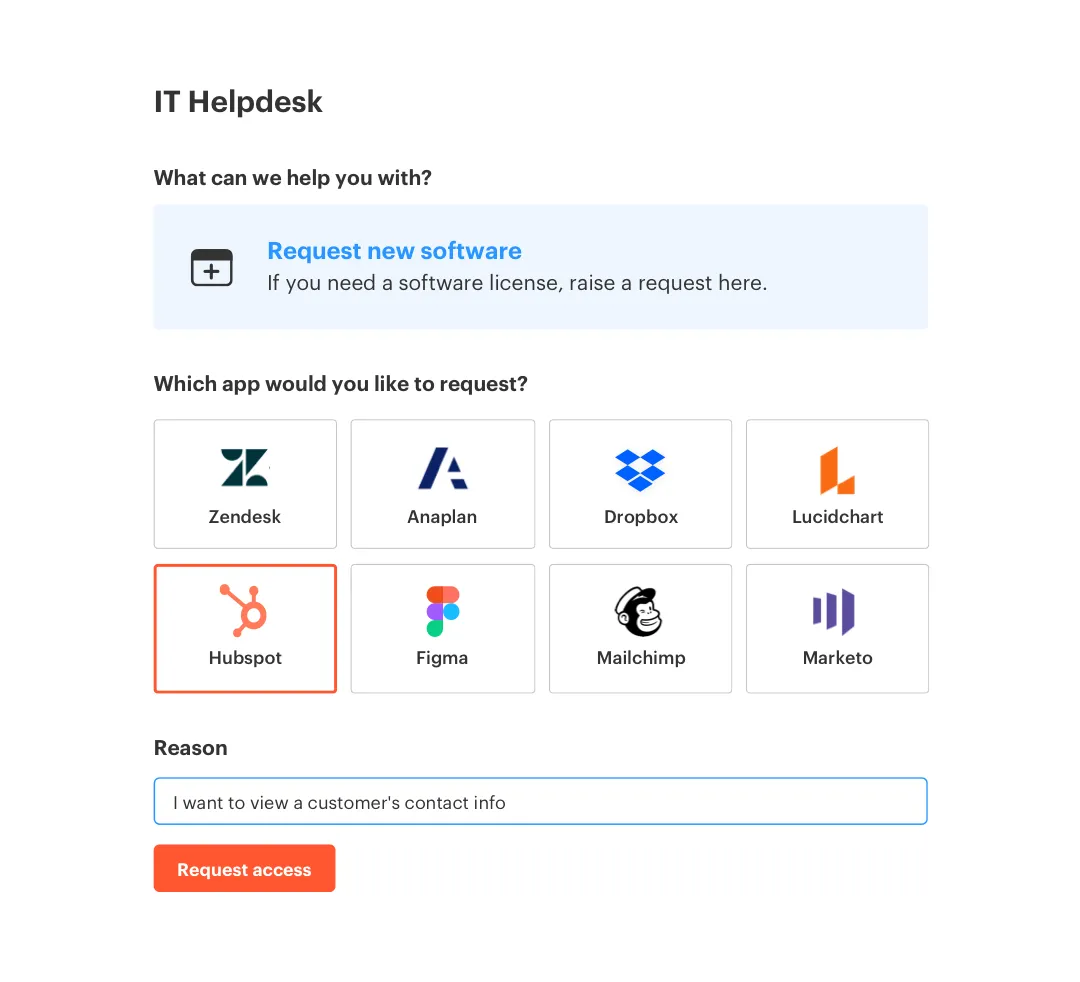
Small change. Big downstream effect.
Once the catalog is tied to approved apps and role-to-group mappings, intake gets cleaner immediately. Even if a team isn’t ready for full automation, every request still becomes a Jira issue, which means every access change starts building evidence on day one. Multiplier syncs apps and groups from Okta, Entra ID, and Google Workspace, so IT doesn’t end up maintaining a ghost inventory somewhere else. Intake quality is boring right up until you realize bad intake is what makes integrating communication tools with access feel chaotic later.
Slack approvals are fast because Jira still owns the record
Approvals only count if they can be proven later. That’s the whole trick.
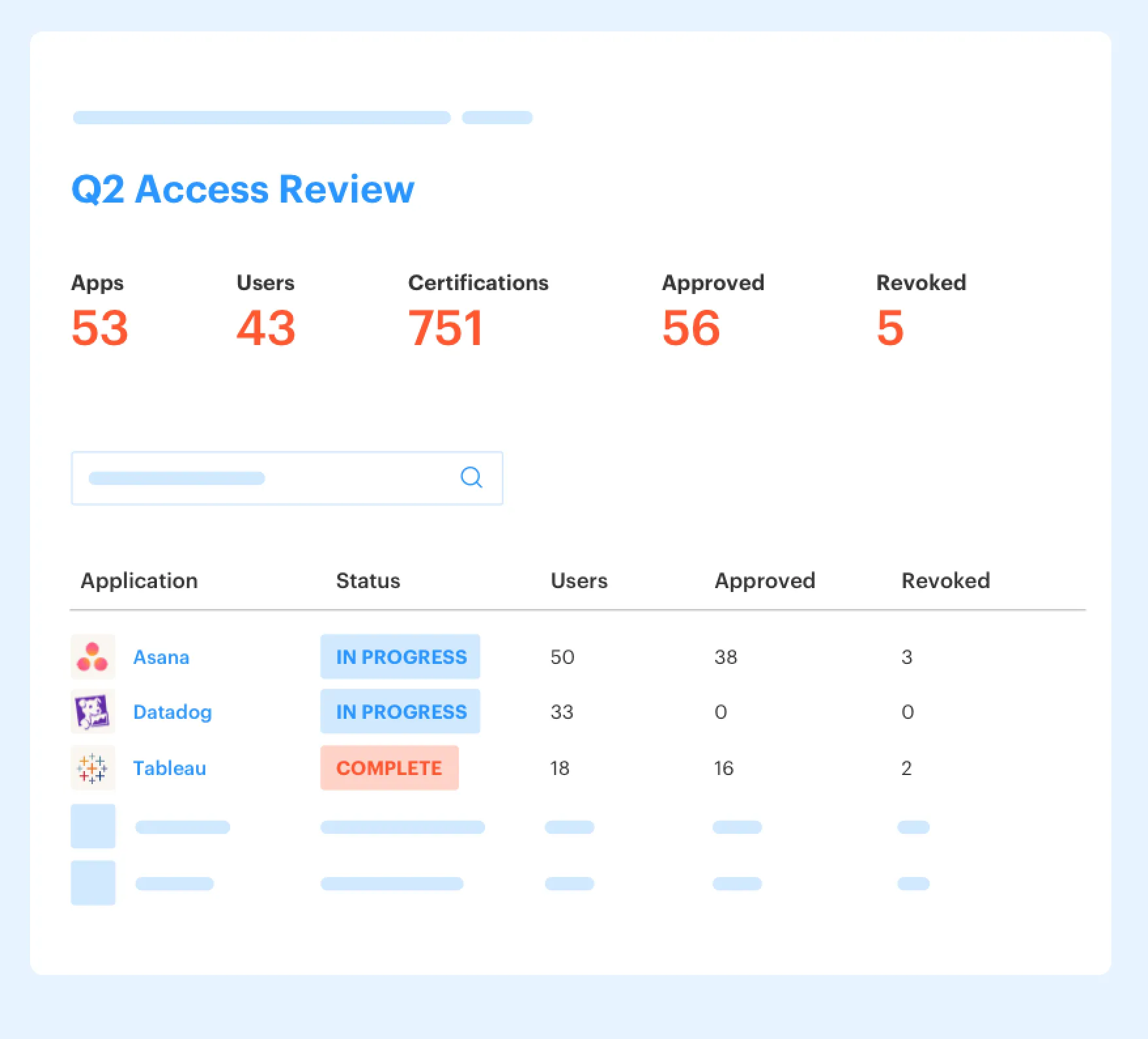
Multiplier’s Approval Workflows route decisions to the manager, app owner, or specific user, and approvers can act in Slack or Jira. But the approval still ties back to the Jira issue. So you get speed without losing evidence.
Then Automated Provisioning through identity-provider groups takes over once the request is approved. Multiplier calls the identity provider to add or remove the user from the mapped group, and the Jira ticket updates with success or failure comments. Before, an admin was copying details from Slack into Okta and hoping nothing got missed. After, the approved issue triggers the change and logs the outcome. That mechanism is why a team like Luno saw an 80% reduction in IT workload on access requests. Faster approvals alone don’t create that. Authoritative provisioning does.
Least privilege and audit cleanup stop being separate projects
Multiplier also closes the loop after access is granted. Time-Based Access makes elevated access temporary by default, with durations like 1, 6, or 24 hours and automatic revocation at expiry when access is provisioned through identity-provider group membership. Access Reviews run in Jira with reviewer dashboards, user context, and enforced revocations. Auto Reclaim identifies inactive users from identity-provider telemetry, warns them, and removes access after the grace period if they stay inactive.

That’s the shift. Evidence stops being a cleanup exercise and starts being a byproduct of normal work. Which sounds almost too simple, I know. But that’s usually the sign the architecture is right. When integrating communication tools with governance is done properly, the workflow feels lighter precisely because the controls got tighter.
Governance gets better when chat stops being the system
Integrating communication tools with access workflows is absolutely worth doing. Just don’t confuse communication with control. Put Jira at the center, let Slack handle fast decisions, let the identity provider do the authoritative provisioning, and make time limits and reviews part of the same workflow.
That’s the difference between faster messages and better governance. One looks modern in a demo. The other survives growth, security pressure, and audits.
Frequently Asked Questions
How do I streamline access requests for new hires?
To streamline access requests for new hires, you can use Multiplier's Application Catalog within Jira Service Management. This allows new employees to browse approved applications and select the roles they need right from the start. 1) Ensure the catalog is populated with all necessary apps and roles. 2) Encourage new hires to submit their access requests through the JSM portal or Slack, where a Jira ticket will be automatically created. 3) This setup helps capture all requests in one place, ensuring that IT can manage approvals and provisioning efficiently.
What if approvals are delayed in Slack?
If you notice delays in approvals via Slack, consider mapping your approval workflows in Multiplier to ensure accountability. 1) Set up notifications for approvers in Slack to remind them of pending requests. 2) Use the Approval Workflows feature to designate default approvers and streamline the process. 3) By keeping the approval tied to the Jira ticket, you maintain a clear audit trail, which can help in identifying bottlenecks in the approval process.
Can I automate license reclamation for inactive users?
Yes, you can automate license reclamation for inactive users using Multiplier's Auto Reclaim feature. 1) Set inactivity thresholds (e.g., 30 days) to identify users who haven’t logged in. 2) Configure notifications to alert users about their impending license revocation if they remain inactive. 3) If they don’t log in after the grace period, Multiplier will automatically revoke their access and document the change in Jira, helping you optimize your SaaS spend efficiently.
When should I conduct access reviews?
You should conduct access reviews quarterly, especially if your organization has over 200 employees or uses multiple SaaS applications. 1) Use Multiplier’s Access Review feature to create campaigns that allow you to review user access systematically. 2) Assign appropriate reviewers for each application to ensure thorough assessments. 3) This process helps identify inactive users and ensures that access remains compliant with your governance policies.


