


85% of privileged access can disappear when you stop treating expiry as a manual task. And if you're integrating identity providers with Jira but still rebuilding audit trails in spreadsheets, you're not done.
Most teams think the hard part is integrating identity providers with Jira. It isn't. The hard part is making that integration operational, so requests, approvals, provisioning, expiry, and evidence all happen in one flow instead of getting split across Jira, Slack, your identity provider, and a spreadsheet someone updates the night before the audit.
Key Takeaways:
- Integrating identity providers with Jira only pays off when Jira becomes the system where governance work actually happens
- If approvals happen outside the ticket, your audit trail is already weaker than you think
- Time-bound access is the fastest way to cut standing privilege without slowing the business down
- If more than 25% of access requests still need manual group changes, your integration is incomplete
- Quarterly reviews break when ownership, evidence, and revocation live in different systems
- The best setup uses Jira for workflow, the identity provider for execution, and Slack for speed
- Audit readiness should be a byproduct of normal work, not a separate project
Why Integrating Identity Providers With Jira Usually Falls Short
Integrating identity providers with Jira should give you one clean operating model for access. In practice, most teams only wire up intake, then leave approvals, provisioning, revocation, and audit evidence scattered across other tools. That partial setup creates the same old delays, just with better branding.

The integration is often real, but the workflow is still broken
A lot of teams get the first 20% done and call it a win. They connect Okta, Entra ID, or Google Workspace to Jira Service Management. They stand up a request form. Maybe they even auto-create tickets. Then the messy part starts.
An employee needs Figma admin access or a short window into prod. They open Jira. Good start. Then a manager approves in Slack, or worse, in email. IT checks which group maps to which role. Someone manually adds the user in the identity provider. A comment gets dropped into the ticket. Maybe a screenshot too. Expiry gets handled "later." That's the old process wearing a Jira badge.
I've seen this movie a lot. The team thinks they integrated identity providers with Jira. What they really did was centralize the first click.
The hidden bottleneck is the ITSM and IGA split
The real problem isn't Jira. And it isn't the identity provider either. It's the split between service management and governance.
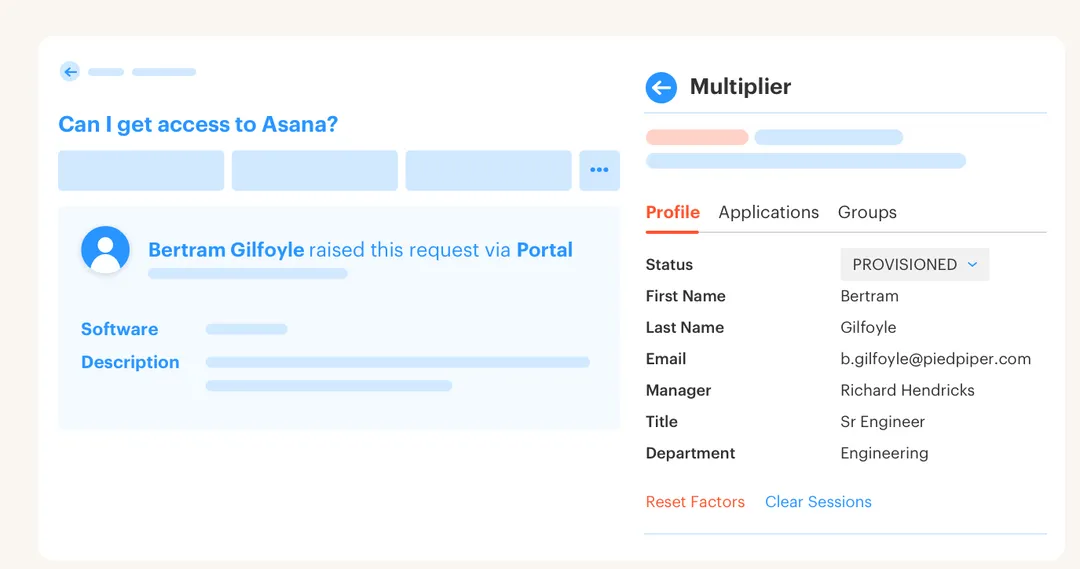
Jira is where work starts. Your identity provider is where the change needs to happen. If those two systems aren't tied together tightly enough, humans become the connector. Humans chase approvals. Humans look up the right group. Humans remember to revoke. Humans paste evidence together for auditors. That's where the cost shows up.
A simple diagnostic works well here. Look at your last 50 access requests and check four things:
- How many approvals happened inside the ticketed workflow
- How many changes were executed through the identity provider without manual group lookup
- How many time-bound requests revoked automatically at expiry
- How many had enough evidence in the Jira issue to satisfy an auditor without extra screenshots
If fewer than 35 of those 50 pass all four checks, your setup isn't really governance yet. It's coordinated manual work.
Fast growth exposes the cracks first
This breaks hardest during growth. A mid-market team can limp along at 20 requests a week. At 100 a week, weak process becomes a queue problem. At 300, it becomes a security problem.
One customer in a high-growth environment saw the pattern clearly. They grew from 100 to 500 employees, and Tuesdays became the day the IT queue filled up with access requests that didn't have enough detail to act on. Ownership was fuzzy. Approvals dragged. IT became the bottleneck. That's not a ticketing issue. It's what happens when your workflow has intake, but not enforcement.
And that's the part people feel. You're already overloaded, someone pings for urgent access, someone else asks for audit evidence, and now your team is doing detective work in three tools. That wears people down fast.
The Real Job of an Identity Provider and Jira Integration
Integrating identity providers with Jira should do more than create tickets. The real job is to let Jira handle workflow while the identity provider handles authoritative change. Once those roles are clear, access gets faster, least privilege gets easier, and evidence shows up by default.
Jira should own the workflow, not the entitlement logic
This is where a lot of teams get tripped up. They try to make Jira the place that stores every policy nuance and every entitlement mapping in a manual way. That gets messy. Fast.
Jira is really good at intake, workflow states, approvals, visibility, and service operations. Your identity provider is really good at group-based control and being the source of truth for who should have what. So use each for what it's good at.
If you're integrating identity providers with Jira, the cleaner model is this: Jira captures the request, routes approval, and records the full chain. The identity provider executes the add or remove based on mapped groups. If you find admins regularly choosing groups by memory after approval, stop and fix the mapping. That's your signal. Once manual group selection shows up more than 10 times per 100 requests, the process is drifting.
The best setups don't ask IT to interpret intent after approval. They make the requested role map directly to the right identity provider group ahead of time.
Time-bound access is where least privilege becomes practical
A lot of least privilege talk sounds good in policy docs and then falls apart in real operations. Why? Because permanent access is easier to grant than temporary access is to clean up manually.
That's why time-bound access matters so much. It makes the secure path easier than the lazy one. Requester picks a duration. Approval happens. Access gets granted. Then it expires automatically. Done.
One fintech team reduced privileged access by 85% after moving to a just-in-time model with automated expiry. More than 1,300 access requests were automatically revoked after their approved windows. That's not a nice-to-have. That's the difference between least privilege as a principle and least privilege as a working system.
There is a fair counterpoint here. Not every app or environment can be fully auto-revoked if the grant doesn't flow through identity provider group membership. That's true. But that limitation doesn't weaken the model. It sharpens the implementation rule. If the access is sensitive and repeatable, move it onto group-based provisioning first. If it can't be auto-revoked, treat it as an exception, not the default.
Audit evidence should be created by the work itself
This is the part I feel strongest about. Audits should be ready by design in Jira, not rebuilt in spreadsheets.
Most audit pain isn't really audit pain. It's evidence fragmentation. The request is in Jira. The approval is in email or Slack. The entitlement change is in Okta or Entra. The reviewer comments are somewhere else. Then somebody spends two days stitching that back together.
A better rule is simple: if an access event requires a screenshot to explain what happened, your workflow is incomplete.
Use this threshold. For any app in scope for SOX, ISO 27001, or SOC 2, the Jira issue should show who requested access, who approved it, what role was granted, when it was granted, and when it was revoked if temporary. If your auditor still needs side evidence more than 10% of the time, the process isn't audit-ready.
That might sound strict. I think it's the right kind of strict.
What Good Access Governance Looks Like Inside Jira
Good access governance inside Jira is operational, not theoretical. Requests come through one front door, approvals hit the right people fast, provisioning runs through the identity provider, and reviews happen in the same system where the original work already lives. That setup removes delay without loosening control.
Start by standardizing the request surface
You can't govern what enters through five different channels. That's why the first move is usually boring, but important. Standardize where requests start.
If requests are still coming through Slack messages, email, hallway asks, and random tickets, fix that before you do anything fancy. One catalog. One request flow. One ticket record. That's the base layer.
A good test is this: can a new employee, on day two, find the apps they need without asking IT who owns them? If the answer is no, your request layer is still tribal knowledge. A team in advertising solved this by launching a self-service app catalog inside Jira Service Management. They processed more than 500 app requests in six months and saved more than 70 hours of IT productivity. That didn't happen because forms got prettier. It happened because sanctioned access moved into one predictable path.
And yes, there are exceptions. Some non-SSO apps will still need manual provisioning. Fine. Keep them in the same request surface anyway so approvals and evidence stay consistent.
Route approvals based on ownership, not whoever is online
Approval speed has less to do with tool choice than ownership clarity. If nobody knows who should approve an app, your SLA is already toast.
The clean rule is straightforward. Low-risk access can be auto-approved or use default routing. Sensitive access should go to the app owner, the requester's manager, or a specific designated approver. If your average access request touches more than two approval hops, review the policy. In most environments, every extra hop adds delay faster than it adds real risk reduction.
I get why companies pile on approvers. It's a protection reflex. Nobody wants to be the person who made access too loose. But approval chains become theater when they aren't tied to clear app ownership and enforcement. Better to have one accountable approver with a real workflow than three passive approvers nobody trusts.
Run reviews where the operational context already exists
Quarterly access reviews go sideways when reviewers get dropped into a spreadsheet with no context. They don't know the user. They don't know the app. They don't know last login. So they click keep and move on.
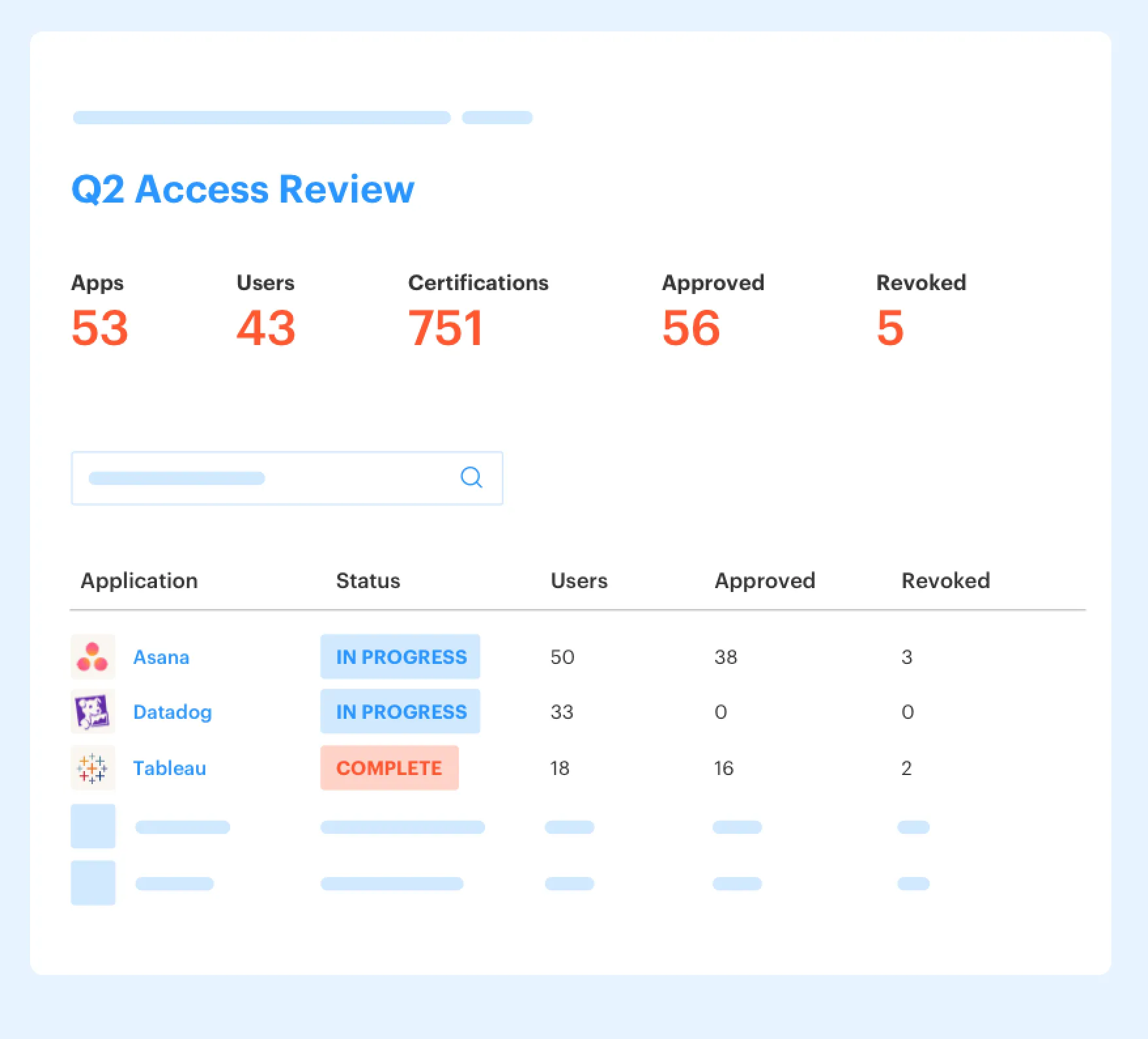
That's why reviews inside Jira matter. Reviewer sees user attributes, role context, group membership, and last login in the same operating environment. That changes behavior. If a user hasn't logged in for 90 days and the review screen says so, the revoke decision gets easier and faster.
There's also a simple rule you can apply. If a reviewer can't complete a certification decision in under 30 seconds for a straightforward case, the review design is too thin on context. Add job title, department, group, last login, and a recommendation. Without that, you're asking reviewers to guess.
Treat lifecycle changes as governance work too
A lot of teams separate access requests from onboarding, transfers, and offboarding. I think that's a mistake. They're the same problem showing up at different points in the employee lifecycle.
New hire joins. Account gets created. Group memberships get assigned. Maybe department-based access gets added. Later they transfer. Then some groups should be removed, others added. Finally they leave, and disablement plus group cleanup should happen in sequence. If those flows live outside Jira, you lose the audit chain and create more one-off automation to maintain.
If you have more than 50 hires a quarter, or more than 10 role changes a month, put lifecycle orchestration on the roadmap early. Below that, you can survive with lighter process. Past that, manual transitions start to pile up in ways leadership usually doesn't see until something breaks.
How Multiplier Makes This Operational Inside Jira
Multiplier turns integrating identity providers with Jira into an operating model, not just a connection. It keeps the workflow in Jira Service Management, executes changes through your identity provider, and writes the evidence back to the issue so the record stays intact.
It standardizes requests and approvals without another portal
Multiplier's Application Catalog gives employees a Jira-native self-service place to request sanctioned apps and roles. Apps sync from Okta, Entra ID, and Google Workspace, and each role can map to the right identity provider group. That matters because it removes the guesswork after approval.
Then Multiplier's Approval Workflows route each request to the right person in Jira or Slack, whether that's the app owner, the requester's manager, or a specific user. Approvers can act from Slack DMs or JSM notifications, and the decision stays tied to the ticket. Multiplier's Slack App also lets employees submit requests in chat while Jira remains the system of record.
This is the operational shift. You stop bouncing between request portals, chat threads, and side notes. The request, the decision, and the ticket stay connected from the start.
It enforces least privilege through the identity provider
Multiplier's Automated Provisioning via Identity Provider Groups handles the execution step after approval. When the Jira issue reaches the configured approved status, it calls the identity provider to add or remove the user from the mapped groups. That's a big deal because it keeps the change authoritative and auditable.

For elevated access, Multiplier's Time-Based Access makes temporary access practical. Requester chooses a duration like 1, 6, or 24 hours. Once approved, access is granted and the timer starts. At expiry, Multiplier removes the group membership and records the change in Jira. That's how you cut standing privilege without slowing down engineers or IT.
There is one important boundary here. Automatic revocation depends on access being provisioned through identity provider group membership. If the grant is purely manual or outside that path, it can't be auto-removed. I actually like being explicit about that, because it tells teams exactly where to tighten the design.
It keeps reviews and lifecycle evidence in the same record
Multiplier also covers the parts that usually fall apart later. Access Reviews run as Jira-native campaigns, so reviewers can see user details, groups, last login, and recommendations before deciding to keep or revoke access. When they revoke, the related group removal can be executed and documented through Jira-linked workflow.
For broader lifecycle work, Multiplier's Post Functions let teams trigger identity actions from Jira workflow transitions without scripts. That can mean creating a user in Entra during onboarding, updating attributes during a transfer, or disabling accounts and removing groups during offboarding. Each action writes success or error comments back to the ticket.
That's why the product fits this model so well. Multiplier doesn't ask you to move governance into another tool. It brings the missing governance layer into Jira, then uses the identity provider to execute the change where it should happen.
Why Jira-Native Governance Wins as You Scale
Integrating identity providers with Jira is only valuable if it reduces toil, cuts standing privilege, and makes audits easier. Once governance lives in Jira, those gains compound because the same workflow handles requests, approvals, provisioning, expiry, reviews, and evidence.
The old model asks your team to reconcile tools by hand. The better model makes Jira the workflow layer and the identity provider the execution layer. That's cleaner. Faster. Easier to defend in an audit too.
If your team is still approving in one place, provisioning in another, and documenting somewhere else, that's the next thing to fix.
Frequently Asked Questions
How do I set up time-bound access for requests?
To set up time-bound access using Multiplier, follow these steps: 1) Ensure the application supports time-based access in the catalog. 2) When submitting a request in Jira or Slack, select the duration for access (like 1, 6, or 24 hours). 3) After approval, Multiplier will automatically grant access and set a timer to revoke it once the duration expires. This approach helps minimize standing privileges and keeps your access management efficient.
What if my team needs to approve requests outside of Jira?
If your team needs to approve requests outside of Jira, consider using Multiplier's Approval Workflows. You can set up notifications to go to approvers via Slack or email. This way, they can approve or deny requests directly from their preferred communication tool without losing track of the Jira ticket. Just make sure all approvals are routed through the configured workflow to ensure proper documentation.
Can I manage access reviews directly in Jira?
Yes, you can manage access reviews directly in Jira using Multiplier's Access Review feature. Start by creating a campaign in the Access Reviews section. Select the applications you want to include, assign reviewers, and launch the campaign. Reviewers will receive notifications and can easily mark access as 'Keep' or 'Revoke' based on user activity, all within Jira, making sure a seamless review process.
When should I use the Application Catalog for access requests?
You should use the Application Catalog when you want to streamline access requests and ensure consistency. It provides a single, Jira-native self-service experience where employees can easily browse and request sanctioned applications. This helps reduce manual errors and ensures that all requests are logged properly for audit purposes. Make sure all apps are set to 'Approved' for visibility in the catalog.
Why does my integration with Jira feel incomplete?
Your integration might feel incomplete if approvals, provisioning, and audit evidence are not fully managed within Jira. To improve this, ensure that Multiplier is set up to handle all aspects of the workflow: requests should come through Jira, approvals should be routed within the system, and provisioning should occur via your identity provider groups. This way, everything stays connected, and you avoid fragmentation across different tools.


