


Most teams assume legacy apps will always be manual. Long-lived accounts, spreadsheets, screenshots, and an audit scramble every quarter. You can feel the waste. If you typed “jit access for legacy” into Google and shrugged, you are not alone. The good news is you do not need a full IGA migration to fix it. You need a lighter pattern that plugs into Jira and Slack, issues short-lived access, and writes the evidence automatically.
I have watched standing privileges creep in everywhere because “it is just faster.” Then costs spike, risk creeps, and no one has the nerve to rip it out. The fix is more boring than a giant replatform and more reliable than emails and favors. Centralize approvals in Jira. Generate ephemeral credentials when you cannot push through SSO. Verify revocation, do not just hope a timer fired. When you do that well, legacy stops being an excuse.
Key Takeaways:
- You can run JIT for legacy apps without SCIM by issuing vaulted, short-lived credentials and brokering sessions.
- Integrate approvals and provisioning triggers with Jira and Slack so evidence lives on the ticket by default.
- Timers alone are fragile; add heartbeat and session checks to guarantee revocation actually happens.
- Design for failure, log errors to the originating ticket, and support safe retries and rollbacks.
- Persist issuance, approver, and revocation events to Jira issues and immutable logs for clean audits.
- Use access reviews to clean up drift and Auto Reclaim to cut license waste from inactive accounts.
The Overlooked Truth About JIT Access for Legacy Apps
JIT access for legacy apps is achievable with a lightweight pattern that combines Jira-based approvals, ephemeral credentials, and verified revocation. You do not need a new portal to get there. Anchor decisions in Jira and Slack, then let your identity provider and a vault handle the short-lived access. Legacy becomes manageable, not a permanent exception.
Manual By Default Is The Real Risk
Manual is where mistakes hide. People copy the wrong group. Someone forgets to remove a temp admin. No one remembers the screenshot when the audit hits. The pattern looks harmless in isolation, then multiplies across dozens of apps and hundreds of users. Risk builds quietly while everyone is “just helping.”
In my experience, manual wins when the alternative feels heavy. If you need a six-month IGA rollout to remove a single admin role after two hours, people will keep bypassing it. The fix is a small, tight flow inside Jira and Slack that grants access fast, expires it automatically, and leaves evidence right on the ticket. Make the right thing easier than the workaround.
You will still have edge cases. That is fine. What matters is the default path. If the happy path gives you short-lived access and an audit trail, the exceptions stop drowning you.
What Auditors Actually Want
Auditors do not want heroics. They want proof. Who asked, who approved, what changed, and when it ended. They want least privilege with time limits, not standing admin that hangs around for months. Zero trust principles back this up, including strict session control and continuous verification, as outlined in NIST SP 800-207 Zero Trust Architecture.
You do not need a new system if your current one can show that sequence in one place. Put the full story on the Jira issue every time. Approvals, changes, expiry, and revocation, all tied together. When evidence sits in the record where the work happened, audits stop being a rebuild.
Why JIT Access for Legacy Breaks In Fragmented Workflows
JIT fails in legacy environments when approvals, provisioning, and evidence live in different tools. Tickets start in Jira, approvals happen in chat or email, changes happen in the identity provider, and evidence ends up in spreadsheets. The flow breaks at handoffs. Standing privileges become the fallback because the system cannot enforce time limits across tools.
Four Separate Systems, One Broken Flow
Fragmentation creates blind spots. You cannot enforce what you cannot see. When a manager approves in email, the ticket has no authority. When an admin adds a user in the IDP without context, no one knows if a timer should start. When revocation requires a human to remember, it often does not happen.
Centralizing the request and the decision inside Jira, then letting automation call the identity provider, flips the dynamic. The issue becomes the source of truth. Every change references that record. Approvals and execution are finally connected, which is how you make revocation non-negotiable.
Approvals Outside The Record
Approvals drift into DMs because they are fast. You pay later. Now you have a ticket with no proof and a user with elevated access. The next person has to reconstruct the story with comments and screenshots. That is not governance. That is archaeology.
Bring the approval back to where the ticket lives. Let the approver click from Slack, but have the action write back to Jira. One system stays authoritative. Everything else becomes a notification layer, not a parallel universe.
No Single Source Of Truth
Without a single source of truth, teams argue about facts. Did we approve that role? When does it expire? Who removed it? The answers should live in Jira and match what the identity provider executed. Any gap creates friction, and friction encourages risky shortcuts.
A simple rule helps. If it is not on the ticket, it did not happen. That is blunt, but it keeps you honest. And it nudges people into a flow that produces clean evidence by default.
The Cost Of Missing JIT Access for Legacy
Skipping JIT for legacy apps costs time, money, and credibility. Each manual request adds minutes of coordination, licenses linger because no one revoked them, and audits turn into late nights. You can cut most of that with time-bound access anchored in Jira and executed through your identity provider, similar to how Microsoft Entra PIM just-in-time access shrinks exposure windows.
Time You Do Not Get Back
A single access request can chew up 10 to 30 minutes across requesters, approvers, and admins. Now multiply that by the weekly volume. Even modest teams lose hours that should go to higher-value work. And every back-and-forth adds latency for the person waiting to do their job.
You do not need to eliminate humans. You need to eliminate rework. Centralize the context up front, get a crisp yes or no, and have the system execute and expire the change. Humans make the decision. The system handles the bookends.
Hidden License Waste
Licenses hang around because no one remembers to clean them up. Some users stop logging in. Others jumped teams months ago. Without a policy that checks last login and removes entitlements, your spend drifts up quietly. Finance notices later. Then budget season gets awkward, especially when evaluating jit access for legacy.
A usage-based policy plus time-bound access plugs the hole. If access is short-lived by default and inactivity triggers removals, waste goes down. People can always request again. You stop paying for ghosts.
What It Feels Like To Chase Access The Old Way
You know the drill. Someone pings you for admin at 4 pm. The ticket is thin. The approver is on a plane. You are weighing speed against risk while a release is stuck. You cave and grant broad access because the clock is ticking. Two weeks later, that access is still there. Now you do not just have a delay problem. You have a security problem.

The Late-Night Admin Fix
Late nights happen when processes depend on people being perfectly available. Approvers miss emails. Admins juggle ten tools. You are trying to land a change while digging for context across tabs. Stress goes up. Quality goes down.
A small, boring workflow saves you here. Right form, right fields, the right approver in one click, executed through the identity provider, and a scheduled removal that you do not have to remember. That is how you protect sleep and systems at the same time.
The Approval Ping-Pong
Nothing kills momentum like approval ping-pong. “Who owns this app?” “Ask her manager.” “Loop in security.” You can feel the cost even if you do not track it. People start bypassing the process because the process feels broken.
Approvals should be visible, quick, and definitive. One place to act. One record to check. When you remove the chase, compliance stops feeling like a tax.
A Practical JIT Access for Legacy Playbook
You can deliver jit access for legacy with a simple pattern. Keep requests and approvals in Jira and Slack, issue short-lived credentials from a vault when SSO is not an option, and verify revocation with a session broker that ends access on time. Evidence lives on the ticket. Auditors get the whole story without screenshots.
Centralize Approvals And Evidence In Jira
Start where your work already happens. The request form sits in Jira, not a side portal. Require the essentials, like app, role, reason, and duration. Route to the right approver and let them act from Slack or email, but always write the decision back to the ticket.
Once approved, the ticket becomes your anchor. Provisioning calls reference it. Success and failure comments land there. Expiry and revocation events update it. When everything points at one record, audits stop being a hunt.
Issue Ephemeral Credentials From A Vault
For non-SSO and legacy systems, generate short-lived credentials instead of creating long-lived accounts. A vault that supports dynamic secrets can mint users or passwords that expire automatically, which fits the JIT model well. If you are new to the pattern, read up on HashiCorp Vault dynamic secrets as a reference approach.
Keep the issuance tied to the original ticket and duration. Do not email credentials. Hand them to a session broker or deliver through a secure channel with strict TTLs. When the timer hits, the vault revokes and the system confirms it on the ticket.
Broker Sessions And Verify Revocation
Timers are not enough. You also need proof that the session ended. A lightweight broker can terminate sessions, rotate credentials, and report success. Pair that with server-side checks or API calls that confirm removal from a role or group.
If your verification fails, fail closed. Remove access and surface the error on the ticket. People can always request again with better context. Risk should not hinge on whether someone noticed a timeout log.
After you run this a few times, add guardrails:
- Enforce maximum durations for high-risk roles.
- Require reasons for elevated access and store them.
- Auto-deny duplicate active requests for the same user and role, especially when evaluating jit access for legacy.
- Alert on any revocation that takes longer than your target window.
Design For Failure And Rollback
Things break. An IDP call can time out. The vault can be rate-limited. Build a rollback path and make it boring. If provisioning fails, surface the error with context on the ticket, then retry safely. If revocation fails, escalate and lock down related entitlements until verification passes.
Log everything. People forgive delays when the system is transparent. They do not forgive silent failures that keep risky access alive.
Stop chasing approvals. Start publishing a clean trail in Jira with short-lived access. See how Multiplier works
How Multiplier Enables JIT for Legacy-Heavy Environments for Jit access for legacy
Multiplier embeds access governance inside Jira and Slack, then executes changes through your identity provider with time-based access and audit evidence written to the ticket. Legacy apps still benefit because requests, approvals, and proof are centralized, and non-SSO apps can be captured in the catalog for consistent tracking. Least privilege becomes the path of least resistance.

Application Catalog Inside JSM
Multiplier’s Application Catalog replaces ad hoc requests with a Jira-native storefront. Employees pick the app and role you sanctioned. Approvals route to the right owner or manager, and the request becomes a JSM issue with every detail you need. You get clean intake and a single source of truth from the first click.
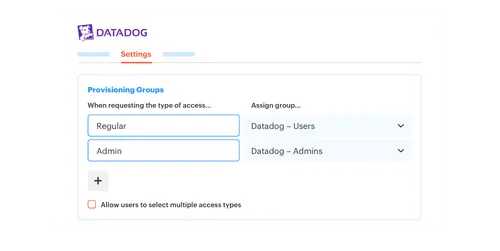
Behind the scenes, Multiplier syncs apps and groups from your identity provider so IT is not maintaining parallel lists. You can also add custom, non-SSO apps to make sure approvals and evidence are captured even when provisioning remains manual. That keeps legacy in the light, not on the side.
A quick view of what lands well here:
- Visual app tiles with mapped roles, so users request the right thing clearly.
- Default approvers per app, so decisions are fast and consistent.
- Catalog status controls visibility, so only sanctioned apps show up.
- Support for non-SSO apps, so approvals and audit trails still live in Jira.
Time-Based Access And Automated Provisioning
When a request is approved, Multiplier calls your identity provider to add the user to the mapped group, assign licenses where relevant, and start the clock. Time-based access enforces least privilege by default. On expiry, Multiplier removes the group membership and records the change on the ticket. No one chases reminders.
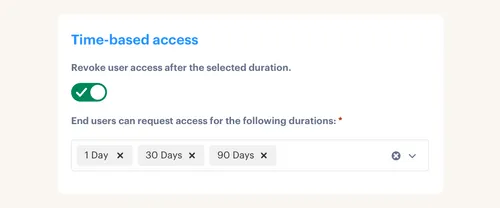
The important boundary is clear. Automatic revocation requires that access is provisioned via identity provider group membership. If a legacy app cannot honor IDP-driven changes, Multiplier still gives you the approvals and evidence in Jira, but the in-app removal stays manual. That honesty matters more than false promises.
You can pair this with usage-based cleanup for spend control. Inactive licenses get reclaimed automatically when your identity provider telemetry shows no logins, which turns drift into savings without spreadsheets.
Reviews, Slack Approvals, And Orchestration
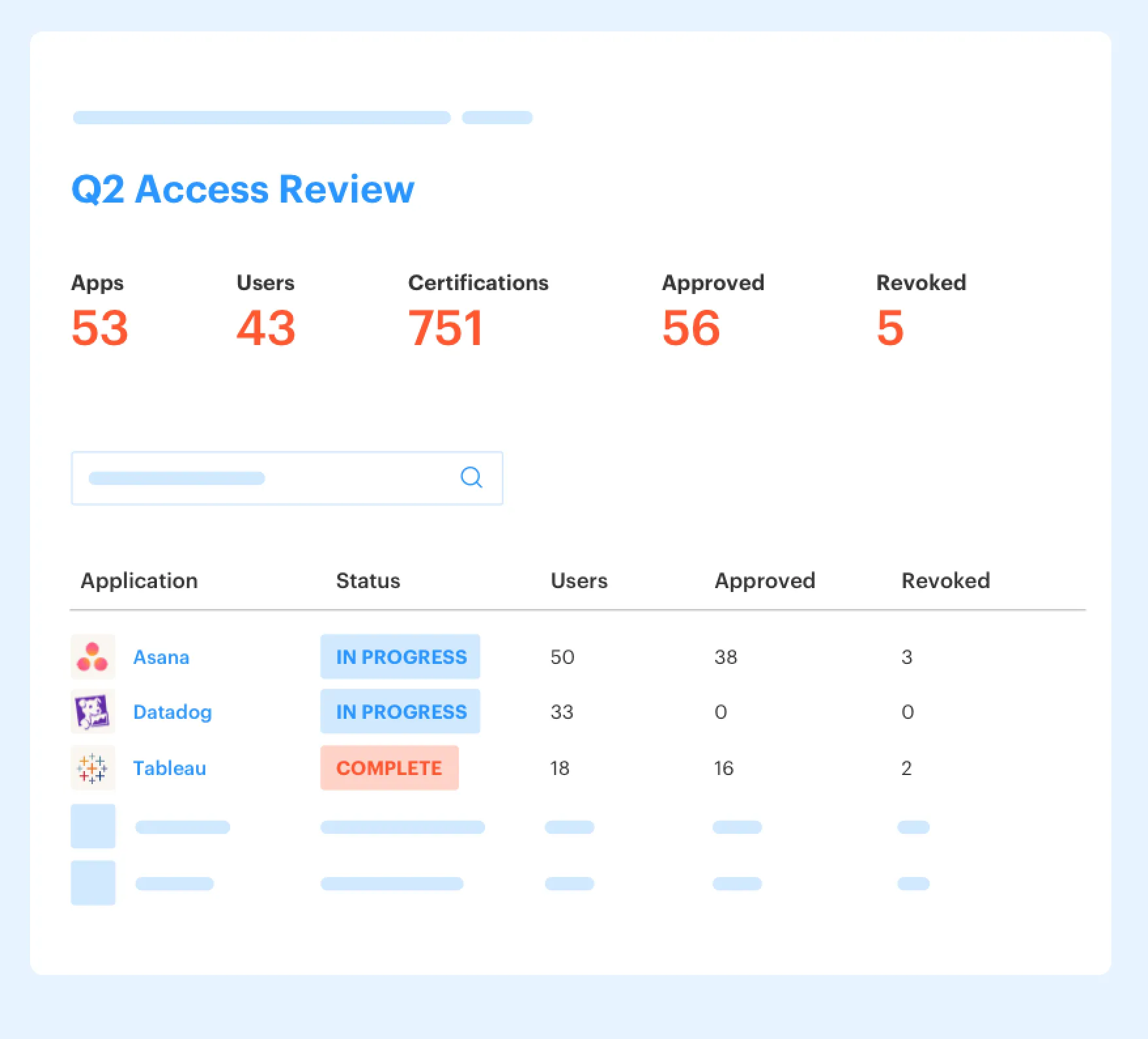
Approvers act from Slack in one click, and Multiplier writes the decision to the Jira issue. That keeps speed high without losing the record. Access Reviews run as Jira-native campaigns with last login context, so reviewers can revoke with confidence and Multiplier executes the change through your identity provider. The audit report is exportable without a rebuild.
For lifecycle changes, no-code Post Functions let you create or disable accounts, add users to the right groups, and map form inputs directly to IDP fields. Success and error comments write back to the issue, so troubleshooting lives where the request started. That callback closes the loop on the costs we outlined earlier, especially the time you used to lose chasing down provisioning status.
3x faster approvals and fewer standing privileges. That is what Multiplier delivers. Learn more about Multiplier
Before you standardize the pattern, try it on a single high-friction app. Move intake and approvals into the catalog. Map roles to IDP groups where possible. Enable time-bound access. Add an access review for that app next quarter. Watch the queue drop and the evidence clean up.
Ready to cut the ping-pong and enforce expiry by default? Get started with Multiplier
Conclusion
Legacy apps are not a pass for permanent access. You can run a tight JIT model with Jira at the center, a vault for ephemeral credentials when SSO is not an option, and verified revocation that ends sessions on time. The payback shows up fast. Fewer fire drills, less license waste, cleaner audits.
Multiplier makes the operational parts easy. The catalog pulls people into the right flow, Slack keeps approvals moving, time-based access enforces least privilege, reviews clear the cobwebs, and every action writes to the ticket. Start small, prove it on one app, then scale the pattern. You will not miss the spreadsheets.
Frequently Asked Questions
How do I handle edge cases effectively?
To manage edge cases effectively, start by documenting the specific scenarios that don't fit your standard workflows. You can then create tailored approval workflows in Multiplier that address these unique situations. For example, if certain applications require manual provisioning, ensure that the approval process captures all necessary details and evidence in Jira. This way, even if the process deviates from the norm, you maintain a clear record for audits. Additionally, consider using the Access Reviews feature to periodically review these edge cases and adjust your processes as needed.
What if I need to revoke access before the timer expires?
If you need to revoke access before the timer expires, you can manually trigger the revocation through the Jira ticket associated with the access request. Multiplier allows you to log the revocation event directly in Jira, ensuring that there's a clear audit trail. Just make sure to document the reason for the early revocation in the comments section of the ticket. This helps maintain transparency and provides context for future audits.
Can I customize the access request form in Multiplier?
Yes, you can customize the access request form in Multiplier to include specific fields that are relevant to your organization. When setting up the Application Catalog, you can require essential information like app name, role, reason for access, and duration. This ensures that all requests include the necessary context right from the start, streamlining the approval process and minimizing back-and-forth communication.
When should I use time-based access for legacy apps?
You should use time-based access for legacy apps when you want to enforce least privilege by default. This is particularly important for sensitive applications or roles that require elevated permissions. With Multiplier, you can set specific durations for access requests, such as 1, 6, or 24 hours. This way, users only have access for the time they need, and it automatically revokes when the time expires, reducing the risk of unauthorized access.
Why does my team need to adopt automated access management?
Adopting automated access management, like what Multiplier offers, can significantly reduce the time and effort spent on manual access requests. Automation helps streamline the approval process, ensures that access is granted based on predefined rules, and maintains a clear audit trail in Jira. This not only saves time for your IT team but also enhances security by minimizing standing privileges and ensuring compliance with access policies.


