


If you’ve ever tried to “bolt on” identity governance after the fact, you already know the pain. The request starts in Jira, the approval happens in email or chat, the actual change happens in the identity provider, and the evidence gets rebuilt later when an auditor asks. That separation is where most of the cost and risk hides.
This guide compares Multiplier vs Okta Identity Governance (OIG) in plain terms, with the stuff that actually decides success: where work happens, how approvals move, how provisioning gets triggered, and how you prove it all later without screenshot archaeology.
Ready to get started? Learn more about Multiplier.
Okta Identity Governance vs Multiplier At A Glance
Multiplier and Okta Identity Governance solve similar governance problems, but they start from different “homes” for the workflow. Multiplier puts access requests, approvals, reviews, and evidence inside Jira Service Management (JSM) and Slack, while OIG runs governance inside the Okta platform with requests, certifications, and audit trails tied to Okta. If your team lives in Jira all day, that difference changes adoption and audit evidence.

[Table: Dimension] — See "Table Embed Codes" in Oleno to copy the HTML for this table.
Key Takeaways:
- If Jira is your system of record, Multiplier keeps request, approval, provisioning results, and evidence attached to the same Jira issue end to end.
- If you’re standardized on Okta for SSO and lifecycle, Okta Identity Governance can keep governance inside the Okta platform with native alignment to Okta services (Okta Platform Innovations (2025)).
- The biggest trade-off usually isn’t “feature depth”, it’s workflow gravity: approvals and reviews happen where people already work, or they get bypassed.
- Time-bound access and automatic revocation is where teams often reduce standing privilege and license waste, so validate expiry behavior early in any trial.
The Real Choice: Jira-Native Access Governance Or A Separate IGA Suite?
The real choice is whether access governance lives where IT work already happens (Jira) or in a separate IGA suite with its own portal, workflows, and reporting. Both approaches can meet compliance goals, but they produce very different day-to-day behavior from requesters, approvers, and admins. A Jira-native approach tends to reduce context switching, while a suite approach tends to centralize controls in the identity layer.

Jira-Native Governance Vs Standalone Suite
Jira-native governance means the “work object” is the Jira issue. That sounds small until you’re in the middle of a messy access situation and you need to answer one question fast: who approved what, when, and what actually changed. When the issue is the spine of the process, you can usually trace it without rebuilding a story.
Standalone IGA is the opposite. It assumes governance belongs in the identity platform, not the ticketing system. That can be the right call if your org treats Okta as the central operating system for identity and you want everything driven from Okta workflows and certifications.
Here’s the catch. People don’t wake up excited to use “yet another portal.” They use what’s in front of them. If approvals live outside Jira, a surprising amount of work drifts into side channels, then you end up cleaning it up later.
A quick gut check I use when talking to IT leaders: where do your approvals actually happen today, not where you want them to happen? If the honest answer is “Slack and Jira comments,” you’re already in Jira-native territory, whether you intended to be or not.
What To Evaluate Beyond Feature Lists
You can’t buy IGA off a checklist. You buy it off behavior. Adoption. Evidence. Time to close the loop.
When you evaluate Multiplier vs Okta Identity Governance, I’d look at a few things that don’t show up cleanly on marketing pages:
- Where does the employee start the request, and does that create a trackable record by default?
- Where does the manager approve, and do they need to learn a new UI?
- What happens when provisioning fails, and where does the failure get logged?
- How do access reviews run, and what context does the reviewer see?
- Can you export audit-ready evidence without stitching it together manually?
Honestly, the failure mode I see most is “we bought governance, but people still DM admins.” That’s not a tooling issue. That’s a workflow gravity issue.
If you want to pressure-test gravity early, run a pilot and intentionally pick the messiest app in your catalog, not the easiest one. That’s where you find out if the system holds up.
Where Access Requests, Reviews, And Audits Break Down
Access governance breaks down in the seams: handoffs between request, approval, provisioning, review, and audit evidence. The operational cost usually shows up as delays, rework, and standing privilege that nobody feels ownership for removing. A simple way to see it is to track one request end to end and count how many tools you touch.
Manual Approvals And Provisioning Delays
Manual approvals cause delays because the person who can approve is rarely sitting in the tool where the request was created. So the approval goes to email. Or Slack. Or a hallway conversation, then someone “confirms” it later. You get the idea.
Let’s pretend you’ve got 300 access requests a month, which isn’t crazy for a mid-size company once you include role changes and project access. If each request burns even 10 minutes of coordination outside the ticket, that’s 50 hours a month. One week of someone’s life. Gone.
And it compounds. Delays create shadow access patterns. People ask a teammate to share an account. They reuse a license. They keep access “just in case.” That’s when least privilege turns into a slogan.
Audit Evidence Gaps And Rework
Audit evidence gaps happen when the proof lives somewhere else. A ticket says “approved,” but the actual group change happened in the identity provider. The reviewer decision happened in a spreadsheet. The exception note is in someone’s DM thread.
Then the auditor asks for the chain. The chain isn’t a chain, it’s a scavenger hunt.
If you’ve lived through one of these, you know the vibe. It’s Friday. Audit request lands. Everyone starts pulling screenshots and exporting CSVs. You’re worried you’ll miss something dumb, like the “why” behind an approval.
Okta Identity Governance positions governance inside Okta, including certifications and audit trails, which can help centralize the evidence in the Okta layer (Okta Identity Governance Release Notes (2025)). That’s useful, especially in Okta-first orgs. The question is whether your auditors also want the service desk record and the identity record tied together in one place.
License Waste And Standing Privileges
License waste usually isn’t malicious. It’s just neglect at scale. Access gets granted, then nobody remembers to remove it. Or the user moves teams. Or the tool stops being used. Licenses keep renewing. Standing privilege accumulates.
Time-bound access is one of the cleanest ways to fight this. If the default is “access expires,” you don’t need heroics later. You just need the policy to do its job and for the revocation to actually happen.
One more thing that’s easy to miss: standing privilege isn’t only a security risk. It’s also a cost center. When teams complain about SaaS spend, half the time it’s really an access lifecycle problem disguised as procurement.
Okta Identity Governance: Strengths, Gaps, And Best Fit
Okta Identity Governance is a strong fit when you want identity governance to live inside the Okta platform alongside Okta Workforce Identity capabilities. It offers access requests, certifications, and policy controls that align naturally with Okta-centric identity programs. If you already run Okta SSO and Universal Directory, that consolidation can reduce integration sprawl.
Okta IGA Strengths
Okta Identity Governance extends Okta with governance features like access requests and certifications, and Okta highlights ongoing platform innovation in its identity stack (Okta Platform Innovations (2025)). From a buyer perspective, the appeal is pretty straightforward: keep identity and governance in the same ecosystem.
A few strengths that come up often in Okta-first shops:
- It’s designed to sit alongside Okta’s identity engine and platform capabilities (Okta Identity Engine Release Notes (2025)).
- Governance features are delivered and updated as part of Okta’s release cycle (Okta Identity Governance Release Notes (2025)).
- If you already manage app access through Okta integrations, governance tied to that layer can be clean.
That said, “Okta-first” can mean two different things. Some teams mean SSO is Okta, but access requests still come through Jira. Other teams mean Okta is the center of the entire access lifecycle. Be honest about which team you are.
Okta IGA Limitations To Validate
Okta Identity Governance can require careful configuration, and the complexity often shows up in workflows and reporting expectations. Okta publishes ongoing updates via release notes, which is useful, but it also means you should validate specific controls you care about rather than assume they work the way you want out of the box (Okta Identity Governance Release Notes (2025)).
A few areas I’d personally validate in a trial, because they matter in the messy real world:
- How time-bound access and expirations behave for your specific apps and entitlements.
- How proxy requests or delegated workflows behave when managers are out.
- How exportable the evidence is for your audit format, not Okta’s preferred format.
And I’ll say the quiet part out loud. Even if the governance features are strong, if your approvers live in Jira and Slack, you can still end up with parallel processes. One in Okta, one in the service desk. That’s where drift starts.
Okta Pricing And TCO Considerations
Okta Identity Governance pricing is commonly referenced as starting around $6 per user per month billed annually, but you should confirm editions, add-ons, and how connector or module packaging impacts total cost for your environment. Okta doesn’t make every pricing nuance obvious in public docs, so the safe approach is to scope it with your Okta rep and run a small pilot first.
Total cost also isn’t just license cost. It’s implementation time, operational overhead, and how much of the workflow still ends up in Jira anyway.
If your IT team is already buried, long implementation projects have a real cost. It’s not just the project plan. It’s the opportunity cost of everything else you don’t do while you’re trying to get governance live.
How Multiplier is Different: Okta Identity Governance keeps governance inside Okta, but Multiplier keeps the work anchored to Jira issues in JSM and approvals in Slack, so the request, decision, provisioning outcome, and evidence stay in one place your IT team already uses. Multiplier also supports Time-Based Access with auto-revoke, and runs Access Reviews as Jira campaigns, which can reduce the “export CSV, rebuild evidence” loop.
Why Multiplier For Jira-Centric Teams
Multiplier is built for Jira-centric teams that want access requests, approvals, reviews, and evidence to live inside Jira Service Management and Slack. It embeds an access request catalog in JSM, routes approvals to managers or app owners, provisions through your identity provider via group assignment, and writes the outcome back to the Jira ticket. If your biggest headache is “we already do all this in Jira, why are we forcing people into another portal,” this is the lane.
Core Differentiators
Multiplier’s differentiation is operational. It puts governance where the work already lives, then uses automation to make policy real without asking people to change their habits.
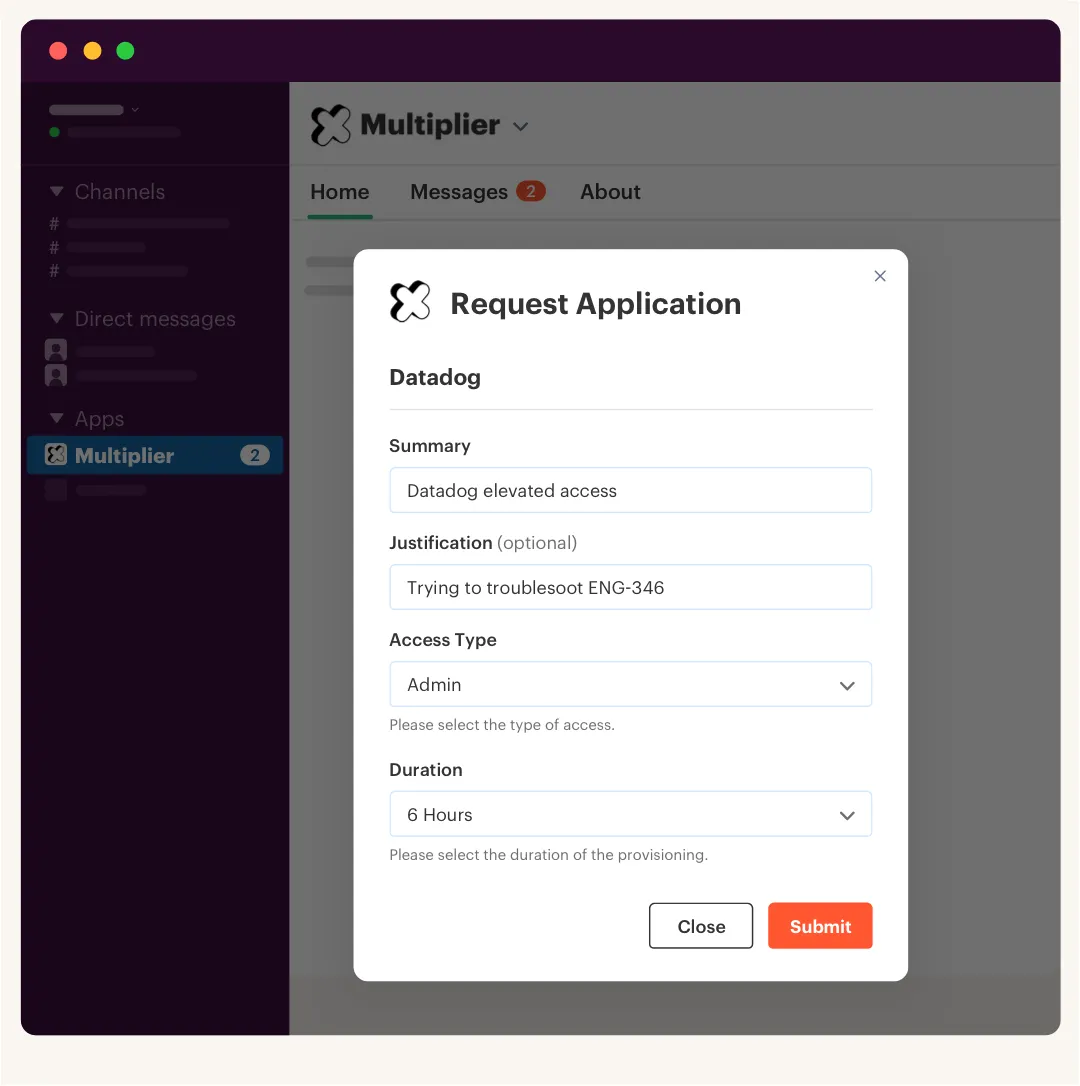
In practice, that shows up as:
- Jira native access request catalog in JSM, so employees self-serve access through the portal they already know.
- Slack-based prompts and one-click approvals tied to the same Jira issue, so approvers don’t disappear into email threads.
- Provisioning via identity provider group assignment, so grants are consistent, and the ticket shows what happened.
- Time-Based Access (just-in-time style) with policy-driven expiry and auto deprovisioning, so access doesn’t live forever.
- Access reviews and certifications as Jira campaigns, so the reviewer work is trackable like any other operational work.
- Exports and audit-friendly reports, plus the ability to push results to Vanta when you need to show evidence quickly.
- In-issue user management for agents to handle things like attribute updates, group management, password and MFA resets, while preserving the traceable link to the original request.
That last point matters more than it sounds. When an agent can do the work inside the issue and keep the thread clean, your audit story stops being “trust us” and starts being “here’s the record.”
If you’re thinking, “Ok, but does that create a mess of tickets,” yeah, it can if you don’t have a decent intake catalog. That’s why the catalog and routing rules are the actual product, not an afterthought.
Use Cases That Fit Multiplier
Multiplier tends to fit well when you have a real service desk culture and Jira is already your place for operational truth. It’s also strong when you want to make time-bound access normal without training the entire company on a new portal.
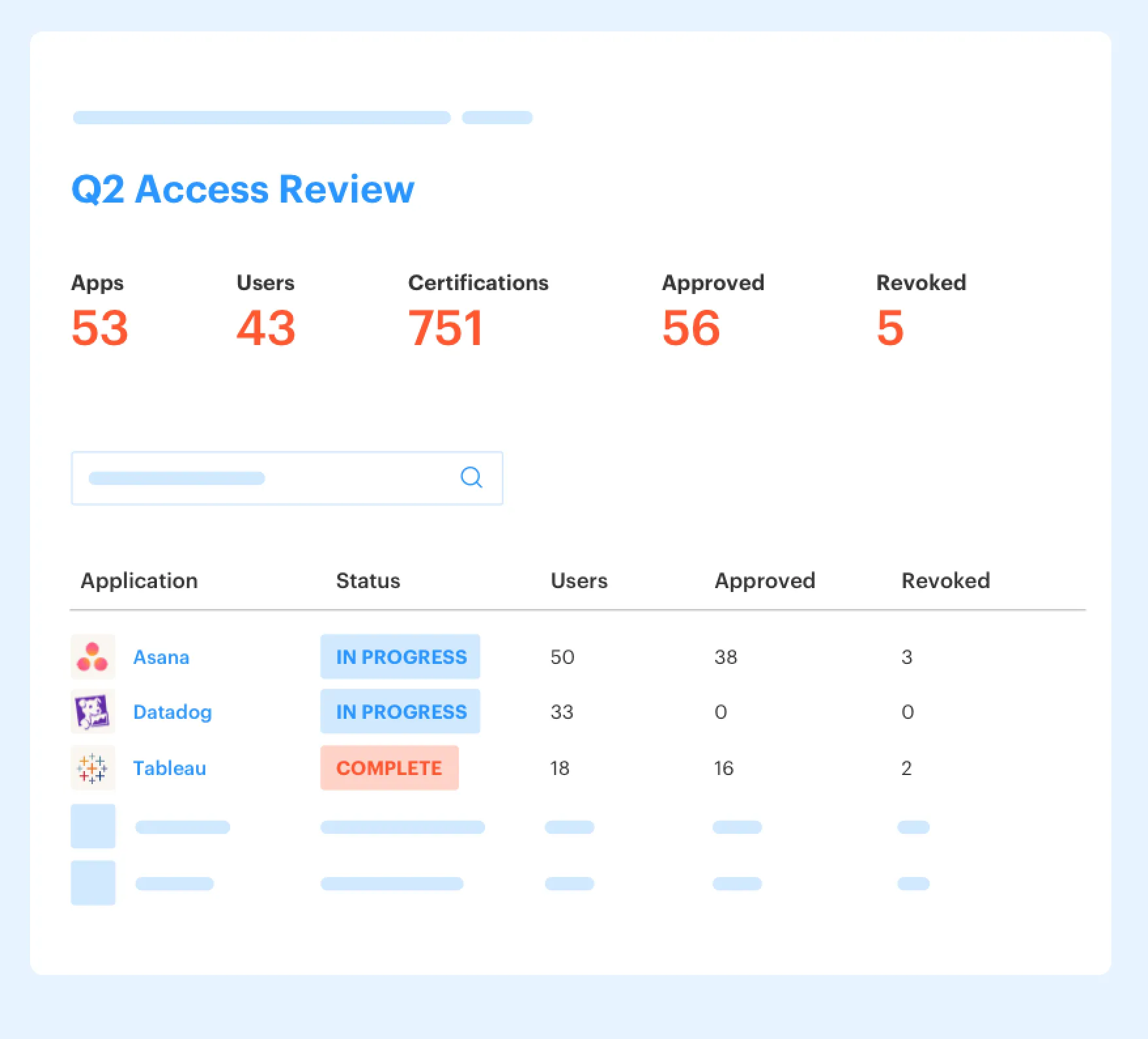
A few common patterns:
- High-volume access requests, where coordination overhead is killing your SLA.
- Quarterly access reviews that currently run in spreadsheets and end in rubber-stamp decisions because reviewers lack context.
- SaaS license waste where nobody owns reclamation, and you want it tied to a real workflow and evidence.
- Onboarding and offboarding steps that are already Jira-driven, and you want provisioning actions triggered by workflow transitions.
I’ve seen teams try to solve these with “process” alone. It never sticks. People revert to habits. Tools that live where work happens have an adoption advantage that’s hard to replicate.
Getting Started In JSM
Getting started in JSM usually goes best when you don’t try to boil the ocean. Pick a few apps, build the catalog entries, wire up approval routing, and prove the provisioning loop works end to end.
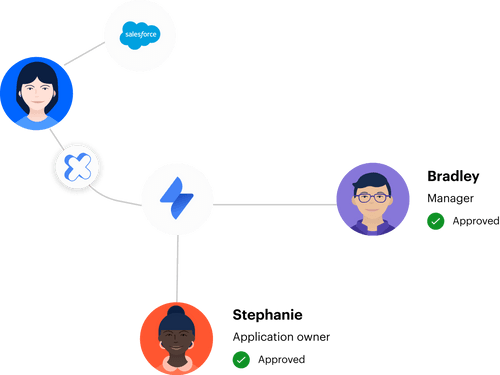
A practical rollout approach looks like this:
- Start with 5 to 10 apps that represent most requests, plus one “painful” app to test edge cases.
- Define roles and map them to identity provider groups so provisioning and revocation are deterministic.
- Set Time-Based Access policies for elevated access, even if it’s only for admin roles at first.
- Run one access review campaign through Jira, and export evidence like you’re prepping for an audit.
Then expand. The point is to make the workflow boring. Boring is good. Boring means it runs without heroics.
If you want to see what this looks like in your environment, See how Multiplier works and walk through one of your real workflows, not a polished demo scenario.
Comparison Grid And Buying Checklist
A good buying decision comes down to matching the tool’s “workflow home” to your company’s reality. If Okta is your identity operating system and you want governance centralized in that layer, Okta Identity Governance is a natural candidate, especially with ongoing investment in the Okta platform ([Okta Platform Release Overview (Q4 2025)]). If Jira is where work and approvals already happen, Multiplier’s Jira-native approach can reduce bypasses and make evidence easier to defend.
[Table: Evaluation Criteria] — See "Table Embed Codes" in Oleno to copy the HTML for this table.
If you’re trying to make this decision without a 3 month bake-off, use a simple checklist. It’s not fancy, but it works.
- Identify where 80 percent of access requests start today (JSM, email, chat, portal).
- Count how many approvals per week happen outside the “system of record.”
- Pick one app with messy entitlements and test time-bound access and revocation.
- Run a mini access review with real reviewers and see if they have enough context to make a real decision.
- Export an evidence package and ask, “Would an auditor accept this without follow-up questions?”
If you want to pressure-test Multiplier quickly in a Jira-centric environment, Learn more about Multiplier and bring one real workflow you’re worried about. The messy one.
You don’t need a perfect decision. You need a decision that matches reality.
And reality is usually Jira.
Frequently Asked Questions
How do I set up access requests in Multiplier?
To set up access requests in Multiplier, start by navigating to your Jira Service Management (JSM) portal. From there, you can create an application catalog where you list the roles and permissions needed. Users can then submit requests through Slack using the /request command or directly in JSM. Ensure that you have the appropriate approval workflows in place to route these requests to the right managers or application owners for timely approvals.
What if I need to change an approval workflow?
If you need to change an approval workflow in Multiplier, you can easily do this within your Jira Service Management settings. Go to the workflow configuration section and identify the specific workflow you want to modify. You can add or remove approvers, adjust the routing logic, or change the conditions under which approvals are granted. This flexibility allows you to adapt the workflow to your team's needs and ensure that access requests are handled efficiently.
Can I integrate Slack with Multiplier for notifications?
Yes, you can integrate Slack with Multiplier to receive notifications about access requests and approvals. To set this up, navigate to the integration settings in your Multiplier account. Connect your Slack workspace and choose the channels where you want notifications to appear. This way, your team can stay updated on request statuses and approvals without having to switch between platforms, making the process smoother.
When should I conduct access reviews using Multiplier?
You should conduct access reviews in Multiplier regularly, typically every quarter or bi-annually, depending on your organization's policy. Use the review feature within Jira Service Management to initiate the process, allowing managers to verify that users still require their access rights. This helps maintain security and compliance by ensuring that permissions are up-to-date and relevant to current roles.
Why does Multiplier focus on Jira Service Management?
Multiplier focuses on Jira Service Management because it allows teams to manage access requests and approvals directly within a platform they already use daily. This integration reduces friction and improves adoption since users can handle identity governance tasks without needing to switch to a separate system. It streamlines the entire process, making it easier to manage and track access requests efficiently.


