


A 15-minute approval delay sounds harmless until it happens 40 times a week. Real-time approval processes in Jira and Slack aren't about speed for speed's sake, they're about stopping access work from leaking into every corner of IT.
Most companies treat access approvals like a people problem. Someone didn't respond. Someone missed a Slack message. Someone forgot to remove the user later. But the real issue is usually the system. The approval, the identity change, and the audit proof all live in different places.
And once that happens, you're not running governance. You're running follow-up.
Key Takeaways:
- Real-time access approvals break when the request, approval, provisioning, and evidence live in different tools.
- Jira is often the right place for approval governance because the work already starts there.
- Slack can speed up approvals, but only if the action still writes back to the Jira record.
- Time-bound access is the cleanest way to reduce standing privilege without slowing teams down.
- The best approval process has a clear risk split: auto-approve low-risk access, route risky requests, and expire temporary grants.
- If an approval doesn't trigger provisioning or revocation, it's just a decision someone still has to execute manually.
Why Real-Time Approvals Break Outside Jira
Real-time approvals break outside Jira because the access request becomes disconnected from the actual work. The request starts in one place, the approval happens somewhere else, and provisioning happens in the identity provider. That gap creates delays, missed evidence, and too much standing access.

The approval isn't the bottleneck anymore
A lot of IT teams still talk about approvals like the main delay is the manager. Sometimes that's true. But in most access workflows I've seen, the bigger delay is what happens after the approval. Someone has to find the right Okta group, add the user, comment on the ticket, maybe screenshot the change, then remember to remove access later if it was meant to be temporary.

Picture a Workplace Technology manager at 9:12 AM on a Tuesday. A new engineer asks for temporary admin access to a production tool in Slack. Their manager approves in the thread in 6 minutes, which sounds great, but the Jira ticket isn't updated, the Okta group change happens 40 minutes later, and no one sets an expiry. By Friday, the access still exists. The approval was fast. The process was broken.
That's why real-time approval processes in access management need to be judged by the full chain, not the click. Approval speed means very little if the identity change and audit trail lag behind. I get why teams start with Slack, because everyone lives there and nobody wants another portal. Fair. But Slack alone is like approving a wire transfer in a hallway conversation. The decision happened, but the ledger still matters.
If the issue you're seeing is approvals getting separated from the ticket record, Learn more about Multiplier and look at how Jira-native access governance keeps the request and the decision tied together.
Separate IGA portals create a second queue
Separate IGA portals make sense on paper. They promise control, policy depth, and a clean place for access governance. That's a real argument, especially in larger enterprises with dedicated identity teams and mature governance programs. I wouldn't dismiss that.
The problem shows up in companies where Jira Service Management is already the front door for IT. Employees file requests in Jira, ask questions in Slack, and expect updates in the same flow as every other IT ticket. Then a separate IGA tool asks them to go somewhere else. Adoption drops. IT becomes the translator between systems. Security still has to trust that the evidence got copied correctly.
A good test is simple. Pull 20 recent access requests and ask four questions:
- Where did the request start?
- Where did the approval happen?
- Where did the provisioning happen?
- Where would you prove all of it during an audit?
If you need more than two systems to answer those questions, your approval process isn't really real-time. It's stitched together. And stitched-together access work always creates gaps.
Audit evidence gets rebuilt after the fact
Audit work gets painful when evidence is created after the process instead of during it. The NIST AC-2 account management control is pretty direct about account creation, modification, disabling, and removal. You need to show the control happened. Not just say someone approved it.
I've seen this go sideways in boring ways. Which is usually how bad audit work starts. A ticket says "approved in Slack." The Slack thread is gone or hard to find. The identity provider shows the group membership, but not the business reason. The spreadsheet says the access was reviewed, but the revocation never happened. Everyone worked hard. The proof is still messy.
And that's the emotional tax nobody puts in the project plan. You end up with smart IT people doing screenshot archaeology instead of fixing the actual access model. The access request was a normal piece of work. The audit turned it into a scavenger hunt.
The way out is not another approval layer. It's making the approval record the operating record.
How to Build Real-Time Approval Processes in Jira
Real-time approval processes in Jira work when each request has one record, one owner, and one path from decision to identity change. The goal isn't to approve everything faster. The goal is to make the correct access outcome happen with less manual work and cleaner proof.
Start by sorting access by risk, not by app name
80% of access requests usually aren't that interesting. Viewer access to a low-risk tool. Standard team software for a new hire. A role someone in that department gets all the time. The mistake is treating those requests the same way you treat production admin access or finance system ownership.
Start with a 30-day sample of tickets. Don't debate policy in a room first. Look at what people actually request. In my experience, the pattern shows up pretty fast. You'll see a pile of repeatable requests, a smaller set of sensitive requests, and a messy middle where nobody is sure who owns the decision.
Use a risk split like this:
- Low risk: Standard access, known role, approved app, no sensitive data.
- Medium risk: Elevated role, paid license, team-specific ownership, or unclear business need.
- High risk: Admin access, production systems, customer data, finance tools, or security tooling.
- Temporary high risk: Access needed for an incident, migration, audit, or one-off task.
The rule I like: if the same request has been approved 10 times with the same outcome, stop pretending it needs a custom decision every time. Encode the pattern. Keep humans for exceptions, not routine work. Real-time approval processes in Jira get much easier when the queue is split before the ticket ever hits an approver.
Make Jira the record, even when Slack is the interface
Slack is great for action. Jira is better for recordkeeping. That distinction matters a lot, because chat-first approvals can feel fast while still creating a weak audit trail if the approval never writes back to the ticket.
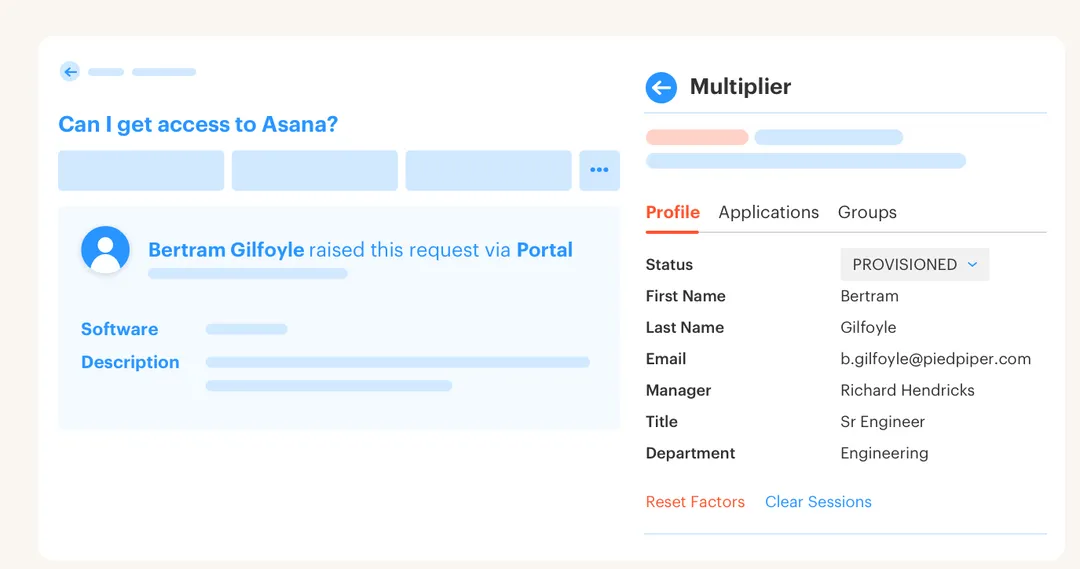
The setup I prefer is simple. Let employees request access where they already work, but make Jira the system of record. The request creates a Jira issue. The approver gets a Slack DM. The approver clicks approve or deny. The Jira issue updates. Then the identity provider change follows the workflow. Real-time approval processes in Slack only work when Slack is the front door, not the database.
Atlassian's own docs on Jira Service Management request types are useful here because request design shapes everything downstream. If the form captures app, role, duration, and business reason up front, IT doesn't have to chase context later. Small thing. Big difference.
Here's the practical test:
- If an approver acts in Slack, does Jira update automatically?
- If access is granted, does the Jira ticket show what changed?
- If access expires, does the same ticket show the removal?
- If an auditor asks why access existed, can one issue answer the question?
If the answer is yes, Slack speeds the process without weakening governance. If the answer is no, Slack is just another side channel.
Connect approvals to identity provider groups
An approval should trigger a system change. Otherwise, you've only moved the work from "waiting for approval" to "waiting for IT." That sounds obvious, but it's where a lot of real-time approval processes in IT fall apart.
The cleanest model is group-based provisioning through the identity provider. Each app role maps to one or more groups in Okta, Entra ID, or Google Workspace. When the Jira issue hits an approved status, the workflow adds the user to the mapped group. The identity provider then pushes access to the downstream app when SSO or SCIM is configured. Not magic. Just a clean chain.
A mid-market AI company is a good example of why this matters. During 4x headcount growth, their IT team had access requests coming through Slack channels and Notion boards. Notifications got missed. Provisioning stayed manual. Once they moved to a Jira-native catalog connected to Okta, they processed 3,800+ access requests in a year and fully automated 75% of them. A four-person IT Ops team supported 420+ employees. That's the whole point.
The diagnostic here is blunt:
- If approval is instant but provisioning still takes 30 minutes, you're not done.
- If provisioning works but the ticket doesn't show the change, audit proof is weak.
- If the group mapping lives in someone's head, the process will break when that person is out.
Real-time approval processes in Jira need deterministic mappings. App, role, group, approver, expiry. Once those are clear, the process becomes repeatable.
Put expiry on the request before access is granted
Temporary access needs an end date before it's approved. Not after. Not when someone remembers. Before. That's how you avoid long-lived access that was only supposed to exist for a production fix or a customer escalation.
This is where teams swing too far sometimes. They hear "least privilege" and create a heavy approval process for everything. Then engineers work around it because they can't wait. A better path is time-bound access for risky work. Give people what they need quickly, but attach a timer to it.
A fintech company used this approach after growth and acquisitions left too much privileged access hanging around. They moved to time-limited access through Jira Service Management and Slack. Privileged access dropped by 85%, and more than 1,300 access requests were automatically revoked after approved windows. That number matters because revocation is where manual systems fail.
Use a simple duration model:
- 1 hour for production fixes and sensitive admin tasks.
- 6 hours for migrations, data pulls, or same-day project work.
- 24 hours for vendor support, audits, or multi-step internal work.
- 7 days only when the business reason is clear and the owner is named.
If the access is high-risk and doesn't have an expiry, it should feel wrong. Not because security said so, but because the process has no cleanup loop.
Design approval rules around ownership
Approval rules get messy when nobody knows who should decide. Manager approval is not always enough. App owner approval is not always enough either. And security approval for every request creates a queue nobody wants.
I like to map approval ownership by the decision being made. Managers can validate business need. App owners can validate role fit. Security can validate risk for sensitive systems. Finance can care about paid licenses, but they shouldn't approve every Zoom seat. Sounds basic. Rarely done cleanly.
A good approval routing table looks like this:
- Standard team app: Manager approval or auto-approval if role is expected.
- Paid app license: Manager approval plus budget owner if needed.
- Admin role: App owner approval.
- Security or production access: App owner plus security review.
- Temporary elevated access: App owner approval with required expiry.
The real trick is cutting approvals where they don't change the outcome. If 97 out of 100 requests for a standard role are approved, the approval step is probably theater. Save the human review for the three requests that look different. Real-time approval processes in Jira should reduce noise, not create more polite delays.
Review access using usage, not memory
Quarterly access reviews often become memory tests. A reviewer sees a spreadsheet with names, apps, and roles. They scan fast. They keep almost everything. Not because they're careless, but because the review gives them no useful context.
Add usage data and the conversation changes. Last login. Department. Job title. Group membership. Whether the user still needs the access. Whether the app is approved. A reviewer can make a decision instead of guessing. That matters because Verizon's DBIR keeps showing how much identity and credential abuse matter in real breaches. Access review quality isn't paperwork. It's risk reduction.
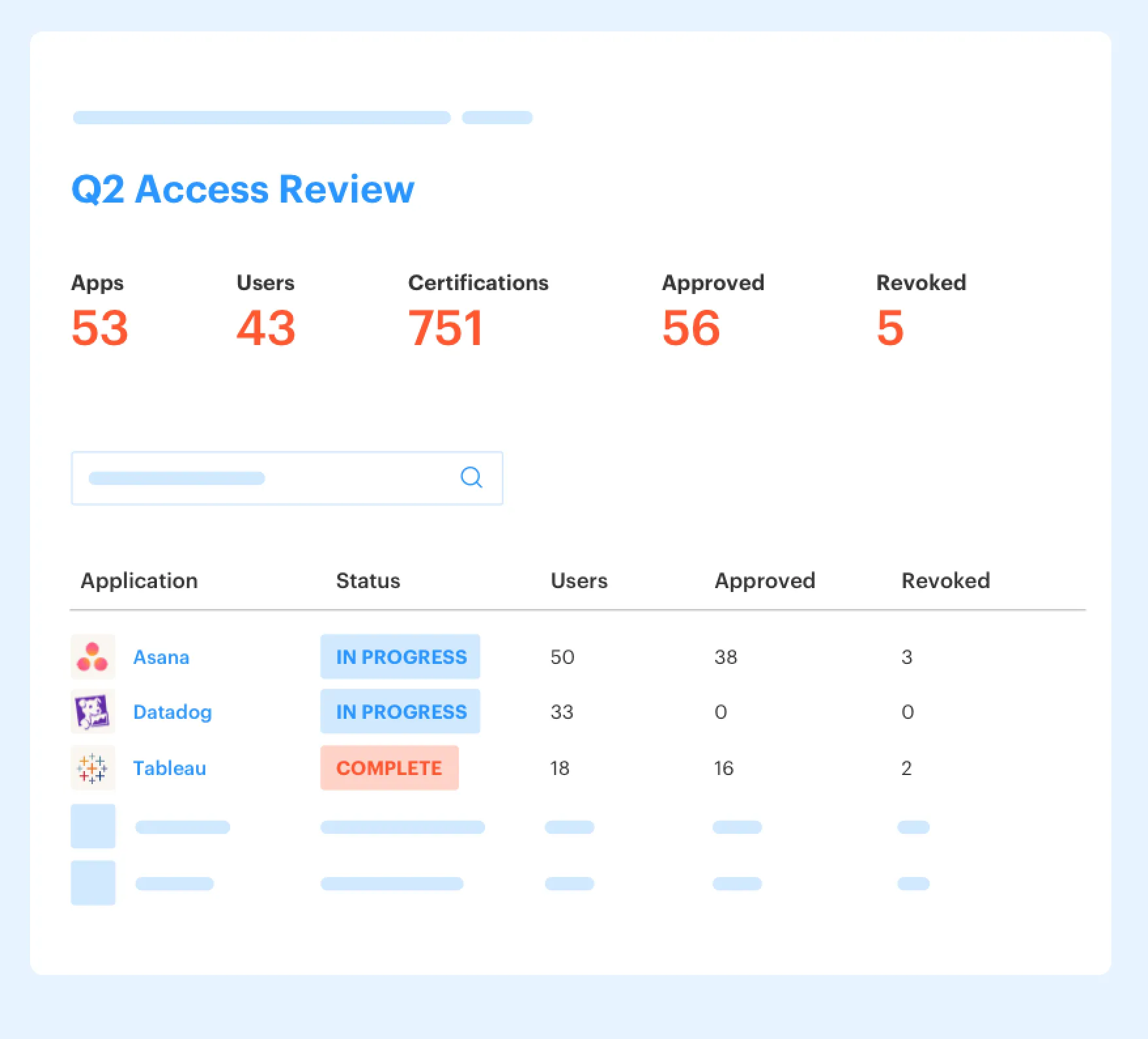
The before and after is pretty clear. Before, IT exports users, sends spreadsheets, chases reviewers, then manually removes access. After, reviewers act inside the service workflow, revocations execute through the identity provider, and the evidence stays attached to the ticket or campaign. Cleaner. Less drama.
I wouldn't automate every review decision. That's too aggressive. Some access needs human context, especially for sensitive apps or unusual roles. But if a user hasn't logged in for 90 days and their manager can't name a reason they still need the tool, the default should shift toward removal. That's a better operating model than rubber-stamping another quarter.
If your next bottleneck is turning approved requests into actual identity changes, See how Multiplier works in the context of Jira, Slack, and identity provider group mappings.
How Multiplier Automates Access Approvals in Jira
Multiplier automates access approvals in Jira by connecting the request, approval, provisioning, expiry, and evidence inside one workflow. Employees can request access through JSM or Slack, approvers can act in the same flow, and identity provider group changes can happen after approval.
The app catalog turns access into a repeatable request
Multiplier's Application Catalog gives employees a Jira-native place to request approved apps and roles. The catalog syncs apps and groups from Okta, Entra ID, and Google Workspace, then shows only apps marked as approved. That means IT isn't asking users to describe access in a blank text field and hoping the request has enough detail.
Once the employee selects an app and role, the request creates a Jira issue. Approval Workflows can route the decision to a manager, app owner, or specific user, with notifications in JSM and Slack. After approval, Automated Provisioning can add the user to mapped identity provider groups. Multiplier doesn't directly provision inside every SaaS app. The cleaner path is through identity provider groups, where access is authoritative and easier to audit.
That callback matters. Earlier, the broken process was approval in one place and provisioning somewhere else. Here, the approved Jira status can trigger the group change, and the ticket records what happened. Same request. Same record. Less chasing.
Time-based access makes least privilege easier to live with
Multiplier's Time-Based Access lets requesters choose a duration, like 1, 6, or 24 hours, during submission. After approval, Multiplier adds the user to the mapped identity provider group and starts the timer. When the window expires, it removes the group membership and records the change in Jira.
That solves the ugly part of least privilege. Not the policy deck. The cleanup. If the access was temporary, the revocation shouldn't depend on someone remembering next Tuesday. Multiplier can also support Access Reviews in JSM, where reviewers see context like user attributes, groups, last login, and recommendations, then mark Keep or Revoke. Revocations can execute by removing users from relevant identity provider groups.
For teams dealing with app sprawl, Auto Reclaim can also identify inactive users through identity provider login telemetry, apply inactivity thresholds and grace periods, and revoke access when users stay inactive. It's available on the Advanced edition, and it depends on accurate last-login data from the identity provider. Worth saying because boundaries matter. Good automation still needs good inputs.
If the workflow you want is Slack approval, Jira evidence, and identity provider changes tied together, Get started with Multiplier from that exact operating model.
Make Approval Speed Part of Governance
Real-time approval processes in Jira only work when speed and control are designed together. Fast approvals without provisioning still create IT work. Fast provisioning without expiry creates standing privilege. Fast audits without linked evidence usually means someone rebuilt the story after the fact.
The better path is pretty practical. Put intake in Jira. Let Slack handle quick decisions. Map roles to identity provider groups. Add expiry before risky access gets granted. Review access with usage context, not memory. And automate the parts where humans don't add judgment.
When the request, decision, identity change, and evidence all live in the same flow, access work stops feeling like a queue you babysit. It becomes a system you can trust.
Frequently Asked Questions
How do I set up automated provisioning with Multiplier?
Start by connecting your identity provider (Okta, Entra ID, or Google Workspace) to Multiplier, then map your app roles to the corresponding IdP groups in the Application Catalog. Once that's done, access requests come in through JSM or Slack, and when they're approved, Multiplier adds the user to the right group automatically. The Jira ticket records the change, so your audit trail is already there. No screenshots required.
What if I need to revoke access after a temporary grant?
With Multiplier's Time-Based Access, revocation is built into the request—not an afterthought. The requester picks a duration (1, 6, or 24 hours) when submitting. After approval, Multiplier provisions access and starts the timer. When time's up, it removes the IdP group membership and logs the removal in Jira. You don't have to remember to clean it up. That's the point.
How do I ensure my access requests are compliant?
Compliance mostly comes down to having proof that the right people approved the right access for a real reason—and that access was removed when it should have been. Multiplier's Application Catalog keeps employees requesting from a pre-approved list, and every request, approval, and provisioning event is tracked in Jira. Run periodic Access Reviews inside JSM to certify active access, with last-login data surfaced so reviewers aren't guessing.
Can I customize approval workflows in Multiplier?
Yes. Approval routing in Multiplier is mapped to Jira workflow statuses, so you control who gets asked at each stage. You can set a default approver globally (say, the manager always approves first) and then override it per app (the app owner approves for admin roles). Everything stays inside Jira, so approvers don't need to learn a new tool.
When should I use time-bound access for requests?
Any time you're granting elevated access for a specific task—production fixes, vendor support, audit work, incident response—use time-bound access. Rule of thumb: 1 hour for production admin, 6 hours for migrations or data pulls, 24 hours for multi-step work. If the request is high-risk and there's no end date attached, something's wrong. Time-bound access makes least privilege something you can actually operate, not just declare.


