


Quarterly, full-scope access reviews fail because they assume reviewers have infinite time and perfect memory. They don’t. Reviewers need small, scoped batches, crisp context, and real deadlines. Build reviewer-centric access reviews and the numbers shift fast. Completion goes up, rubber stamping drops, and audits stop feeling like a fire drill.
I’ve watched smart teams do everything right on paper and still miss. The mistake is structural, not moral. If you hand people 300 cryptic decisions with no last-login data, no group context, and no clock, they’ll stall or guess. Design around human limits first, then layer in automation. That’s where the win lives. And yes, we’ll say it out loud in the intro so you can hold me to it: reviewer-centric access reviews work.
Key Takeaways:
- Shrink scope. Cap batches so a reviewer can finish in under 30 minutes.
- Enrich decisions. Show title, department, groups, last login, and a one-line recommendation.
- Automate the drumbeat. Use due dates, reminders, and escalations that don’t depend on heroics.
- Route to the right person. Manager, app owner, or specific user based on risk and app.
- Enforce least privilege with time-bound access and auto-revocation after expiry.
- Close the loop. Write every decision and change to the ticket for audit by default.
Reviewer-Centric Access Reviews Start With Human Limits
Reviewer-centric access reviews start by respecting attention budgets, not calendar slots. The path is simple: reduce the number of decisions per sitting, raise confidence with context, and set clear deadlines with automatic nudges. Teams finish faster and make fewer wrong calls when the work is scoped to human reality.
The Attention Budget Is Your Real Constraint
Reviewers don’t have two spare hours to certify five apps across 120 users before quarter end. They have 20 minutes between meetings on a Tuesday. Most programs ignore that truth, then act surprised when completion stalls. The fix is boring and powerful: cut decision batch size until a normal person can finish in one sitting.
You’ll see the payoff right away. Fewer late-night marathons. Fewer blanket “keep” clicks that leave standing privilege hanging around for months. And when reviewers finish a batch in one pass, they feel momentum, which carries into the next batch. Quality goes up because context is fresh. Speed goes up because friction is down.
If you’ve been stretching reviewers to cover the whole org in one campaign window, you’re forcing error. Nobody wins there. Break the work, keep the wins.
Rule-of-thumb caps that work in the wild:
- High-risk apps or elevated roles: 10–20 decisions per batch
- Medium risk: 20–30 decisions per batch
- Low risk or broad SaaS: 30–50 decisions per batch
Context Beats Volume, Every Time
A raw list of names and checkboxes is a trap. Without usage signals and role clarity, even careful reviewers guess. Add job title, department, group memberships, and last login. Add a one-line recommendation like “Revoke, inactive 90 days.” Decision confidence jumps.
You don’t need a novel. You need a crisp snapshot that answers three questions in seconds: who is this person, do they still need this access, and have they used it recently. When those answers are visible, reviewers stop hunting through systems. They click with intent. Less waste, less risk, fewer mistakes.
You’ll also notice better audit conversations. When your evidence shows context plus action, auditors stop digging. They see signal, not noise.
Reframing Access Reviews Around Reviewer Capacity
Design your review program around reviewer capacity, not system scope. Start with the decision-maker, then shape batch size, context, and timing to match how they work. When work lives in Jira and Slack, friction drops and finish rates climb.
From System-Centric To Reviewer-Centric
Most teams start from the inventory and throw the entire list at reviewers. Wrong center of gravity. Start from the reviewer. What can they finish in under 30 minutes with high confidence and low switching? That target drives everything else, including routing and reminders.
Put the work where they already live. JSM for the record, Slack for the nudge. That tight loop beats chasing people across portals and email threads. It’s why modern IT teams anchor service work in Jira Service Management, then meet humans in chat when attention matters most. If your review lives two clicks from the ticket queue, you just removed a surprising amount of drag. See how teams structure employee service work inside JSM in the Atlassian overview for Jira Service Management.
Batching Rules That Respect Calendars
You don’t need perfect math. You need workable rules reviewers trust. Start with roles and risk. High-risk apps get smaller batches. Low-risk apps can group more broadly. And always cap the per-sitting decision count.
After you lock rules, it gets easier to adjust cadence, owners, and exceptions without blowing up trust. Reviewers feel seen. They respond faster. They make better calls.
Practical guardrails:
- Set a per-reviewer weekly limit (e.g., no more than 60 total decisions).
- Split long lists into rolling drops instead of one mega-campaign.
- Tie due dates to small batches, not just a campaign end date.
The Real Cost of Non-Reviewer-Centric Reviews
Non–reviewer-centric reviews look cheap on a plan, then bleed hours, licenses, and audit energy. Each manual lookup adds seconds that compound. Each rubber stamp leaves standing privilege that expands attack surface. Each missed revocation is a waste you carry for months. Multiply by hundreds and the cost gets ugly fast.
Time Cost, Error Risk, and Audit Pain
Without context, reviewers click “keep” to avoid being the person who broke access. That fear is rational. But it leaves long-lived access everywhere, which violates basic least-privilege guidance and raises audit risk. NIST spells this out in control families like AC-2 and AC-6 in SP 800-53 Rev. 5. You can meet the letter of “completed a review,” then fail the spirit if nothing actually changes, especially when evaluating reviewercentric access reviews.
Auditors also notice when evidence is stitched together from screenshots and comments. It signals process gaps. Clean, linked actions tied to the originating ticket are the gold standard. Anything else invites deeper sampling and longer fieldwork. That’s real cost.
License Waste and Standing Privilege
Inactive users sit on licenses because nobody saw last-login data at decision time. That is money out the door. It’s also loose access you do not need. SOC 2’s Trust Services Criteria expect you to limit access to what’s necessary and review it regularly. The AICPA Trust Services Criteria are clear on intent, even if your template is not.
When you bake usage context into the review, it becomes obvious who to revoke. Pair that with time-bound access for elevated roles and you shrink exposure windows by default. Cost goes down. Risk goes down. Audits get cleaner.
What It Feels Like To Run a Broken Review Cycle for Reviewercentric access reviews
You know the feeling. It’s Friday at 5:30, your campaign is due Monday, and half the reviewers haven’t started. You’re sending last-chance emails, copying names into spreadsheets, and praying nothing breaks if you push a wave of revocations late at night. It’s exhausting and a little scary.
Late Nights, Rubber Stamps, And Guessing
When the process is heavy, humans protect themselves. They defer. They guess. They click “keep” to avoid blowback. You end up with messy evidence and privileges that never should have lingered. Then you pay the price in post-mortems and make-goods when something goes wrong.
What’s worse is the learned helplessness. People start to believe reviews are performative. That mindset is expensive. It corrodes your security culture, and it’s hard to unwind once it sets in.
Leaders Lose Trust, Auditors Keep Digging
Executives don’t need every detail. They need to trust that the machine works. When reviews slip, or evidence looks patched together, confidence drops. Auditors sense it and widen the scope. Your team burns cycles proving control after the fact instead of improving the system itself.
Flip the script and the conversations change. You show timely completion, clear revocations, and ticket-linked outcomes. Everyone breathes. You get your weekends back.
How To Design Reviewer-Centric Access Reviews That Finish On Time
The new way is boring and effective. Design around attention, ship context with each decision, and automate the rhythm. Then enforce least privilege with time-bound access so reviews are cleanup, not your only line of defense. Do this and you’ll see 40 to 60 percent higher completion and roughly half the time per decision.

Build 30-Minute Batches Reviewers Can Actually Finish
Start where reviewers live. JSM for the record, Slack for the ping. Decide what a human can finish in 20 to 30 minutes and cap batches there. Route by app owner for specialized tools and by manager for broad apps tied to role.
Give reviewers one clear place to act. One queue, one decision UI, one clock. Keep the number of decisions per sitting low enough that context stays fresh across the whole batch. That single constraint change drives more throughput than any pep talk.
Once batches land, monitor time to first action and completion rates. If either stalls, cut batch size again. Speed is a design choice, not a hope.
To make this tangible once scope is set:
- Group users by reviewer and risk, then cap per batch at a finishable count.
- Attach context to every line item so nobody leaves the page to decide.
- Set a due date per batch, not just a campaign end date, especially when evaluating reviewercentric access reviews.
- Send a friendly reminder at midpoint, then a firm one near due.
- Escalate automatically if the due date passes.
Enrich Context And Automate The Drumbeat
Reviewers should not open extra tabs to decide. Put the essentials right in front of them: title, department, group memberships, last login, and a clear recommendation based on inactivity or policy. That one-line “Keep” or “Revoke” nudge prevents the common mistake of keeping dormant access.
Automate the cadence. Friendly reminders first, then escalations to alternates or owners who can finish the job. Route without drama. Decide without guessing. Write every choice and change to the same record so audits stop being archaeology.
A simple context snippet template that works:
- Job title and department, to anchor role fit
- Current groups and roles, to spot overreach
- Last login date, to surface inactivity
- Risk tag for the app or role, to guide scrutiny
- Recommendation line, to speed confident action
Stop chasing approvals in five tools. Start closing reviews where people already work. Learn more about Multiplier
How Multiplier Operationalizes Reviewer-Centric Access Reviews in Jira
Multiplier bakes the new way into Jira Service Management and Slack. Reviews run as JSM campaigns with usage context on the screen, approvals route to the right person, and provisioning and revocations execute through your identity provider. Every action writes to the ticket, so your audit trail is complete by default.

In-Jira Campaigns With Usage Context And One-Click Revocations
Access Reviews in Multiplier live inside JSM. Admins pick in-scope apps, assign reviewers per app, and launch. Reviewers land on a Help Center dashboard that shows user attributes, groups, last login, and a recommendation like “Revoke if inactive 90+ days.” They click Keep or Revoke, give a reason if needed, and move on. When they revoke, Multiplier removes the user from the mapped identity provider group and logs it to the issue.

Because changes run through your IDP, the evidence is authoritative. Okta, Entra, or Google handle the group change, and the ticket records who approved what and when. If you need license alignment, group-based assignments make that deterministic in your IDP. For background on group-based assignment mechanics, see Microsoft’s guide to group-based licensing in Entra ID.
Want to see the reviewer view and campaign flow end to end? See how Multiplier works
Approvals, Time-Bound Access, And Automatic Revocations
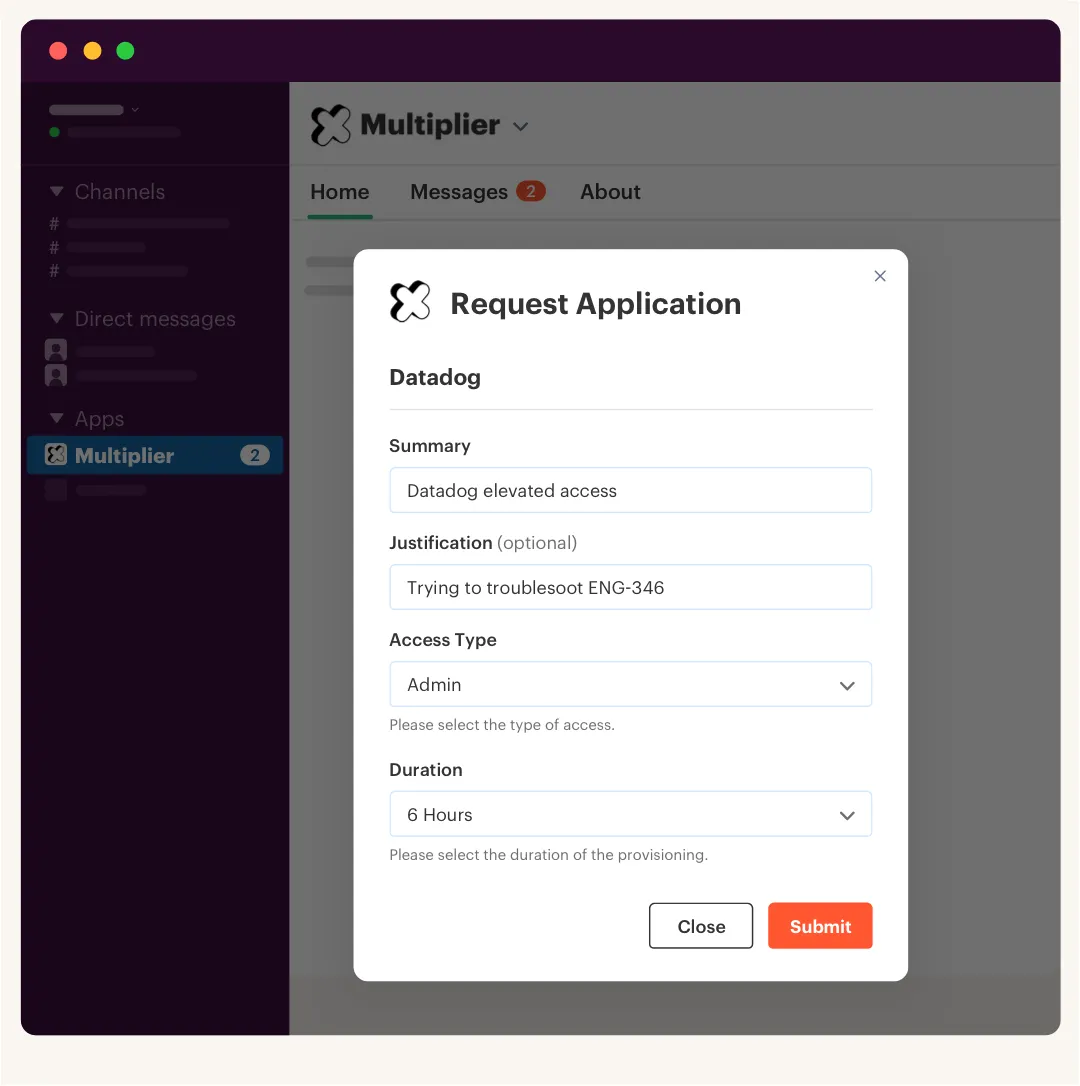
The same foundation powers day-to-day governance. Employees request access from a JSM app catalog or Slack. Approvals go to managers, app owners, or named users in Slack and JSM. On approval, Multiplier provisions through your identity provider groups. Elevated roles can be time bound so access auto-expires without a human ticket.
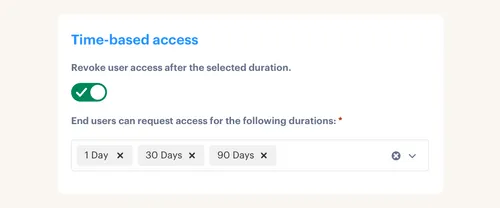
This closes the loop you struggle with in manual flows. Reviews catch the exceptions, daily policy handles the rest, and evidence stays linked to the issue. If you need to cut license waste, Auto Reclaim uses last-login telemetry from your IDP to warn users and reclaim seats when they stay inactive.
Key capabilities that matter here:
- Application Catalog in JSM, so users request the right role with the right context
- Approval Workflows in Slack and JSM, so decisions happen fast without email chases
- Automated Provisioning via IDP groups, so entitlements are authoritative and auditable
- Time-Based Access, so elevated roles expire on schedule and reduce standing privilege
- Access Reviews in JSM, so campaigns finish on time with usage context and one-click revocations
Cut review time, raise completion, and walk into audits ready. Get started with Multiplier
Conclusion
If you treat reviewers like an infinite resource, your reviews will fail. When you flip to reviewer-centric access reviews, you respect attention, add context, and automate the drumbeat. The result is repeatable. Completion rates climb by 40 to 60 percent, average time per decision drops by about half, and least privilege becomes a daily habit, not a quarterly scramble.
Put the work in Jira and Slack. Provision through your identity provider. Time-bound what is risky. Run reviews with usage in view. The audit trail writes itself. And your weekends stop being the buffer for broken process.
Frequently Asked Questions
How do I set up an access review campaign in Multiplier?
To set up an access review campaign in Multiplier, start by navigating to the Access Reviews section in Jira Service Management. Click on 'New Review' and fill out the required details, including the campaign name, applications to review (only those marked as Approved), start and end dates, and the default reviewer. After reviewing the details, click 'Create Access Review' to initiate the campaign. Once ready, you can start the campaign and notify the reviewers. This process streamlines access reviews and ensures that decisions are documented within Jira.
What if I need to change the reviewers for an access review?
If you need to change the reviewers for an access review in Multiplier, go to the campaign you created in the Access Reviews section. You can edit the campaign details and override the default reviewer settings before launching the campaign. This flexibility allows you to ensure that the right people are reviewing access based on the applications and their associated risks.
Can I automate reminders for access reviews in Multiplier?
While Multiplier does not currently support automated reminders for access reviews, you can set clear due dates for each campaign. This helps ensure that reviewers are aware of their deadlines. For now, you may want to manually remind reviewers as the due date approaches to keep the review process on track.
When should I consider using time-based access for elevated roles?
You should consider using time-based access for elevated roles whenever security is a priority, especially for sensitive data or production systems. By allowing access for a limited duration, you can minimize standing privileges and reduce the risk of unauthorized access. In Multiplier, requesters can choose a duration during submission, and access is automatically revoked when the time expires, ensuring compliance with least privilege principles.
Why does my access review process feel slow?
Your access review process may feel slow if the batch sizes are too large or if context is lacking for reviewers. To speed things up, try breaking down the review into smaller batches that can be completed in under 30 minutes, as recommended by Multiplier. Additionally, ensure that each decision includes relevant context, such as last login dates and role clarity, to help reviewers make informed decisions quickly.


