


Most teams treat approvals like a light switch. On or off. That’s why queues explode, access lingers, and audits hurt. The better move is risk-adaptive JIT, where low-risk requests fly through and high-risk ones step up. I call it riskadaptive justintime access, and it cuts manual approvals hard without raising your attack surface.
I’ve seen approval volume drop 50 to 70 percent with a lightweight risk engine. Not because folks got lax. Because the rules matched the reality on the ground. Short windows. Clear signals. Auto revocation. And all of it traceable so you don’t rebuild evidence every quarter.
Key Takeaways:
- Treat approvals as a spectrum, not a switch, and you’ll cut low-risk reviews by 50 to 70 percent
- Convert signals you already have into a score: last login, role sensitivity, environment, blast radius
- Use a simple tier matrix: auto approve low, step-up auth for medium, human review for high
- Automate just-in-time windows and revocation through your identity provider groups
- Write decisions and actions to Jira issues so every JIT call is verifiable during audits
- Measure mean time to grant, percent auto-approved, revocation success rate, and audit exceptions
- Start small, tune weekly, and scale once drift and false positives are under control
Approvals Are Not Binary: Risk-Adaptive JIT Access Beats Blanket Reviews
Approvals work best when they adapt to risk, not when they’re one-size-fits-all. Low-risk access should glide through with short windows and auto expiry, while high-risk access adds friction and proof. That balance speeds common work and shrinks standing privilege in the same move.
Why Binary Approvals Fail At Scale
Binary flows assume equal risk across every request, which forces everything through the slow lane. People then hoard access to avoid delays, so privilege creeps up quietly. You also push reviewers into rubber stamping, which defeats the point. The pattern wastes hours and still leaves gaps.
You already feel it in your SLA reports. Tickets bounce between IT and managers, and the rework piles up. Managers approve in chat, IT provisions in the IDP, and evidence gets pasted together later. It’s the wrong incentive structure, and it rewards speed hacks over safe outcomes. You can change that.
A simple risk lens changes behavior:
- Common, low-impact asks get fast lanes with tight timeboxes
- Sensitive roles get prompts, MFA, or human eyes
- Privilege expires by default, so less cleanup later
Signals You Already Have But Ignore
You don’t need a PhD model. You have usable signals today. Identity attributes tell you who’s asking. App role tells you what blast radius you’re creating. Environment tells you how risky the target is. Usage tells you if the person even needs this access.
Pulling three to five of these signals gives enough separation between low and high risk. Then you can encode decisions that feel obvious in hindsight. It’s not fancy. It’s consistent. And it’s enforceable because the rules live where work happens, not in someone’s head.
Useful signals to start with:
- Last login or recent activity on the target app
- Role sensitivity, like admin versus viewer
- Data classification or environment, like prod versus sandbox
- Business context, like incident involvement or on-call status
- History, like recent escalations or repeated denials
The Real Bottleneck in Just-in-Time Access: No Lightweight Risk Engine
JIT fails when there’s no simple way to score risk at the moment of request. Without that, teams either auto-approve everything or block everything. Both paths create waste and quietly grow standing privileges. You need a middle lane that the system can evaluate in seconds.
Tribal Rules Hide In Chats And Brains
Every team has unwritten rules. “Give analytics Viewer for 24 hours if they’re on the data team.” “Ask the app owner for admin.” Those rules live in Slack threads, emails, and memories. They aren’t encoded, so they can’t be enforced or audited. Auditors hate that, and frankly, so should you.
When rules aren’t systemized, you pay the tax later. Work stops while people chase context. Tickets stall because the only approver who knows the nuance is on PTO. And when the auditor asks why access was granted, the answer is a shrug. Document the rules once, then let the system apply them.
Binary Queues Create The Wrong Incentives
If everything queues, people hoard. If everything sails through, risk explodes. The healthy middle takes a lightweight score and pushes the right path automatically. Low goes fast. Medium proves more context or identity. High waits for human eyes. That’s the only way to scale without getting sloppy.
You also stop burning willpower on routine asks. Reviewers see fewer tickets, so they actually review the important ones. And requesters trust the process, because it’s predictable. JIT stops being a slogan and turns into an operating rhythm your team can count on.
The Hidden Cost When Access Stays Manual
Manual reviews waste time now and create risk later. Mean time to grant balloons, licenses sit idle, and privileged access lingers. That’s the trifecta no one wants. The bad news is it compounds every month. The good news is it’s fixable with small, consistent changes to how you decide.
Time And License Waste You Can Count
You can measure the cost in minutes and dollars. Each manual review burns reviewer time, requester time, and admin time. Mean time to grant creeps from hours into days. While people wait, they can’t do the work they were hired to do. That’s the part finance notices.
Idle licenses are another tax. Without usage signals in the loop, people keep seats they don’t need. Over a year, you end up paying for access that no one uses. Identity provider telemetry is clear on this. Okta documents just-in-time and group-based flows that tie access to real need, not hope, which keeps waste in check once implemented, as explained in Okta’s JIT and group assignment guidance, especially when evaluating riskadaptive justintime access.
Audit And Security Drag You Feel Later
Least privilege looks nice in a policy doc, but it breaks when expiry is manual. People forget. Screenshots get lost. Evidence gets rebuilt in spreadsheets. Auditors ask for proof of revocation and you dig through email. That’s not a process. That’s a scavenger hunt.
Standards are clear on the principle. NIST’s control families call for least privilege and periodic reviews, which means time-bounded access and evidence on tap, not on demand, as seen in NIST SP 800-53 AC-6. Tie decisions and changes back to one record and the scramble disappears. Your future self will thank you.
What It Feels Like To Chase Access, Approvals, And Audits for Riskadaptive justintime access
You already know the feeling. Tickets stack up. Slack pings pile up. Managers ask for exceptions. Meanwhile, your team gets blamed for being slow or unsafe. It’s exhausting. And it leads to the wrong kind of shortcuts.
The 11 PM On-Call Story
An engineer gets paged. They need elevated access now. The on-call manager is around, so they approve in chat. Someone flips a switch in the IDP. No expiry gets set because everyone is in a rush. The incident ends. The access stays. Two months later, no one remembers.
I’ve lived that loop. You probably have too. It’s not that people are careless. They’re tired and trying to help. Risk-adaptive JIT makes the right move the easy move. Short window. Automatic rollback. Clean trail in the ticket.
The Month-End Audit Scramble
Month-end hits and the audit request lands. “Show who had admin on X, why they got it, and when it ended.” You start hunting. It’s a week you’ll never get back. And you still fear missing something.
That scramble goes away when decisions, provisioning, and expiry live in one place. Jira already runs your intake and SLAs. Put your governance there too. Atlassian documents how approvals and workflows centralize action and evidence in one system of record, which is exactly what audits ask for, per Jira Service Management approvals and workflows.
How To Build Risk-Adaptive Just-in-Time Access
You can stand this up in days, not quarters. Start with a minimal score, a simple matrix, and strict timeboxes. Then tune. The aim is predictable speed for low risk, deliberate friction for high risk, and expiry for all elevated roles.

Translate Signals Into A Risk Score
Keep it simple. Pick a few signals with real separation. Score them. Cap the total. Then define what counts as low, medium, and high. You want a model your team can explain in one slide and your system can evaluate in seconds.
I like ranges, not magic numbers. For example, a non-admin role in a sandbox with recent activity is almost always low. An admin role in production with no recent activity is almost always high. Everything in between is medium. That’s enough to start, and you can refine later.
To implement, follow these steps:
- Choose 4 to 5 signals that are easy to fetch at request time
- Assign points to each signal based on risk, then cap at a max score
- Define ranges for low, medium, and high risk that your team agrees on This is particularly relevant for riskadaptive justintime access.
- Map each range to an approval path and a time window
- Log the score, decision, and expiry alongside the request
Set The Approval Tier Matrix
Your matrix is the brain of the flow. It converts a score into a path and a timebox. Keep it readable. Keep it short. And make sure every path ends with provable revocation so drift doesn’t creep back in.
In my experience, this breakdown works well:
- Low: Auto approve, up to 6 hours, log everything
- Medium: Step-up control or owner approval, up to 24 hours
- High: Human review, short window, maybe break-glass with extra proof
After the matrix comes the review loop. Measure false positives and misses weekly. Tighten or relax a single rule at a time. You’ll find the groove fast if you resist the urge to change everything at once.
How Multiplier Makes Risk-Adaptive JIT Access Real In Jira
Risk-adaptive JIT is easier when requests, approvals, provisioning, expiry, and evidence live in Jira and Slack. Multiplier does exactly that by routing approvals, provisioning through your identity provider groups, enforcing time-based access, and running access reviews in Jira. The result is faster grants, fewer standing privileges, and clean audit exports.

Jira-Native Approvals With Slack And Expiry Baked In
Approvals happen where people already work. Employees open a Jira portal and use a visual Application Catalog to pick the app and role. Approvers get a Slack DM and one-click Approve or Deny, and every decision writes back to the ticket. Time-Based Access adds the control you need by enforcing short windows with automatic removal at expiry.
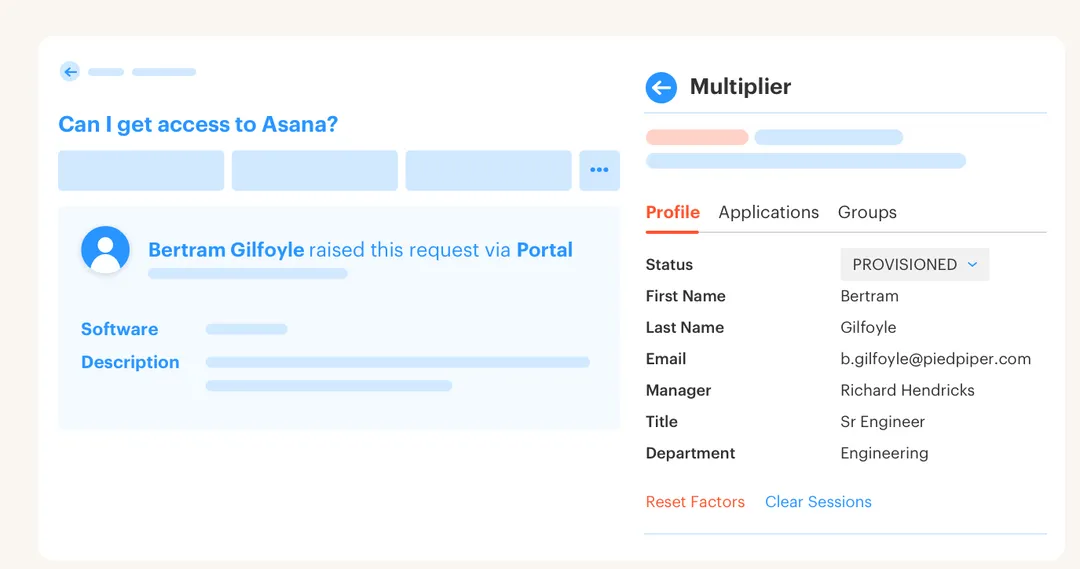
The pain you saw earlier fades here. Low-risk access no longer waits for inbox roulette, and elevated access no longer sticks around for months. Evidence is automatic because the request, the decision, and the change are tied to the same Jira issue. If you prefer a chat-first flow, the Slack app mirrors the catalog and still anchors everything to Jira.
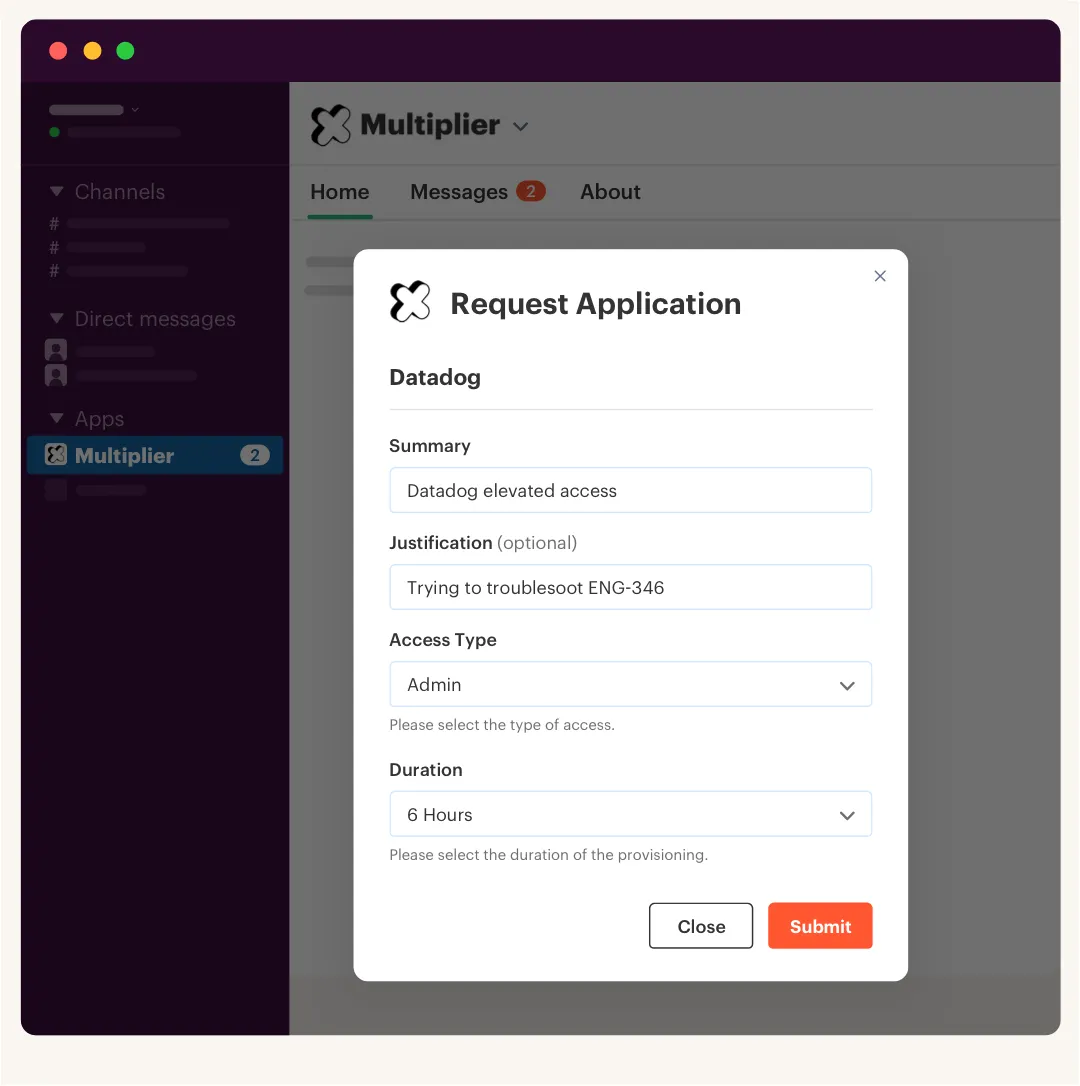
Key capabilities that matter:
- Application Catalog for a single, Jira-native intake with app roles mapped to IDP groups
- Approval Workflows that notify approvers in Slack and JSM with one-click actions
- Time-Based Access that provisions now and auto-revokes on schedule with a recorded trail
Automate Provisioning And Reviews Through Your IDP
Provisioning should be authoritative and reversible. Multiplier calls your identity provider to add or remove group membership when a Jira issue hits Approved. That means entitlements flow via SAML or SCIM for SSO apps and roll back cleanly on expiry. No screenshots. No copy and paste. Just a comment on the ticket with success or error for audit.
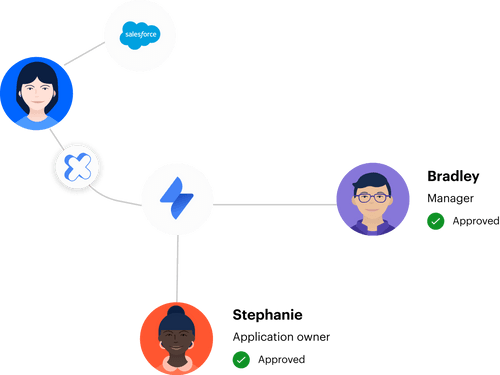
Periodic certifications also move out of spreadsheets. Access Reviews run as Jira campaigns with usage context and one-click revocations that execute automatically through the identity provider. If someone has been inactive for 90 days, reviewers can mark Revoke and know it will be enforced, not just recorded. For spend control, Auto Reclaim uses last-login data to free idle licenses with a documented trail.
Feature callouts that connect to earlier costs:
- Automated Provisioning via IDP groups eliminates manual adds and cuts mean time to grant
- Access Reviews in Jira reduce rubber-stamping and enforce revocations automatically
- Auto Reclaim reclaims idle licenses using real login activity, reducing waste
Conclusion
Approvals aren’t a switch. They’re a spectrum. When you build a small risk engine and tie it to just-in-time windows, you speed low-risk work, slow high-risk grants, and clean up audits. The system does the heavy lifting so people can focus on edge cases.
If you run Jira Service Management with Okta, Entra, or Google Workspace, you’re already close. Multiplier turns that stack into operational least privilege. Requests happen in Jira, approvals happen in Slack, provisioning flows through your identity provider, and expiry is enforced by default. That’s how you cut mean time to grant by half while keeping revocation and audit success north of 99 percent.
Frequently Asked Questions
How do I set up time-based access in Multiplier?
To set up time-based access in Multiplier, follow these steps: 1) When submitting a request through Jira or Slack, choose a duration for access (like 1, 6, or 24 hours). 2) After approval, Multiplier provisions access and automatically sets a timer to revoke it once the time is up. 3) If you need to extend access, you can do so without re-approval if the previous request was already approved. This ensures that elevated access is temporary and reduces the risk of lingering privileges.
What if I need to automate access reviews?
You can automate access reviews using Multiplier's Access Review feature. Start by creating a campaign in Jira, selecting the applications you want to include (only those marked as Approved), and assigning reviewers. Once launched, reviewers will receive notifications and can easily mark users for 'Keep' or 'Revoke' based on their access activity. This streamlines the process, reduces manual work, and ensures that all decisions are documented within Jira for audit purposes.
Can I customize the approval workflows in Multiplier?
Yes, you can customize approval workflows in Multiplier. Admins can map workflow statuses to 'Waiting for Approval' and 'Approved,' and designate default approvers for different applications. You can also set up specific approvers based on the application owner or the requester's manager. This flexibility allows you to manage approvals efficiently and ensures that the right people are involved in the decision-making process.
When should I use the Application Catalog?
Use the Application Catalog when you want to streamline access requests for your team. It provides a single, Jira-native self-service experience where employees can browse approved applications and select their required roles. This reduces the confusion of multiple request channels and ensures that requests include the necessary context. The catalog syncs applications from your identity provider, making it easy for IT to manage and audit access requests.
Why does Multiplier recommend a risk-adaptive approach?
Multiplier recommends a risk-adaptive approach because it allows for a more nuanced handling of access requests. By evaluating the risk level of each request, you can automatically approve low-risk requests, apply step-up authentication for medium-risk ones, and require human review for high-risk access. This method not only speeds up the approval process but also enhances security by minimizing standing privileges and ensuring that access is granted only when necessary.


