


If 30 people join your company this month, role mapping with contextual access either becomes your growth engine or your audit mess. Most IT teams think the hard part is approving access, but the real pain starts after approval, when someone has to figure out which role, which group, which duration, and which evidence trail belongs to the request.
I've seen this pattern a bunch. Jira has the ticket. Slack has the approval nudge. Okta or Entra has the group. Then the spreadsheet has the evidence, because someone had to rebuild the story later for an auditor. That's backwards. Access governance should produce evidence while the work happens, not after everyone forgets what happened.
Key Takeaways:
- Role mapping with contextual access works when each request carries enough information to decide the right role, not just the right app.
- The biggest access problem usually isn't approval speed. It's bad mapping between the request, the identity provider group, and the actual business need.
- If a role can't be explained in one sentence, it's probably too broad.
- Context should include requester, department, manager, app owner, access level, duration, and recent usage.
- Access reviews should enforce decisions, not just collect "keep" or "revoke" answers in spreadsheets.
- Jira is a better control point than a separate IGA portal when your access work already starts there.
Why Static Role Mapping Breaks Access Governance
Static role mapping breaks because it treats every access request like the same request. A finance analyst asking for viewer access, a contractor asking for admin access, and an engineer asking for 6 hours of production access should never move through the same path. The role only makes sense when the context travels with it.
The Old Model Assumes The Role Is Enough
Map the app role to an identity provider group, approve the request, add the user, close the ticket. Clean on paper. I get why teams start there, because it's easy to explain and it looks controlled when volume is low.
Then growth hits. You add more apps, more roles, more departments, more edge cases. Suddenly "Salesforce Admin" means five different things depending on region, team, employee type, and whether the person needs it for an implementation, a support case, or their full-time job. The role name didn't change, but the risk changed completely.
Here's a fast diagnostic. Pull your 20 most requested app roles and ask whether a reviewer can explain who should get each one in under 15 seconds, without opening another tab. If more than 5 of those 20 fail that test, your mapping is too vague. If reviewers consistently need three tabs open, the access model is already leaking context, and you're one fast-growth quarter away from a backlog you can't clear.
Context Is The Difference Between Approval And Governance
Role mapping with contextual access forces the decision to happen at the right level. Not "can this person have the app?" but "does this exact person need this exact permission for this exact reason, and should it expire?" That sounds subtle. It's not.
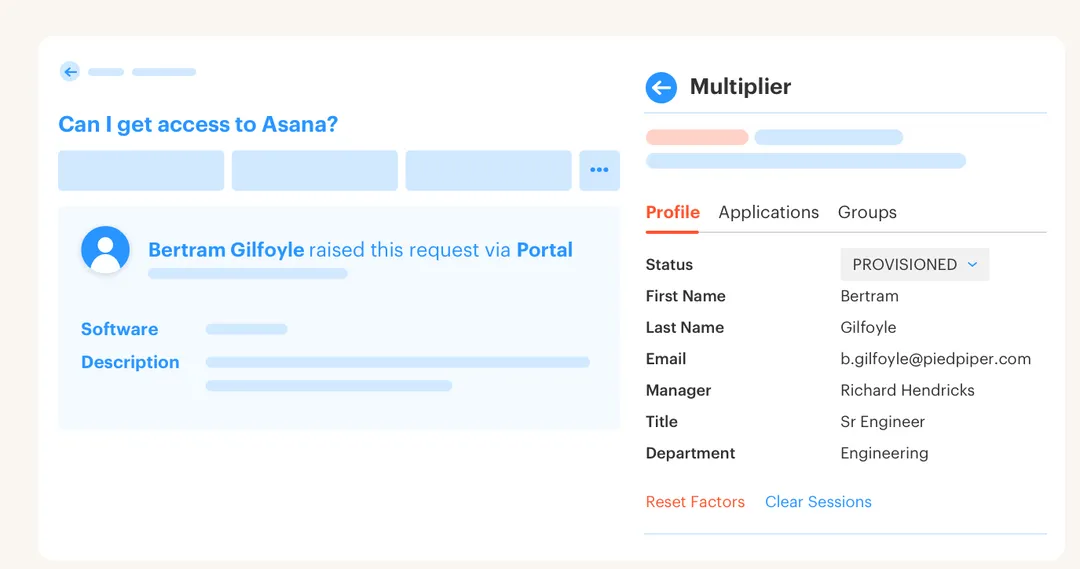
Tuesday at 9:12 AM, a new account executive asks for Gong, Salesforce, and a data warehouse role through Jira. The manager approves in Slack because they're between meetings. IT sees the ticket, checks a spreadsheet, adds two groups in Okta, guesses on the third, and leaves a comment that says "done." Three months later, nobody remembers why the warehouse role was granted.
That's the kind of thing that makes audits annoying. Not because people are lazy. Because the system never captured the decision cleanly in the first place. If you're trying to move access work out of email, Slack threads, and spreadsheets, learn how Multiplier works in the context of how Jira can carry the request, approval, provisioning action, and evidence trail together.
The Real Problem Is Missing Access Context
The real problem isn't that IT teams map roles incorrectly. The real problem is that the request doesn't carry enough context to make the right mapping obvious. Without context, teams either over-approve access to avoid slowing people down, or they create approval drag that everyone starts working around.

Bad Requests Create Bad Group Assignments
"Need access to Figma." "Need GitHub." "Need admin for testing." Anyone who has worked in IT or security has seen these one-line requests. The request is short because the employee doesn't know what details matter, and the approver is busy, so the decision turns into a guess.
That guess then becomes an identity provider group assignment. Once it's in Okta, Entra, or Google Workspace, it feels official. According to the SCIM 2.0 specification, group membership is a core mechanism for managing users and entitlements across systems, which is exactly why sloppy group mapping creates downstream risk. The group is authoritative, even if the original request was weak.
The fix starts before approval. Require enough context to narrow the role before anyone clicks yes. A request should include the business reason, requested role, duration, manager, app owner, department, and whether the person already has a related role. Use a simple rule: if two of those seven fields are blank, the form auto-routes back to the requester before it ever hits an approver. That single change usually cuts clarification ping-pong by half.
The Approval Chain Can Hide The Risk
Approvals make people feel safe. Fair. A manager approval is better than no approval. An app owner approval is better than a random IT decision. Approval by itself doesn't prove the access was right.
I'd argue the approval chain often hides the risk. The manager might approve because they trust the employee. The app owner might approve because they don't want to block the project. IT might provision because the ticket says approved. Nobody is actually checking whether the mapped role matches the job to be done.
Use a simple rule here: if the approver can't see the mapped group and the access level at the moment they approve, the approval is incomplete. The decision should show the translation from business language to technical entitlement. "Figma Editor" should map to a specific group. "Production DB Read Only for 6 hours" should map to a specific group and expiry. No mystery box.
The Cost Shows Up During Reviews And Audits
The cost of weak role mapping shows up when access has to be reviewed, revoked, or proven. Access may feel fine during the request stage, because the employee eventually gets what they need. The real cost lands later, when security needs proof and IT has to reconstruct the story.
Spreadsheet Reviews Turn Into Rubber Stamping
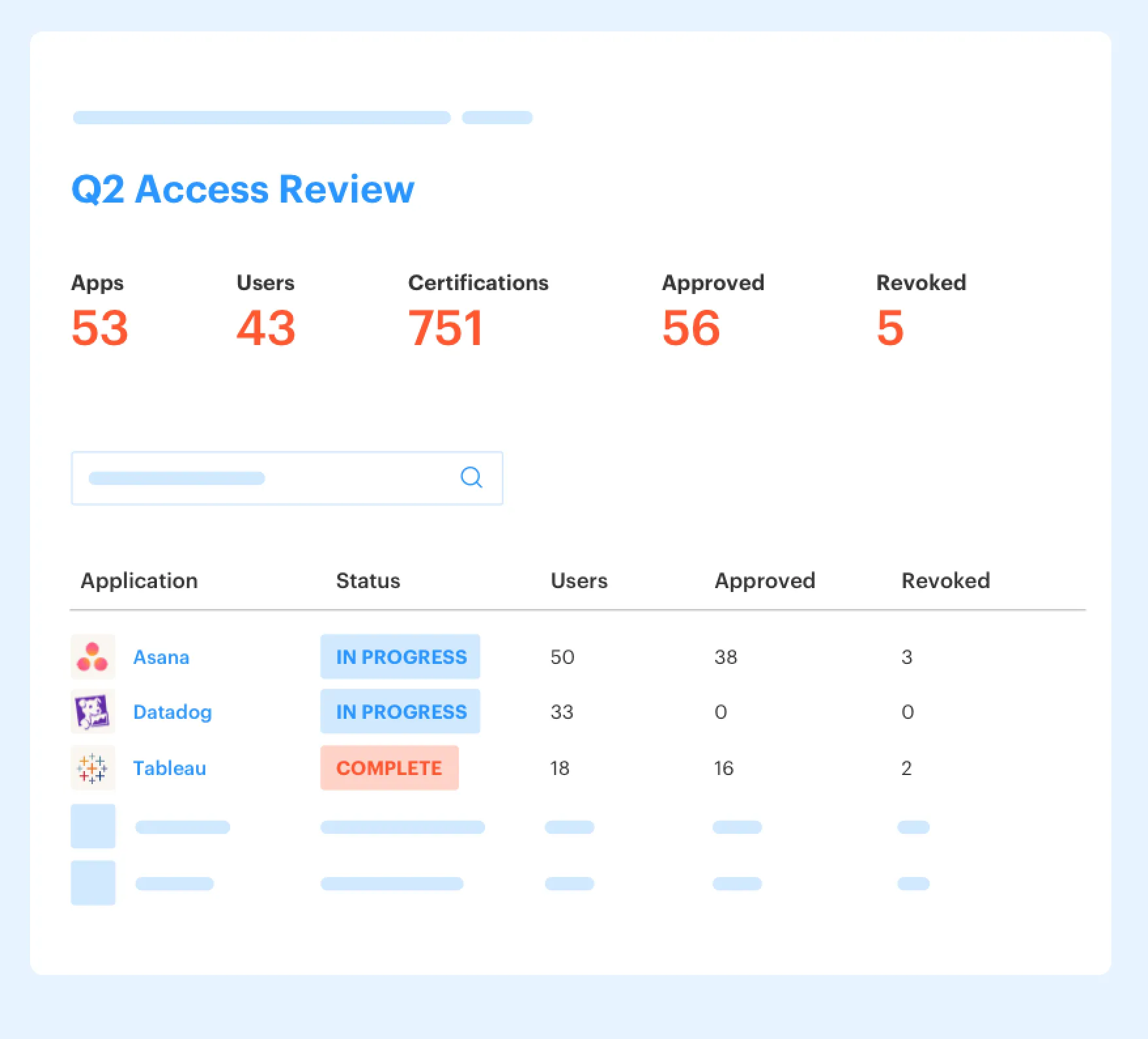
Quarterly access reviews often fail because reviewers are staring at rows with no useful context. They see a name, an app, a group, maybe a job title. Then they have to decide whether that access is still valid. Honestly, that's a tough ask.
The NIST AC-6 least privilege control pushes organizations to limit access to what users need for their role and duties. Great principle. The hard part is proving it when the evidence is split across Jira tickets, Slack approvals, identity provider logs, and spreadsheets.
A reviewer should be able to answer three questions in under 30 seconds: why does this person have access, who approved it, and what happens if I revoke it? If the answer requires digging through old tickets, the review process is doing detective work instead of governance. That's where rubber stamping starts, because the reviewer has too many rows and not enough signal.
Standing Privilege Becomes The Default
Standing privilege grows when revocation is harder than granting access. It's not some grand security failure. It's usually a practical choice made by busy people. If removing access might break someone's work, and nobody has the full context, the safest operational move is to leave it alone.
A fintech team like Stavvy ran into the privileged access version of this after funding and acquisitions. Long-lived access was the risk. They moved toward just-in-time access and cut privileged access by 85%, with 1,300+ access requests automatically revoked after approved windows. That number matters because it shows the operational side of least privilege.
The diagnostic is pretty clear. Look at your privileged roles and count how many have no expiry, no last-used signal, or no linked business reason. If more than 10% fall into that bucket, you don't have a review problem. You have a role mapping with contextual access problem that reviews are exposing too late.
What Broken Access Work Feels Like Inside IT
Broken access work feels like being busy all day and still behind. The queue moves, but the same questions keep coming back: who owns this app, which group should I use, did someone approve this, and will an auditor accept this evidence? That mental load is the part most planning docs ignore.
The Tuesday Queue Becomes The Weekly Tax
Videoamp had a version of this during growth from 100 to 500 employees. New hires started Monday. Tuesday became the access request pileup. The breaking point wasn't only volume, it was requests arriving without enough information to act on.
I like that story because it feels real. Most access backlogs don't start with some huge architecture mistake. They start with Tuesday. A bunch of tickets, missing details, unclear ownership, and IT becoming the human router between employees, managers, app owners, and identity systems.
If you want to see whether this is happening, don't start with ticket count. Start with rework. Sample 50 access requests and count how many needed a follow-up question before provisioning. If more than 20% needed clarification, the catalog or request form isn't collecting enough context. Fix that first.
The Auditor Forces Everyone To Relive The Mess
Audits should be boring. I mean that in the best way. The request happened, the approver approved, the identity provider changed the group, the access expired or got reviewed, and the evidence is sitting on the record. Done.
The painful version is different. Someone exports identity provider groups, finds old Jira tickets, asks app owners to confirm access, pulls Slack screenshots, pastes evidence into a spreadsheet, and hopes the story makes sense. You can have good people and still end up with bad evidence, because the workflow was never designed to produce audit proof.
A useful rule: if evidence has to be rebuilt, the workflow is broken. Not morally broken. Operationally broken. The system should capture the approval, the mapped role, the provisioning action, and the revocation or review decision while the work happens.
How To Build Contextual Role Mapping That Holds Up
Contextual role mapping holds up when roles are specific, requests carry decision-ready information, and reviews can enforce changes directly. The point isn't to create more policy. The point is to make the right access path easier than the workaround.
Start With Roles People Can Explain
A role should describe the work someone can do, not just the app they can open. "Admin" is rarely enough. "Billing Admin for refunds" is better. "Read-only production access for incident review, 6 hours" is much better.
A simple role audit works well. Take each high-risk app and list every role tied to identity provider groups. For each role, write one sentence explaining who should get it and one sentence explaining who should not get it. If you can't write those two sentences, the role is too broad or the business meaning is unclear.
I'd prioritize roles in this order:
- Privileged roles with admin rights
- Apps tied to customer data
- Finance, HR, and legal systems
- Developer tools and production systems
- Expensive SaaS licenses with low usage
Make Context Mandatory Before Approval
The fastest way to improve role mapping with contextual access is to move context collection before approval. Don't ask approvers to infer the details. Put the details in front of them. Manager, app owner, role, duration, business reason, current access, and usage signal should be visible before they act.
Some teams push back on this because they worry employees won't fill out forms. That's a fair concern, and long forms genuinely do create bad data. Still, the answer isn't fewer fields, it's conditional fields. Viewer access stays light. Admin access requires business reason and duration. Production access requires the incident or project link.
Use this decision rule:
- Low-risk app and low-risk role: manager approval may be enough.
- Sensitive app or elevated role: app owner approval should be required.
- Privileged or production access: require duration and automatic expiry.
- Unknown app or unmapped role: route to IT for review before approval.
That's not bureaucracy. That's removing guesswork.
Tie Every Role To An Identity Provider Group
Role mapping only works when the business role connects cleanly to the technical group. If "Figma Editor" maps to an Okta group, and that group provisions the app entitlement, the flow is understandable. If IT has to manually interpret the request and click around inside the app, the control gets weaker.
There's a real exception here. Non-SSO tools, legacy apps, and a handful of SaaS products with no group-based provisioning will never fit this model cleanly. That's fine. The point isn't pretending every app can be automated. The point is labeling the exception clearly so the review and audit trail still show what happened, including who did the manual provisioning step and when.
For mapped apps, use a 1:1 or very clear 1:many structure. Each catalog role should map to one or more identity provider groups, and the naming should make sense to a reviewer. If the group names are cryptic, build a translation layer in the request experience so people aren't approving nonsense strings.
Design Reviews To Enforce Decisions
Access reviews shouldn't just collect opinions. They should cause action. Keep means keep. Revoke means remove the mapped group. If review decisions require IT to go clean things up later, you've only moved the manual work from one spreadsheet to another.
The review screen should show job title, department, manager, group membership, last login, and recommendation. That context changes behavior. A reviewer looking at "hasn't logged in for 90+ days" is much more likely to revoke than one looking at a blank spreadsheet row.
If you're rebuilding reviews, use a small threshold. Start with 10 apps. Pick the apps where bad access would actually matter. Run the review, measure how many revocations were executed, and check how much manual follow-up remained. If follow-up is still high, the mapping or enforcement layer isn't tight enough yet. For teams already using Jira as the access record, see how Multiplier works around mapped roles, review context, and enforced revocations from the same workflow.
How Multiplier Makes Jira The Governance Layer
Multiplier makes Jira the governance layer by connecting app requests, role mappings, approvals, provisioning, access reviews, and evidence inside Jira Service Management. Instead of sending employees to a separate IGA portal, the access workflow starts where IT work already lives and executes through your identity provider.
Catalog Roles Map To Identity Provider Groups
Multiplier's Application Catalog gives employees a Jira-native place to request approved apps and roles. Behind the scenes, those catalog roles map to identity provider groups in Okta, Entra ID, or Google Workspace. When an approved Jira issue reaches the right status, Multiplier can add the user to the mapped group and write the outcome back to the ticket.
That matters because it closes the gap between "approved" and "actually provisioned." The approval workflow can route decisions to managers, app owners, or specific users, with Slack and JSM notifications keeping the decision close to where people already work. For time-bound access, Multiplier can add the user to the mapped group for a chosen window, then remove the membership when the timer expires, as long as the access is controlled through identity provider group membership.
Reviews Carry Usage Context And Enforce Revocation
Multiplier's Access Reviews run in JSM with reviewer views that show users, attributes, groups, last login, and recommendations. Reviewers can mark Keep or Revoke, and revocation can remove users from the relevant identity provider groups while creating Jira evidence for the change. That's the part that matters. The review decision doesn't sit in a spreadsheet waiting for cleanup.

Auto Reclaim can also identify inactive users from identity provider login data, send warning emails, and revoke access after the grace period if the user stays inactive. Multiplier is not directly provisioning inside every SaaS app, and that boundary matters. It works through identity provider groups, which is exactly why clean role mapping with contextual access becomes so important.
Make Access Governance Boring Again
Access governance gets a lot easier when role mapping stops being a static spreadsheet exercise and becomes part of the request workflow. The request should carry the context. The approval should show the mapped role. The identity provider should execute the change. The review should enforce the decision.
That's the whole shift. Not more portals. Not more screenshots. Not another quarterly scramble where everyone tries to remember why access was granted three months ago. Put the work in Jira, tie roles to groups, collect context before approval, and make revocation part of the same system.
Boring audits are earned during normal work.
Frequently Asked Questions
How do I ensure accurate role mapping for new hires?
To ensure accurate role mapping for new hires, start by using Multiplier's Application Catalog. This allows employees to request access to specific applications and roles directly through Jira Service Management (JSM). Make sure that the request form includes key details like the business reason, requested role, duration, and current access. This way, approvers have all the context they need to make informed decisions. Additionally, consider running a role audit to clarify who should have access to which roles, ensuring that each role is well-defined and understood.
What if I need to revoke access quickly?
If you need to revoke access quickly, use Multiplier's Access Reviews feature. This allows you to create a review campaign where reviewers can easily see user access details, last login dates, and recommendations for revocation. When a reviewer marks an access as 'Revoke', Multiplier automatically removes the user from the relevant identity provider groups, ensuring that access is revoked in real-time. This streamlined process minimizes the risk of lingering access and keeps your organization compliant.
Can I automate access requests in Slack?
Yes, you can automate access requests in Slack using the Multiplier Slack App. Employees can simply type `/request` to access the application catalog, select the app and role they need, and submit their request. This creates a Jira ticket automatically, streamlining the process and reducing the need for manual tracking. Approvers will receive notifications in Slack to approve or deny requests, keeping everything organized and efficient.
When should I implement time-based access?
Implement time-based access when dealing with sensitive applications or elevated roles. With Multiplier, requesters can select a duration for their access during the submission process. This ensures that access is granted only for the necessary time frame, reducing the risk of standing privileges. After the access is approved, Multiplier will automatically revoke the access when the time expires, helping you maintain a least privilege approach.
Why does role clarity matter in access requests?
Role clarity is crucial because vague roles can lead to over-approving access, which increases security risks. Using Multiplier's features, you can create specific roles that clearly define what access is needed for each position. This not only helps approvers make informed decisions but also ensures that users only receive the access they truly need to perform their jobs effectively. Clear roles also simplify the audit process, as it becomes easier to track who has access to what and why.


