


Most IT leaders try to solve access with another portal, more policy, and a new inbox to watch. That path rarely pays off. Streamlining Identity Governance Processes starts when you move governance into Jira and Slack where the work already lives, route approvals there, and push changes through your identity provider so evidence writes back to the ticket. Once you do that, backlogs shrink, risk windows get shorter, and audits stop feeling like a fire drill.
I’ve watched teams grind for quarters with spreadsheets, side-channel approvals, and screenshots as “evidence.” Not because they’re bad at their jobs. Because the work is split across tools that don’t share context. Put intake, approvals, provisioning, time limits, and access reviews in one loop tied to Jira, and the picture changes fast.
Key Takeaways:
- Put governance inside Jira and Slack so requests, approvals, and changes live in one record
- Provision through your identity provider to keep changes authoritative, fast, and auditable
- Default to time-bound access to cut standing privilege and shrink risk windows
- Run access reviews in Jira with last login context to stop rubber stamps
- Reclaim unused licenses automatically based on real activity, not gut feel
- Start small: centralize a self-service app catalog, then layer automation safely
Streamlining Identity Governance Processes Starts in Jira, Not Another Portal
Identity governance works best when it lives where people already work, inside Jira and Slack. Keeping intake, approvals, and provisioning in one place removes context switching, slashes wait time, and produces clean evidence on the ticket. A separate portal adds overhead, weakens adoption, and leaves audits scattered.
What Fragmentation Really Costs Day to Day
Approvals in email, group changes in the IDP, screenshots in a folder, and a Jira ticket that never quite matches reality. That mashup sounds familiar. Every handoff is a chance to miss a step, forget an expiry, or misplace proof. Multiply that by headcount growth and you get slow access or broad standing access, neither of which you want.
I’ve seen teams buy extra licenses just to dodge delays. That choice feels practical in the moment and quietly burns budget each month. Worse, it bakes in risk because entitlement creep isn’t obvious until an audit asks why marketers still have admin. When requests, approvals, and changes live on the same issue, the right outcome becomes the easy outcome.
You can spot fragmentation early:
- Approvals live in email threads you have to screenshot later
- No one trusts the ticket to reflect the real change
- Expiries are “remember to remove on Friday” notes, often forgotten
Why Slack Alone Won’t Fix Governance
Chat-first approvals speed decisions, sure. Governance still fails if Slack actions aren’t tied to the Jira issue and provisioned through the IDP. Without that anchor, you create shadow approvals that auditors can’t follow and admins can’t enforce. Speed without control is a shortcut that ages badly.
Teams often wire a bot to post a button and call it done. That avoids the queue for a month, then breaks under load because evidence is missing and revocations don’t happen. The fix is simple in principle. Keep chat for decisions, have Jira as the system of record, and execute changes in the identity provider so history and reversibility are guaranteed.
The Real Bottleneck Isn’t Approval, It’s Context Switching
The slow part isn’t a manager clicking Approve. It’s chasing people across tools, copying details between systems, and reconciling evidence after the fact. Streamlined governance eliminates the swivel chair by anchoring every step to a single Jira issue and automating the handoffs. That’s why cycle time drops without adding headcount.
Surface Symptoms Hide the Root Cause
Leaders assume “we need faster approvals” or “we need a stronger portal.” The real problem is the split brain between ITSM, chat, and your IDP. Workflows lose context with every hop. Approvers don’t see enough to be decisive, admins guess at the right groups, and audit trails get rebuilt from memory.
When you connect those dots, the work feels lighter. Approvers act in Slack or Jira, the system provisions through group membership in the IDP, and the ticket logs the exact change. No screenshots to collect later. No “did we remove that?” DMs a month after an incident.
Least Privilege Fails Without Operational Enforcement
Policies read well. Without time limits and automatic revocation, they’re wishful thinking. NIST’s least privilege control exists for a reason, and operations need to enforce it, not just describe it. AC-6 is clear about restricting privileges to the minimum necessary for tasks, and that demands expiry by default, not manual follow-up later. You can read the control context in NIST SP 800-53 AC-6.
The Hidden Costs of Not Streamlining Identity Governance Processes
Teams pay for manual governance in three currencies: time, risk, and software spend. Time goes first, as tickets bounce and admins repeat the same steps daily. Risk follows, as standing privileges accumulate and expiries slip. Then spend creeps up, because idle licenses remain assigned and audits burn weeks of work.
Time Sinks You Can Actually Measure
Managers get pinged twice because the first approval got buried in email. Admins paste screenshots into tickets to satisfy auditors who still ask for more. A simple low-risk request can cost 20 to 40 minutes across roles when fragmented. Atlassian’s own guidance on Jira Service Management approvals shows how much faster it is when approvals live in the queue connected to the issue.
Provisioning itself eats time too. Without group-based mapping, admins click through each app. Okta documents why group-based access and SCIM matter for reliable, reversible changes. Check the concept in Okta group rules and assignments.
Risk You Can’t Ignore
Standing admin is the quiet mistake that lingers. SOC 2 and SOX push for least privilege and proof of effective controls. Auditors look for expiries, approvals, and evidence that revocations happened. The AICPA Trust Services Criteria define these expectations clearly.
Absent automation, revocations fail after incidents because everyone moves on. That’s the worst moment to rely on memory. Every missed expiry increases blast radius and audit exposure. Without visibility into last login, reviewers keep access for users who haven’t logged in for months. License waste hides inside that blind spot as well.
What It Feels Like to Run Access the Old Way
Manual governance feels like chasing pings all day, answering “did you get my request?” and “can you screenshot it?” It’s reactive, anxiety-driven work that steals time from real projects. People wait, your backlog grows, and your weekends get peppered with cleanup tasks you shouldn’t have to do.
Late-Night Fire Drills and Audit Scrambles
Imagine production access needed during an incident. You grant it fast, then promise to remove it later. Two weeks pass. An auditor asks for proof of expiry. You search Slack, dig through email, paste images into tickets, and still feel exposed. That isn’t a one-off. It’s a pattern born from scattered systems.
Under pressure, teams overprovision “just to be safe.” It feels efficient in the moment and becomes a risk you inherit. You don’t want to carry that risk into the next quarter’s review. You want confidence that access ended on time and proof sits on the issue without extra work.
Engineers Waiting, Finance Paying
New hires pile into Slack on Tuesday asking for five more apps. By Thursday, your IT queue doubles, and context is missing from half the requests. So you ping managers for details, then go hunting in the IDP. Meanwhile, Finance keeps paying for licenses no one used all quarter. That waste adds up quickly.
Without last login context, reviewers rubber-stamp because they can’t tell what’s actually used. No one loves saying no based on a guess. Give reviewers real usage and automated follow-through, and the rubber stamps stop.
How to Start Streamlining Identity Governance Processes Inside Jira
Begin by centralizing requests into a visual catalog on your JSM portal and Slack. Map roles to identity provider groups so approvals become deterministic changes. Default sensitive roles to time-bound access with automatic revocation, then run periodic reviews in Jira with last login context. That sequence fixes speed and risk together.

Decide What Lives in the Catalog
You don’t need to boil the ocean. Start with your top 15 apps by volume plus a few sensitive ones. Create clear roles employees understand, map each role to the right IDP group, and hide anything not ready for self-service. The point is decision clarity, not perfect coverage on day one.
Approver logic should fit risk. Low-risk viewer roles can auto-approve. Elevated roles route to app owners or managers. Keep it in Jira and Slack so action happens where people already hang out. Once requests sit in one place with context included, your queue stops bouncing.
Then put it into motion:
- Pick the first 10 to 15 apps, define Viewer, Editor, Admin where it applies
- Map each role to identity provider groups you already manage
- Attach the catalog to a JSM request, test submission and approval paths
- Turn on auto-approve for low-risk roles, route sensitive ones to the right owner
- Train managers with one page and a 5-minute Slack demo
Define Least-Privilege by Default
Elevated access should expire unless renewed. Make duration selection part of the request form for sensitive apps. Set default windows to hours, not weeks, so risk shrinks by design. During incidents, design an extension path that doesn’t require re-approval if the prior request was already approved.
Access reviews need more than names and roles. Pull in title, department, group memberships, and last login so reviewers can make smart calls. A short review with good context beats a long one with guesses. If you want a mental model, compare it to what NIST calls for in least privilege and periodic review, then apply it through your Jira workflows.
Ready to operationalize this approach with less effort? Learn more about Multiplier
How Multiplier Makes the New Model Real in JSM and Slack
Multiplier embeds governance into Jira Service Management and Slack, then executes changes through your identity provider. Requests become catalog selections, approvals happen in chat or JSM, group assignments update in Okta, Entra, or Google, and evidence writes to the ticket automatically. That is how speed, least privilege, and audits align.

Catalog, Approvals, and Time-Bound Access in One Loop
Multiplier’s Application Catalog puts a clean app store on your JSM portal and Slack. Employees see approved apps, pick roles mapped to IDP groups, and submit with the right context. Approvals route to managers or app owners inside JSM and Slack, so decisions don’t get lost in email. With Time-Based Access, sensitive roles come with a clock, access is granted quickly, and privileges end on schedule without human follow-up.

That loop fixes the earlier costs you felt. Requests stop bouncing, approvals stop stalling, and revocations stop slipping. Audit evidence sits on the issue the whole way through, no screenshots needed.
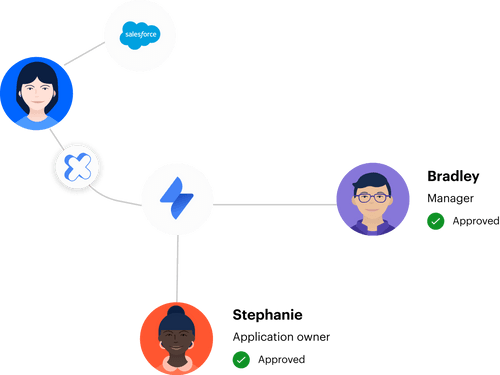
Want to see the full loop from request to auto-revocation? See how Multiplier works
Provisioning Through the IDP, Reviews in Jira, Waste Reclaimed
Multiplier provisions by adding and removing users from identity provider groups, so entitlements flow via SAML or SCIM and remain authoritative. Automated Provisioning handles the grant after approval, posts success or error to the ticket, and closes the loop. Access Reviews run as Jira campaigns with last login context and one-click Keep or Revoke, and Multiplier executes revocations back in the IDP. Auto Reclaim identifies inactive users based on real login activity and reclaims licenses automatically, which stops silent budget leaks.
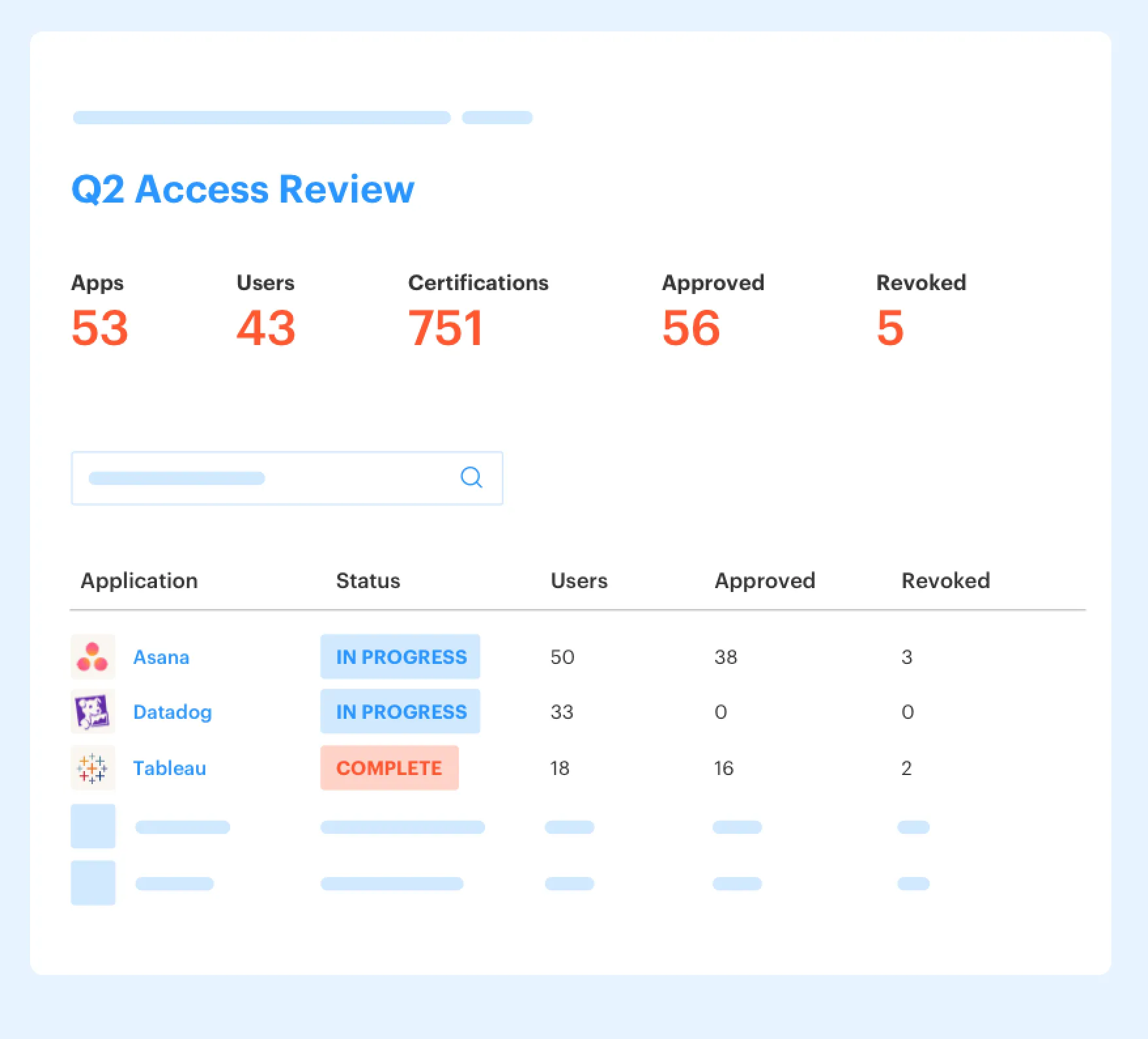
Security teams get least privilege by default, IT gets fewer tickets and cleaner handoffs, and Finance sees waste drop. All of it anchored to Jira, so audits become exports not rebuilds.
Conclusion
You don’t need another portal or a bigger policy binder. You need governance where work happens, enforced by your identity provider, with expiries and reviews that run themselves. Start with a simple catalog, map roles to groups, set time limits, and bring approvals into Slack while Jira stays the source of truth. Risk goes down. Cycle time goes down. Audit stress goes away.
If you’re ready to turn that into your day-to-day, not a slide, Get started with Multiplier
Frequently Asked Questions
How do I set up time-based access for sensitive roles?
To set up time-based access in Multiplier, start by defining the duration options for sensitive roles during the request process. 1) When creating or editing an application in the Application Catalog, specify the time limits (e.g., 1 hour, 24 hours) that users can select when requesting access. 2) Ensure that the application is configured for time-based access in the settings. 3) Once a request is approved, Multiplier will automatically provision access and set a timer to revoke it when the duration expires, providing a streamlined approach to managing elevated privileges.
What if my team needs to reclaim unused licenses?
If your team wants to reclaim unused licenses, you can use Multiplier's Auto Reclaim feature. 1) Set inactivity thresholds for applications, determining how long a user can be inactive (e.g., 30 days) before their license is flagged for reclamation. 2) Multiplier will automatically notify inactive users, giving them a grace period to log in. 3) If they remain inactive after the grace period, Multiplier will revoke their access and generate a Jira ticket to document the change, helping to optimize your SaaS spend effectively.
Can I automate access reviews in Jira?
Yes, you can automate access reviews using Multiplier's Access Review feature. 1) Create a new access review campaign in Jira, selecting the applications you want to review and assigning reviewers. 2) Launch the campaign, and reviewers will receive notifications with a dashboard showing user details, including last login dates. 3) Reviewers can mark users to 'Keep' or 'Revoke', and Multiplier will automatically execute the revocations based on their decisions, streamlining the review process and ensuring compliance.
When should I map roles to identity provider groups?
You should map roles to identity provider groups during the initial setup of your Application Catalog in Multiplier. 1) When defining each application, ensure that roles like Viewer, Editor, and Admin are linked to the appropriate groups in your identity provider (like Okta or Azure AD). 2) This mapping allows for automated provisioning after approvals, ensuring that users receive the correct access based on their roles. 3) Regularly review and update these mappings as roles and applications change to maintain security and compliance.
Why does context switching slow down access requests?
Context switching slows down access requests because it involves moving between different tools and platforms for approvals and provisioning. When requests are split across email, chat, and spreadsheets, it creates delays and increases the chance of errors. By using Multiplier to centralize requests and approvals within Jira and Slack, you can streamline the process. Everything stays in one place, reducing the time spent on chasing approvals and ensuring that all evidence is captured directly in the Jira ticket.


