


At Synthesia, a 4-person IT Ops team had to support 420+ employees while access requests kept coming through Slack and Notion. The real reason app access gets messy is simple: the identity lives inside apps, but the decision trail lives somewhere else. Without visibility into app-embedded identity, IT ends up approving from partial context, provisioning from memory, and rebuilding audit evidence after the fact. That's where the waste starts.
You can have Jira, you can have Okta or Entra, and you can have Slack approvals. And still not really know who has what access, why they got it, how long they should keep it, and whether the access is still justified.
That's the part that gets missed, the identity provider shows group membership, Jira shows the request, Slack shows the conversation, and the app itself has the real blast radius.
Key Takeaways:
- Visibility into app-embedded identity breaks when Jira, Slack, the identity provider, and the SaaS app each hold a different part of the access story.
- Least privilege only works when expiry and revocation are built into the request flow, not handled later as cleanup.
- A Jira ticket should become the evidence container for approval, provisioning, expiry, review, and revocation.
- If more than 20% of access requests require manual interpretation, your catalog and role mappings are too vague.
- Access reviews work better when reviewers see usage context, group membership, and the original request in one place.
- Automation-first least privilege usually beats policy-heavy governance because enforcement happens during normal work.
Why App-Embedded Identity Breaks Jira Visibility
Visibility into app-embedded identity breaks when access decisions are recorded in one system and entitlement changes happen somewhere else. Jira may show approval, the identity provider may show a group, and the app may contain extra roles. That gap creates audit risk, standing privilege, and messy cleanup.
The Real Issue Is Roles Hiding Inside Apps
A lot of IT teams think they have access visibility because they can search the user in Okta or Entra. Fair enough. Identity providers are the right place to manage group membership, and for many SSO apps, that's the correct control point. But app-embedded identity is where the weird stuff lives. Admin roles, workspace owners, billing admins, project-level access, shared accounts, local users, contractors who got invited directly, all the stuff that doesn't fit neatly into one identity group.

I've seen this pattern in other systems too. The source of truth looks clean until you compare it to what actually happens in the operating layer. It's like having a perfect org chart while every team runs its own private Slack channel for decisions. The chart isn't wrong. It's just not enough. If the identity provider says someone is in the "Figma Editor" group, but the app has three team spaces, two admin roles, and a contractor invite from six months ago, your visibility into app-embedded identity is only partial.

Why Tickets Lose the Identity Story
Tickets are great at capturing intake. They're not automatically great at capturing identity truth. A request comes in, someone approves it, IT adds the person to a group, and the ticket gets closed. Clean enough on paper. Until the auditor asks who approved the access, whether the user still needs it, whether the access was time-bound, and why the entitlement inside the app doesn't match the ticket.
Picture a workplace technology manager at 4:40 PM on a Thursday. A director asks for admin access to a reporting tool "just for a customer escalation." The request comes through Slack, the approval happens in a thread, and someone adds the user to a group in the identity provider. Two weeks later, the person still has admin access because nobody owned the expiry. That's how standing privilege builds. Not from bad intent — just from normal work moving too fast.
The practical test is simple: pick 10 recently approved access requests and try to reconstruct the full story in under 30 minutes. You should be able to answer four questions without opening a spreadsheet: who asked, who approved, what changed, and when it ends. If you can't, your Jira visibility is intake visibility, not access governance visibility. For teams trying to close that gap inside Jira, Learn more about Multiplier in the context of the exact approval and evidence problem above.
The Audit Trail Usually Gets Rebuilt Too Late
Audit evidence gets painful when the workflow wasn't designed to produce it. That's the hidden cost. You're not just answering an auditor's question. You're rebuilding the past from Jira comments, Slack messages, identity provider logs, screenshots, and whatever spreadsheet someone maintained during the last review cycle. And if the app has embedded roles, you're also trying to prove that the group assignment actually matched the access granted.
The threshold I'd use is 15 minutes. If proving one access change takes longer than 15 minutes, the evidence trail is too scattered. If proving 25 changes takes half a day, the process is already broken. And if your team starts granting broader access just to avoid repeated requests, the access model has started rewarding risk. That's the scary part, because the system feels faster while least privilege gets worse.
How to Build Visibility Into App-Embedded Identity
Building visibility into app-embedded identity means turning every access request into a complete record of intent, approval, entitlement, expiry, and review. The workflow has to connect Jira, Slack, and the identity provider. Without that chain, app roles drift away from the original business reason.
Start by Mapping Where Identity Actually Changes
Before you fix access governance, map where identity actually changes. Not where policy says it changes. Where it really changes. In most companies, the change points are messier than expected: Jira tickets, Slack DMs, identity provider groups, SaaS admin consoles, HR lifecycle events, and quarterly access review spreadsheets. Honestly, the first time you draw the map, it usually looks worse than people want to admit.
Use a simple diagnostic. Take your top 20 business apps by request volume and mark each one as group-controlled, app-controlled, or mixed. Group-controlled means access is mostly governed through Okta, Entra, or Google Workspace groups. App-controlled means admins still make changes directly in the SaaS app. Mixed means both happen, which is where visibility into app-embedded identity usually breaks first. If more than 30% of your top apps are mixed, don't start with policy docs. Start with role mapping.
A good first pass looks like this:
- Pick the 20 apps with the most access requests.
- Identify every role employees can request.
- Map each role to the identity provider group that grants it.
- Flag any role that still needs manual action inside the app.
- Add an expiry requirement for elevated roles.
That list won't solve everything. But it tells you where the risk lives. And that's a lot better than arguing in the abstract about "least privilege" while nobody knows which roles are actually controlled.
Treat Jira Issues as the Evidence Container
The Jira issue should be the container for the access story. Not just the intake form. The whole story. Request, business reason, approver, group mapping, provisioning result, expiry, review decision, and revocation should all point back to the same record. That's how you stop rebuilding audit evidence after the fact.
There's a case to be made for using a dedicated IGA portal. Bigger enterprises often need deep certification logic, complex segregation rules, and heavy policy modeling. That's valid. The limitation is adoption. If employees ask for access in Jira, approvers live in Slack, and IT works out of JSM queues, a separate portal becomes another place to reconcile. The stronger move for Jira-heavy teams is to make the ticket the operating record, then push the actual identity change through the identity provider.
The decision rule is pretty straightforward. If the request starts in Jira, the evidence should finish in Jira. If approval happens in Slack, the approval should still write back to the Jira issue. If provisioning happens through Okta, Entra, or Google Workspace, the result should be recorded against the issue that triggered it. Otherwise you get a workflow that works in the moment and fails during review.
Put Expiry Dates on Risky Access Before Approval
Time-bound access is the most underused control in least privilege. Everyone talks about reducing standing access. Fewer teams make expiry part of the request itself. And that's where the gap shows up. If a user asks for admin access during an incident, the decision shouldn't be "approve or deny forever." It should be "approve for 1 hour, 6 hours, or 24 hours, then remove it automatically."
The threshold I'd use: any role with admin rights, production access, financial data, customer data, or security settings should require a duration. No duration, no approval. That sounds strict, but it's actually easier for the business. People get the access when they need it, and IT doesn't have to remember to clean it up later. The access request becomes more like borrowing a keycard from the front desk. You can get into the restricted room, but the card stops working when the visit is over.
A few rules make this easier to run:
- Default risky roles to temporary access.
- Offer short duration options like 1, 6, and 24 hours.
- Require a business reason for extensions.
- Auto-revoke when the approved window ends.
- Log the grant and revocation on the same request.
Some security teams prefer permanent access plus quarterly review, and I get why. It feels cleaner to manage fewer moving parts. The tradeoff is exposure time. If the access was only needed for two hours, reviewing it 90 days later means you accepted 89 days and 22 hours of unnecessary privilege.
Use Request Paths Based on Risk, Not App Popularity
Access workflows often get built around app volume. The most requested apps get the most attention. That makes sense operationally, but it can be wrong from a risk point of view. A low-volume finance admin role may matter more than a high-volume design tool viewer role. If every app follows the same approval flow, your process is treating very different risks like they're equal.
Use three request paths. Low-risk access can be auto-approved when the role is mapped cleanly to an identity provider group. Medium-risk access should route to the manager or app owner. High-risk access should require an app owner, a duration, and a written reason. If the role can affect production, customer data, billing, or security settings, put it in the high-risk path by default. You can always loosen later when the data proves it's safe.
For a mid-market SaaS team I'd set the first version like this:
- Low risk: viewer roles, standard team tools, no sensitive data.
- Medium risk: editor roles, department-specific apps, paid seats.
- High risk: admin roles, production systems, finance tools, customer data, security tools.
The mistake is trying to perfect the taxonomy before you automate anything. Don't. Start with obvious buckets and improve them every month. Visibility into app-embedded identity gets better when access paths are clear enough for employees to use and strict enough for security to trust. The midpoint is where the operating model starts to click, and See how Multiplier works if you want to compare that model against your current Jira and Slack flow.
Run Reviews From Live Usage, Not Spreadsheet Memory
Access reviews fail when reviewers are asked to make decisions from stale spreadsheets. They don't know why the person has access, they don't know the last login, they don't know which group created the entitlement, and so they rubber-stamp. Or they revoke too aggressively and break someone's work. Neither outcome is great.
A better access review shows the reviewer enough context to make a real decision. User, department, manager, group membership, last login, original request, and a recommendation when the user looks inactive. If someone hasn't logged in for 90 days, the reviewer should see that before they click "Keep." If the access was granted for a project that ended two months ago, the original request should make that obvious. The review should feel less like archaeology and more like checking a live system.
Use a review trigger based on risk and usage. Review high-risk roles monthly or quarterly. Review standard business apps quarterly or twice a year. Flag users with 60 to 90 days of inactivity for closer review. If a reviewer keeps inactive access, ask for a reason. Not because you want to annoy people. Because forcing the reason separates real business exceptions from habit.
Measure the Boring Ratios That Reveal Drift
The boring metrics tell you whether visibility is improving. Not the big board-level metrics. The ratios inside the queue. How many access requests were auto-provisioned? How many were missing role or duration? How many risky grants expired automatically? How many revocations happened during review? How many app roles still require manual provisioning? That's where identity drift shows up before the audit catches it.
I like ratios because they remove drama. Sales has close rates. Support has first response times. Access governance should have operating ratios too. If 75% of routine requests can be fully automated, that tells you the catalog and mappings are working. If 25% of requests still need clarification, your intake is weak. If revocations from reviews are close to zero for three cycles, either your access model is incredibly clean or reviewers are rubber-stamping. Usually it's the second one.
Track these monthly:
- Percentage of requests with complete role and duration data.
- Percentage of requests provisioned through identity provider groups.
- Percentage of elevated access grants with automatic expiry.
- Percentage of review decisions that result in revocation.
- Median time from approval to provisioning.
- Number of apps with embedded roles not mapped to groups.
Once these numbers are visible, the conversation changes. You're no longer debating whether access governance is "good." You can see where it's leaking.
How Multiplier Makes Access Governance Visible
Multiplier makes access governance visible by keeping requests, approvals, provisioning, time limits, reviews, and evidence tied to Jira issues. It works through Jira Service Management, Slack, and identity provider groups. That makes least privilege easier to enforce during the actual access workflow.
Time-Based Access Turns Expiry Into Default Behavior
Multiplier's Time-Based Access is built for the risky access problem we talked about earlier. Requesters choose a duration, like 1, 6, or 24 hours, during submission. After approval, Multiplier adds the user to the mapped identity provider group, starts the timer, and removes the group membership when the window expires. The grant and revocation are recorded on the Jira issue, which matters a lot when someone later asks why the access existed.
The important boundary is worth saying out loud. Automatic revocation works when access is provisioned through identity provider group membership. If someone manually grants access inside a SaaS app outside the SSO path, that manual grant can't magically be removed by the timer. That's not a product flaw. That's the app-embedded identity problem showing up again. The practical fix is to map as many approved roles as possible to identity provider groups, then reserve manual paths for exceptions.
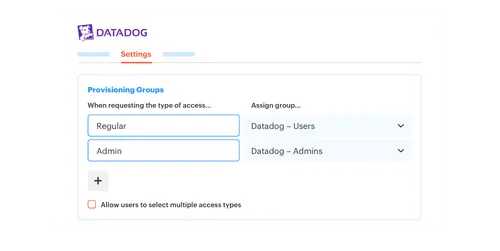
Multiplier also handles approval workflows through Jira and Slack, so app owners, managers, or specific users can approve without leaving the tools they already use. The Application Catalog gives employees a sanctioned place to request apps and roles, while automated provisioning executes approved group changes through Okta, Entra, or Google Workspace. The access story stays attached to the originating Jira issue, not scattered across chat, tickets, and screenshots.
Reviews and Reclaims Keep Evidence Inside Jira
Access Reviews in Multiplier move the quarterly certification process into Jira Service Management. Admins create campaigns, select approved applications, assign reviewers, and give reviewers a dashboard with user attributes, groups, last login, and recommendations like revoking users inactive for 90+ days. When a reviewer chooses "Keep" or "Revoke," the decision and reason stay connected to the review record. If revocation is selected for supported identity provider group access, the removal can execute and create Jira evidence.
Auto Reclaim handles another piece of the visibility problem: unused SaaS licenses. It uses last-login data from connected identity providers, applies inactivity thresholds and grace periods, warns users by email, and revokes access if they stay inactive. It's available on the Advanced edition, and it depends on accurate login telemetry from the identity provider. So again, no pretending. The quality of the control depends on the quality of the data coming in.
For teams already living in Jira, the value is pretty simple. Multiplier doesn't ask IT to rebuild access governance somewhere else. It makes Jira the operating record, uses Slack for fast decisions, and drives provisioning or revocation through the identity provider where group-based control exists. If your audit trail currently takes hours to rebuild from tickets and screenshots, the natural next move is to evaluate the Jira-native workflow and Get started with Multiplier from the access paths you already run every week.
Make Access Visible Before the Audit Asks
Visibility into app-embedded identity is really about proving the access story without heroic cleanup. who asked, who approved, what changed, when it expires, and why it was kept or revoked. If those answers live in five places, your team will always be rebuilding history.
The better approach is operational, not philosophical. Map roles to groups. Make risky access temporary. Keep the evidence on the Jira issue. Review from live data, not spreadsheet memory. And measure the ratios that show whether privilege is drifting.
Policy matters. Of course it does. But policy without enforcement turns into a PDF people ignore when the queue gets busy. Automation-first least privilege wins because the right behavior happens during the work, not three months later when everyone is trying to remember what happened.
Frequently Asked Questions
How do I set up time-based access for users?
To set up time-based access with Multiplier, follow these steps: 1) When a user submits an access request through the Application Catalog in Jira or Slack, they can select a duration for their access (like 1, 6, or 24 hours). 2) After the request is approved, Multiplier automatically provisions the access and starts a timer. 3) Once the time expires, the user is automatically removed from the mapped identity provider group. This helps minimize standing privileges and ensures users only have access when they need it.
What if I need to revoke access before the expiry date?
If you need to revoke access before the expiry date, you can do so directly in the Jira ticket associated with the access request. Simply locate the ticket, and select the option to revoke access. Multiplier will handle the removal from the identity provider group and document the change in Jira. This keeps your audit trail intact and ensures that access is managed efficiently.
Can I automate access reviews using Multiplier?
Yes, you can automate access reviews with Multiplier. Start by creating an access review campaign in Jira Service Management. 1) Select the applications you want to include, which must be marked as 'Approved.' 2) Assign reviewers who will evaluate user access based on real-time data, such as last login and group memberships. 3) Reviewers can then decide to 'Keep' or 'Revoke' access, and Multiplier will automatically execute the revocation if needed, keeping everything documented within Jira.
When should I use the Application Catalog for access requests?
You should use the Application Catalog for access requests whenever employees need access to standardized applications. This tool simplifies the process by allowing users to browse approved applications, select roles, and submit requests through Jira or Slack. It ensures that requests are well-documented and routed to the right approvers, streamlining the intake process and reducing the administrative burden on IT teams.
Why does my team struggle with access visibility?
Access visibility often struggles due to fragmented systems where approvals, provisioning, and audit trails are scattered across different platforms. To improve visibility, consider using Multiplier, which integrates directly with Jira Service Management and your identity provider. This way, every access request, approval, and change is logged in one place, making it easier to track who has access, why they have it, and when it should be revoked.


