Last updated: November 21, 2026
SAML handles authentication. It lets a user sign in to an app through your identity provider with single sign-on. SCIM handles provisioning, so the identity provider can create, update and deactivate that user's account in the app. They solve different problems, so most teams use both.
What does SAML do?
SAML (Security Assertion Markup Language) is an XML-based standard from OASIS for passing a signed login assertion from an identity provider, such as Okta or Microsoft Entra ID, to an app. The user goes to the app, the app redirects them to the identity provider, and the identity provider signs them in and sends the app an assertion that says who they are.
SAML runs only at login. It doesn't tell the app about a new hire before their first sign-in, a changed department, or a person who left last Friday.
SAML just-in-time provisioning
Many apps support SAML just-in-time (JIT) provisioning, which creates the account the first time a user signs in with SAML. That covers the create step. It doesn't cover removal. When someone leaves, SSO stops working for them, but the account, its data and often its paid license stay in the app until someone deletes them. That's the gap deprovisioning that runs from the identity provider closes.
What does SCIM do?
SCIM (System for Cross-domain Identity Management) is a REST and JSON standard for managing user and group records across systems. SCIM 2.0 is defined in RFC 7643 (the schema) and RFC 7644 (the protocol), both published in September 2015.
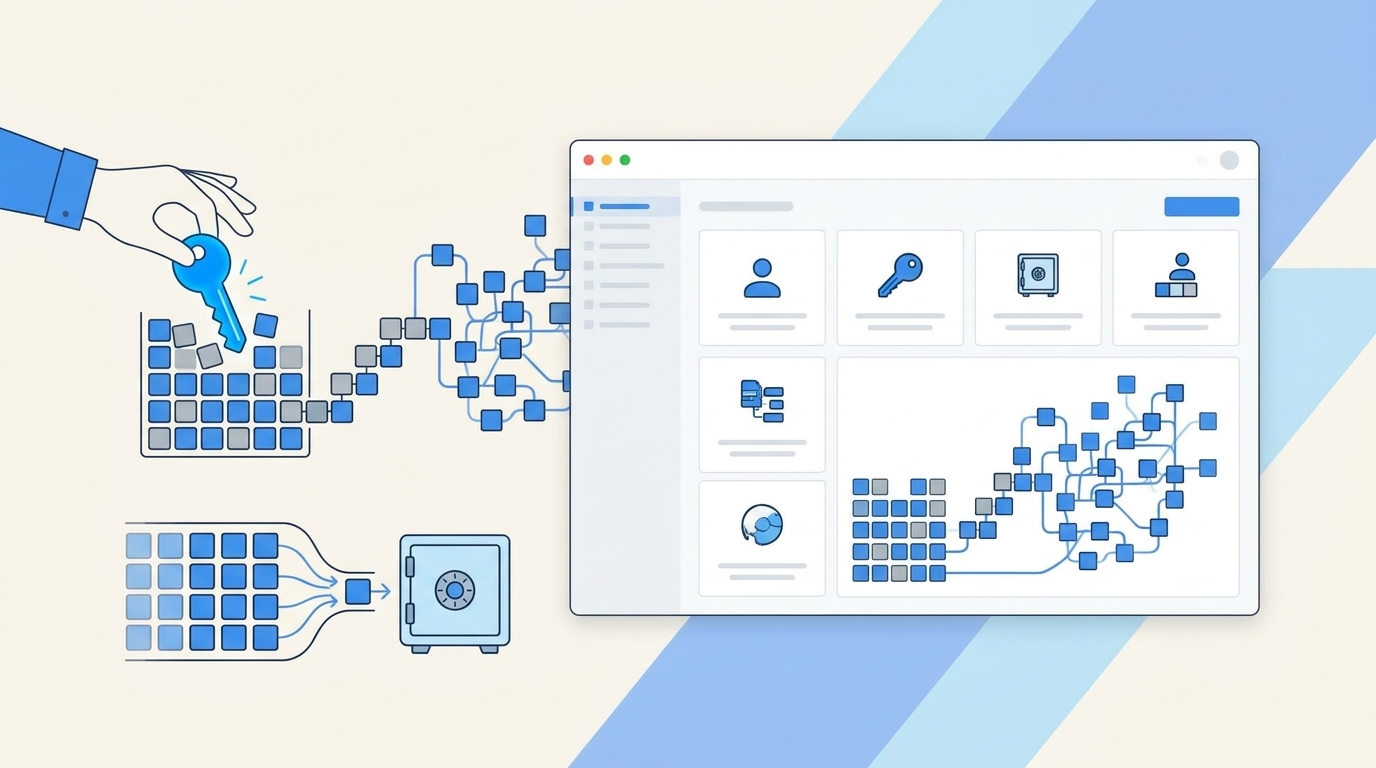
Your identity provider acts as the SCIM client and the app acts as the SCIM server. When you assign someone to an app in the identity provider, it calls the app's SCIM API to create the user. When you change their attributes or groups, it updates them. When you unassign or deactivate them, it deactivates the account. SCIM never signs anyone in.
What does SCIM mean?
SCIM stands for System for Cross-domain Identity Management. "Cross-domain" means the identity provider and the app are separate systems, often run by different companies, that need to agree on who has an account.
SCIM vs SAML comparison table
Is SCIM the same as SSO?
SSO (single sign-on) is the outcome: one login for many apps. SAML and OIDC are the protocols that deliver it. SCIM isn't an SSO protocol, so comparing "SCIM vs SSO" really means comparing provisioning with login. SSO lets a user in. SCIM gives them an account to land in and removes it later.
How SCIM and SAML work together
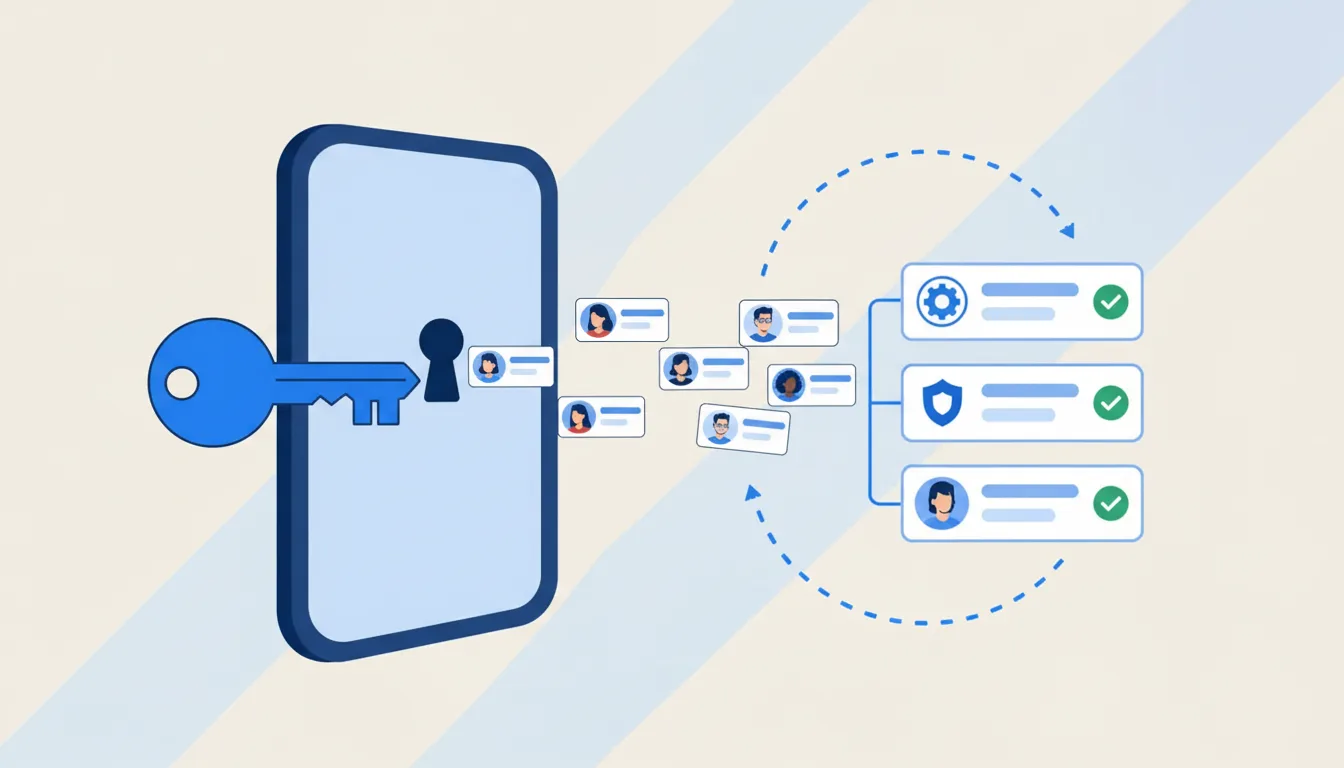
A typical lifecycle with both in place looks like this:
- Onboarding. HR or IT adds the new hire to the identity provider and assigns them to the group for an app. SCIM creates their account in that app before day one.
- Daily use. The employee opens the app and SAML signs them in through the identity provider.
- Role change. IT moves them to a different group. SCIM updates their attributes and group memberships in the app.
- Offboarding. IT deactivates them in the identity provider. New SAML sign-ins stop at once, and SCIM deactivates the app account, which can free the license.
Without SCIM, step 4 is where access leaks. The person can't log in through SSO, but their account still exists in the app until someone removes it by hand.
SCIM vs LDAP
LDAP (Lightweight Directory Access Protocol, RFC 4511) is a protocol for querying and updating a directory, such as on-premises Active Directory. Apps that use LDAP usually connect to the directory and read from it, and some check passwords against it at login.
SCIM pushes changes from the identity provider to a cloud app over HTTPS. LDAP lets an app look up users in a directory, typically inside your network. Many teams use both: Active Directory on-premises with LDAP, synced to a cloud identity provider that then uses SCIM and SAML for SaaS apps.
Where SCIM stops
Not every app supports SCIM
SCIM only works if the app has a SCIM endpoint. Many smaller and older apps don't, and some vendors offer SCIM only on higher plans. For those apps, the identity provider can still handle SAML login, but someone has to create and remove accounts by hand.
SCIM may need a separate product on your side too
On the identity provider side, provisioning can be its own line item. Okta lists automated SCIM provisioning under Lifecycle Management (Okta Lifecycle Management), which its pricing page marks as an add-on for the Starter suite and included from Core Essentials up, as of November 2026 (Okta pricing). Our Okta pricing breakdown has the suite details.
Atlassian needs Guard for SCIM
Atlassian Cloud is a common example. Atlassian's user provisioning, which syncs users and groups from your identity provider over SCIM, requires an Atlassian Guard Standard subscription, as of November 2026 (Atlassian support). The same page says group sync works for Jira and Confluence but not yet for Bitbucket or Trello, and that synced users still need app access configured per site. Our Atlassian user provisioning guide walks through the setup.
SCIM moves data, not decisions
SCIM carries out whatever the identity provider says. It doesn't decide who should get access, collect an approval, set an end date, or record why someone has a role. Teams that need that for SOC 2 or ISO 27001 audits still need a request and approval process on top.
Where Multiplier fits
Multiplier is an access management app that runs inside Jira Service Management. It doesn't replace SAML or SCIM. It works through your identity provider: when a Jira access request is approved, Multiplier adds the user to the mapped group in Okta, Microsoft Entra ID or JumpCloud, and your existing SSO and provisioning setup does the rest (Okta integration). With time-based access, Multiplier removes the user from the group when the period ends.
For apps with no SCIM or API, Multiplier's disconnected apps feature uses AI agents with browser automation that log in to the app's admin panel to create users, assign licenses and remove access, with the request and approval recorded on the Jira ticket. For more on governing apps without SCIM, read JIT access for legacy, non-SSO apps.
Multiplier costs $5 per user per month on Standard and $6 on Advanced, with a 30-day free trial (Multiplier pricing). Start the free trial on the Atlassian Marketplace.
Frequently asked questions
Do I need both SCIM and SAML?
Usually, yes. SAML gives users one login through your identity provider, and SCIM keeps their accounts in each app in step with that identity provider. With SAML alone, accounts stay in apps after people leave. With SCIM alone, users have accounts but still manage a separate password for each app. Use both wherever an app supports them.
Is SCIM the same as SSO?
No. SSO is single sign-on, usually delivered by SAML or OpenID Connect, and it handles login. SCIM is a provisioning standard that creates, updates and deactivates user accounts and group memberships. An app can support SSO without SCIM, which is common, or SCIM without SSO, which is rare. They answer different questions about the same user.
Can SAML provision users?
Partly. With SAML just-in-time provisioning, an app creates an account the first time a user signs in, using attributes from the SAML assertion. JIT provisioning can't create accounts ahead of first login and doesn't remove accounts when someone leaves. For full lifecycle coverage, including deprovisioning, the app needs SCIM or another provisioning method.
Is SCIM more secure than SAML?
They protect different things, so neither replaces the other. SAML reduces password risk by moving login to your identity provider, where you enforce MFA. SCIM reduces orphaned-account risk by deactivating accounts when people leave or change roles. A strong setup uses SAML for login and SCIM for account lifecycle, with access reviews to catch what either misses.
What happens if an app doesn't support SCIM?
You can still use SAML for login if the app supports it, but account creation and removal fall back to manual work, the vendor's API, or a tool that automates the admin panel. Track those apps separately in your offboarding checklist and access reviews, because they are where leftover accounts and unused licenses tend to pile up.
Does Atlassian support SCIM?
Yes. Atlassian Cloud supports SCIM user provisioning from identity providers such as Okta, Microsoft Entra ID and Google, but it requires an Atlassian Guard Standard subscription, as of November 2026 (Atlassian support). Group sync covers Jira and Confluence, not yet Bitbucket or Trello.